Does Any Mattress Work With Adjustable Bases?
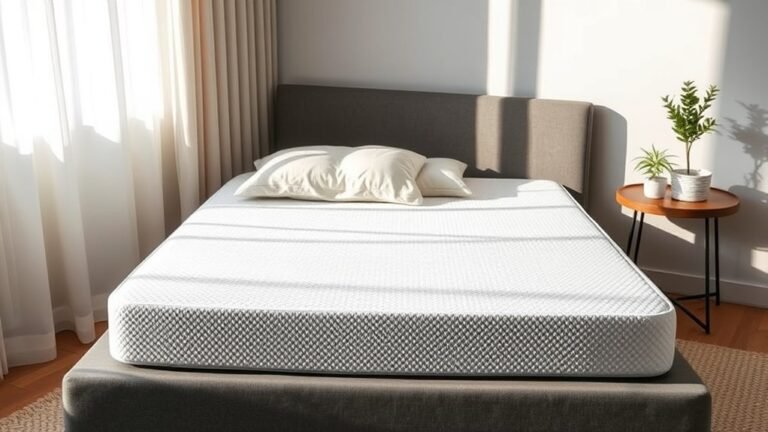
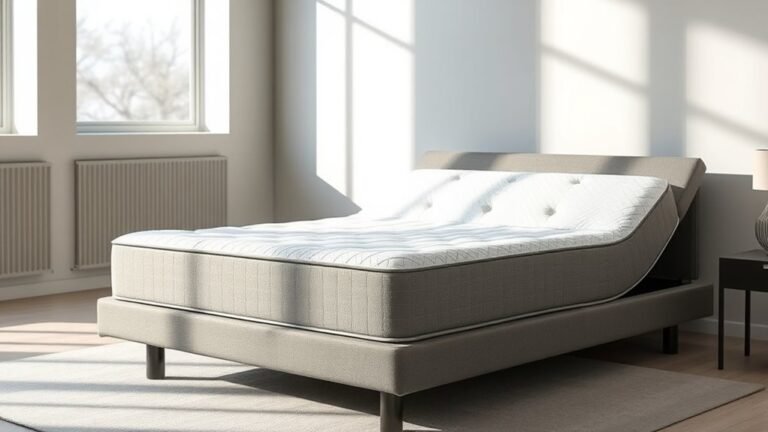
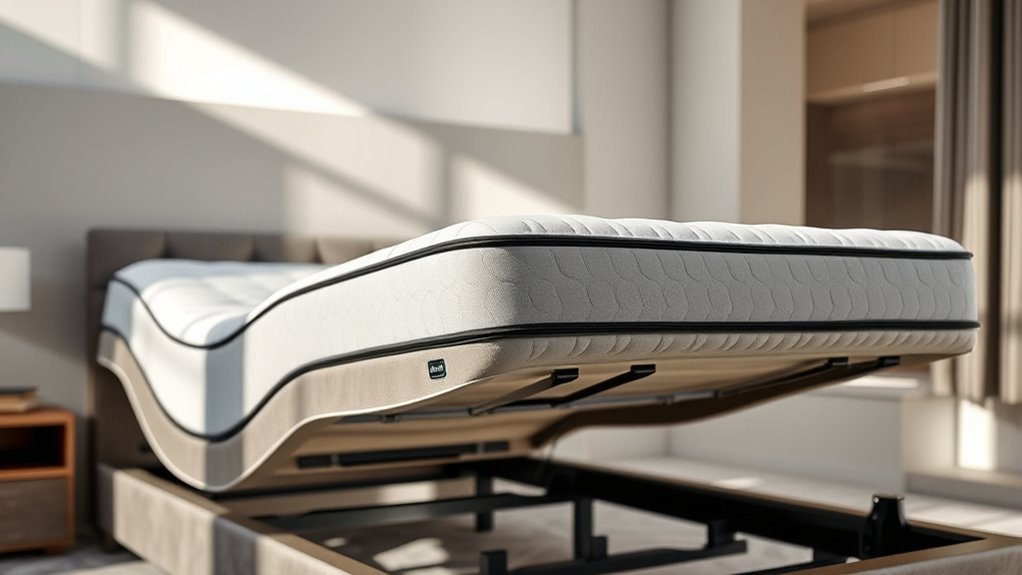
You can’t use just any mattress with an adjustable base because it needs to be flexible and durable to bend without damage.
Memory foam, latex, and some hybrid mattresses work best since they flex smoothly and support your body well.
Traditional innerspring mattresses usually aren’t suitable—they resist bending and can wear out quickly.
You also want to watch mattress thickness and warranty to guarantee long-lasting comfort.
If you want to make the best choice for your adjustable base, exploring these details will help.
It’s all about getting the right mattress that moves with your base and keeps you comfortable night after night.
Key Takeaways
- Not all mattresses work with adjustable bases; flexible materials like memory foam, latex, and hybrids are best suited for smooth adjustments. Traditional innerspring mattresses often lack flexibility and can be damaged or void warranties when used on adjustable bases.
- Optimal mattress thickness is 8-12 inches to ensure proper bending, support, and durability with adjustable bed movements. Mattresses designed with reinforced edges and non-flip construction maintain shape and performance on adjustable bases.
- Always check manufacturer compatibility and warranty terms before pairing a mattress with an adjustable base to avoid damage and warranty issues. It’s a good idea to do this to keep your mattress in great shape and make sure your investment lasts.
Key Features of Mattresses Compatible With Adjustable Bases
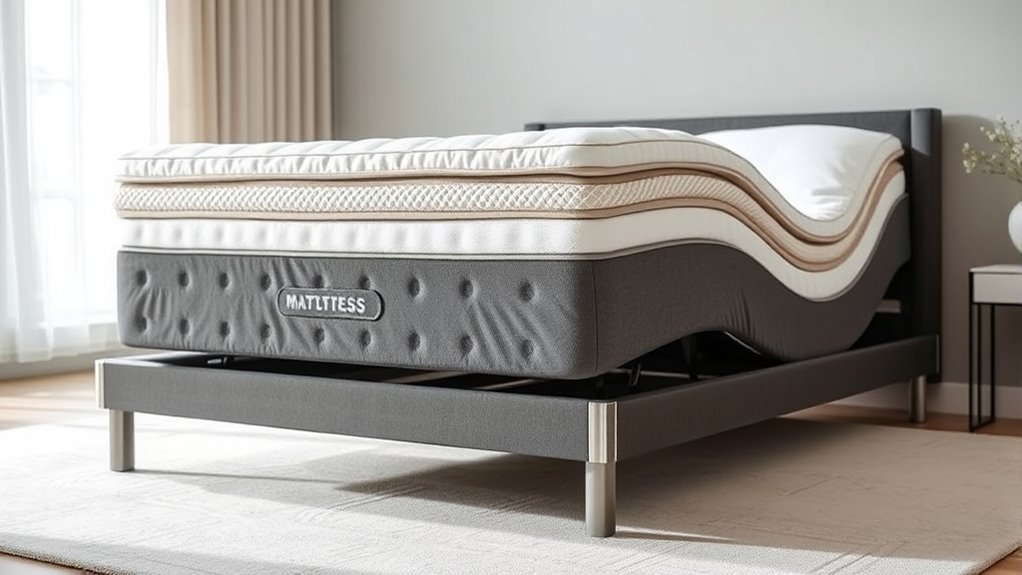
When you choose a mattress for an adjustable base, flexibility is key. Memory foam and other flexible materials like latex offer excellent adjustable base compatibility because they bend easily without damage.
Ideally, your mattress should have a thickness between 8 and 12 inches to ensure proper bed support and pressure relief when adjusting positions. Durable construction with reinforced edges plays a critical role in maintaining edge support and preventing sagging over time.
Additionally, these mattresses provide superior motion isolation, minimizing disturbances when you or your partner move. Opt for non-flip designs to keep the mattress’s orientation intact, enhancing performance during adjustments.
Types of Mattresses That Work Best With Adjustable Beds
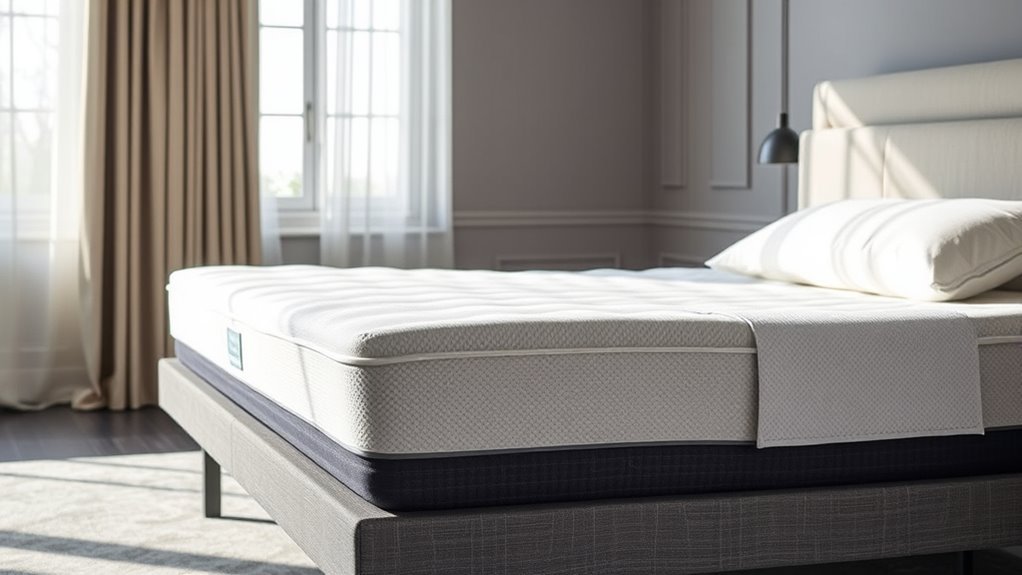
When choosing a mattress for your adjustable bed, foam mattresses stand out because they flex easily to match your bed’s movements. They’re super adaptable and really comfy.
Hybrid mattresses combine support and flexibility, making them another solid option. So, if you want a bit of both worlds, these might be the way to go.
However, traditional innerspring mattresses usually don’t work well unless they’re specially designed for adjustable bases. It’s best to check before you buy!
Foam Mattress Flexibility
Because adjustable bases require mattresses that can bend without damage, memory foam and latex options work best for you. These foam mattresses offer superior flexibility, allowing smooth mattress bending that matches the adjustable base’s movements.
Memory foam’s multiple foam layers provide excellent pressure relief, adapting to your body while maintaining bed compatibility. Hybrid mattresses with individually wrapped coils and foam layers also support flexibility, combining coil support with foam’s adaptability.
However, innerspring models with interconnected coils often resist bending, limiting their use with adjustable bases. To guarantee ideal mattress bending and comfort, aim for foam mattresses between 8 to 12 inches thick.
This thickness strikes the right balance, enhancing flexibility without compromising support, so your adjustable base and mattress work together seamlessly for a restful night.
Hybrid Mattress Advantages
Foam mattresses offer excellent flexibility for adjustable bases, but hybrid mattresses bring the best of both worlds by combining supportive coils with adaptable foam layers. When you choose a hybrid mattress for use with adjustable bases, you get the perfect balance of support and flexibility.
The flexible coils in hybrid mattresses bend easily with the bed’s movements, preventing gaps and ensuring comfort. Their durable design withstands repeated adjustments without damage, making them reliable mattresses for adjustable beds.
To ensure compatibility, look for hybrids with individually wrapped coil systems, reinforced edges, and a thickness between 10-12 inches. This combination of coil systems and foam layers delivers superior comfort, making hybrid mattresses an excellent choice if you want a mattress that works seamlessly with your adjustable base.
Innerspring Mattress Limitations
Although innerspring mattresses have been popular for years, they often don’t work well with adjustable bases due to their rigid coil structures. Most standard innerspring mattresses feature interconnected coil systems with a rigid internal structure, limiting their flexibility and compatibility with adjustable bed frames.
Using these mattresses on adjustable bases can cause coil stress, leading to early wear or damage. However, innerspring mattresses with individually wrapped coils may work if designed specifically for flexibility.
Keep in mind:
- Traditional coil systems lack flexibility needed for adjustable bed frames
- Rigid internal structure risks damage and early wear
- Individually wrapped coils improve contouring and compatibility
- Manufacturers rarely recommend standard innerspring mattresses for adjustable bases unless specially designed
Why Innerspring Mattresses May Not Be Ideal for Adjustable Bases
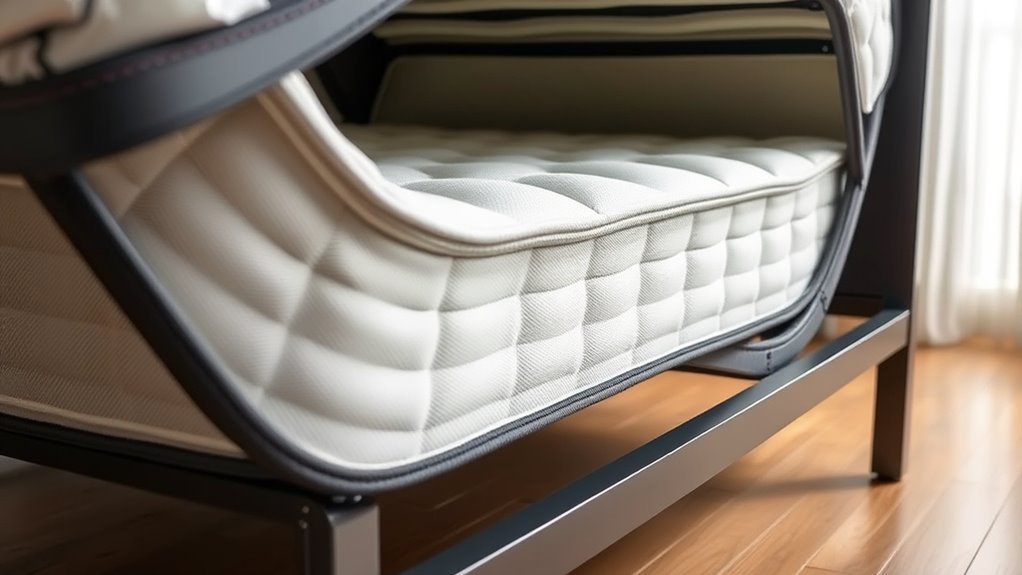
When you try to use an innerspring mattress with an adjustable base, you’ll often run into problems because the interconnected coils resist bending and flexing. These traditional coil systems lack the flexibility needed to conform smoothly to the adjustable bed’s curves.
As a result, the mattress may warp, crease, or even sustain damage from repeated adjustments. This incompatibility can lead to gaps, slipping, and premature wear, compromising both durability and comfort.
Additionally, using an innerspring mattress on an adjustable base can void your warranty, leaving you unprotected against potential failures. So, if you want your mattress to work well with an adjustable bed, innerspring models generally aren’t the best choice.
Their rigid internal structure and limited flexibility just don’t play well with adjustable bases. It’s better to look for mattresses designed to bend and flex more easily.
The Importance of Mattress Flexibility and Durability
If you want your mattress to work well with an adjustable base, it needs to bend and flex without losing shape or comfort. Mattress flexibility and durability are key to ensuring your bed adjusts smoothly while providing lasting support.
Memory foam and latex excel here, thanks to their flexible materials and superior construction. When choosing a mattress, consider materials that offer high resistance to wear and tear, and construction designed to maintain support during bending.
Memory foam and latex provide flexibility and durability, ensuring support and comfort when bending with adjustable bases.
Also, look for mattress flexibility to conform to base movements without damage, plus durability to withstand frequent adjustments over time. Avoid rigid innerspring mattresses, as their coils limit flexibility and reduce durability.
Selecting the right thickness also influences performance, but flexibility and durable materials remain the foundation for a mattress that truly complements adjustable bases. So, keep these points in mind to get the best sleep experience!
How Mattress Thickness Affects Adjustable Base Performance
Because mattress thickness directly impacts how well your adjustable base performs, choosing the right height is essential. Mattresses between 8 to 12 inches thick offer the ideal balance of support and flexibility, ensuring your adjustable bed frame bends properly without causing bridging issues.
If your mattress height exceeds 14 inches, it may reduce adjustable base performance by hindering proper bending and movement. This can potentially damage the frame.
On the other hand, mattresses thinner than 8 inches often lack the necessary flexibility and durability to support position changes comfortably. Selecting a mattress within the recommended thickness range guarantees long-term comfort and helps maintain your adjustable base’s functionality.
Benefits of Memory Foam and Latex Mattresses on Adjustable Bases
You’ll find memory foam mattresses bend easily with your adjustable base, providing smooth flexibility without damage. They really move with you, making those position changes feel natural and comfortable.
Latex mattresses stand out for their durability, keeping their shape even with frequent position changes. They’re tough and resilient, so you don’t have to worry about wear and tear.
Together, they offer reliable comfort and support that adapts perfectly to your bed’s movements. It’s like having a mattress that understands exactly what you need, every time you adjust.
Flexibility of Memory Foam
When you pair an adjustable base with a memory foam mattress, you get a combination that moves seamlessly together. Memory foam’s flexibility and moldable nature allow it to conform perfectly to every adjustment without damage.
Its compression and resilience mean it absorbs movement smoothly, making position changes effortless. You’ll appreciate how well memory foam maintains shape retention over time, ensuring long-lasting support.
Key benefits include:
- Superior flexibility that adapts to adjustable bases’ contours
- Moldable structure enabling close conformity for comfort
- Excellent movement absorption reducing strain on mattress and base
- Long-lasting shape retention preserving mattress integrity through repeated use
This adaptability makes memory foam an ideal match for adjustable bases. It really enhances your sleep experience through consistent comfort and durability.
Latex Durability Benefits
While memory foam offers excellent flexibility, latex mattresses bring impressive durability to adjustable bases that you’ll appreciate over time. Thanks to their resilient, elastic properties, latex mattresses conform smoothly to every adjustable position, providing consistent support and pressure relief.
You’ll notice how their shape retention prevents sagging or indentations, even with frequent adjustments, ensuring optimal spinal alignment. This durability translates into remarkable longevity, often lasting 15-20 years without losing performance.
Plus, latex’s natural motion absorption minimizes disturbances if you share the bed. Its breathable, responsive structure enhances comfort across various positions, especially when paired with cooling features.
Choosing latex mattresses for your adjustable base means investing in a mattress that combines durability, support, and adaptability seamlessly. It’s a choice that gives you years of restful, comfortable sleep.
Hybrid Mattresses: Combining Support and Flexibility
Because hybrid mattresses blend foam layers with pocketed coil springs, they offer the perfect balance of support and flexibility for adjustable bases. When you choose a hybrid with individually wrapped coils, the mattress bends easily without harming its structure.
Hybrid mattresses with individually wrapped coils flex effortlessly, providing ideal support and flexibility for adjustable bases.
The foam layers, like memory foam or latex, add conforming comfort and pressure relief while allowing smooth adjustments. However, not all hybrids are compatible; those with interconnected coils or rigid bases may resist bending and risk damage.
To guarantee ideal durability and compatibility, look for hybrid mattresses that feature flexible pocketed coil springs and high-quality foam layers for conforming support. Also, make sure they use pressure-relieving materials and have designs specifically made for adjustable bases.
This combination gives you reliable support and flexibility every time you adjust your bed. It’s all about getting comfort without sacrificing durability or function.
Mattress Warranty Considerations for Adjustable Bed Compatibility
Although adjustable bases enhance comfort, failing to verify mattress compatibility can void your warranty. Many mattress warranties become void if you use a mattress on an incompatible adjustable base.
Manufacturers usually specify which mattress types ensure adjustable bed compatibility and maintain warranty coverage. Using mattresses not recommended for adjustable bases may cause mattress damage like sagging or tearing, leading to warranty exclusions.
To avoid having your warranty void, carefully review warranty terms before pairing your mattress with an adjustable base. Always select compatible mattresses explicitly designed or verified for adjustable bases, especially if you consider modifications.
How Body Type and Sleeping Position Influence Mattress Choice
Choosing the right mattress for your adjustable base goes beyond compatibility and warranty concerns. Your body type and sleeping position play a pivotal role in mattress choice, especially when considering support features and pressure relief.
Different mattress materials and firmness levels cater to varied support needs. For example, heavier individuals (over 230 lbs) often need firmer foam mattresses for better support on adjustable bases.
Heavier individuals benefit from firmer foam mattresses to ensure optimal support on adjustable bases.
Side sleepers benefit from pressure-relieving mattresses like memory foam or hybrid models that cushion hips and shoulders. Meanwhile, back sleepers usually prefer medium-firm mattresses that maintain spinal alignment across multiple sleeping positions.
Stomach sleepers require firmer mattresses to prevent sinking and sustain proper neck and back posture during adjustments. So, understanding how your body type and sleeping positions affect support can really help you pick the ideal mattress for your adjustable base.
Tips for Choosing the Perfect Mattress for Your Adjustable Base
When selecting a mattress for your adjustable base, prioritize materials that flex easily to prevent damage and maximize comfort. Memory foam and latex are excellent choices because they adapt smoothly to the adjustable frame’s movements.
Hybrid mattresses also work well, as their individually wrapped coils offer both support and comfort while maintaining flexibility. Avoid traditional innerspring mattresses unless they’re specifically designed for adjustable bases use, since rigid materials must bend without harm.
Confirm your mattress for an adjustable base is between 8-12 inches thick to optimize pressure relief and durability. Always check the manufacturer’s compatibility ratings before placing a mattress on an adjustable frame.
Following these tips helps you find the perfect mattress for an adjustable, balancing support, comfort, and long-lasting performance. It’s all about making sure your mattress moves with you and keeps you comfy night after night.
Frequently Asked Questions
Can I Use My Sleep Number Base With a Different Mattress?
You can use a different mattress on your Sleep Number base if it’s flexible, fits size and thickness guidelines, and supports adjustable positions.
Otherwise, you risk reduced comfort, function, or voiding your warranty. It’s really important to check these details before making a switch.
Are Adjustable Beds Easy to Assemble?
Yes, adjustable beds are easy to assemble. You’ll usually spend under 30 minutes using basic tools.
Most come with clear instructions or videos, and many parts snap or bolt together. So, you can set it up yourself without much hassle.
What Are the Disadvantages of an Adjustable Bed?
Imagine your peaceful night disrupted—adjustable beds can cause discomfort, pinched nerves, and annoying noises.
You might face mattress wear, electrical malfunctions, or voided warranties if compatibility isn’t perfect, turning comfort into frustration.
Does a Sleep Number Bed Need a Special Frame?
Yes, your Sleep Number bed usually needs a special frame, especially their FlexFit bases designed for perfect support and flexibility.
Using non-Sleep Number frames might hurt adjustability, support, and even void your warranty, so check first. It’s always best to stick with what they recommend to keep your bed working great.
Conclusion
Choosing a compatible mattress for your adjustable base calls for careful consideration. Focus on flexibility, firmness, and function to find the perfect fit. Avoid awkward innersprings and opt for materials that move smoothly with your base.
Remember, mattress thickness, type, and durability dramatically dictate comfort. By blending body type, sleeping style, and warranty wisdom, you’ll discover a dreamy, durable duo that delivers delightful nights and dynamic days.
Don’t settle—select smart and sleep soundly! When picking a mattress for your adjustable base, think about how well it bends and adjusts without losing support. Memory foam, latex, and hybrid mattresses usually work best because they’re flexible and comfortable.
Keep in mind that the right mattress thickness and firmness can make a huge difference in how well your adjustable base performs. So, take your time choosing a mattress that not only fits your base but also suits your sleeping habits and comfort preferences. This way, you get the most out of your adjustable base and enjoy restful, rejuvenating sleep every night.