How You Can Get Rid of Carpet Moths Step by Step
To get rid of carpet moths effectively, start by vacuuming thoroughly, especially around edges and hidden spots. Don’t forget to seal and dispose of the vacuum bag right away to prevent any larvae from escaping.
Next, freeze small infested items for 72 hours to kill the moths and their eggs. This step is super important if you want to stop the problem from spreading further.
After that, apply moth sprays carefully on affected areas. You might need to repeat this process to make sure all the moths are gone. Be sure to follow the instructions on the spray for the best results.
Store your textiles in airtight containers to keep moths out. Also, try to reduce indoor humidity below 50% because carpet moths love moist environments.
Using natural deterrents like cedarwood or lavender can help keep moths at bay too. If the infestation persists or spreads, it might be time to call in professional help.
Lastly, consider protecting your carpets long term with proper cleaning and maintenance. This way, you can prevent future moth problems and keep your home fresh.
Key Takeaways
- Thoroughly vacuum carpets, edges, and hidden areas. Then seal and dispose of vacuum contents immediately to remove larvae and eggs.
- Freeze small infested items in sealed bags at 0°F for 72 hours. This will kill larvae and eggs effectively.
- Apply moth sprays evenly, following instructions carefully. Reapply after a few weeks if moth activity continues.
- If the infestation persists, affects multiple rooms, or damages valuable wool carpets, seek professional treatment.
- For long-term prevention, maintain regular vacuuming and get professional cleaning every 6-12 months. Also, store textiles in airtight containers to keep moths away.
Understanding Carpet Moths and Their Lifecycle
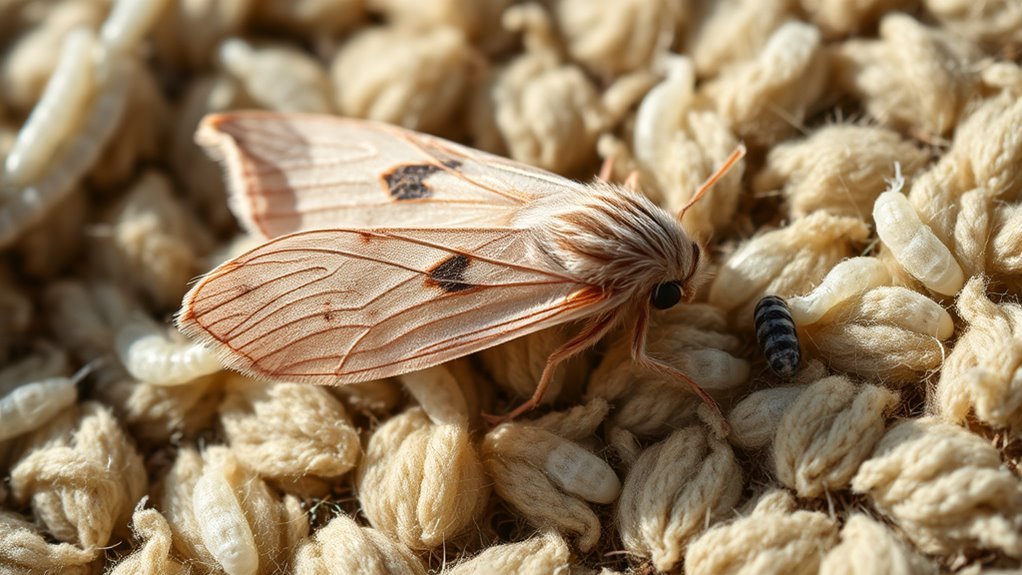
Before you can tackle a carpet moth problem, it helps to understand their lifecycle. Carpet moths, especially the common clothes moth, lay eggs directly on carpets, clothing, and other natural fibers.
These eggs hatch into larvae within 4 to 10 days. It’s the larvae you need to watch out for—they’re the ones causing damage by feeding on keratin-rich materials in your fabrics.
Larvae hatch in 4 to 10 days and cause damage by feeding on keratin-rich fabrics.
The larval stage can last anywhere from 2 to 30 months, depending on temperature and humidity. Adult moths are small, about half an inch long, and don’t feed or harm your items.
Knowing this lifecycle helps you target the vulnerable larvae stage effectively, which is key to preventing and eliminating infestations before they spread further. So, focusing on larvae is really the way to go!
Identifying Signs of a Carpet Moth Infestation

You’ll want to check your carpet for irregular holes and frayed edges that signal damage. Keep an eye out for small, silvery moths fluttering nearby, especially in the evening.
Don’t forget to look for tiny silk threads or larvae crawling around, as these are clear signs of moth activity. It’s these little clues that can help you catch an infestation early on.
Spotting Carpet Damage
When you notice irregular holes, fraying, or thinning in your carpet fibers—especially along edges and near skirting boards—it’s a strong sign that carpet moths might be damaging your floor. Check closely for small silken tunnels or casings within the carpet pile, as larvae often leave these behind.
You might also spot shed skins, larvae, or even adult moths around the affected areas. Don’t ignore any musty or dusty odors, which can indicate moth larvae and their webbing are present.
Pay special attention to stored or seldom-used carpets, inspecting them thoroughly for signs like eggs, larvae, or webbing. Catching these indicators early is essential for controlling a moth infestation before it spreads and causes more damage.
Noticing Moth Activity
Noticing physical damage to your carpet is just one part of identifying a moth infestation. You should also look for small, silvery or brown moths fluttering around carpets, especially at dusk or night.
Check along baseboards, under furniture, and in hidden carpet creases for tiny silk cocoons or webbing. If you spot unexplained holes or fraying in wool or natural fiber carpets, that’s a sign larvae have been feeding.
Keep an eye out for tiny larvae resembling caterpillars moving within the carpet fibers or along edges. Additionally, detect any musty or mothball-like odor near affected areas, as it often signals moth activity.
Effective DIY Methods to Eliminate Carpet Moths
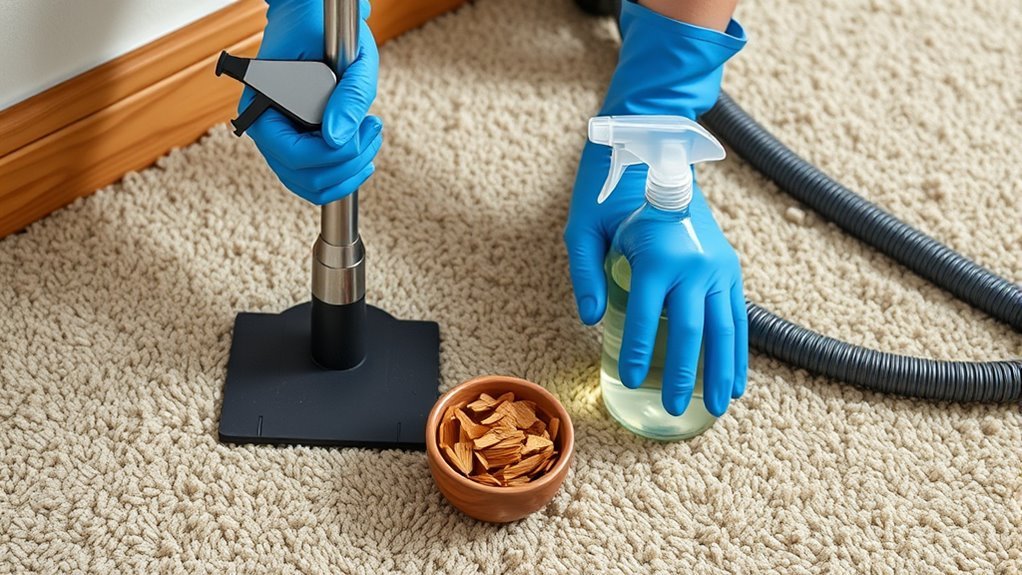
You’ll want to start by vacuuming thoroughly and sealing the vacuum contents to keep moths from coming back. For smaller items, freezing them for at least 48 hours can kill all stages of moths.
Finally, applying moth sprays carefully to affected areas helps eliminate any remaining pests. It’s a good idea to be cautious with sprays, making sure to follow the instructions closely. This way, you can effectively get rid of those pesky carpet moths without any hassle.
Vacuuming and Disposal
Although carpet moths can be elusive, vacuuming thoroughly across all affected carpets, rugs, and upholstery can remove eggs, larvae, and adults effectively. Focus on creases, edges, under furniture, and hidden spots where moths hide.
Use a crevice tool attachment to reach deep folds and baseboards. After vacuuming, empty vacuum contents immediately into a sealed plastic bag to prevent reinfestation.
Keep vacuuming weekly during infestation to break the moth lifecycle.
| Task | Tips |
|---|---|
| Vacuuming areas | Target edges, creases, under furniture |
| Tools to use | Crevice tool attachment |
| Disposal of vacuum contents | Seal contents in plastic bag immediately |
This routine disrupts moth development and protects your home.
Freezing Small Items
Vacuuming can remove many carpet moths, but small items like cushions or clothing often need extra care. To effectively kill moth eggs, carpet moth larvae, and adult moths hiding in these undisturbed areas, place infested items in sealed plastic bags and freeze them.
Keep them at 0°F (-18°C) for at least 72 hours to ensure all species of moths and their larvae are eliminated. Use a freezer with a consistent temperature and avoid opening it during this time to maintain effectiveness.
After freezing, thaw the items gradually at room temperature and inspect for any remaining moths and larvae. If you find any, you might want to repeat the process.
It’s a good idea to freeze items periodically if you’re storing them long-term or just want to keep moths from coming back. This method’s a simple, chemical-free way to protect your belongings.
Moth Sprays Application
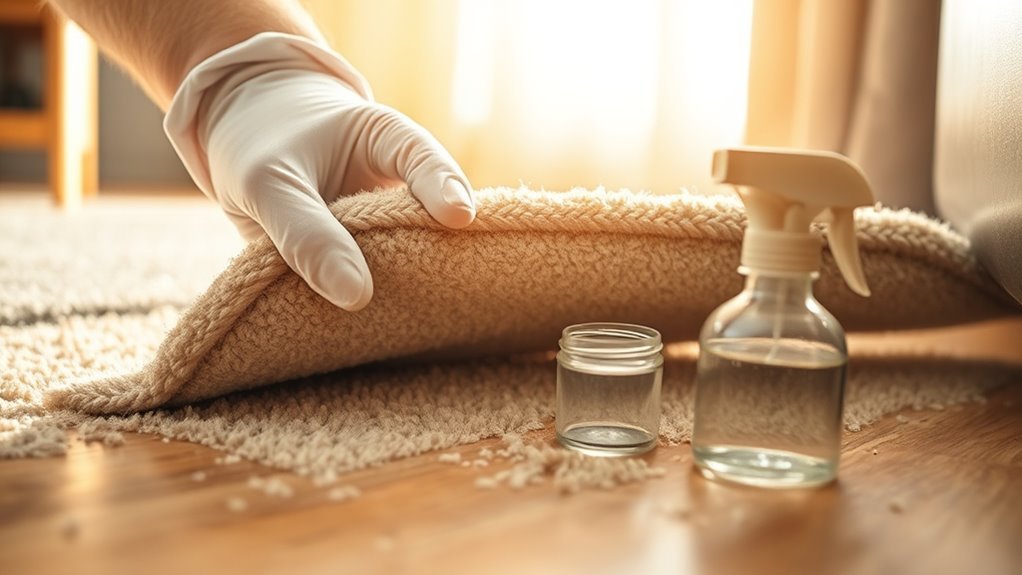
When tackling carpet moths, applying specially formulated moth sprays can quickly reduce their numbers by targeting eggs, larvae, and adults. You’ll want to spray evenly across affected carpets and surrounding areas, paying close attention to edges and crevices.
Always follow the manufacturer’s instructions on distance, amount, and duration to get the best results. Remember to ventilate the room well during and after application to avoid inhaling fumes. If moth activity continues, reapply the spray after a few weeks.
- Thoroughly cover carpet surfaces and baseboards
- Target hidden corners and cracks where larvae hide
- Use sprays effective against all moth life stages
- Keep windows open to disperse chemical fumes
This method guarantees thorough eradication of carpet moths.
When to Seek Professional Carpet Moth Treatment
If you find larvae or moths returning despite your best efforts, it’s a clear sign to call in professionals. Persistent infestations often indicate a deep-rooted problem that DIY methods can’t fully address.
Recurring larvae or moths signal a deeper issue—time to seek professional help for effective control.
When moths keep reappearing after thorough cleaning and repeated treatments, expert intervention becomes necessary. Professional services are especially important if you have high-value or wool-based carpets needing precise insecticide application.
Also, if the infestation spreads across multiple rooms or covers large areas, specialists can ensure thorough eradication. Don’t wait if you notice ongoing damage or if home remedies fail to reduce moth populations.
Bringing in professionals provides long-term, effective solutions that protect your carpets and keep your home moth-free.
The Importance of Post-Treatment Carpet Cleaning
Although treating carpet moths is essential, you’ll need thorough post-treatment cleaning to fully eliminate eggs, larvae, and debris that could cause re-infestation. Cleaning lifts away dirt and dead insects, removing hidden threats and discouraging moths from returning.
It also restores the carpet’s texture and appearance, which can be damaged from moth activity. Regular post-treatment cleaning enhances pest control by clearing out places where larvae might hide.
Whether you opt for professional or DIY cleaning, combining it with treatment improves your chances for lasting success.
Here’s what effective post-treatment cleaning targets:
- Residual eggs and larvae tucked deep in fibers
- Dead insects and organic debris attracting moths
- Dirt buildup that serves as a food source for larvae
- Damaged fibers needing restoration to prevent further harm
Long-Term Strategies to Prevent Carpet Moth Recurrence
To keep carpet moths from returning, you need to adopt consistent long-term habits that target their life cycle and habitat. Schedule professional carpet cleaning every 6 to 12 months to eliminate eggs, larvae, and residues.
Regularly vacuum carpets, baseboards, and hidden areas to disrupt larvae before they hatch. Store clothes and textiles in airtight containers or sealed garment bags to block moth access.
Maintain indoor humidity below 50%, as moths thrive in moist environments. You can also use natural deterrents like cedarwood oil or lavender sachets in storage spaces to repel moths and inhibit their development.
Frequently Asked Questions
How to Rid of Carpet Moths?
You should vacuum thoroughly, targeting edges and crevices, then seal and discard vacuum contents.
Apply moth-specific insecticides carefully, freeze small items, and maintain cleanliness and low humidity to prevent carpet moths from returning.
What Chemical Kills Moth Larvae?
Chemicals like permethrin kill moth larvae like a lightning strike—fast and effective. You can also use pyrethrin sprays or insect growth regulators to stop their growth.
Diatomaceous earth works too, dehydrating larvae safely. It’s a great option if you prefer something less harsh.
How Do I Get Rid of Moths in My Wool Rug?
You should vacuum your wool rug thoroughly. This helps remove any moth eggs and larvae hiding in the fibers.
For small sections, freezing them can kill off those pesky larvae. Just make sure the rug is dry before you freeze it.
Next, try applying wool-safe repellents like cedarwood oil. It’s a natural way to keep moths away without damaging your rug.
When it comes to cleaning, be gentle and use a mild detergent. After cleaning, drying your rug in sunlight can help deter moths too.
If the infestation just won’t quit, it might be time to consider professional treatment. They have special tools and products to get rid of moths for good.
How Can I Get Rid of Moths in My House?
You’ll want to starve those moths out like unwelcome guests—vacuum every corner, wash or freeze infested fabrics, use moth repellents, and seal your treasures tight.
Stay vigilant, or they’ll keep throwing their tiny parties.
Conclusion
Now that you know how to tackle carpet moths step by step, imagine Sarah, who saved her grandmother’s heirloom rug by acting quickly with DIY treatments and thorough cleaning.
You can do the same—spot signs early, treat effectively, and keep your carpets moth-free long term. Don’t wait until damage shows up; taking action now guarantees your home stays fresh and your carpets last for years to come.
By following these simple carpet moth removal steps, you protect your investment and maintain a clean, healthy living space. Regular vacuuming, prompt treatment, and preventive measures make all the difference in keeping carpet moths away.
So start today—inspect your carpets, use natural or chemical treatments as needed, and enjoy a moth-free home that looks and feels great for years!