How to Do Get Bleach Out of Carpet
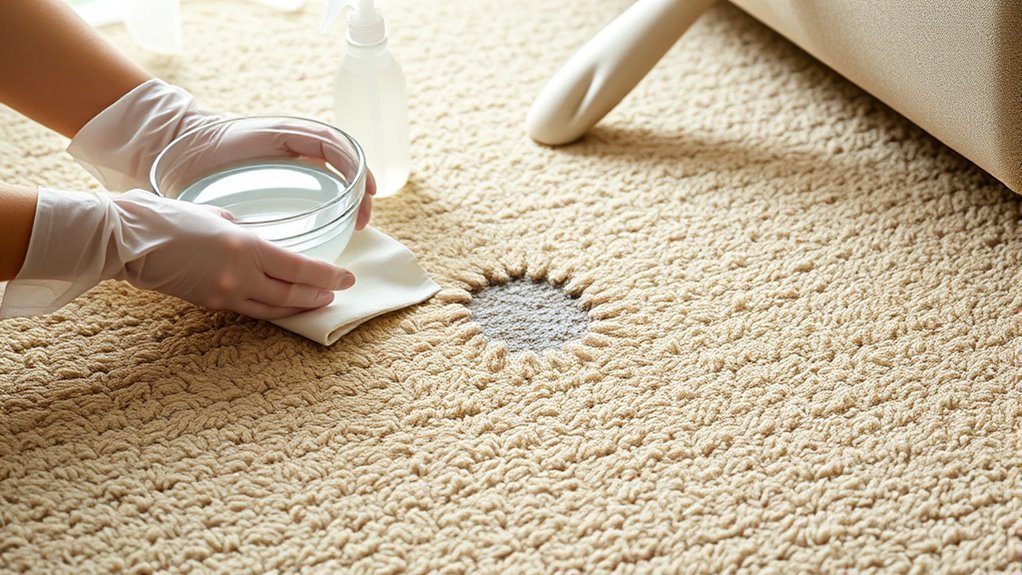
You can’t completely remove bleach from carpet, but acting fast helps minimize damage. Bleach stains can be tricky, so it’s important to address the spill right away. Blot the spill with water and towels—don’t rub—to absorb excess bleach.
Next, gently apply a solution of mild dish soap and warm water to the stain. Rinse the area and blot it dry carefully.
To prevent further discoloration, neutralize the bleach by applying diluted white vinegar.
If the stain is large or the damage goes deep, DIY methods might not be enough. In those cases, professional repair could be your best bet.
Keep moving forward to discover effective restoration and care tips that can help bring your carpet back to life.
Key Takeaways
- Immediately blot excess bleach with water and paper towels. Avoid scrubbing to prevent spreading the damage.
- Gently clean the stain using a mild dish soap solution. Then rinse with cold water and blot dry.
- Neutralize bleach residue by applying a diluted white vinegar solution. Blot, rinse, and dry the area afterward.
- Use diluted fabric paint or patch replacement only for small stains. Larger damage usually requires professional repair.
- If discoloration persists or the damage covers a large, visible area, contact carpet cleaning professionals promptly. They can help restore your carpet properly.
Understanding the Effects of Bleach on Carpet
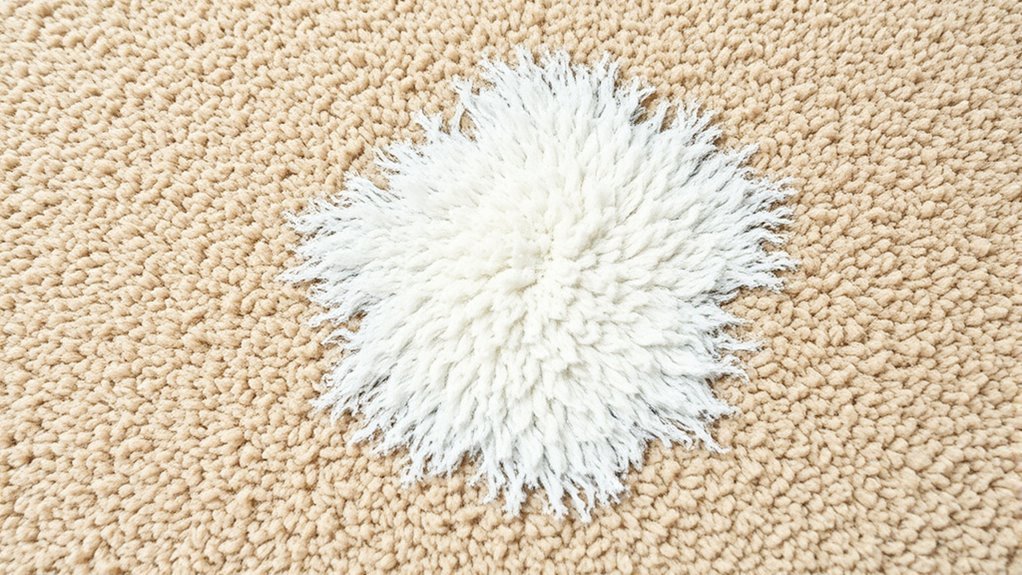
While bleach might seem like a quick fix for carpet stains, it actually causes permanent discoloration by breaking down the dye molecules in the fibers. When bleach stains your carpet, it chemically destroys the carpet fibers’ original pigment, leaving a lightened or white patch that you can’t reverse.
Bleach causes irreversible carpet discoloration by destroying dye molecules, leaving permanent light or white patches.
This damage isn’t just cosmetic—bleach’s corrosive nature can weaken the carpet backing and underlay, potentially causing structural issues over time. The severity depends on the concentration of bleach and the type of carpet fibers involved.
Even with immediate action, once bleach reacts with the fibers, the discoloration remains. That’s why professional cleaning can help manage the damage but can’t restore the original color.
Understanding these effects helps you handle bleach spills more effectively. So, if bleach ever gets on your carpet, don’t panic—but don’t expect a miracle fix either.
Immediate Steps to Take After a Bleach Spill
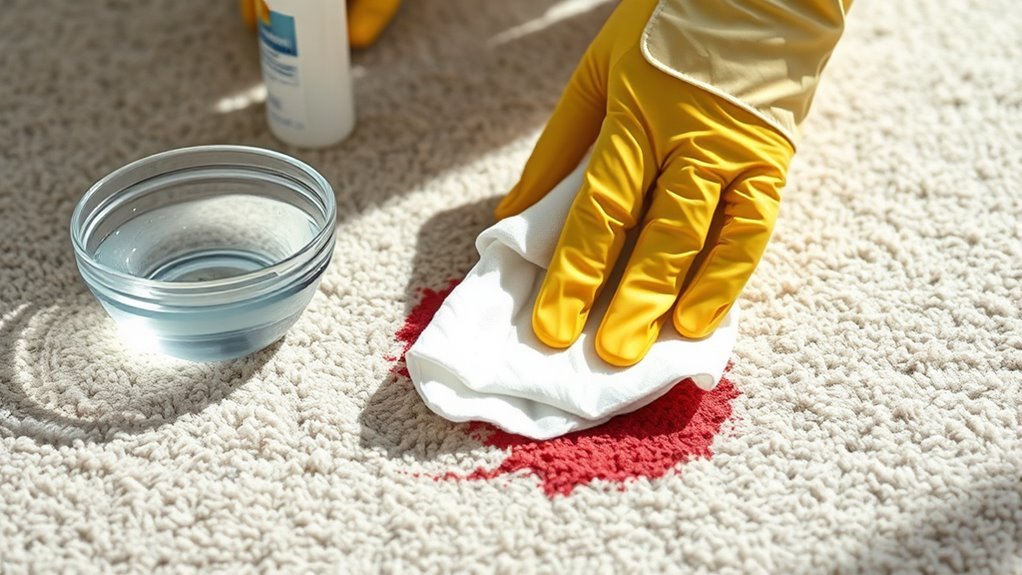
As soon as bleach touches your carpet, you need to act quickly to minimize damage. Start by blotting the bleach stain immediately with water and paper towels to absorb excess bleach and prevent further harm.
Avoid scrubbing or rubbing the area, as this can spread the bleach and worsen discoloration. Next, prepare a mild solution of ¼ teaspoon dish soap mixed with one cup of warm water, then gently pour it over the spot.
Let it sit for about five minutes to neutralize the bleach. Rinse with cold water and blot dry using a clean towel to remove residual bleach. These immediate steps are vital for effective bleach stain removal and spot removal.
If the stain is really bad, you might want to consider contacting a professional carpet cleaner to help restore your carpet.
Using Dish Soap and Water to Treat Bleach Stains
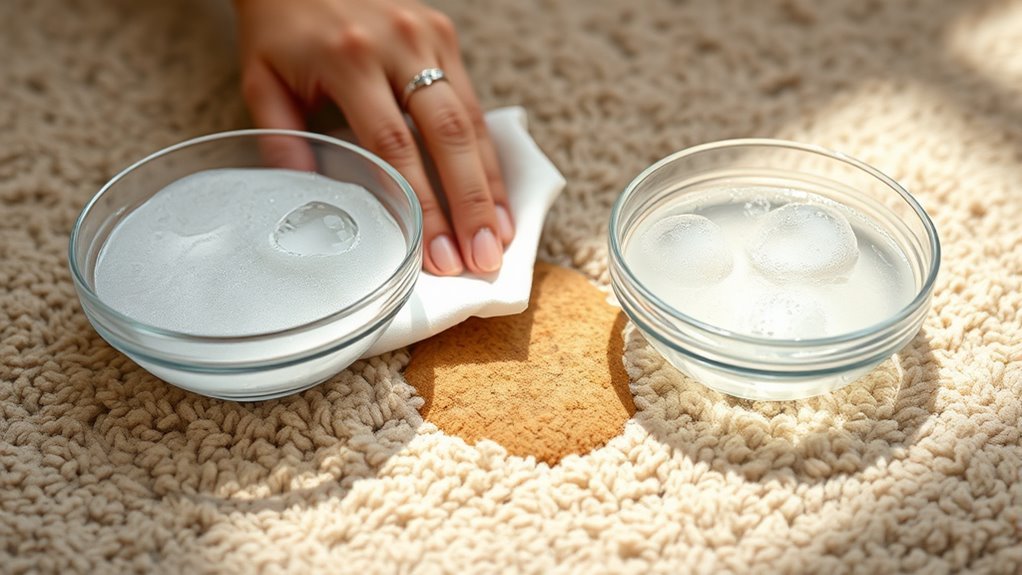
Start by mixing a quarter teaspoon of mild dish soap with a cup of warm water to create your cleaning solution. Use a damp cloth to gently apply the mixture onto the bleach stain, blotting from the center outward to avoid spreading it.
Once the stain fades, rinse with cold water and blot dry to remove any soap residue and protect your carpet fibers. It’s pretty simple, right? Just take your time and be gentle with the fabric.
Soap Solution Preparation
Because bleach can seriously damage carpet fibers, you’ll want to act quickly using a mild soap solution to treat the stain. Start by mixing ¼ teaspoon of mild dish soap with 1 cup of warm water to create a gentle cleaning solution.
Next, dampen a clean cloth or sponge with the soap solution, making sure it’s not overly soaked to avoid spreading the bleach. Carefully blot the stain, working from the center outward, which helps prevent the discoloration from spreading further.
Gently press and hold the cloth on the stained area to lift the bleach without damaging the fibers. Finally, rinse the treated area with cold water and blot it dry to remove any soap residue and prevent new stains from forming.
Application Techniques
Once you’ve prepared your mild soap solution, you’ll want to handle the bleach stain carefully to prevent further damage. First, blot the affected area gently with water and a paper towel, working from the center outward to avoid spreading the stain.
Next, apply the soapy water to the affected area using a clean cloth or sponge, pressing softly without rubbing. Let the solution sit for about 5 minutes to help loosen the stain and damaged fibers.
Finally, rinse with cold water before blotting dry with a clean towel. It’s important to be gentle throughout the process to keep the fabric safe.
| Step | Action |
|---|---|
| 1 | Blot with water, center outward |
| 2 | Apply soapy solution gently |
| 3 | Let sit for 5 minutes |
| 4 | Rinse with cold water |
| 5 | Blot dry with a clean towel |
Blotting and Drying
Although bleach stains can be stubborn, you can minimize damage by immediately blotting the area with a clean, damp cloth to absorb excess liquid without rubbing.
Next, mix ¼ teaspoon of mild dish soap with one cup of warm water. Gently apply this soapy solution to the stain using a sponge or cloth, working from the center outward to avoid spreading.
After about five minutes, blot the area with a dry towel to remove excess moisture. Then, rinse the treated spot with cold water and blot dry again to prevent soap residue from attracting dirt or causing further discoloration.
Applying a White Vinegar Solution for Bleach Neutralization
Start by mixing 4 cups of warm water with 2 tablespoons of white vinegar to create your neutralizing solution. Apply this mixture directly onto the bleach stain and let it sit for about 5 minutes to reduce the damage.
Then gently blot the area to lift the residue before rinsing with cold water. It’s pretty straightforward and helps stop the bleach from causing more harm. Give it a try!
Vinegar Solution Preparation
When you mix 2 tablespoons of white vinegar with 4 cups of warm water, you create a solution that helps neutralize bleach stains on your carpet. This vinegar mixture is essential for effective stain removal and carpet cleaning. It gently treats the affected fibers without causing further damage.
Make sure to use warm water to help the vinegar blend thoroughly. Once prepared, this solution is ready to be applied directly to the bleach-stained area. Preparing the vinegar solution correctly guarantees that you’re using a safe, natural method to combat the discoloration and restore your carpet’s appearance.
Keep this mixture handy as a simple yet powerful tool in your carpet cleaning routine. It’s great for tackling bleach stains efficiently and keeping your carpet looking fresh.
Application and Soaking
Before you begin scrubbing, pour the vinegar and warm water mixture directly onto the bleach stain to neutralize its effects. This application is vital for stopping the bleach from further damaging your carpet fibers.
Once applied, let the solution soak into the affected area for about 5 minutes. This soaking period allows the white vinegar to effectively neutralize the chemical reaction caused by the bleach.
After soaking, gently rub the stained spot with a clean cloth or sponge to help lift the discoloration. Finally, rinse the area with cold water to remove any residual vinegar and blot it dry.
This careful application and soaking process helps minimize lasting damage and prepares your carpet for any additional cleaning steps. Just take your time here, and you’ll see better results.
Techniques for Restoring Carpet Color and Repairing Damage
Although bleach permanently lightens carpet fibers, you can still restore your carpet’s appearance through several effective methods. To remove bleach stains, simple cleaning often isn’t enough, so color restoration typically involves more hands-on approaches.
You might try applying a very diluted acrylic or fabric paint to blend the discoloration with the surrounding fibers. For more extensive damage, carpet repair by cutting out the affected section and replacing it with a matching piece from a closet or hidden area works well.
Gluing this patch into place can effectively conceal bleach spots. These techniques help you handle minor to moderate damage, but keep in mind that professional carpet repair services offer specialized dyeing and patching methods for the best color restoration results on bleached carpets.
When to Call a Professional Carpet Cleaning Service
If you’ve tried home remedies without success or the bleach stain covers a large area, it’s time to call a professional carpet cleaning service. Professionals can better assess and treat extensive discoloration or damage to your carpet fibers.
When DIY methods fail to restore your carpet’s appearance or prevent the stain from worsening, hiring a professional is your best option. They use specialized equipment and dyes to tackle large or deeply embedded bleach stains effectively.
If you’re unsure about the damage extent or how to proceed safely, consulting a professional can prevent further harm. Contact a professional promptly if the bleach spill is recent and affects a significant or highly visible portion of your carpet to improve its look and durability.
Frequently Asked Questions
Will Bleach Ruin Your Carpet?
Yes, bleach will ruin your carpet by permanently stripping its color and damaging fibers. You can’t remove bleach stains with regular cleaning, so you’ll likely need professional dyeing or patching to fix the damage.
It’s a tough situation because once the bleach hits, it’s pretty much game over for that spot. So, it’s best to avoid using bleach on your carpet altogether. If you do get a bleach stain, calling in a pro is usually the only way to make it right.
How to Fix Carpet That Has Been Bleached?
When bleach steals color like a thief in the night, you can’t rewind time. Instead, cut out the faded patch, replace it, or blend with matching dye.
If all fails, hide damage with rugs or furniture. Sometimes that’s the easiest fix!
Can Bleach Stains Be Removed?
You can’t fully remove bleach stains since they destroy the carpet’s color.
You can try masking them with dye or paint, but for a true fix, you’ll need professional re-dyeing or patching to restore your carpet.
Does White Vinegar Bleach Carpet?
No, white vinegar doesn’t bleach carpet. It can help neutralize bleach’s alkalinity and prevent further damage, but it won’t restore color or remove bleach stains.
Use vinegar cautiously to avoid weakening fibers or causing discoloration. So, while it’s handy for some cleanup, it’s not a fix-all for bleach mishaps on your carpet.
Conclusion
Dealing with bleach on your carpet can feel like trying to fix a volcano eruption, but don’t panic! Act quickly with soap, water, and vinegar to neutralize the stain and protect your carpet fibers.
If the damage feels overwhelming, calling a professional can save the day and your flooring. Remember, with the right steps, you can tackle bleach spills and keep your carpet looking great—no disaster is too big to handle!
When you get bleach out of carpet, timing is everything. The sooner you start treating the spot, the better your chances of preventing permanent damage. Use a gentle mixture of soap and water first to blot the area, then apply vinegar to neutralize any remaining bleach.
If the stain persists or the damage is extensive, professional carpet cleaners have specialized treatments to restore your carpet’s appearance. So, don’t stress over bleach accidents—quick action and the right cleaning methods can help you get bleach out of carpet effectively and keep your home looking fresh!