Does an Adjustable Base Ruin Your Mattress?
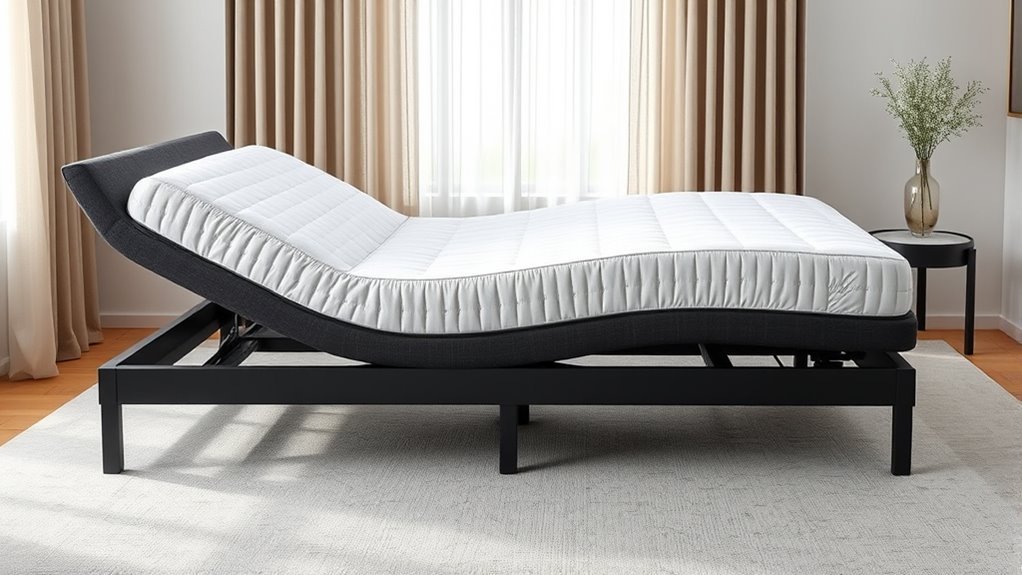
An adjustable base won’t ruin your mattress if you use one designed to flex, like memory foam or hybrid types. These mattresses are made to bend and move with the base, so they stay comfy and intact over time.
Old, rigid innerspring mattresses with stiff borders don’t flex well. They resist bending, which can lead to sagging, tears, or even coil damage.
Plus, mattresses that are too thick or stiff can put extra strain on both the mattress and the adjustable base, shortening their lifespan.
Choosing the right mattress is key. Keep an eye on how your mattress wears down to avoid problems. Keep exploring to discover how mattress choice affects durability and comfort with adjustable bases. It’s all about matching the right mattress with your adjustable base for the best sleep experience.
Key Takeaways
- Adjustable bases can damage rigid innerspring mattresses because these mattresses resist bending. This resistance can lead to coil breakage and fabric tears.
- Mattresses designed for flexibility, like memory foam or hybrids, work well with adjustable bases. They maintain their durability and adapt easily to the base’s movements.
- Using old or stiff mattresses on adjustable bases isn’t a great idea. It can increase sagging, cause support loss, and put extra mechanical strain on the base.
- Thick mattresses over 14 inches make bending harder. This thickness risks damage to both the mattress and the adjustable base mechanisms.
- Regularly inspecting your setup and choosing mattresses that are compatible with adjustable bases is key. This helps ensure long-term comfort, good support, and protects against premature wear.
Mattress Compatibility With Adjustable Bases
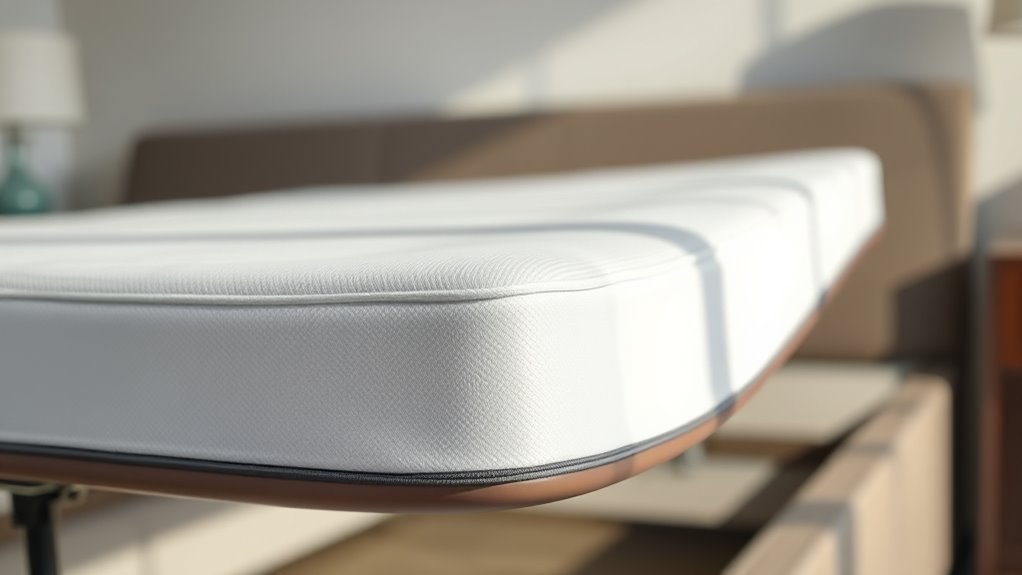
How do you know if your mattress will work with an adjustable base? Mattress compatibility mainly depends on the materials and construction.
Adjustable bases require flexible materials like memory foam, latex, or hybrid mattresses with pocketed coil systems that bend easily. If your mattress has a rigid innerspring coil system with continuous coils and stiff border wires, it’s likely an incompatible mattress that won’t flex properly.
Flexible materials like memory foam or hybrids with pocketed coils work best; rigid innersprings usually don’t flex well.
Most compatible mattresses don’t exceed 14 inches in thickness. This ensures they bend without damage and maintain durability.
Using an incompatible mattress can strain your adjustable base, causing premature wear. So, to protect both your mattress and adjustable base, opt for mattresses explicitly labeled as adjustable bed-friendly.
This guarantees comfort while preserving the functionality and lifespan of your setup.
Ideal Mattress Types for Adjustable Bed Use
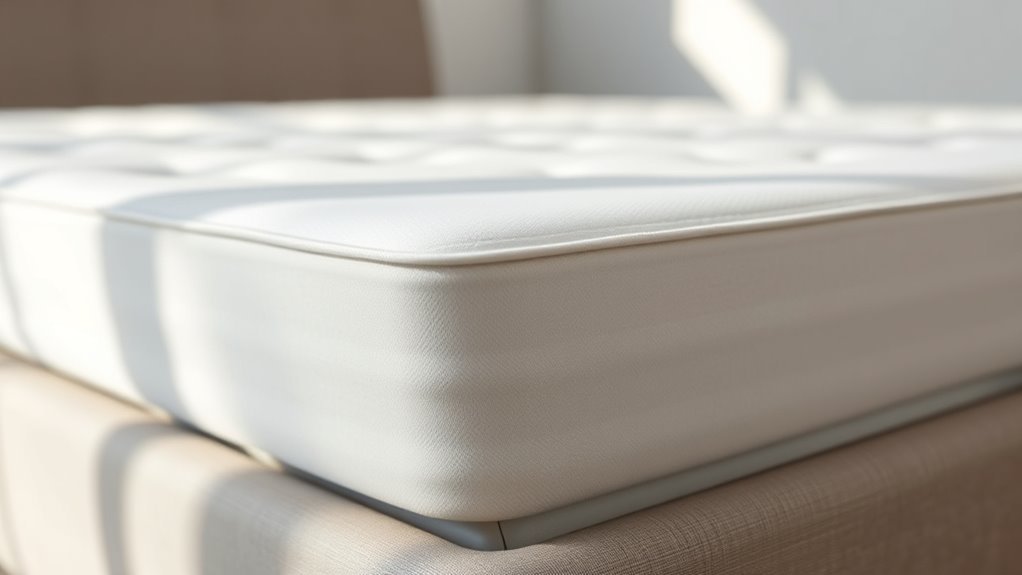
Since adjustable beds require flexibility, you’ll want a mattress that can easily bend without losing support or shape. Foam mattresses and hybrid mattresses are your best bets because their flexible materials adapt smoothly to the bed’s movements.
Look for compatible mattresses featuring pocketed coils or independent coil support systems. These offer excellent mattress support while conforming to adjustments.
Avoid thick mattresses over 14 inches. Excessive mattress thickness can reduce bed frame compatibility and hinder flexibility.
Innerspring mattresses with rigid, continuous coils aren’t ideal because they resist bending. This can potentially damage the mattress or base.
Risks of Using an Old or Incompatible Mattress
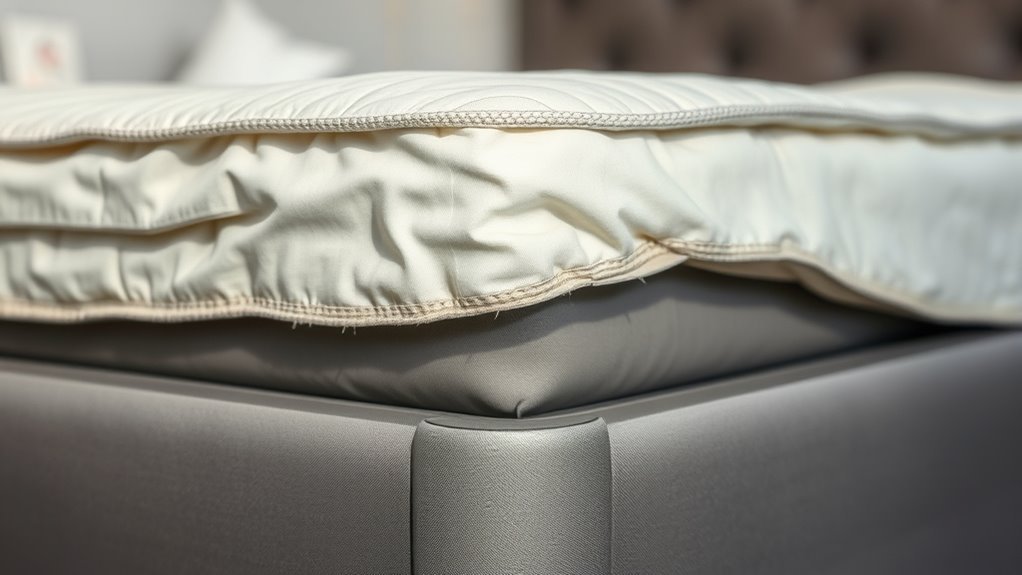
Choosing the right mattress for your adjustable base isn’t just about comfort—it also protects your investment. Using an old or incompatible mattress can lead to rapid wear and tear, compromising durability and causing structural damage.
Inflexible mattresses with rigid innersprings or stiff borders struggle with bending, which results in sagging and support issues. This incompatibility doesn’t just affect the mattress; it can overstress the base’s motor, risking mechanical failure.
Plus, using the wrong mattress may even void your warranty, leaving you unprotected.
Watch out for:
- Increased sagging and uneven support
- Cracks or breaks from bending stiff materials
- Accelerated wear and structural damage
- Motor strain leading to mechanical failure
Making sure your mattress is compatible helps keep both your comfort and the lifespan of your bed in check.
Structural Impact of Adjustable Bases on Mattresses
You need a mattress that’s flexible enough to handle the bending motions of an adjustable base without damaging its structure. Incompatible mattresses with stiff springs or bulky layers can tear, sag, or lose support quickly.
Understanding how mattress construction affects durability can help you avoid premature wear and get the most from your adjustable setup. It’s all about choosing the right materials that move well with the base. That way, your mattress stays comfortable and supportive for longer.
Mattress Flexibility Requirements
How well your mattress bends can make or break the performance of an adjustable base. Mattress flexibility is key for adjustable base compatibility, ensuring smooth bending without damage.
Foam mattresses and hybrids with flexible support layers handle bending well, preserving mattress durability. In contrast, innerspring mattresses with coil support and stiff border wires show high bending resistance, risking mattress wear and tear.
Consider these points for suitable use with adjustable bed frames:
- Flexible foam or latex mattresses adapt easily to changing positions.
- Thick mattresses over 14 inches may strain motors and resist bending.
- Rigid innerspring designs often cause creasing and material fatigue.
- Choosing a mattress designed for adjustable bases extends lifespan and comfort.
Risks of Incompatible Mattresses
Although adjustable bases offer great comfort, pairing them with incompatible mattresses can cause serious structural issues.
Mattresses with rigid springs or stiff border wires resist bending, which leads to coil breakage and mattress damage over time. This bending resistance also strains adjustable bases, increasing the risk of mechanical failure.
Material fatigue speeds up when a mattress can’t flex properly. That causes support issues and might even void your warranty.
| Mattress Feature | Risk with Adjustable Bases |
|---|---|
| Rigid springs | Coil breakage, fabric tearing |
| Stiff border wires | Increased bending resistance |
| Heavy/thick mattress | Motor strain, mechanical failure |
Mattress Construction and Durability
Since adjustable bases flex in multiple positions, mattresses must accommodate this movement without compromising their structure. Your mattress construction plays a vital role in its durability on an adjustable base.
Mattresses with rigid innerspring systems and non-flexible border wires often resist bending, which can lead to structural damage. On the other hand, mattresses designed with flexible materials like foam layers offer better compatibility and resist wear and tear much more effectively.
Consider these factors: innerspring mattresses may suffer coil support breakage due to repeated flexing. All-foam mattresses bend easily, which enhances durability on adjustable bases.
Also, thick, heavy mattresses can strain the base’s motor, potentially reducing the overall lifespan of your setup. Proper mattress construction minimizes resistance to bending and helps prevent premature damage.
Choosing a mattress built specifically for adjustable bases ensures longer-lasting comfort and durability. It’s definitely worth investing in the right materials to keep both your mattress and adjustable base in great shape.
Mattress Thickness and Construction Considerations
You’ll want to choose a mattress between 8 and 14 inches thick to make certain it bends properly with your adjustable base. Focus on flexible materials like all-foam or hybrid designs, which handle movement better than rigid coil systems.
Avoid overly thick or stiff mattresses, as they can strain both the mattress and base over time. So, keeping it flexible and not too bulky is key to getting the most out of your adjustable setup.
Ideal Mattress Thickness
How thick should your mattress be to work best with an adjustable base? The ideal mattress thickness usually falls between 8 and 14 inches, balancing flexibility and support.
Mattresses thicker than 14 inches can limit bending, risking damage to both mattress and base. Thinner mattresses under 8 inches might lack sufficient support and comfort.
To guarantee durability and smooth articulation, consider these factors in mattress construction:
- Choose mattress materials like flexible foam or pocketed coils that adapt well to bending.
- Prioritize support layers that maintain firmness without sacrificing flexibility.
- Avoid excessive thickness that hinders the adjustable base’s movement.
- Ensure mattress construction supports long-term durability alongside flexibility.
Mattress Flexibility and Materials
Although mattress thickness plays a crucial role, the materials and flexibility of your mattress considerably impact its performance on an adjustable base. Foam mattresses and latex mattresses excel in mattress flexibility, bending easily without damage, making them highly compatible with adjustable bases.
Hybrid mattresses, combining pocketed coils and foam layers, provide excellent pressure relief and balance mattress bendability with solid bed frame support. In contrast, traditional innerspring mattresses with rigid coils resist bending, reducing adjustable base compatibility and risking structural damage.
If your mattress is too thick or heavy, it may struggle to flex properly, causing wear over time. Choosing mattress materials designed for flexibility ensures your mattress works seamlessly with your adjustable base, preserving comfort and durability while maximizing support and adjustability.
Maximizing Mattress Longevity With Adjustable Beds
When you pair an adjustable base with a compatible, flexible mattress like memory foam or a hybrid, you help prevent premature wear and extend the mattress’s lifespan.
Choosing mattresses with flexible foam layers or independent coil support reduces mattress wear by bending without damage.
Avoid rigid innerspring mattresses, as stiff border wires can crease or break with movement.
To maximize mattress longevity, focus on proper bed maintenance and regular inspections.
Here’s how you can maintain your adjustable bed frame and mattress:
- Use a flexible mattress designed for adjustable bases
- Avoid thick innerspring mattresses with stiff borders
- Inspect the mattress and base regularly for signs of wear
- Perform routine bed maintenance to support mechanical parts
This care assures your mattress and adjustable base work together for lasting comfort.
Frequently Asked Questions
What Are the Downsides of Using Adjustable Beds?
You might face reduced mattress lifespan, voided warranties, and increased wear if your mattress isn’t flexible enough.
Plus, heavy mattresses can strain the motor, causing potential damage to both the mattress and adjustable base over time.
Who Should Not Use an Adjustable Bed?
Why risk damaging your mattress or comfort?
You shouldn’t use an adjustable bed if you have a stiff, old, or very thick mattress.
Also, if you need a fixed sleep position for health reasons, it’s best to avoid them.
Protect your sleep!
Can You Put a 14 Inch Mattress on an Adjustable Bed?
Yes, you can put a 14-inch mattress on an adjustable bed if it’s flexible and designed for that use.
Just make sure it’s not too stiff, so it bends properly and doesn’t damage the base or mattress.
How Long Should a Mattress Last on an Adjustable Bed?
Imagine Sarah, who uses a memory foam mattress on her adjustable bed—it lasts around 7 to 10 years with proper care.
You’ll get similar durability by choosing flexible mattresses and regularly checking for wear or sagging signs.
Conclusion
Using an adjustable base doesn’t have to ruin your mattress if you choose wisely. Think of your mattress and base like dance partners—you need the right match to move smoothly together without causing wear or damage.
Opt for compatible, flexible mattresses, and keep an eye on thickness and support. By doing this, you’ll maximize comfort and extend your mattress’s life, ensuring your sleep stays as restful as you deserve.
In short, the key to preserving your mattress when using an adjustable base is picking the right type. Memory foam, latex, and hybrid mattresses generally work best. Avoid mattresses that are too firm or rigid, as they may not bend well and can wear out faster.
So, if you want to enjoy the benefits of an adjustable base without ruining your mattress, focus on compatibility and quality. That way, you protect your investment and sleep soundly every night.