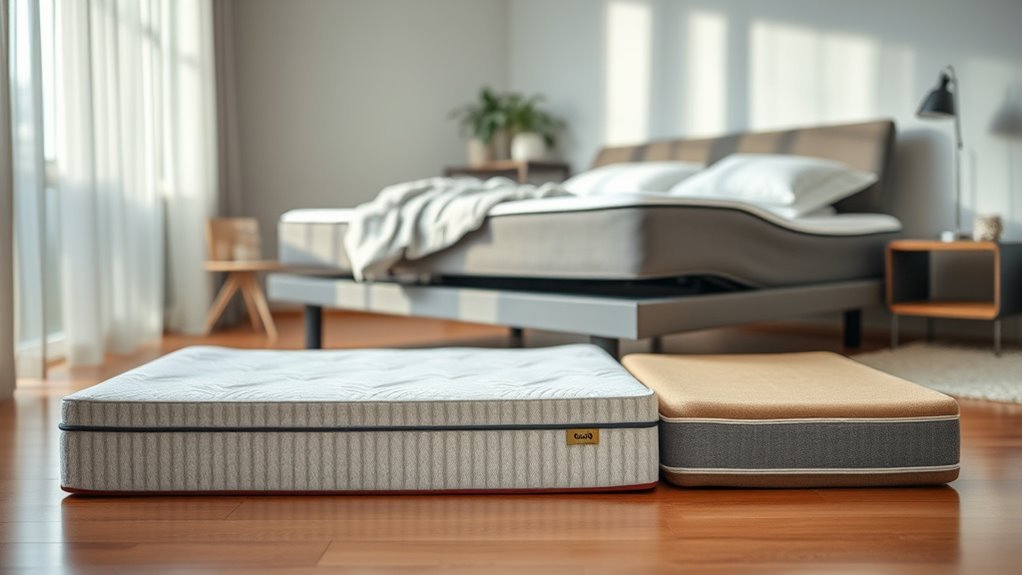
How to Choose Any Mattress Used on Adjustable Beds
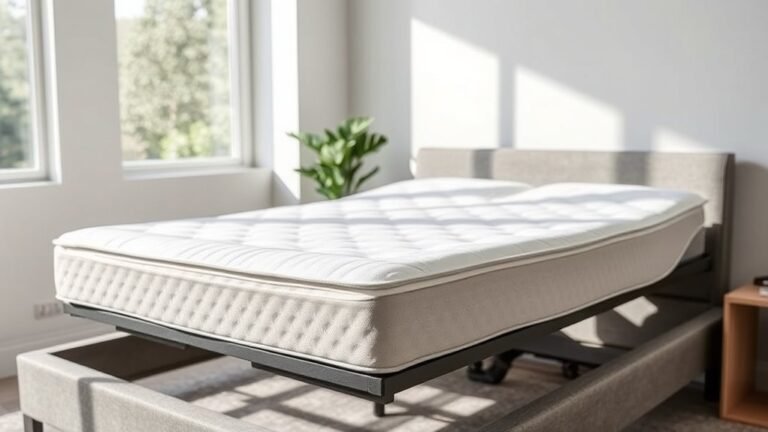
When choosing a mattress for your adjustable bed, it’s important to pick one that bends smoothly without any damage. Materials like memory foam, latex, or a flexible hybrid work best because they adapt easily to the bed’s movements.
Avoid mattresses that are too rigid, such as traditional innerspring or waterbeds, and steer clear of anything thicker than 14 inches.
Matching the firmness to your body weight is key—firmer mattresses suit heavier bodies, while softer ones are better for lighter individuals. This helps ensure you get the right support for a good night’s sleep.
Don’t forget to test the mattress’s bendability and check if it’s compatible with your adjustable bed’s frame.
Finding the right balance not only makes your mattress last longer but also keeps it comfortable. Keep exploring different options to discover the perfect fit and get the most out of your adjustable bed’s benefits.
Key Takeaways
- Choose memory foam, latex, or hybrid mattresses for flexibility and smooth bending with adjustable beds. These materials adapt well to movement, making them perfect for adjustable frames.
- Avoid traditional innerspring, waterbeds, airbeds, and mattresses thicker than 14 inches to prevent damage. These types don’t bend easily and can wear out faster on adjustable bases.
- Match mattress firmness and thickness to your body weight for optimal support and durability. This helps keep you comfortable and extends the mattress lifespan.
- Test mattress flexibility by bending or elevating it in-store. Also, check with the manufacturer to confirm it’s compatible with your adjustable bed.
- Use trial periods and customer reviews to evaluate long-term performance and mattress shape retention. This way, you can be sure it stays comfy over time.
Why Mattress Flexibility and Durability Matter for Adjustable Beds
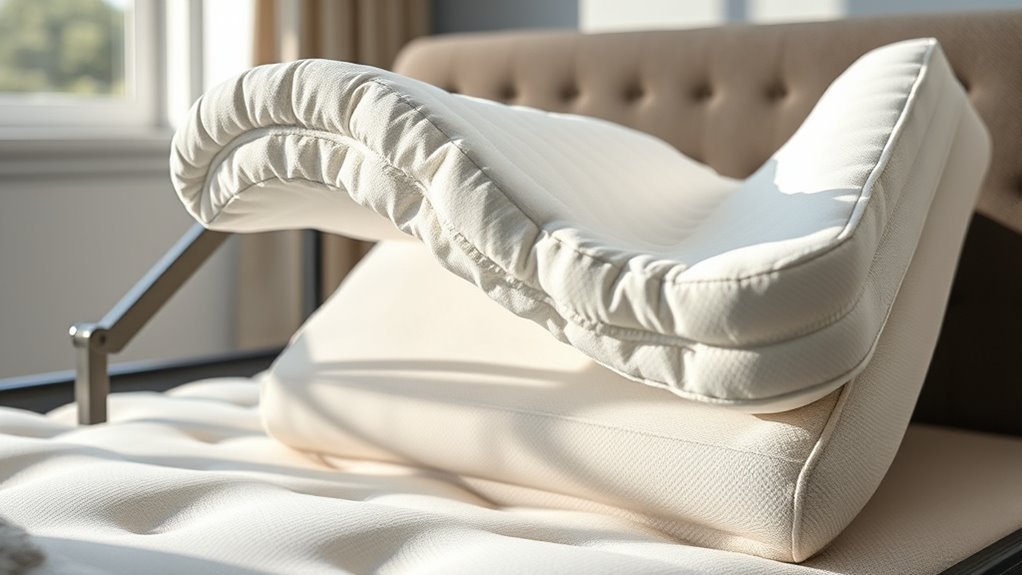
Because adjustable beds move into various positions, your mattress needs to be flexible enough to bend smoothly without causing discomfort or damage. Mattress flexibility is vital to prevent strain on the bed frame and avoid reducing its lifespan.
A flexible mattress ensures smooth movement with adjustable beds, preventing discomfort and extending bed frame lifespan.
Durable materials like high-density foam and quality latex provide excellent support and guarantee shape retention after repeated adjustments. These materials help maintain support longevity, allowing your mattress to respond quickly and return to its original form.
In contrast, traditional innerspring mattresses with rigid coils often lack the necessary coil support for adjustable beds, leading to discomfort and potential damage. Choosing a mattress tested for compatibility with adjustable bases guarantees the right balance of mattress flexibility and durability.
This assures consistent comfort and long-term performance. So, picking the right mattress really makes all the difference!
Matching Mattress Types to Adjustable Beds
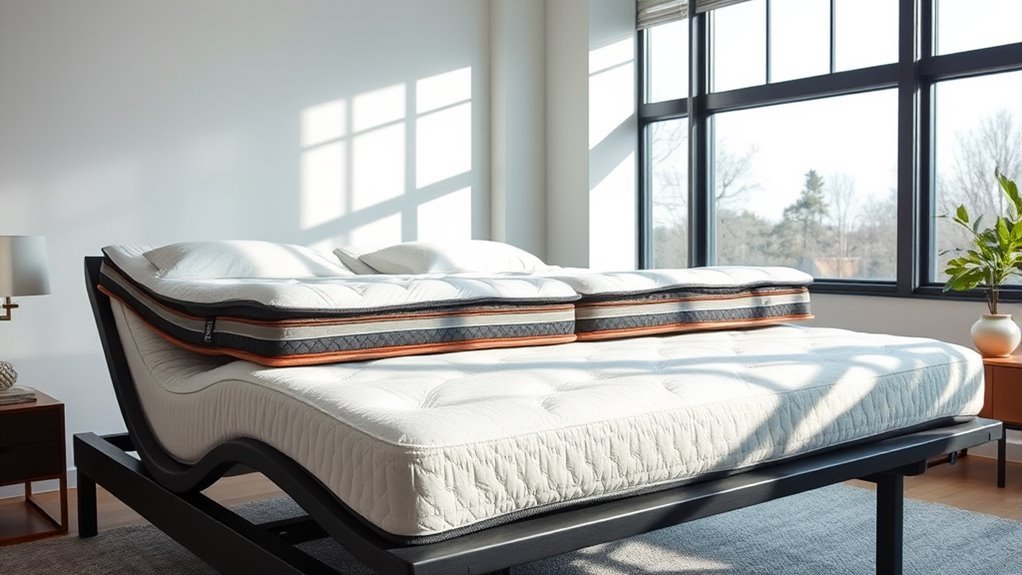
When selecting a mattress for your adjustable bed, you’ll want to focus on materials that can flex easily without losing their shape. Memory foam and latex mattresses offer excellent mattress compatibility because they provide superior mattress flexibility and pressure relief while contouring smoothly to an adjustable bed frame.
Hybrid mattresses can also work well if they have flexible coils designed for independent movement. This enhances coil support without restricting bending.
However, innerspring mattresses with rigid coils often lack the necessary flexibility and may damage both the mattress and frame. So, it’s usually best to avoid those.
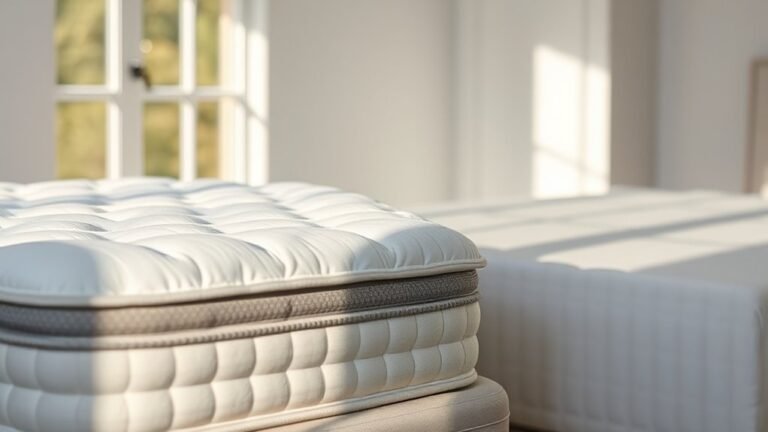
You should prioritize mattresses between 10 to 14 inches thick to guarantee durability and proper bending. Choosing memory foam, latex, or well-constructed hybrid mattresses ensures your adjustable bed performs at its best, providing comfort and long-lasting support.
Mattresses to Avoid for Adjustable Beds
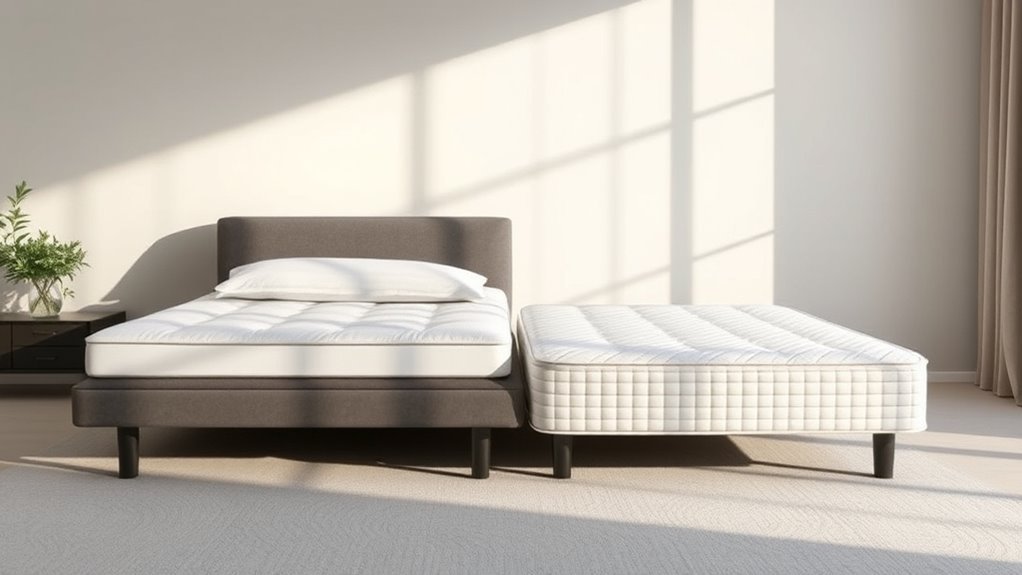
Although adjustable beds offer great flexibility, not every mattress can keep up with their movement. You should avoid mattresses that are incompatible with the bending and flexing of adjustable bases to prevent damage and discomfort.
Specifically, stay away from traditional innerspring mattresses with rigid coils or non-pocketed coils. Their rigidity resists bending and can cause damage.
Avoid traditional innerspring mattresses with rigid or non-pocketed coils—they resist bending and can cause damage.
Also, waterbeds and airbeds are a no-go. They risk leaks or structural failure since they just can’t flex properly.
Mattresses thicker than 14 inches or made from stiff materials aren’t great either. They won’t conform well to the frame’s adjustments.
Choosing any of these will limit your adjustable bed’s functionality and might even shorten the mattress’s lifespan. So, it’s best to opt for more flexible options to ensure smooth movement and lasting comfort.
How Body Weight Affects Mattress Choice
Choosing the right mattress for your adjustable bed goes beyond flexibility—it also depends on your body weight. If you weigh over 250 lbs, you’ll need thicker, firmer hybrid mattresses with strong coil support to prevent sagging and maintain spinal alignment.
Edge support and durability are essential to avoid premature wear. These features help your mattress last longer and keep you comfortable.
For lighter sleepers under 130 lbs, softer mattresses with plush top layers provide better pressure relief and reduce pressure buildup. This means less tossing and turning through the night.
Average-weight sleepers between 130 and 250 lbs benefit from medium to medium-firm mattresses that balance support and contouring. This combination helps keep your spine in a healthy position.
Matching your mattress firmness and support to your body weight improves comfort, prevents sagging, and promotes spinal health. Paying attention to these factors helps you choose a mattress that works perfectly with your adjustable bed.
Choosing the Right Firmness for Your Adjustable Bed
Since adjustable beds let you change your sleeping position easily, picking the right mattress firmness is key to maximizing comfort and support. The right firmness balances pressure relief and support level, adapting to your body weight and sleep position.
Medium firmness (5-7/10) suits most sleepers, offering both contouring comfort and adequate support. Softer mattresses provide excellent pressure relief but might not support heavier bodies or those with back pain well.
Firm mattresses work best for back and stomach sleepers, though they can feel too rigid for side sleepers. With adjustable beds, you can enhance comfort by adjusting elevation, so choose a mattress that complements this feature while matching your ideal firmness for restful sleep.
What Mattress Thickness Works Best With Adjustable Bases
When you pick a mattress for your adjustable bed, thickness plays a crucial role in how well it bends and supports your body. The ideal mattress thickness for adjustable bases usually falls between 10 and 14 inches. This range offers the perfect balance of flexibility and durability, allowing flexible mattresses to contour smoothly with your bed frames without sacrificing support or comfort.
Mattresses thinner than 10 inches often lack adequate pressure relief and comfort. On the other hand, those thicker than 14 inches can restrict movement and risk damaging the adjustable base.
Choosing the right mattress thickness ensures excellent mattress compatibility, enhancing both comfort and longevity. Prioritizing this balance helps your mattress work seamlessly with your adjustable bed, delivering consistent support and pressure relief throughout its use.
Tips for Testing Mattress Compatibility Before You Buy
Finding the right mattress thickness is just one part of guaranteeing your mattress works well with an adjustable bed. Before buying, focus on mattress flexibility and adjustable bed compatibility to avoid issues with support retention and mattress movement.
Start with in-store testing by bending or elevating the mattress to see how it responds. Check manufacturer specifications for explicit compatibility with adjustable bases.
Begin by testing mattress flexibility in-store and verify manufacturer specs for adjustable bed compatibility.
Use the trial period to test support and shape under real conditions. Also, review customer feedback for insights on durability and performance over time.
- Test mattress movement during adjustments to prevent sagging or damage
- Verify support retention to ensure lasting comfort
- Consult manufacturer specs and customer reviews for durability and compatibility
Frequently Asked Questions
What Type of Mattress Works Best With an Adjustable Bed?
You’ll want a memory foam, latex, or hybrid mattress for your adjustable bed since they bend easily and support movement.
Avoid traditional innerspring mattresses because they’re too rigid and won’t flex smoothly with adjustments.
These flexible options help you get the most comfort out of your adjustable bed, making it easier to find the perfect position.
Can I Use Any Mattress on My Adjustable Bed Frame?
You can’t just toss any mattress onto your adjustable bed frame—it’s like trying to fit a square peg in a round hole.
Choose flexible, bend-friendly mattresses like memory foam or latex to keep comfort and durability intact.
These materials move with your frame, so you won’t lose that cozy feel or damage your mattress over time.
What Mattress to Stay Away From?
You should stay away from traditional innerspring, waterbeds, airbeds, and mattresses with rigid coil systems like Bonnell coils.
Also, avoid mattresses thicker than 14 inches since they won’t flex well and might damage your adjustable bed.
These types just don’t work well with adjustable frames, so it’s better to skip them.
What Is the Best Mattress for an Adjustable Bed According to Consumer Reports?
When it comes to adjustable beds, memory foam or latex mattresses are your best bet, according to Consumer Reports. They bend easily, offer great support, and won’t break the bank.
This means you get comfort without spending a fortune, which is always a win. Plus, these mattresses help ensure you sleep like a log every night.
Conclusion
Choosing the right mattress for your adjustable bed is like finding the perfect dance partner—you need flexibility, strength, and harmony. Just as a dancer moves smoothly with their partner, your mattress should bend effortlessly without losing support or comfort.
Remember, the right firmness and thickness keep you in sync, while the wrong choice can trip you up. So, test your mattress well, and let your adjustable bed and mattress dance together beautifully every night.
When selecting any mattress used on adjustable beds, focus on materials that offer both durability and flexibility, like memory foam or latex. These types adapt well to different positions and maintain comfort. Also, consider the mattress thickness—too thick or too firm might not bend properly, while too thin might lack support.
In the end, choosing the best mattress for your adjustable bed comes down to balancing comfort, support, and flexibility. Take your time testing different options, so your mattress complements your adjustable bed perfectly, ensuring restful nights and enhanced sleep quality.