How to Choose All Mattresses Used on Adjustable Bases
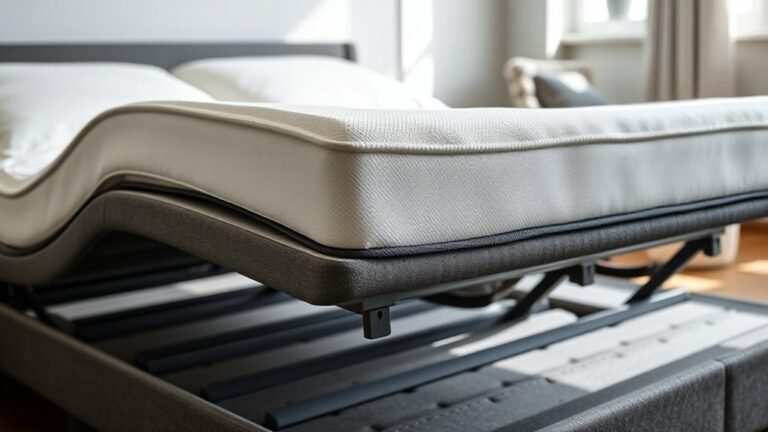
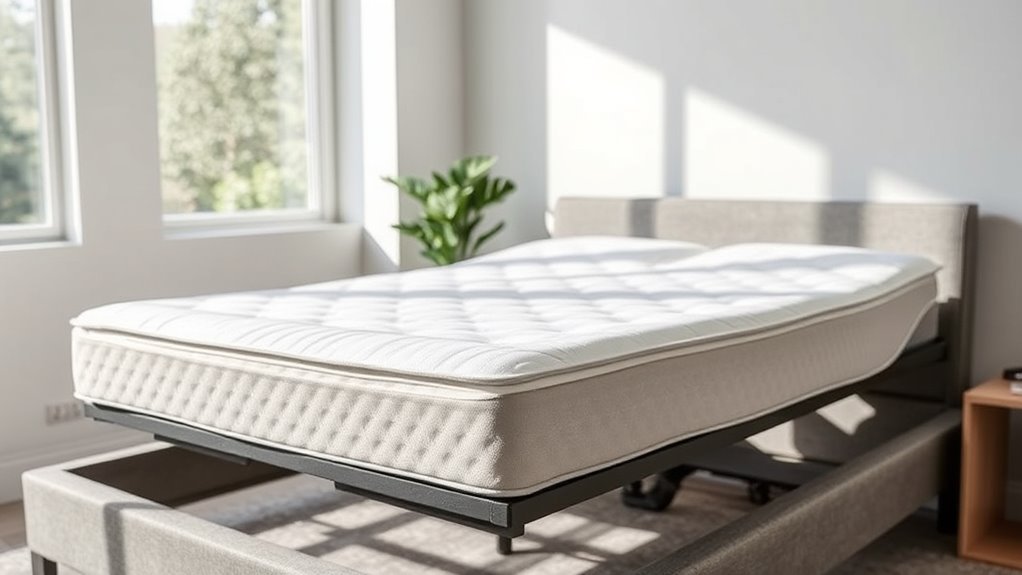
You’ll want a flexible, thin mattress—around 10 to 14 inches thick—that bends easily without damage. Memory foam, latex, and hybrid mattresses work best because they offer both support and durability. These types are perfect for adjustable bases since they move with you and keep you comfortable all night long.
Choose firmness based on your sleep position and weight for proper spinal alignment and comfort. It’s important to pick one that suits how you sleep so you wake up feeling refreshed.
Also, look for cooling features and motion isolation—they help improve your sleep quality by keeping you cool and minimizing disturbances.
If you keep exploring, you’ll discover how to pick the perfect mattress tailored to your adjustable base and needs. Finding the right match can make a big difference in how well you rest and recover.
Key Takeaways
- Choose flexible mattresses like memory foam, latex, or hybrids that bend easily without damaging the adjustable base. These materials adapt well to movement, making them ideal for adjustable beds.
- Select mattress thickness between 8 to 14 inches to balance comfort, support, and flexibility for smooth movement. Thinner or thicker mattresses might not work as well with the base’s adjustments.
- Match mattress firmness to sleep position and weight, favoring medium-firm for back sleepers and softer for side sleepers. This helps you get the right support where you need it most.
- Prioritize mattresses with cooling features, motion isolation, and durability for enhanced comfort and longevity on adjustable beds. These extras make a big difference in your overall sleep experience.
- Use trusted reviews and certifications such as OEKO-TEX and CertiPUR-US to ensure mattress safety and performance compatibility. It’s always good to know your mattress is both safe and reliable.
Why Flexible, Thin Mattresses Work Best on Adjustable Beds
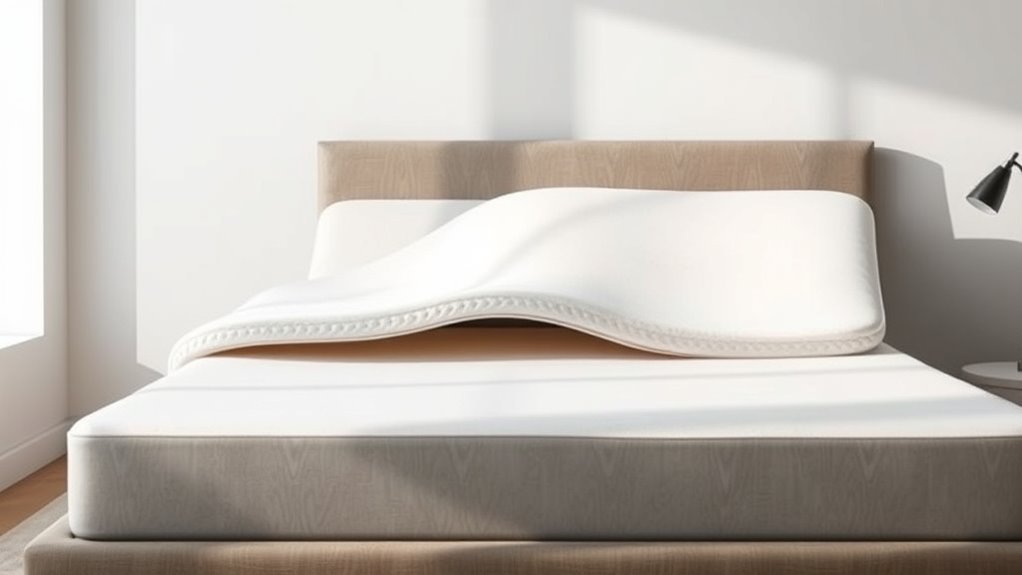
Because adjustable beds rely on smooth bending and repositioning, flexible, thin mattresses work best to guarantee comfort and durability.
When you choose thin mattresses—typically 8 to 12 inches thick—they bend easily without stressing the frame or mattress. This mattress flexibility ensures even pressure distribution across adjustable base hinges, reducing wear during repositioning.
Materials like memory foam and latex excel here because they stay comfortable and flexible even when compressed or bent. Thicker mattresses can hinder bending, causing discomfort and potential damage.
How to Match Mattress Types to Your Adjustable Bed
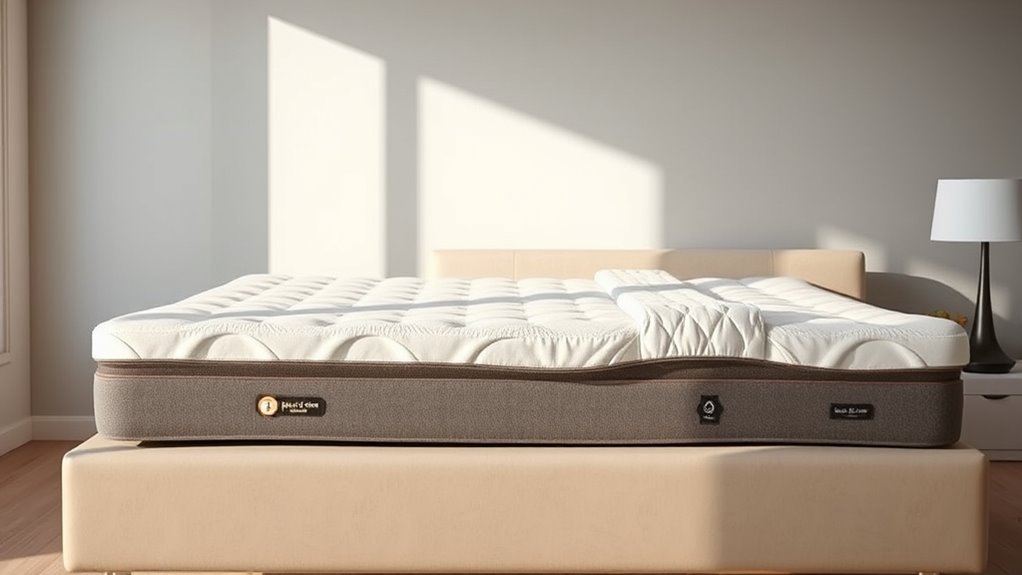
To get the best comfort from your adjustable bed, you’ll want to focus on mattress flexibility and how it suits your weight and sleep position. Memory foam and hybrids offer different benefits, so knowing which fits your needs helps a lot.
Let’s explore how to match these mattress types to your adjustable base for the best support and durability. It’s easier than you might think! Just a little insight can make a big difference in your sleep quality.
Mattress Flexibility Importance
When choosing a mattress for your adjustable base, you’ll want to prioritize flexibility to guarantee smooth movement and long-lasting durability. Mattress flexibility is key because adjustable bases require materials that bend easily without damage.
Memory foam and latex mattresses excel here—they offer excellent bendability and maintain consistent support and durability. Hybrid mattresses with individually pocketed coils also work well, providing necessary coil support within a flexible support core.
Avoid traditional innerspring mattresses, as their rigidity can lead to cracking when repeatedly bent. Also, consider mattress thickness; 10 to 14 inches is ideal to balance comfort and flexibility.
Choosing the right mattress flexibility ensures your sleep position stays supported and your adjustable base functions smoothly over time. It’s all about finding that perfect balance for a great night’s sleep.
Foam Vs. Hybrid
Although both foam and hybrid mattresses can work well with adjustable bases, understanding their differences helps you pick the best fit for your sleeping preferences and base features.
Foam mattresses, like memory foam and latex, excel in material flexibility and conformance. They offer excellent pressure relief and durability without compromising support.
Hybrid mattresses combine foam with coil support. This gives you a balance of contouring comfort and responsive support.
Consider these factors when choosing:
- Foam mattresses offer superior pressure relief and smooth bending, ideal for consistent conformance.
- Hybrid mattresses deliver enhanced durability and coil support, adapting well if coils are flexible.
- Both mattress types should be 10-14 inches thick to maintain material flexibility and long-term performance on adjustable bases.
This way, your mattress will complement your base perfectly.
Weight And Sleep Position
Since your weight and sleep position greatly affect how a mattress performs on an adjustable base, choosing the right type and firmness is crucial for comfort and support.
If you weigh over 250 lbs, thicker, firmer hybrid mattresses with strong coil support help prevent sagging and maintain durability.
Light sleepers under 130 lbs often prefer softer mattresses that offer plush contouring and pressure relief.
Side sleepers benefit from medium-soft to medium-firm memory foam or latex, which provide excellent pressure point relief and contouring.
Back sleepers do best with medium-firm mattresses, like hybrids or memory foam, that promote spinal alignment while offering balanced cushioning.
Matching your firmness and mattress material to your body type and sleep position guarantees the best support, reduces pressure points, and extends the mattress’s lifespan on your adjustable bed.
Picking the Right Firmness for Your Adjustable Bed Mattress
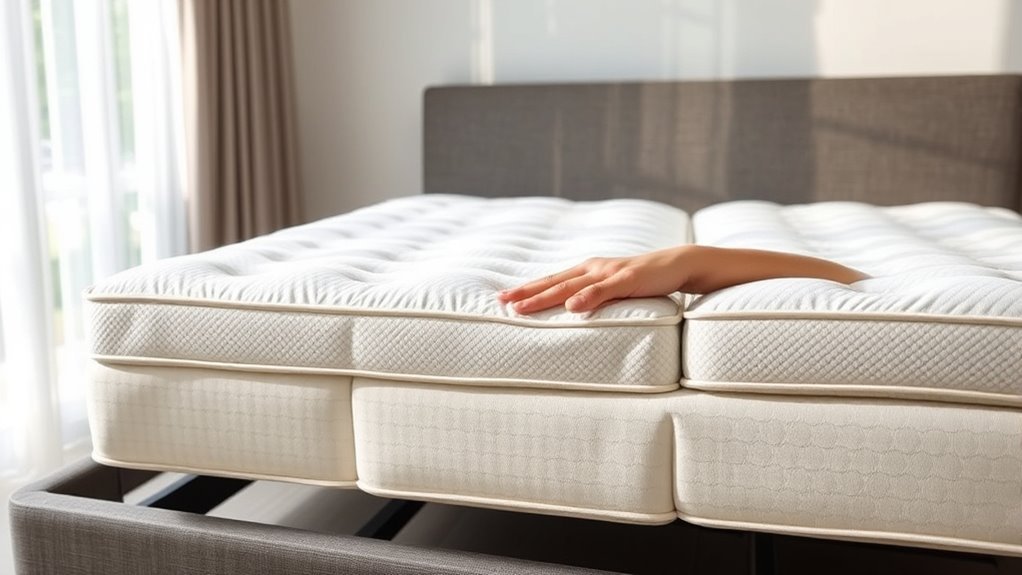
Choosing the right firmness for your adjustable bed mattress is key to getting the support and comfort you need. Medium-firm mattresses usually offer the best balance, but your sleeping position and body weight also play a big role.
Let’s explore how different firmness levels match up with various sleepers. It’s important to find what feels best for you, so you can enjoy a good night’s sleep every night.
Firmness Levels Explained
When you pick a mattress for an adjustable bed, firmness plays a crucial role in comfort and support. Firmness levels on a scale from soft (3/10) to firm (8/10) affect how well your mattress adapts to adjustable beds.
Medium-firm (around 6/10) is often ideal because it balances support, pressure relief, and mattress flexibility. This firmness supports spinal alignment while contouring to your body.
Consider these key points when evaluating firmness levels:
- Softer mattresses offer better pressure relief, especially for side sleepers.
- Firmer mattresses promote spinal alignment, ideal for back and stomach sleepers.
- Medium-firm mattresses flex easily with adjustable bases without sacrificing support.
Your sleep position and comfort preferences ultimately guide the best firmness choice for your adjustable bed setup.
Matching Firmness To Sleepers
Although selecting mattress firmness can feel overwhelming, matching it to your sleep position and body weight makes a huge difference in comfort and support on an adjustable base. For most sleepers, a medium-firm mattress (around 6.5/10) strikes the right balance of contouring and support.
If you sleep on your side, a softer firmness level (4-6/10) offers better pressure relief, but lighter body weight is key to avoid sinking too much. Firmer mattresses (7-8/10) work best for back and stomach sleepers, especially heavier individuals, as they promote proper spinal alignment during adjustments.
Memory foam and latex mattress materials adapt smoothly to changes in position, enhancing comfort and durability. By choosing firmness that fits your sleep position and body weight, you guarantee ideal support and lasting comfort on your adjustable bed.
Durability and Support Tips for Adjustable Bed Mattresses
Since adjustable bases require mattresses that flex without losing support, you’ll want to pick materials like memory foam, latex, or hybrids that offer both flexibility and durability. These materials provide excellent material resistance and long-term support, which is essential for adjustable bed compatibility.
To guarantee durability and support, focus on mattresses with reinforced edges and high-density foam cores. This helps with mattress reinforcement and sagging prevention.
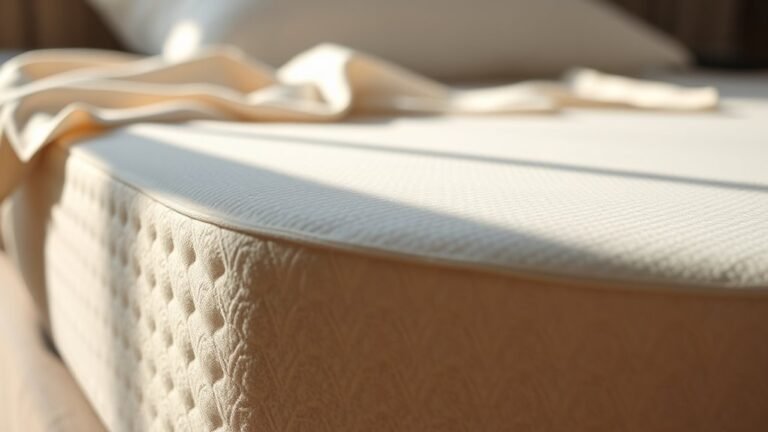
Look for an ideal thickness of 10–14 inches to maintain wear resistance while still bending smoothly. Also, durable covers are important because they protect against wear and extend the mattress lifespan.
It’s a good idea to regularly rotate or flip dual-sided mattresses to promote even wear. Choosing mattresses designed with these features assures the support and durability you need.
This way, you can prevent premature sagging and keep your comfort consistent throughout years of adjustment.
Cooling and Motion Isolation for Adjustable Bed Comfort
Beyond durability and support, cooling and motion isolation play a big role in your comfort on an adjustable bed. Choosing a mattress with gel-infused memory foam or breathable latex layers enhances cooling by improving heat dissipation during sleep.
Hybrid mattresses with coil systems also promote airflow, keeping the surface cooler. These features help prevent overheating, ensuring better pressure relief throughout the night.
Motion isolation is equally important—it minimizes partner disturbance when you or they adjust positions. Mattresses designed for adjustable beds often score 4.5 or higher in cooling and motion isolation ratings, thanks to pocketed coils and advanced foam layers.
Where to Find Trusted Reviews of Adjustable Bed Mattresses
Finding trusted reviews of adjustable bed mattresses can make all the difference when choosing the right fit for your needs. To guarantee you get reliable information, focus on sources that combine expert analysis with real user experiences.
Sleep-focused websites and consumer reports provide valuable independent testing and detailed performance data. You’ll also want to check mattress ratings and user feedback to see how products perform over time.
Look for trusted reviews from:
- Sleep-focused websites like Sleep Foundation, which test numerous mattresses yearly.
- Consumer reports offering independent testing and extensive performance data.
- Industry experts’ guides highlighting durability, flexibility, and certification labels such as OEKO-TEX and CertiPUR-US.
These resources help you confidently select adjustable bed mattresses tailored to your comfort and safety.
Frequently Asked Questions
What Is the Best Type of Mattress to Use With an Adjustable Base?
You’ll want memory foam, latex, or hybrid mattresses since they bend easily without damage. Avoid innerspring models because they’re rigid.
Choose mattresses 10 to 14 inches thick for ideal comfort and support on your adjustable base. That way, you get the best of both worlds—flexibility and support.
Can All Mattresses Be Used on an Adjustable Base?
No, you can’t use all mattresses on adjustable bases. You’ll want flexible materials like memory foam or hybrids.
Avoid innerspring or waterbeds, as they’re too rigid and won’t bend properly. This can risk damage to the mattress or cause discomfort.
What Mattress to Stay Away From?
You should stay away from traditional innerspring, waterbeds, airbeds, and thick mattresses over 14 inches.
Avoid any mattress not labeled as adjustable base compatible since they can slip, gap, or get damaged easily.
It’s really best to choose something designed to work well with your bed frame. That way, you won’t have to worry about any annoying issues down the line.
What Is the Best Mattress for an Adjustable Bed According to Consumer Reports?
Think of the Nectar Memory Foam as your adaptable dance partner—fluid, supportive, and reliable.
Consumer Reports crowns it best for adjustable beds, thanks to its perfect balance of pressure relief, flexibility, and durability that moves with you effortlessly.
Conclusion
Choosing the right mattress for your adjustable bed is like finding the perfect dance partner—it needs to move smoothly and support you effortlessly. By focusing on flexibility, firmness, and durability, you’ll ensure your mattress adjusts easily without wear and tear.
Don’t forget about cooling features, especially if you tend to sleep hot. A mattress that breathes well helps keep you comfortable all night long. And hey, always check reliable reviews before making your pick—they can save you time and money.
When you choose mattresses used on adjustable bases thoughtfully, you’re investing in restful nights where comfort and support work together seamlessly. The right mattress adapts to your lifestyle and sleep needs, making every adjustment feel natural. So, whether you want to sit up to read or lie flat to sleep, the perfect mattress keeps you cozy and supported every step of the way.