How to Sleep Safely in a Recliner While Pregnant
To sleep safely in a recliner while pregnant, start by adjusting it to a semi-reclined position. This helps reduce pressure on your blood vessels and supports your spine, which is super important during pregnancy.
Using lumbar pillows behind your lower back can add extra comfort and support.
Next, elevate your legs with the footrest or some cushions. You can also place a pillow under your belly for added support—it really helps ease the strain.
Sleeping on your left side is recommended because it improves blood flow to both you and your baby.
If you want to ease discomfort and know when to seek help, keep exploring these tips for a safer, more comfortable rest. Taking these small steps can make a big difference in how well you sleep in your recliner while pregnant.
Key Takeaways
- Choose a recliner with adjustable lumbar and head support to maintain proper spinal alignment and comfort during sleep. This helps you avoid waking up with aches and pains.
- Use pillows to support the lower back, elevate your legs, and stabilize your belly. Doing this can promote better blood flow and reduce pressure where you need it most.
- Recline to a semi-upright position. This way, you minimize spinal strain and avoid putting too much pressure on your blood vessels.
- Try to sleep mostly on your left side or keep a stable side position. This improves placental blood flow and helps your baby get enough oxygen.
- Make sure to change your position regularly. Keep an eye out for any discomfort or warning signs like swelling, pain, or if you notice your baby moving less. Don’t hesitate to talk to your doctor if anything feels off.
Why Reclining Position Affects Pregnancy Sleep

Because reclining can increase pressure on blood vessels, it may reduce blood flow to your uterus and affect your baby’s oxygen supply. When you rest in a reclined position, gravity shifts how your baby lies, sometimes causing fetal positioning issues like a sunny side up presentation, which can make labor more painful.
You might also notice increased back discomfort since reclining can strain your spine, especially later in pregnancy. Plus, this position can alter maternal circulation, contributing to swelling and overall discomfort.
To help minimize these effects, use support pillows to properly align your body and ease pressure on blood vessels. Paying attention to how you recline ensures better blood flow and comfort for both you and your baby during pregnancy.
Setting Up Your Recliner for Safe Sleep
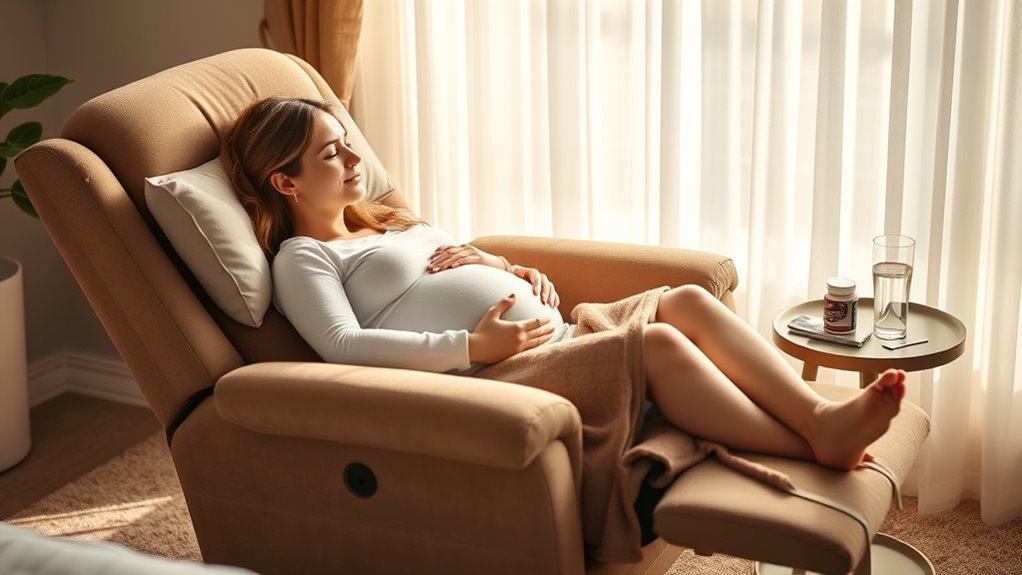
When setting up your recliner for safe sleep during pregnancy, you’ll want to focus on support and stability to keep both you and your baby comfortable. Start by choosing a recliner with adjustable support, including a lumbar support pillow and headrest, to maintain proper spinal alignment.
Focus on adjustable support and stability in your recliner to keep you and your baby comfortable during pregnancy.
This helps reduce pressure on blood vessels, promoting better circulation. Use the footrest to elevate your legs, which can decrease swelling and improve comfort and well-being.
Make sure the recliner is spacious and on a stable, level surface to prevent tipping. Finally, stabilize your position to avoid rolling onto your back or stomach, ensuring you stay safe throughout the night.
Prioritizing these adjustments will help you sleep soundly and safely in your recliner. It’s all about making small changes that make a big difference!
Using Pillows and Supports to Stay Comfortable

To stay comfortable while sleeping in a recliner during pregnancy, you’ll want to use pillows strategically to support your back, hips, and legs. Placing a pillow behind your lower back provides essential lumbar support, helping maintain proper spinal alignment and reducing strain.
Elevate your legs with a pillow or footrest to improve blood circulation and decrease swelling. For added comfort and better posture, position a small pillow or rolled towel under your belly to stabilize your bump and prevent discomfort.
Using pregnancy-specific supportive cushions can further enhance your comfort while ensuring correct posture in a reclined position. By arranging pillows thoughtfully, you create a supportive environment that eases pressure points and promotes restful, safe sleep throughout your pregnancy.
Side-Sleeping Techniques for Better Blood Flow
Sleeping on your side, especially the left side, boosts blood flow to your placenta and baby. This helps reduce risks like stillbirth.
When side sleeping in a recliner during pregnancy, you want to focus on comfort and spinal alignment. Use pillows strategically to support your body and maintain circulation.
| Technique | Purpose | Tip |
|---|---|---|
| Left side sleeping | Enhance blood flow | Avoid lying flat on back |
| Pillow between knees | Improve spinal alignment | Use firm, supportive pillows |
| Elevate upper body | Prevent acid reflux | Slight incline in recliner |
| Consistent position | Maintain steady circulation | Adjust recliner gently |
| Recliner support | Increase overall comfort | Add lumbar pillow if needed |
These techniques help you stay comfortable and promote healthy blood flow throughout pregnancy.
Try them out and see how much better you feel!
Managing Common Discomforts Sleeping in a Recliner
Although reclining can ease some pregnancy discomforts, you might still experience aches or stiffness if your position isn’t supportive enough.
To manage common discomforts while sleeping in a recliner, focus on these key strategies:
- Adjust your recliner to a semi-reclined position that supports your lower back. This helps reduce back pain and pressure on your hips and pelvis.
- Use supportive pillows to maintain proper spinal alignment. Placing cushions behind your lower back or under your knees boosts comfort and prevents stiffness.
- Change your position regularly within the recliner. This helps avoid prolonged strain on any one area, promotes better circulation, and reduces discomfort.
When to Seek Medical Advice About Recliner Sleep
If you notice persistent pain, swelling, or numbness while sleeping in your recliner, it’s important to talk to your healthcare provider.
Pay close attention to warning signs like regular contractions or unusual dizziness, and don’t hesitate to seek medical advice.
Your doctor can help guarantee your sleep position stays safe for both you and your baby.
Warning Signs To Monitor
When you notice persistent dizziness, shortness of breath, or chest pain while resting in a recliner during pregnancy, don’t hesitate to seek medical advice. Monitoring warning signs is crucial for your safety and comfort throughout your pregnancy journey.
Pay close attention to decreased fetal movement or irregular heartbeat patterns. These require prompt health monitoring.
Also, watch for swelling in your legs, ankles, or feet that worsens despite elevation. This signals the need for medical evaluation.
Severe back pain, contractions, bleeding, or signs of preterm labor—like regular contractions or pelvic pressure—demand immediate medical intervention.
Addressing discomfort early helps you stay safe and comfortable while using a recliner. Always prioritize medical advice when these warning signs show up during your pregnancy.
Consulting Healthcare Providers
To guarantee your safety and comfort while sleeping in a recliner during pregnancy, you should reach out to your healthcare provider at the first sign of discomfort, dizziness, or breathing difficulties.
Before using a recliner, especially if you have pregnancy complications or blood circulation issues, get medical advice to *assure* safe sleep positions.
Also, consult your provider if you notice reduced fetal movement or unusual symptoms.
Your healthcare provider can guide you on posture and pregnancy safety when reclining.
| When to Consult Healthcare Provider | Why It’s Important |
|---|---|
| Discomfort, dizziness, or breathing issues | Prevent complications and ensure safety |
| Underlying health conditions | Tailor safe sleep recommendations |
| Reduced fetal movement | Monitor fetal health |
| Choosing the right recliner | Support blood circulation and posture |
Frequently Asked Questions
Why Can’t You Fly After 37 Weeks?
You can’t fly after 37 weeks because your risk of going into labor suddenly increases. Airlines worry about managing emergencies mid-flight.
Plus, your chances of blood clots rise, making travel more dangerous for you and baby. So, it’s really about keeping both of you safe and sound.
Do Doctors Recommend Recliners?
Doctors do recommend recliners, citing comfort and circulation. You’ll find reclining relieves backaches and supports sleep posture. But you shouldn’t sit too long.
Choose an ergonomic chair and adjust positions to keep comfort consistent. It also helps to keep your circulation clear. Just remember to move around every now and then!
What Sitting Positions Should I Avoid During the First Trimester of Pregnancy?
You should avoid crossing your legs, sitting without proper back support, twisting at the waist, and sitting on low or unsupportive surfaces.
Also, don’t stay in one position too long to prevent discomfort and circulation problems. It’s important to keep moving a bit and change your posture regularly.
What Is the Best Sleeping Position During Pregnancy?
You should sleep on your left side during pregnancy to improve blood flow to your baby. This position helps keep things flowing smoothly.
Avoid lying on your back, especially after 28 weeks. Doing so can increase certain risks.
Try using pillows for extra support and comfort. They can make a big difference in how well you sleep.
Conclusion
Sleeping safely in a recliner during pregnancy can really boost your comfort and ease pressure on your body. It’s a great way to find relief when traditional beds feel uncomfortable.
Many people think that reclining more helps blood flow, but research shows it’s actually small position changes that make the biggest difference. So, it’s not just about how far back you recline.
Setting up your chair thoughtfully is key. Use pillows to support your belly, back, and legs to keep everything aligned. Try to practice side-sleeping techniques as much as possible since that’s often recommended during pregnancy.
Always listen to your body. If you feel any discomfort or have concerns, don’t hesitate to check in with your doctor. Sleeping safely in a recliner while pregnant means balancing comfort, support, and good sleep habits to protect both you and your baby throughout your pregnancy journey.