

How to Use Adjustable Beds for Good Back Pain Relief
To relieve your back pain with an adjustable bed, start by elevating your head and legs. This helps support your spine’s natural curves and reduces pressure on your lower back. Finding the right angles can make a big difference in how you feel.
Try the Zero Gravity position, which is designed to evenly distribute your weight and decompress your spine. It’s a favorite for many people who want to ease discomfort and improve circulation.
Don’t forget about extra support! Using lumbar pillows can provide targeted relief where you need it most.
Also, pick a medium-firm mattress that suits your body and sleep style—it plays a big role in your comfort.
Fine-tuning these settings is key. Play around with the angles and support until you find what works best for you. Keep exploring for more personalized tips and care to help manage your back pain effectively.
Key Takeaways
- Elevate the head and legs to maintain natural spinal curves. This helps reduce muscle strain and promotes proper alignment for back pain relief.
- Try using the Zero Gravity position. It evenly distributes your body weight, decompresses the spine, and effectively alleviates pressure points.
- Adjust the bed angles gradually. Play around with head and foot positions until you find what feels best for you and offers the most support.
- Adding lumbar and wedge pillows can really help. They support the lower back curve and improve circulation while keeping your spine aligned.
- Don’t forget to combine adjustable bed positioning with physical therapy. This combo can enhance spinal support, reduce inflammation, and improve how you manage pain.
How Adjustable Beds Improve Back Pain Relief
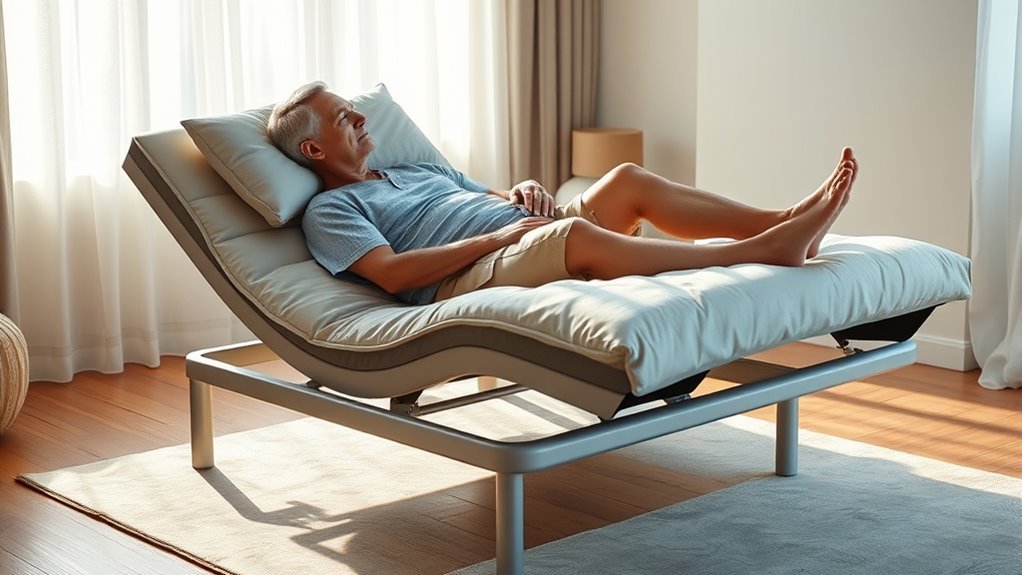
When you adjust your bed to elevate your head and legs, you support your spine’s natural alignment. This eases pressure on your lower back and makes a big difference in comfort.
Adjustable beds let you customize your sleeping position. This way, you can find the perfect angle that helps reduce back pain.
Adjustable beds help you find the ideal position to ease and reduce back pain.
By elevating your knees and head, you keep the spine’s natural curves intact. This prevents muscle strain and misalignment, which are common causes of discomfort.
Some positions, like Zero Gravity, mimic a weightless posture. This decompresses your spine and offers significant relief from pain.
These beds also improve blood flow, which helps your spine recover while you sleep. Plus, with adjustable beds, you can target pressure points that often cause back pain.
That makes it easier to rest comfortably and wake up feeling refreshed and pain-free.
How Elevating Your Head and Legs Supports Spinal Alignment

By elevating your head and legs, you actively support your spine’s natural curves. This reduces pressure on your lower back and prevents strain.
Adjustable bed frames let you customize these positions, promoting proper spinal alignment throughout the night. It’s a simple way to keep your spine happy while you sleep.
Raising your head eases neck strain and relieves tension in the upper spine. This helps you maintain a healthy posture even when you’re lying down.
Elevating your legs above heart level decreases lumbar compression and boosts blood flow to spinal tissues. That can unload stressed spinal discs and reduce discogenic pain.
Using adjustable bed frames to find the right angle supports your spine’s natural posture during sleep. It minimizes muscle strain and enhances back health.
Honestly, this small adjustment can make a big difference in managing back pain effectively. Why not give it a try?
How the Zero Gravity Position Relieves Pressure

Adjustable beds offer more than just head and leg elevation; they can also achieve the Zero Gravity position, which takes pressure relief to a new level. By elevating your legs above heart level and slightly raising your torso, this position mimics the weightless posture of astronauts, providing exceptional back relief.
It evenly distributes your body weight, reducing pressure on your lumbar spine and tailbone.
In Zero Gravity, you’ll notice key benefits like decompressed lower back, easing spinal compression pain. Plus, it improves circulation, which reduces muscle tension.
You’ll also get enhanced spinal alignment, especially helpful for herniated discs.
Using the zero gravity position regularly can profoundly decrease back pain and improve comfort. Honestly, it’s an ideal setting on your adjustable bed.
Choosing the Right Mattress for Your Adjustable Bed and Back Pain
Choosing the right mattress for your adjustable bed can make a big difference in easing back pain. You’ll want to focus on medium-firm options, especially latex, which offer the right balance of support and comfort.
Be sure to take advantage of trial periods to find the mattress that fits your body and sleeping style perfectly. It really helps to try before you buy!
Mattress Firmness Considerations
When you pick a mattress for your adjustable bed, firmness plays a key role in relieving back pain. Choosing the right mattress firmness guarantees your spine stays aligned while using the adjustable base. This helps reduce discomfort.
A medium-firm mattress often works best. It balances support and comfort without causing pressure points or the “hammock effect.” Keep these points in mind:
- Soft mattresses may sag, leading to poor spinal alignment.
- Hard mattresses can create pressure points and lack contour support.
- The ideal firmness depends on your body weight and sleeping position. So, try to test options when you can.
Material Impact On Comfort
The material of your mattress plays a crucial role in how comfortable and supportive your adjustable bed feels, especially when managing back pain. Choosing a latex mattress provides natural support and conforms to your body’s shape, helping maintain proper spinal alignment.
Unlike memory foam, which may trap heat and emit odors, latex offers breathability and comfort. When picking a firm mattress, aim for medium-firm rather than overly hard or soft.
A mattress that’s too soft can cause sagging and misalignment, while one that’s too firm may create pressure points, both worsening back pain. By selecting supportive, natural materials like latex combined with the right firmness, you’ll maximize your adjustable bed’s effectiveness in relieving back discomfort and improving your overall sleep quality.
Trial Period Importance
How long should you test a mattress before deciding if it truly helps your back pain? Ideally, a 200-day trial period lets you evaluate how well the mattress works with your adjustable bed for back pain relief.
During this time, focus on comfort, support, and spinal alignment in multiple positions. Personal comfort varies, so use the trial period to explore different firmness levels and materials.
Also, try various adjustable bed angles to find what eases your pain best. Reputable brands offer these trial periods so you can return or exchange the mattress if it doesn’t improve your sleep or back condition.
Remember to:
- Assess spinal alignment in different sleeping positions
- Experiment with firmness and mattress materials
- Test adjustable bed angles for maximum relief
This trial period ensures you pick the right mattress for lasting back pain relief.
Personalizing Your Bed Settings for Better Back Comfort
You can personalize your adjustable bed by fine-tuning the head and foot positions to support your spine’s natural curve. Try customizing elevation levels to relieve pressure on your back and neck.
Go ahead and experiment with different angles until you find the perfect setup that eases your pain. It might take a little time, but it’s worth it for better comfort.
Adjusting Sleep Positions
When you personalize your adjustable bed by elevating your head and knees, you support your spine’s natural curves and ease lower back strain. Adjusting sleep positions helps you find the best comfort level and reduces pressure on sensitive areas.
With adjustable beds, you can explore various angles to relieve back pain effectively. It’s all about finding what feels best for you.
Try these tips to optimize your sleep positions:
- Use preset modes like Zero Gravity to evenly distribute your body weight and decompress your spine.
- Adjust angles slowly to avoid sudden movements that might cause discomfort.
- Combine bed adjustments with supportive pillows for targeted relief.
Give these a try and see what works best for your comfort!
Customizing Elevation Levels
Although finding the right elevation levels may take some trial and error, adjusting the head and foot positions on your adjustable bed can markedly reduce lumbar pressure and ease back pain. Start by gradually customizing angles rather than making abrupt changes, which helps you identify the best spinal support for back pain relief.
Elevate your legs slightly above your heart to boost circulation and ease lower back strain during sleep. Using preset positions like Zero Gravity can be a helpful starting point.
Keep a journal to track which elevation settings improve your back comfort, allowing you to fine-tune adjustments over time. For personalized guidance, consult a healthcare provider or physical therapist to determine the most effective elevation levels tailored specifically to your back condition.
Adding Pillows and Supports to Enhance Back Pain Relief
Since adjustable beds allow you to customize your sleeping position, adding pillows and supports can considerably boost your back pain relief. Proper pillow support helps maintain spinal alignment, reducing strain on your back.
You can enhance comfort and reduce pressure by strategically placing pillows to support key areas. Here are some effective options:
- Use a lumbar support pillow to maintain lower back curvature and prevent slouching.
- Place a wedge pillow under your knees to relieve pressure on the lower spine and improve circulation.
- Choose a cervical pillow that adapts to your adjustable bed’s position, providing consistent neck and head support.
Combining Adjustable Beds With Physical Therapy Tips
You can boost your back pain relief by coordinating your adjustable bed positions with your physical therapy routine. Adjusting angles as your therapist suggests helps reduce pressure and supports proper spinal alignment.
This teamwork between bed settings and exercises really enhances your overall therapy outcomes. It’s all about working together to feel better faster.
Coordinating Bed Positions
When you coordinate adjustable bed positions with physical therapy exercises, you can really improve spinal alignment and speed up back pain relief. Adjustable beds let you customize your sleep position to support natural spinal curves. This helps correct posture just like physical therapists recommend.
Using positions like Zero Gravity during therapy reduces pressure on herniated discs and boosts circulation. That makes exercises way more effective.
To coordinate your bed positions with therapy, try to elevate your legs and torso at specific angles to ease spinal stress. You can also incorporate gentle stretching and core strengthening while your bed is adjusted.
And don’t forget to consult your physical therapist to tailor the positions for your treatment plan. They’ll help make sure you’re doing what’s best for your recovery.
Enhancing Therapy Outcomes
Although adjustable beds offer great comfort on their own, combining their use with targeted physical therapy can substantially boost your back pain relief. Using adjustable beds to find positions like Zero Gravity reduces pressure on herniated discs and supports spinal alignment.
Elevating your legs and torso during therapy helps decrease inflammation and eases chronic discomfort. It’s a simple way to make your therapy sessions more effective and comfortable.
Incorporate physical therapy exercises alongside your adjustable bed routine to improve flexibility and strengthen back muscles. This further supports pain relief and helps you move better.
Regularly consulting with your physical therapist lets you tailor your bed settings to complement treatment strategies. That way, you ensure you’re getting the ideal sleep positions for your recovery.
Common Positioning Mistakes to Avoid With Adjustable Beds
Since adjustable beds offer numerous ways to relieve back pain, it’s super important to avoid common positioning mistakes that can actually make your discomfort worse. Using these beds the wrong way can strain your neck, lower back, or even worsen spinal issues.
Adjustable beds can ease back pain, but improper positioning might increase neck and spine discomfort.
To get the best results, keep these tips in mind:
- Avoid elevating both your head and feet to extreme angles at the same time; this can increase neck and lower back strain.
- Always support your lumbar region with a pillow or cushion to maintain proper alignment and enhance relief.
- Don’t sleep flat if you have spinal stenosis or discogenic disease, as this can aggravate pain.
Maintaining Your Adjustable Bed for Long-Term Back Comfort
Getting the positioning right is only part of the equation for lasting back pain relief with your adjustable bed. You also need to maintain it properly to guarantee consistent back support.
Regularly check and tighten mechanical parts, clean moving components, and avoid sudden position changes to prevent strain. It’s a good idea to inspect your mattress and foundation for wear, rotating or replacing them as needed to keep your spine aligned.
Make sure to follow the manufacturer’s guidelines and schedule professional servicing when necessary. Here’s a quick maintenance checklist:
| Task | Purpose |
|---|---|
| Tighten components | Prevent malfunction |
| Clean moving parts | Ensure smooth operation |
| Adjust positions gradually | Avoid back strain |
| Inspect mattress and base | Maintain spinal alignment |
| Follow manufacturer’s advice | Preserve therapeutic benefits |
Proper upkeep of your adjustable bed ensures long-term back comfort and support. It’s worth the effort to keep feeling great!
Tips to Optimize Your Sleep Setup for Lasting Pain Relief
When you optimize your adjustable bed settings, you can greatly enhance your sleep quality and reduce back pain. Adjustable beds offer customizable positions that help alleviate pressure and improve spinal alignment. These are key factors in lasting back pain relief.
Optimizing adjustable bed settings boosts sleep quality and eases back pain through better pressure relief and spinal alignment.
To get the most from your setup, consider these tips:
- Set your bed to a zero gravity position to evenly distribute pressure and minimize spinal compression.
- Elevate your head about 30-45 degrees to support proper cervical alignment and ease neck strain.
- Use the foot elevation feature to flex your knees, reducing lower back pressure during sleep.
Additionally, try supportive pillows or wedges alongside your adjustable bed settings. Experiment with preset positions to find what best suits your unique back issues.
This fine-tuning can greatly boost your comfort and pain relief. Give it a try, and see what works best for you!
Frequently Asked Questions
Can You Use Your Regular Mattress on an Adjustable Bed?
You can use your regular mattress on an adjustable bed, but it should be flexible enough to bend without damage. Memory foam or latex works best.
Firm innerspring mattresses might not adjust well or last long. So, if you have one of those, it might not be the best fit for an adjustable base.
How to Make an Adjustable Bed More Comfortable?
To make your adjustable bed more comfortable, use supportive pillows and adjust the head and foot angles gradually. Choosing a compatible mattress can really make a difference, too.
Try out preset positions to see what feels best. Don’t be afraid to experiment with different setups until you find your perfect fit.
What Is the Best Way to Get Out of Bed With Back Pain?
The best way to get out of bed with back pain is to bend your knees and swing your legs gently over the side.
Engage your core, and push yourself up slowly using your arms while avoiding twisting motions.
Taking it slow really helps prevent any extra strain on your back. Just be mindful of how your body feels as you move.
What Is the Best Sleeping Position for Lower Back Pain in an Adjustable Bed?
The best sleeping position for lower back pain? You’re better off sleeping on your back with your head elevated 30-45 degrees and knees slightly bent.
Conclusion
Using an adjustable bed can substantially improve your back pain relief—did you know 85% of users report better sleep quality after just a few weeks? By customizing your bed’s position, especially with head and leg elevation or the zero gravity setting, you support proper spinal alignment and reduce pressure.
Remember to choose the right mattress and avoid common mistakes to maximize comfort. These small changes make a big difference in how your back feels.
Combine these tips with physical therapy, and you’re well on your way to lasting back comfort. Adjustable beds are a game-changer for back pain relief because they let you find the perfect position that suits your body’s needs. When used correctly, they can improve sleep quality, reduce pressure points, and promote overall spinal health. So, if you’re struggling with back pain, giving an adjustable bed a try might just be the solution you need to get better rest and feel better every day.