Can You Put a Rug on Carpet?
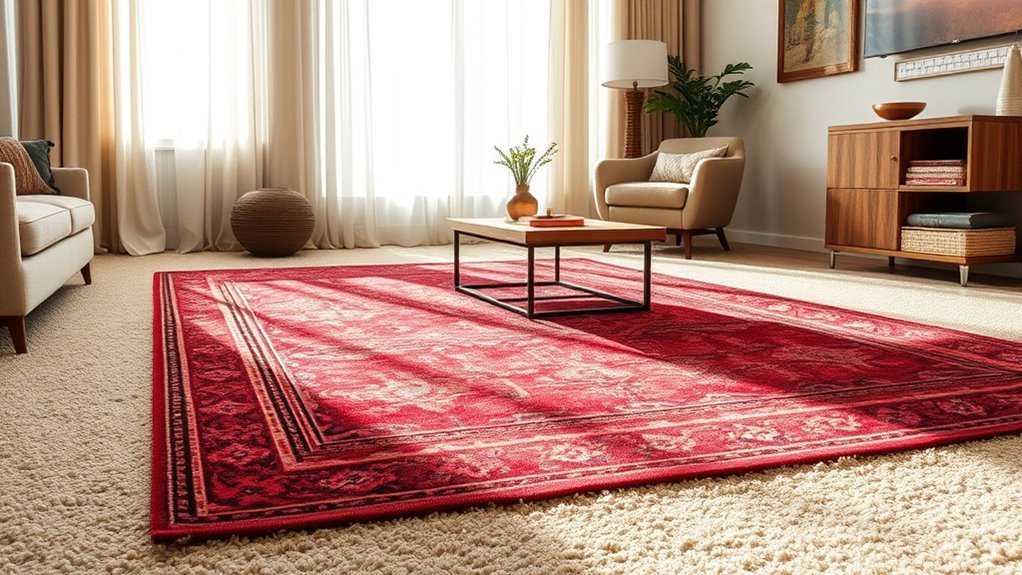
You can definitely put a rug on your carpet to boost style, comfort, and protect both layers. Adding a rug over carpet is a great way to refresh your space without a full renovation.
Just make sure to choose the right materials and colors to really elevate your room’s look and feel.
To keep the rug secure and prevent slipping, use a non-slip, eco-friendly rug pad that’s slightly smaller than the rug. This simple step makes a big difference in safety and durability.
Plus, it helps protect both the carpet and the rug underneath.
Regular cleaning and proper maintenance will keep everything fresh and long-lasting.
Keep exploring to discover smart tips for the best rug layering and care.
Trust me, your floors will thank you!
Key Takeaways
- Yes, you can put a rug on carpet to enhance room aesthetics, add comfort, and conceal carpet imperfections. It’s a simple way to refresh your space without a full carpet replacement.
- Use a non-slip rug pad designed for carpet to prevent slipping, bunching, and extend both rug and carpet lifespan. This little addition makes a big difference in keeping everything in place.
- Choose eco-friendly rug pads like natural rubber or wool felt for grip, durability, and environmental benefits. They’re a smart choice if you want something safe and sustainable.
- Select rug materials and sizes thoughtfully to complement carpet texture, avoid slipping, and maintain cohesive room design. Matching these well keeps your room looking put together and cozy.
- Regularly vacuum, deep clean, and inspect both rug and pad to ensure safety, cleanliness, and longevity. Taking care of them means your rug and carpet will look great for years to come.
Can You Put a Rug on Carpet? Benefits & Tips
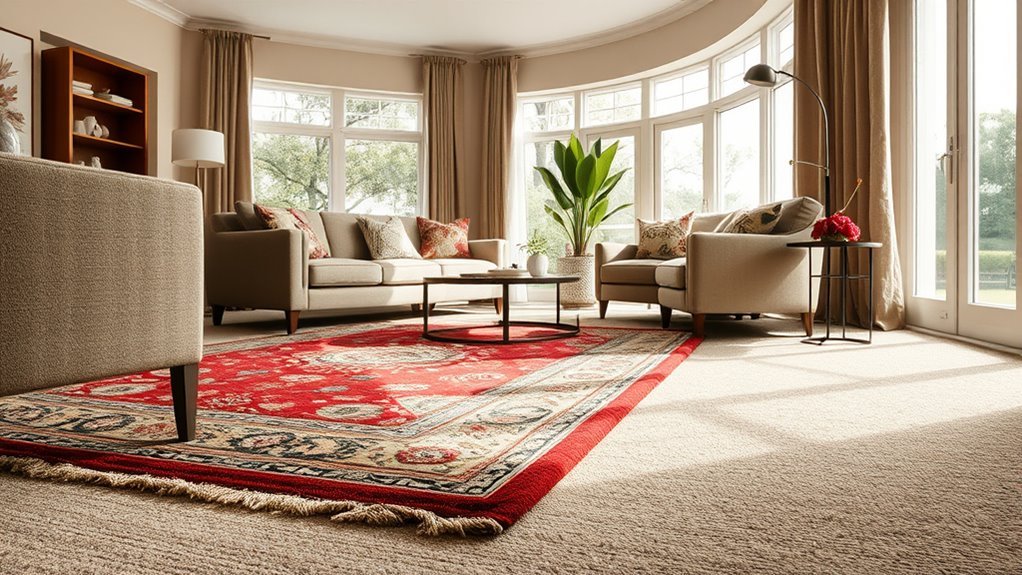
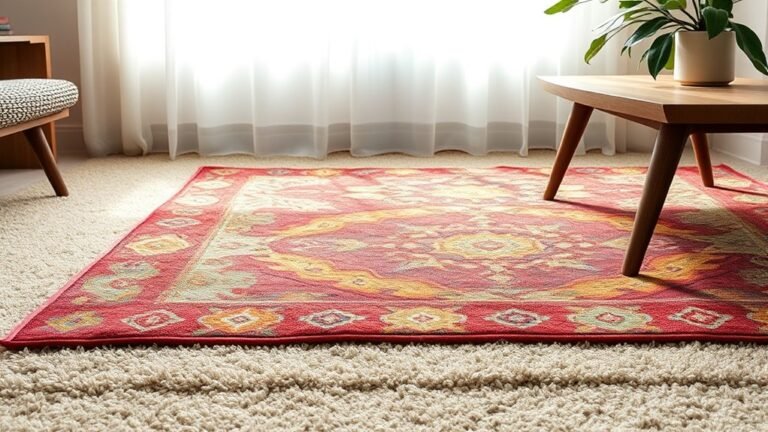
You can definitely put a rug on carpet to instantly boost your room’s style and comfort. Using area rugs over carpeted floors lets you hide stains and add a fresh look without replacing your carpet.
To keep your rug in place, consider securing it with furniture or double-sided tape, which helps reduce bunching. Choosing a rug that complements your carpet’s color and texture creates a cohesive design.
Leaving about an inch of carpet visible around the rug’s edges improves both safety and visual balance. While a rug pad designed for over-carpet use is ideal for preventing slipping and shifting, you can also rely on careful placement and securing methods to guarantee your rug stays put, enhancing both style and comfort in your space.
Why Use a Rug Pad on Carpet?
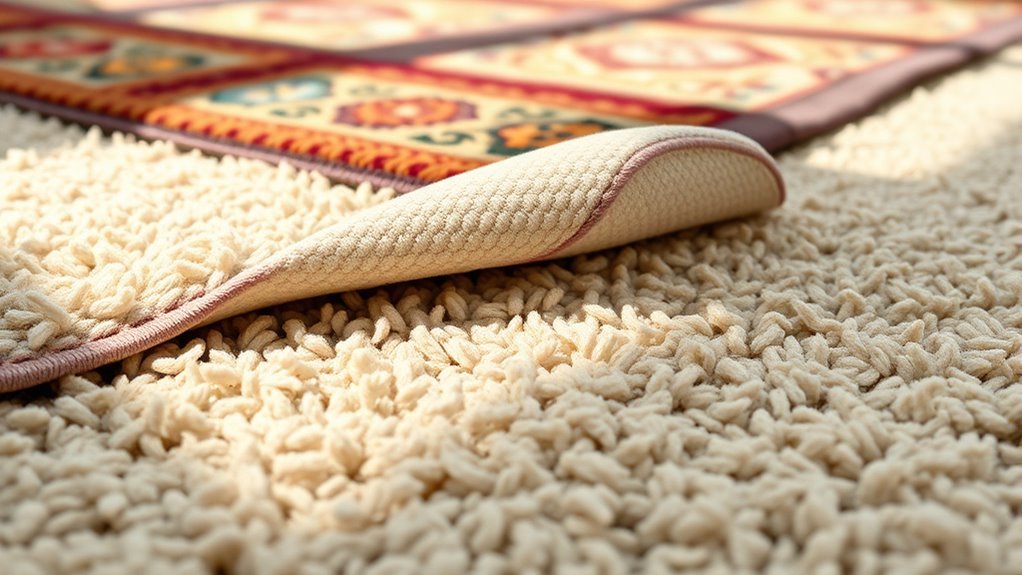
You’ll want to use a rug pad on carpet to prevent slipping and keep your rug securely in place. It also protects your carpet fibers from wear, extending their life.
Plus, a rug pad adds cushioning that makes walking on your layered rugs much more comfortable. It’s a simple way to make your space safer and cozier at the same time.
Prevent Rug Slippage
Although rugs can add style and comfort to carpeted floors, they tend to slip or bunch without proper support. To prevent slippage, you should use a rug pad designed specifically for carpet.
Rug pads with non-slip backing or gripping fibers increase friction between the rug and carpet, keeping the rug firmly in place. Choosing a properly sized rug pad, about an inch smaller than your rug, helps avoid visible edges that could cause tripping.
While rug tape can offer extra security, a high-quality rug pad made from natural rubber or felt provides better grip and cushioning. Using a rug pad not only prevents slippage but also minimizes wear and tear on both the rug and carpet by reducing shifting during foot traffic.
Protect Carpet Fibers
When placing a rug over carpet, using a rug pad plays a crucial role in protecting the carpet fibers underneath. A rug pad helps prevent damage by reducing friction between the rug and carpet, which can cause carpet wear over time.
It also protects fibers from fraying due to the rough backing of some rugs. Without a rug pad, heavy foot traffic or furniture can press down on the carpet, leading to indentations and deterioration.
Enhance Cushioning Support
Beyond protecting carpet fibers, adding a rug pad also enhances cushioning support, making your floors more comfortable to walk and stand on. A rug pad provides extra cushioning that softens every step and helps evenly distribute weight, reducing pressure points on both the rug and carpet.
It also prevents bunching or slipping, keeping the rug stable and secure. Here’s why you should use a rug pad on carpet:
- Adds cushioning for a softer, more comfortable feel underfoot.
- Distributes weight evenly to minimize wear and tear.
- Prevents bunching, slipping, and movement of the rug.
- Offers additional support with materials like felt or natural rubber.
Using a rug pad boosts comfort and protects your flooring investment. It’s a simple upgrade that makes a big difference!
How to Choose the Right Rug Pad for Carpeted Floors
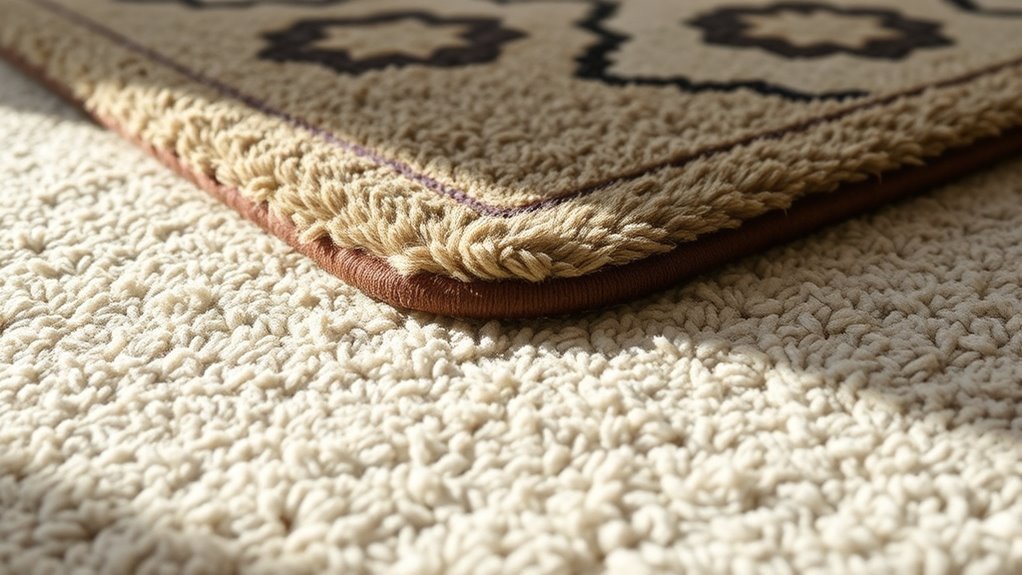
Choosing the right rug pad for carpeted floors matters because it keeps your rug securely in place and protects both the rug and the carpet underneath.
You’ll want a non-slip rug pad designed specifically for carpet to prevent shifting. It’s best to opt for eco-friendly materials like natural rubber or wool felt since they offer durability and support.
Make sure the rug pad is slightly smaller than your rug. This helps avoid tripping hazards and allows a clean border.
| Feature | Benefit | Material Recommendation |
|---|---|---|
| Non-slip grip | Prevents shifting | Natural rubber |
| Breathability | Reduces dirt buildup | Needle-punched wool felt |
| Size | Ensures safety | 1 inch smaller than rug |
This way, your rug stays put, supports carpet fibers, and lasts longer.
Best Rug Materials to Use Over Carpet
Selecting the right rug pad sets the stage for choosing the best rug materials to place over your carpet. You want materials that work well with layered use, offer stability, and look great.
Here are four top options to evaluate:
- Natural rubber, wool felt, and jute are eco-friendly choices with excellent grip and support.
- Needle-punched felt rugs promote breathability and prevent dirt buildup between layers.
- Rugs with a non-slip backing ensure safety and keep your rug firmly in place.
- Thinner rugs, about 1/4 to 1/2 inch thick, like sisal or flatweave cotton, reduce bunching and tripping hazards.
Just a heads-up: avoid synthetic materials like polyester or nylon. They tend to slip more and can damage your carpet over time.
How to Measure and Cut a Rug Pad for Your Area Rug
When you’re ready to put your rug pad under your area rug, start by measuring the rug’s length and width carefully. Use a tape measure to get accurate measurements, then subtract one inch from each side.
This ensures the rug pad is slightly smaller, preventing edges from showing and reducing tripping hazards. Next, place the rug pad on a flat surface and use a straight edge to mark the adjusted measurements.
Double-check your measurements before you cut to avoid errors. Use sharp scissors or a utility knife to cut the rug pad cleanly along the marked lines.
Properly measuring and cutting your rug pad guarantees a snug fit under your area rug, providing the right support and enhancing safety.
How to Prevent Rug Slipping and Bunching on Carpet
Although rugs can add warmth and style to carpeted floors, they often slip or bunch up, creating a safety hazard and an unsightly mess. To prevent slipping and bunching, focus on proper rug placement and using the right materials.
Here’s how you can keep your rug secure:
- Use a non-slip rug pad designed for carpet to add grip and stability.
- Choose a rug slightly smaller than the pad (about 1 inch all around) to avoid curling edges.
- Secure the rug with double-sided carpet tape or heavy furniture to minimize movement.
- Pick rugs with textured or needle-punched felt backing for better hold on soft carpets.
Make sure to regularly adjust your rug and pad, especially in high-traffic areas. This will help maintain their placement and keep slipping or bunching at bay.
Pros and Cons of Layering Rugs Over Carpet
If you want to add depth and style to your room, layering rugs over carpet can be an effective way to do it. Layering rugs creates visual interest and enhances decor, but you need to consider the carpet texture and rug material carefully.
Softer or high-pile carpets may not support rugs well, increasing slip risks and uneven surfaces. Slip prevention is essential—you’ll want to use a rug pad or anchor furniture to keep everything secure and avoid trip hazards.
On the downside, layering rugs can trap dust and dirt between layers, meaning you’ll need to clean more often. Ultimately, layering rugs over carpet works best in low-traffic areas where you can maintain safety and preserve the layered look with proper precautions.
How to Match Rug Colors and Patterns With Carpet
Selecting the right rug colors and patterns can transform your carpeted room into a stylish, cohesive space. To match rugs with your carpet effectively, follow these tips:
Choose rugs in colors that complement or subtly contrast with your carpet to maintain a balanced color scheme. When using patterned rugs on patterned carpets, pick designs with different scales or motifs to avoid a busy look.
Select rug colors that complement or gently contrast your carpet, and vary pattern scales for a balanced, stylish look.
On textured or busy carpets, opt for neutral or solid-colored rugs to prevent visual overload. Consider the entire room’s palette—walls, furniture, and accessories—and select rugs that harmonize with these elements.
Always test your rug and carpet combinations in natural light to ensure they truly coordinate with each other before making your final choice. It really helps to see them together in different lighting!
How Often Should You Clean Rugs and Pads on Carpet?
You should vacuum your rugs and carpet pads regularly to keep dust and dirt at bay—aim for at least twice a week for rugs and once a week for pads.
Deep clean both every 6 to 12 months, depending on how much traffic they get.
Keeping up with this routine helps maintain their look, support, and overall hygiene.
Routine Vacuuming Frequency
Although it might seem tedious, vacuuming both your area rug and the carpet beneath at least twice a week keeps dirt from settling in and extends their lifespan. Proper vacuuming is essential for maintenance, especially with layered rugs.
Here’s how to keep them clean:
- Vacuum both the rug and carpet twice weekly to remove surface dirt and debris.
- For layered rugs with needle-punched felt, vacuum underneath twice a year to eliminate trapped debris.
- Use a vacuum with a beater bar or rotating brush for deep cleaning, particularly on high-pile surfaces.
- Consistent vacuuming reduces allergens and dust mites, promoting a healthier indoor environment.
Following this routine helps prevent abrasive dirt from fraying fibers and keeps your rugs and carpet looking fresh longer. It’s a simple step that really makes a difference!
Deep Cleaning Schedule
When dirt and allergens settle deep within your rugs and pads, a thorough cleaning becomes essential to maintain a healthy home environment. To prevent dirt buildup, vacuum beneath your layered rugs and rug pads at least twice a week.
However, regular vacuuming isn’t enough; aim for deep cleaning every 6 to 12 months, depending on how much foot traffic and exposure your rugs get. Don’t forget to remove rug pads during deep cleaning to clean them separately—this helps maintain hygiene and prevents odors.
Always follow manufacturer guidelines for cleaning methods, like steam cleaning or professional services, to protect your rugs and pads. Spot clean spills promptly to avoid stains and extend the life of both rugs and rug pads.
Pad Maintenance Tips
Since rugs and pads on carpet endure constant foot traffic and exposure to dirt, maintaining a regular cleaning routine is essential for their longevity and your home’s cleanliness.
Proper rug pad maintenance prevents wear and extends its life. Here’s how often you should clean and care for them:
- Vacuum both your rug and rug pad at least twice a week to remove dirt and debris.
- Periodically lift layered rugs and vacuum the rug pad underneath weekly to avoid dust buildup.
- Follow manufacturer instructions for cleaning solutions and frequency to protect the rug and pad’s integrity.
- Deep clean the rug and pad every 3 to 6 months using steam cleaning or professional services.
Also, regularly inspect your rug pad for wear or odor. Replace it as needed to maintain safety and freshness.
Eco-Friendly Rug Pads for Layering
If you want to layer rugs on carpet while keeping your home eco-conscious, choosing an eco-friendly rug pad is key. These pads are made from natural materials like wool, jute, and natural rubber. They offer sustainable support and safety without synthetic chemicals.
Natural rubber rug pads provide excellent grip without adhesives, making them ideal for layering. Wool felt adds cushioning and durability, while jute serves as a biodegradable alternative.
Using eco-friendly rug pads reduces indoor chemical exposure and environmental impact. This way, your layered rugs stay secure and your home stays green.
| Material | Benefits |
|---|---|
| Natural Rubber | Non-slip, adhesive-free |
| Wool Felt | Cushions, renewable, durable |
| Jute | Biodegradable, natural |
| Eco-Friendly | Reduces chemicals, sustainable |
| Layering | Adds support, keeps rugs stable |
Frequently Asked Questions
Is Carpet Outdated in 2026?
No, carpet isn’t outdated in 2026. You’ll still find it cozy and practical, especially in bedrooms.
You’ll notice newer low-pile and eco-friendly options keep it stylish and relevant, so don’t count it out just yet.
Is It Good to Have Carpet in a Bedroom?
Yes, it’s good to have carpet in a bedroom because it adds warmth, reduces noise, and feels soft underfoot.
Just remember to clean regularly to manage dust and allergens, keeping your space cozy and comfortable.
Should a Rug Be Darker or Lighter Than the Carpet?
You should choose a rug darker than the carpet to add depth and hide stains, or lighter to brighten the space and create softness.
Think about your room’s mood and color scheme to decide what fits best. It really depends on the vibe you want to create.
Do I Need a Rug Pad on Carpet?
Don’t you want your rug to stay put and feel comfy? You should use a rug pad on carpet—it prevents slipping, adds cushioning, protects both surfaces, and helps your rug keep its shape longer.
It’s a simple way to make sure everything stays in place and feels great underfoot. Plus, it can save your carpet and rug from wear and tear over time.
Conclusion
Yes, you can definitely put a rug on carpet, and it can add style and comfort to your space. You might worry about slipping or bunching, but using the right rug pad solves that problem by keeping everything securely in place.
Plus, layering rugs lets you mix patterns and textures for a fresh look without damaging your carpet. Just choose the right materials and clean regularly to keep everything looking great and feeling cozy!
In conclusion, placing a rug on carpet is a smart way to enhance your room’s decor while adding extra comfort underfoot. With the right rug pad, you can avoid slipping and bunching, ensuring your rug stays put. Remember to select materials that complement your carpet and maintain both with regular cleaning. This layering technique not only protects your carpet but also lets you experiment with styles and textures, making your space more inviting and stylish. So go ahead, put a rug on your carpet and enjoy the cozy, fashionable upgrade!