Can You Put a Rug Over Carpet?
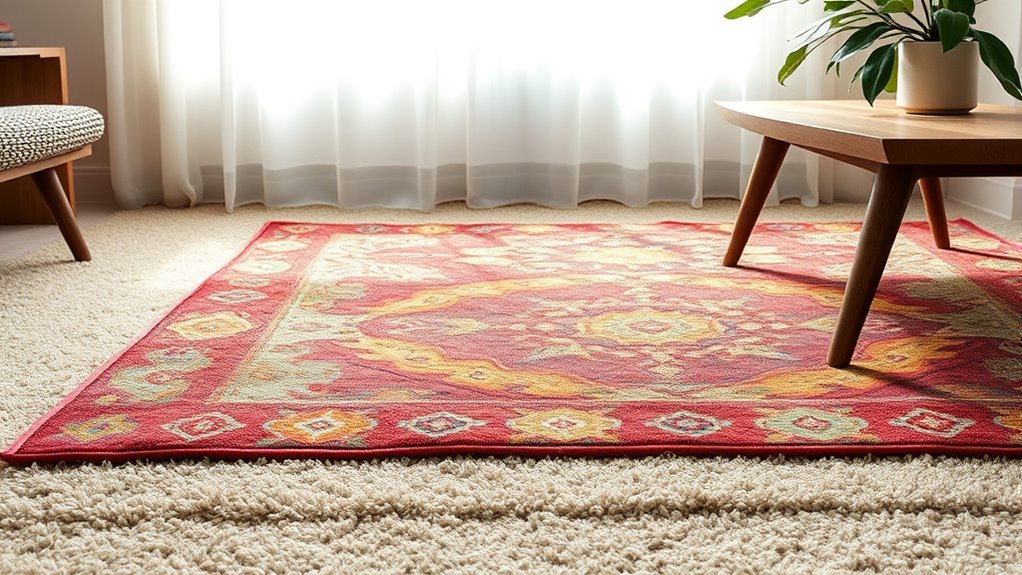
You can definitely put a rug over carpet, and it’s a great way to add style and protect your flooring. Just make sure you choose the right type of rug and use a quality non-slip rug pad to keep everything secure.
Opt for low-pile or flat-weave rugs because they grip better on carpet. Avoid thick, plush rugs over thick carpets since they can make things unstable.
Regular maintenance is key. Vacuum both the rug and carpet underneath, and reposition the rug every now and then to prevent slipping and bunching.
With the right setup and a little care, layering rugs over carpet can really transform your space. Keep exploring simple tips to make it work perfectly for your home!
Key Takeaways
- Yes, you can put a rug over carpet using non-slip rug pads to prevent slipping and bunching. It’s a simple way to add style or warmth to your space without much hassle.
- Choose low-pile or flat-weave rugs for better stability and grip on carpeted floors. These types tend to stay put better than thick, fluffy rugs.
- Avoid thick or plush carpets and rugs as they reduce rug stability and increase safety risks. You don’t want your rug sliding around or bunching up underfoot.
- Regularly adjust and clean both the rug and underlying carpet to maintain appearance and safety. This keeps everything looking fresh and prevents any tripping hazards.
- Use quality rug pads and secure rug corners with anchors or tape to enhance safety and prevent movement. It’s a simple step that makes a big difference in keeping your rug in place.
Is It Safe to Put a Rug Over Carpet?
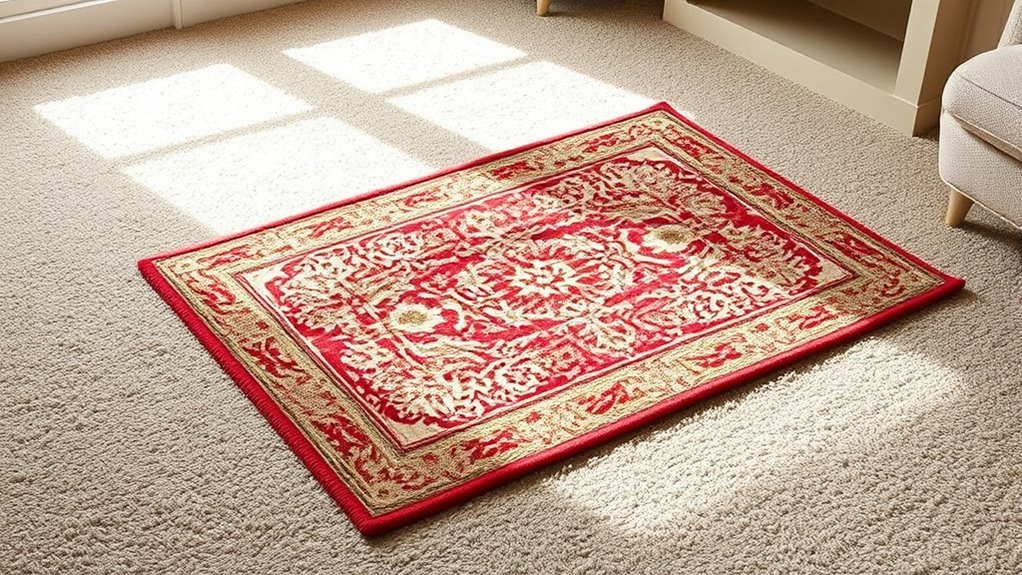
Wondering if it’s safe to put a rug over carpet? You can definitely enhance safety by using a non-slip rug pad specifically designed for carpeted floors. This extra layer helps prevent rug bunching and slipping, which are common hazards when layering rugs.
Make sure your rug is properly sized and securely placed to avoid tripping risks caused by uneven edges or folds. Rugs with a short to medium pile work best because they don’t flatten as much, maintaining stability.
Avoid cheap adhesives or tape, as they degrade and create safety issues over time. Regularly check and adjust your rug’s placement to keep everything secure.
With the right rug pad and attention, layering rugs over carpeted floors can be safe and stylish.
Which Carpet Types Are Best for Layering Rugs?
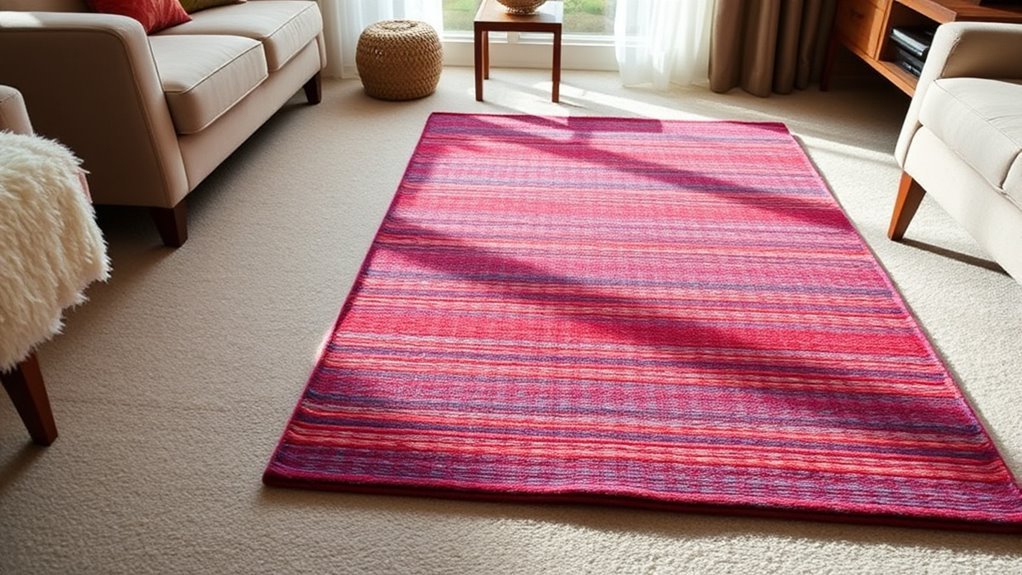
When layering rugs, choosing the right carpet type makes a big difference in both appearance and stability. Low-pile carpets are your best bet because they offer a stable surface that prevents slipping.
You’ll also want to consider carpet materials, as some provide better grip and durability. Here’s what works well:
- Low-pile carpets like Berber and sisal create a firm base, enhancing stability for layering rugs.
- Short to medium pile carpets maintain texture without flattening or bunching when you layer rugs on top.
- Synthetic carpets with smooth texture suit layering, while textured or heavily patterned carpets might clash with your rug’s design.
Avoid thick or plush carpets, as they reduce stability and make layering tricky. It’s just easier to work with carpets that keep everything in place.
How to Choose the Best Rugs for Carpeted Floors
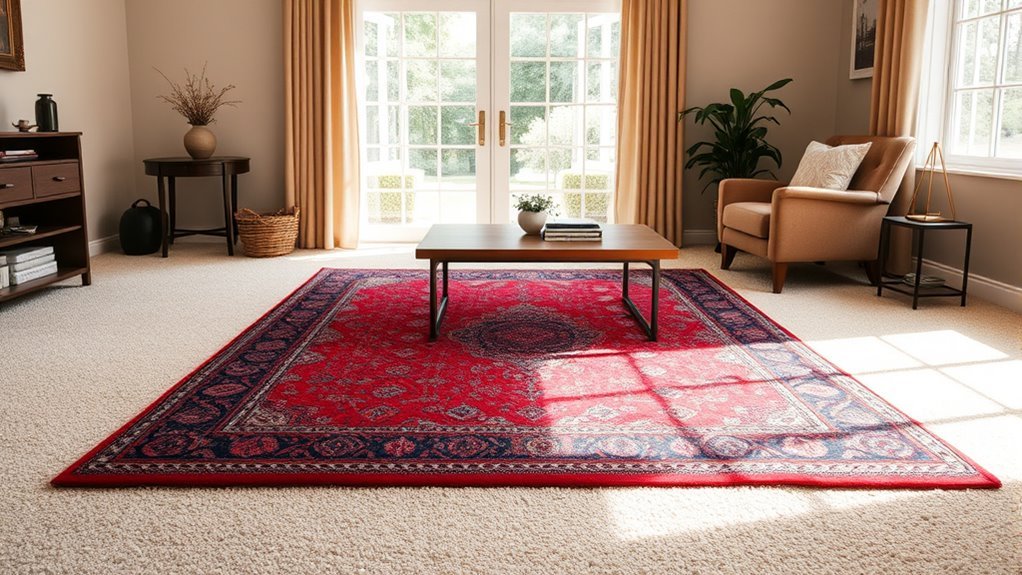
Although layering rugs over carpet can add style and comfort, choosing the right rug is essential to maintain safety and appearance. You’ll want to select low-pile or flat-weave rugs, like sisal or Berber, to prevent bunching and slipping on carpeted floors.
Rugs with natural rubber or felt backing offer better grip, reducing movement without needing a rug pad. Avoid thick, plush, or shaggy rugs, as they can flatten your carpet and create safety hazards.
For a balanced aesthetic, pick rugs that complement your carpet’s colors and patterns and size them properly, leaving a 1-2 inch border around the edges. By focusing on these factors, you’ll enjoy the benefits of layering rugs while keeping your space safe and visually appealing.
Why You Should Use a Rug Pad on Carpet
Since rugs can shift and bunch on carpeted floors, using a rug pad is essential to keep them securely in place. A quality rug pad offers slip prevention and protects your carpet fibers from wear and tear.
Here’s why you should use one:
- Slip Prevention: A non-slip rug pad keeps your rug stable, reducing trips caused by shifting or bunching.
- Protect Floors: It cushions both the rug and carpet fibers, preventing fraying and damage over time.
- Layering Rugs: When layering rugs, a rug pad adds extra grip and support, ensuring safety and stability.
How to Prevent Rugs From Slipping or Bunching on Carpet
Using a rug pad is a great start to keeping your rug in place, but there are other steps you can take to stop slipping and bunching on carpet. Choose non-slip rug pads designed for carpet to increase grip and prevent slipping.
Make sure your rug pad is slightly smaller than the rug to avoid bunching at the edges. Secure corners with rug anchors or double-sided carpet tape for extra stability.
Opt for low pile or flat weave rugs to reduce movement. Finally, regularly adjust your rug to keep it positioned correctly.
| Step | Benefit |
|---|---|
| Non-slip rug pads | Prevent slipping |
| Rug anchors/tape | Secure edges, prevent bunching |
| Regular repositioning | Maintain stability |
Tips for Layering Rugs to Enhance Room Style
When you layer rugs, you instantly add depth and personality to your space. Layering rugs is a smart way to bring visual interest and texture, especially when placing an area rug over carpet.
Here are tips for styling rugs on carpet:
- Layer at a 45-degree angle to create a dynamic look that catches the eye.
- Use rugs of different sizes—let larger rugs anchor the space while smaller ones add accents.
- Place a rug pad beneath the bottom rug to prevent slipping and keep everything secure.
How to Match Colors and Patterns When Layering Rugs
When layering rugs over carpet, start by coordinating your color scheme to complement the room’s palette. Mix patterns carefully, using no more than two or three to keep the look balanced and avoid clutter.
You’ll want to create visual contrast by pairing bold patterns with solid colors for a dynamic yet harmonious style. It’s all about finding that sweet spot where the rugs work together without overwhelming the space.
Color Scheme Coordination
Although layering rugs might seem tricky, coordinating colors and patterns can instantly elevate your space. To achieve a cohesive look, you need to focus on your color scheme carefully.
Here’s how to guarantee your layered rug enhances the room decor:
- Choose matching colors or complementary tones between the layered rug and the underlying carpet to create visual harmony.
- Incorporate accent colors from your room decor into the layered rug to tie the space together seamlessly.
- Limit patterns by balancing bold designs with solid colors. This prevents visual overload while still keeping things interesting.
Pattern Mixing Techniques
If you want your layered rugs to look intentional and stylish, you’ll need to master pattern mixing techniques. Start by choosing contrasting patterns that differ in scale and style to add visual interest without clashing.
Stick to a consistent color scheme or complementary hues to maintain design harmony across your layered rugs. Pair bold, large-scale patterns with subtle, solid-colored rugs to avoid overwhelming your space.
Incorporate cohesive design elements like stripes or chevron to unify different patterns seamlessly. Remember to limit yourself to two or three patterns to keep the look balanced and pleasing.
Balancing Visual Contrast
Mastering pattern mixing sets the stage for balancing visual contrast in your layered rugs. When you layer rugs over carpet, you want each piece to complement the other without overwhelming the space.
Focus on creating cohesiveness through thoughtful color and texture choices. It’s all about making sure everything works together, not fighting for attention.
- Use contrasting colors or bold patterns on the top rug to create striking visual contrast against the carpet. This helps the layers stand out without clashing.
- Limit patterns to one or two, mixing solid and patterned rugs to avoid clutter and guarantee balance. Keeping it simple makes the space feel calm and curated.
- Choose textures and colors that harmonize with your room’s color scheme. Try applying color theory—like pairing warm rugs with cool carpets—to create a balanced, inviting look.
The Benefits of Layering Rugs Over Carpet
When you layer rugs over carpet, you instantly boost your room’s style by adding texture, patterns, and color that grab attention.
Layering rugs not only creates visual interest but also helps protect your carpet from stains and wear. Using an area rug on top offers stain prevention and shields high-traffic zones.
Plus, layering adds warmth and comfort, making your space cozier without replacing the carpet. It’s a simple way to update your décor and personalize your room.
| Benefit | Description | Keyword |
|---|---|---|
| Protect Your Carpet | Guards against stains and damage | protect your carpet |
| Visual Interest | Adds color, pattern, and texture | visual interest |
| Easy Update | Quick style change with layering | layering rugs |
How to Maintain and Clean Layered Rugs on Carpet
To keep your layered rugs looking fresh, vacuum both the rug and carpet at least twice a week. Also, remember to remove the rug periodically to clean underneath.
Check your rug pads regularly to make sure they stay non-slip. It’s a good idea to replace them every 6 to 12 months.
For stains, use spot cleaning methods recommended by the manufacturer. This helps protect your rugs and keeps them looking great.
Regular Vacuuming Routine
Although layered rugs add style and comfort to your space, they need a consistent vacuuming routine to stay clean and fresh.
To prevent dirt buildup and keep both your layered rugs and carpet looking great, follow these simple steps.
- Vacuum the layered rugs and the carpet beneath at least twice a week. Use a handheld or crevice attachment to reach under the rugs and clean the carpet fibers thoroughly.
- Every now and then, take the rugs up to vacuum the rug pads and the carpet underneath. This helps stop dust from piling up and keeps all the layers fresh.
- Make sure to follow the manufacturer’s maintenance instructions for your rugs and rug pads. This will help you avoid damage and make sure your cleaning is effective.
Rug Pad Maintenance
Since rug pads play an essential role in keeping your layered rugs secure and comfortable, maintaining them properly guarantees they continue to perform well. Regularly remove the rug pad and clean it according to the manufacturer’s instructions to retain its grip and prevent mold or odors.
Use a damp cloth or mild cleaning solution to clean any stains or dirt buildup on the rug pad. Check your rug pad often for signs of wear, like fraying or reduced grip, and replace it if needed to avoid slipping.
Keep the rug pad dry and well-ventilated to prevent mold growth and preserve its cushioning. By maintaining your rug pad, you’ll assure your layered rugs stay safe, fresh, and comfortable for years to come.
Spot Cleaning Tips
Three key habits can help you keep your layered rugs on carpet looking fresh and clean: regular vacuuming, prompt spot cleaning, and careful maintenance. Follow these tips:
Vacuum both the rug and carpet at least twice a week to remove dirt and loose fibers without causing wear. Use a gentle brush or vacuum attachment for the rug’s surface. This way, you keep everything looking great without any damage.
Spot clean stains immediately using a mild detergent and a soft cloth. Just be sure to avoid soaking the rug to prevent damage and discoloration. Quick action really makes a difference here.
Periodically remove the layered rug to clean the rug pad and the carpet underneath. Doing this helps prevent dust buildup and keeps both layers fresh. It’s a simple step that pays off in the long run.
Frequently Asked Questions
Is Carpet Outdated in 2026?
Carpet isn’t outdated in 2026; you’ll find it still popular for comfort and insulation.
You’ll see lots of low-pile and eco-friendly options, plus plush carpets remain common in bedrooms and living rooms.
Should a Rug Be Darker or Lighter Than the Carpet?
Think of your rug as the cherry on top—go lighter to brighten a dark carpet and create airiness.
Or choose a darker rug over a light carpet to add warmth and cozy up your space effortlessly.
How Can I Cover up Carpet Without Removing It?
You can cover up carpet by layering a low-pile rug with a rug pad underneath to prevent slipping. Choose complementary colors or patterns, and measure carefully to hide stains or damage without removing the carpet.
It’s a simple way to freshen up a room without the hassle of ripping out the carpet. Plus, rugs can add a nice touch of style or coziness to your space.
Is It Possible to Lay Carpet Over Existing Carpet?
Absolutely, you can lay carpet over carpet—it’s like stacking clouds for your feet!
Just make sure the bottom carpet is low-pile, clean, and dry. Use a proper pad to keep things comfy and safe.
Conclusion
Putting a rug over carpet isn’t just safe—it’s a style upgrade waiting to happen. Imagine transforming your space with just a simple layer, adding warmth, texture, and personality.
By choosing the right rug and using a pad, you’ll prevent slipping and keep everything looking fresh. So go ahead, layer boldly and let your floors tell a story that’s uniquely yours.
After all, your home deserves to feel as cozy as it looks. Putting a rug over carpet can instantly enhance comfort and style without the hassle of removing your existing flooring. Just remember to pick a rug pad designed for carpet to avoid any movement and protect both layers. This little step ensures your layered look stays in place and lasts longer, making your space inviting and beautiful.