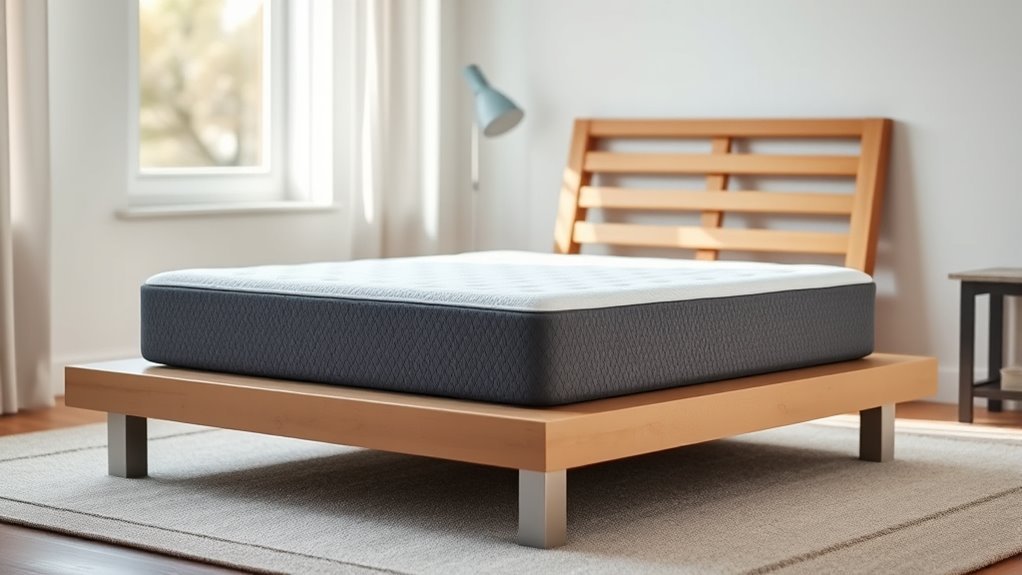
Do You Need Box Springs With a Memory Foam Mattress?
You don’t need traditional box springs for a memory foam mattress because they often don’t provide the firm, even support your mattress needs to avoid sagging or damage. Memory foam mattresses require a solid, flat foundation to maintain their shape and comfort over time.
Instead, solid foundations like platform beds, bunkie boards, or adjustable bases work better by offering sturdy, flat surfaces that preserve comfort and durability. These options help your mattress last longer and keep you sleeping comfortably night after night.
Using old or worn box springs can actually harm your mattress’s shape and lifespan. So, it’s a good idea to explore other support options tailored for memory foam beds. Keep reading to discover the best ways to support and extend your mattress’s life.
Key Takeaways
– Memory foam mattresses need a flat, sturdy foundation to provide the right support and last longer.
Traditional box springs aren’t ideal for this purpose.
– Using old or flexible box springs can lead to sagging and warping.
This not only feels uncomfortable but also shortens the life of your memory foam mattress.
– Good alternatives include platform beds, bunkie boards, or solid slatted bases.
Just make sure the slats have proper spacing to allow for ventilation.
– When your mattress has the right support, it maintains its contouring benefits and avoids those annoying indentations.
Plus, it helps keep your warranty valid.
– Choosing the right foundation also boosts airflow, which prevents moisture buildup.
That means your mattress stays comfortable and lasts longer overall.
What Is a Memory Foam Mattress?
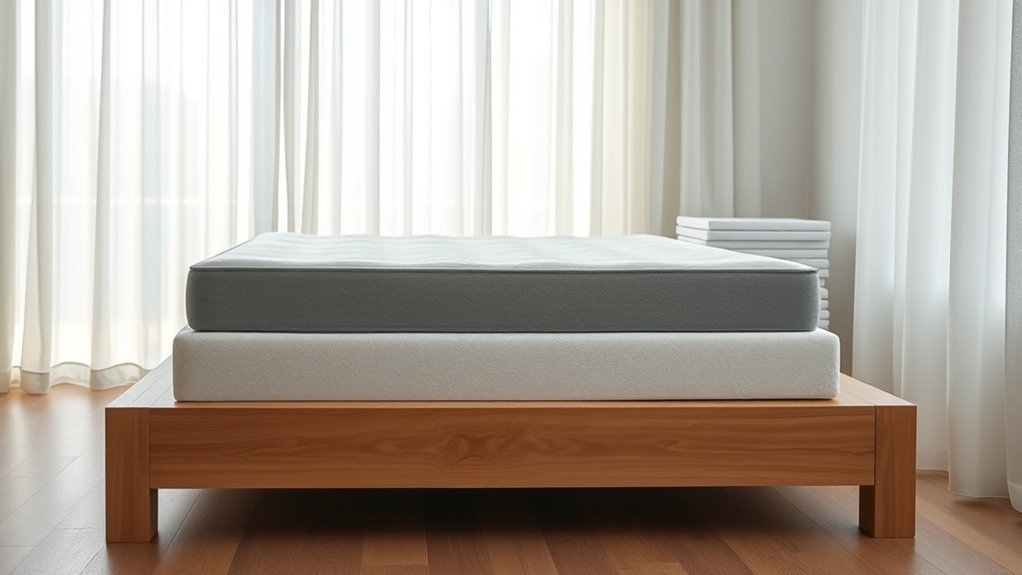
Although memory foam mattresses might seem like a modern invention, they were actually developed by NASA in the 1960s to improve seat cushioning and crash protection.
Memory foam mattresses, originally developed by NASA in the 1960s, enhance comfort and crash protection.
When you choose a memory foam mattress, you get a comfort layer that molds to your body, providing personalized support and pressure relief.
To maintain this support, your mattress needs a proper foundation. Whether it’s placed on a solid base, slatted platform, or sturdy bed frame, the support system must keep the mattress stable without sagging.
A reliable bed base or bed frame ensures even weight distribution, preserving the mattress’s contouring benefits.
Using an inadequate support system can harm the memory foam’s structure and reduce comfort, so always pair your mattress with a foundation designed to support memory foam properly.
How Memory Foam Mattresses Are Supported
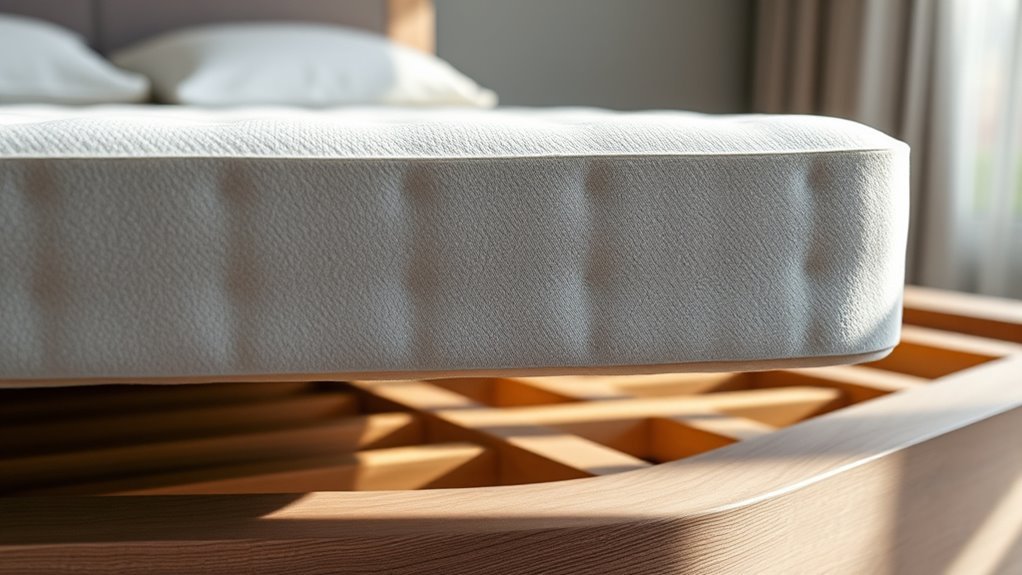
You need a flat, sturdy surface to keep your memory foam mattress from sagging and losing shape. Traditional box springs usually aren’t the best choice because their flexible coils don’t provide even support.
Instead, using a platform bed or a slatted base with proper spacing helps maintain support and allows for airflow. This airflow keeps your mattress comfortable and lasting longer.
Support Requirements Overview
While memory foam mattresses offer excellent comfort and support, they need a stable, flat surface beneath to maintain their shape and prevent sagging. Proper support is vital to meet the support requirements of your memory foam mattress, ensuring even pressure distribution and extending its lifespan.
Unlike traditional box springs, which have a coil-based structure and may cause uneven support, memory foam performs best on firm foundations.
Ideal foundation types include:
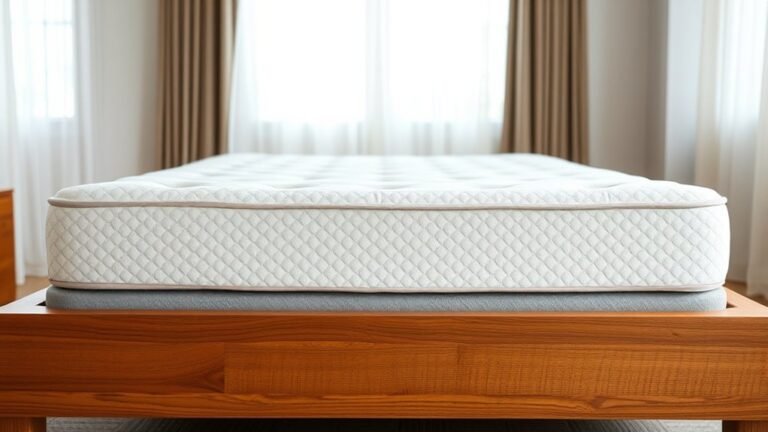
- A solid platform bed or foundation providing a completely flat surface
- A slatted base with closely spaced slats to prevent mattress flexing
- Supportive, non-flexing bases designed specifically for memory foam
Choosing the right foundation ensures proper support, maintains warranty coverage, and preserves your mattress’s comfort and durability. So, it’s definitely worth picking the right base to keep your mattress in great shape!
Suitable Support Options
Because memory foam mattresses need consistent support to maintain their shape, choosing the right base is essential. You have several support options to consider, including solid platform beds and slatted bases with minimal gaps (less than 3 inches).
These provide solid support, preventing sagging and extending your mattress’s lifespan. If you prefer an alternative to box springs, bunkie boards and foundation slabs offer excellent foundation types designed specifically for memory foam.
Proper support also comes from sturdy bed frames that keep your mattress stable. Avoid traditional box springs, as they often lack the flat, firm surface memory foam requires.
Importance of Proper Ventilation
Although memory foam mattresses rely on solid support to maintain their shape, proper ventilation beneath them plays an equally vital role. Without adequate airflow, heat and moisture can build up, compromising the mattress’s comfort and durability.
Your foundation should promote breathability and effective heat dissipation to keep the mattress fresh and long-lasting. When supporting memory foam, consider a support structure that encourages air circulation to prevent mold and odors.
To guarantee ideal ventilation and support, choose a foundation that offers:
- Slats with appropriate spacing to enhance airflow and moisture control
- Breathable materials that aid heat dissipation and maintain cool sleeping temperatures
- Elevated designs that promote continuous air circulation beneath the mattress
Prioritizing ventilation along with support preserves your mattress’s integrity and your sleep quality. It really makes a difference in how long your mattress lasts and how comfortable you feel every night.
Comparing Box Springs and Alternative Foundations
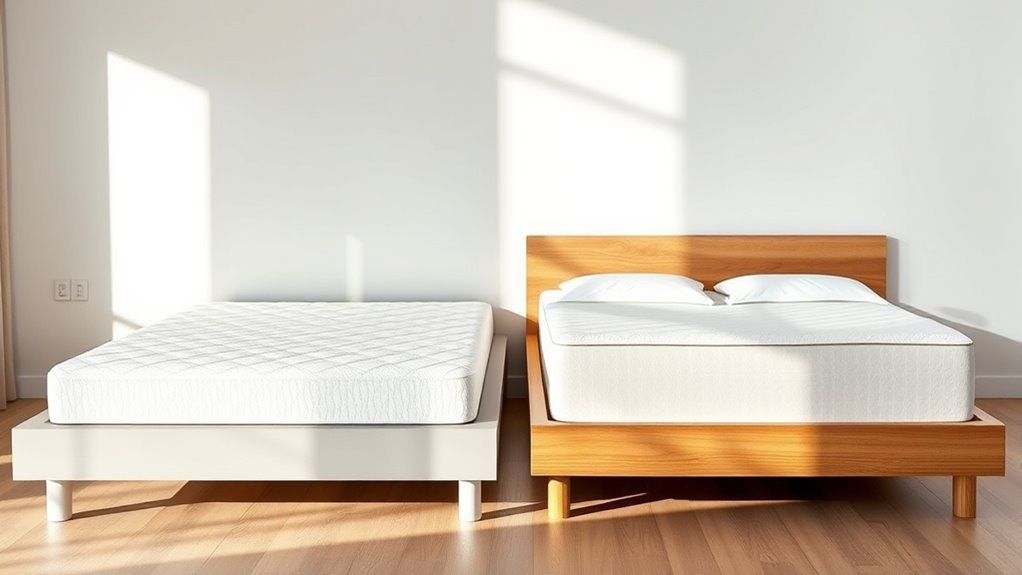
You might think a box spring works fine, but it often lacks the firm, even support memory foam mattresses need.
Alternative foundations like platform beds or bunkie boards provide better stability and airflow, protecting your mattress from sagging.
Choosing the right base can extend your mattress’s life and keep it comfortable. It’s worth considering these options to get the most out of your mattress.
Box Spring Limitations
While traditional box springs work well for innerspring mattresses, they fall short when supporting memory foam. Their coil support often causes flex and uneven support, leading to sagging and indents that damage your mattress over time.
You’ll notice increased wear and indentations because of insufficient firm support and poor ventilation. Many manufacturers recommend solid or slatted foundations instead to preserve your mattress’s shape and lifespan.
Keep these box spring limitations in mind:
- Traditional box springs don’t provide the stable, firm base memory foam needs.
- Coil support can create pressure points, causing sagging and uneven wear.
- Lack of ventilation traps heat and moisture, accelerating wear and indentations.
Choosing the right foundation ensures your memory foam mattress performs at its best. So, it’s worth investing in a proper base to enjoy comfort and durability.
Alternative Foundation Benefits
Because memory foam mattresses require consistent, firm support, alternative foundations like solid platform beds or slatted bases offer significant advantages over traditional box springs.
These options provide a solid foundation that maintains memory foam support, enhances pressure relief, and extends mattress lifespan. Unlike flexible box springs, platforms, bunkie boards, and slatted bases deliver uniform, alternative support that protects your mattress integrity.
Here’s a quick comparison of foundation benefits:
| Foundation Type | Support Quality | Additional Benefits |
|---|---|---|
| Platform Bed | Solid foundation | Improved airflow, durability |
| Slatted Bases | Firm, spaced support | Better ventilation, pressure relief |
| Bunkie Board | Flat, sturdy base | Compact, enhances mattress support |
| Box Spring | Flexible, uneven | May cause sagging |
| Bed Frame | Variable | Depends on included support |
Choosing the right bed frame foundation supports your mattress and improves sleep quality. It’s worth considering these options to get the best out of your memory foam mattress.
Risks of Using Old Box Springs With Memory Foam Mattresses
If an old box spring has seen better days, it can’t provide the consistent support your memory foam mattress needs. Using a deteriorated box spring with worn springs leads to sagging support and an uneven surface. This compromises comfort and mattress longevity.
You might also notice noise from structural failure, like creaks and squeaks, which can disrupt your sleep. Visible damage or warping further reduces stability. That causes premature indentations in your mattress.
Watch out for these risks when using an old box spring:
- Support loss from worn springs causing sagging and uneven surfaces
- Structural failure producing noise and compromising mattress stability
- Damage and deterioration that shorten mattress lifespan and comfort
Avoid these issues to keep your memory foam mattress performing at its best.
Manufacturer Recommendations for Memory Foam Mattress Support
When you choose a memory foam mattress, manufacturers usually recommend placing it on a solid or slatted foundation rather than a traditional box spring. This helps guarantee ideal support and durability.
They point out that box springs often lack the firm, even support needed, which can lead to sagging and reduce your mattress’s lifespan. So, instead of a box spring, they suggest using a flat surface like a platform bed or adjustable base for proper support.
Following these manufacturer guidelines not only ensures your memory foam mattress performs *at its best* but also helps maintain your warranty. By selecting the right foundation—solid or slatted—you protect your investment.
Plus, you get to enjoy the comfort and longevity your mattress is designed to deliver. It’s a simple step that really pays off in the long run.
Signs Your Box Spring May Not Be Suitable
Although box springs were once standard mattress supports, you might find yours isn’t up to the task for your memory foam mattress. Over time, sagging and warping can cause uneven support, leading to premature wear and instability.
You should watch for signs of damage or breakage that compromise support quality.
Keep an eye out for any damage or breakage that could weaken your mattress support.
Look out for these key indicators:
- Creaking or squeaking noises during the night, signaling weakened or broken springs
- Visible tears or rips in the fabric covering, which reduce ventilation and expose the core
- Excessive sagging or warped surfaces causing uneven support and discomfort
If your box spring is over 8-10 years old or shows these issues, it likely no longer provides the reliable foundation your memory foam mattress needs.
Benefits of Platform Beds and Adjustable Bases
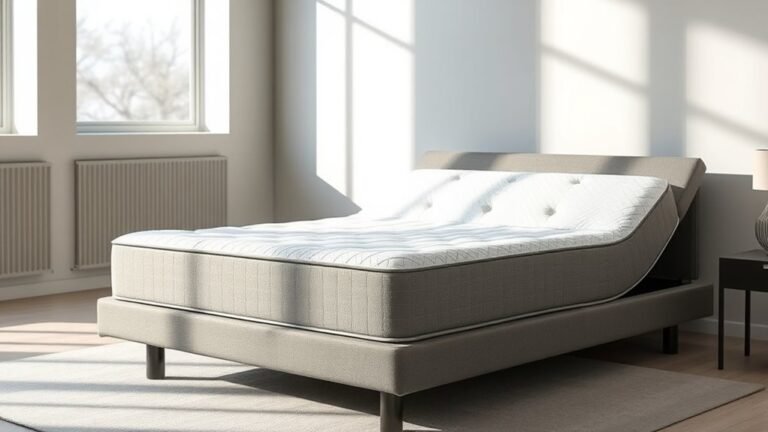
Since memory foam mattresses require firm, even support, platform beds and adjustable bases offer excellent alternatives to traditional box springs. A platform bed provides a sturdy foundation with a solid surface that guarantees your memory foam mattress maintains stability and proper support without extra layers.
Adjustable bases, on the other hand, let you customize your sleeping position, improving comfort and support tailored to your needs. Both options promote better airflow around the mattress, helping reduce heat retention and moisture buildup.
Additionally, these support options often allow you to adjust bed height, matching your preferred setup and enhancing ease of use. Compatible with most memory foam mattresses, a quality bed frame combined with a platform bed or adjustable base can greatly improve sleep quality and prolong mattress life.
Tips for Extending the Lifespan of Your Memory Foam Mattress
To keep your memory foam mattress comfortable and supportive for years, you’ll want to follow a few simple care tips. Using a solid foundation or proper bed base ensures adequate airflow and helps distribute weight evenly. This prevents sagging and extends your mattress’s lifespan.
Providing proper support safeguards the foam’s structure and maintains comfort.
- Rotate your mattress every three to six months to prevent uneven wear and maintain support.
- Use a waterproof, allergen-proof cover to prevent damage from moisture and stains.
- Avoid jumping or placing heavy objects on the mattress to protect its foam integrity.
Frequently Asked Questions
What Happens if You Don’t Wait 48 Hours for Memory Foam?
If you don’t wait 48 hours, you’ll risk discomfort from uneven support and strong chemical odors.
Your mattress might not fully expand, which can reduce its lifespan and negatively affect your sleep quality and room air.
Why Are People No Longer Buying Memory Foam Mattresses?
You can’t judge a book by its cover—people aren’t buying memory foam mattresses because they’re heavy, trap heat, and smell.
Plus, newer beds offer better support, making memory foam less appealing these days.
What Are the Disadvantages of a Memory Foam Mattress?
You’ll find memory foam mattresses heavy, prone to heat retention, and sometimes smelly from off-gassing. They can sag over time without proper support, which reduces comfort and lifespan.
Handling them isn’t always easy either. So, while they have their perks, there are definitely some downsides to keep in mind.
What Is the Best Thing to Put Under a Memory Foam Mattress?
You should put a solid platform, bunkie board, or plywood sheet under your memory foam mattress. These provide firm, even support and prevent sagging.
They also help improve airflow, which is great because it helps your mattress last longer and stay comfortable. So, it’s definitely worth setting up a good base for your mattress!
Conclusion
You might think you always need a box spring for your memory foam mattress, but that’s not necessarily true. Memory foam mattresses actually require a firm, flat, and supportive base—not just any box spring will do.
Using an old or unsuitable box spring can damage your mattress and reduce its lifespan. Instead, consider platform beds or adjustable bases, which often provide better support.
So, don’t just rely on tradition; choose the foundation that truly protects your mattress. Remember, a proper foundation helps maintain the mattress’s shape, comfort, and durability. When it comes to memory foam mattresses, skipping the box spring in favor of a sturdy platform or adjustable base is often the best choice. This way, you’ll get the most out of your mattress and enjoy better sleep quality for years to come.