How Do You Put Carpet Over Tile Step by Step?
To put carpet over tile, start by thoroughly cleaning and repairing the tile surface. This step is crucial to ensure the tile is smooth and stable, providing a perfect base for your carpet. You want to avoid any bumps or loose tiles that could affect the carpet later on.
Next, lay down a thick underlay. This cushioning layer adds comfort and helps the carpet feel soft underfoot.
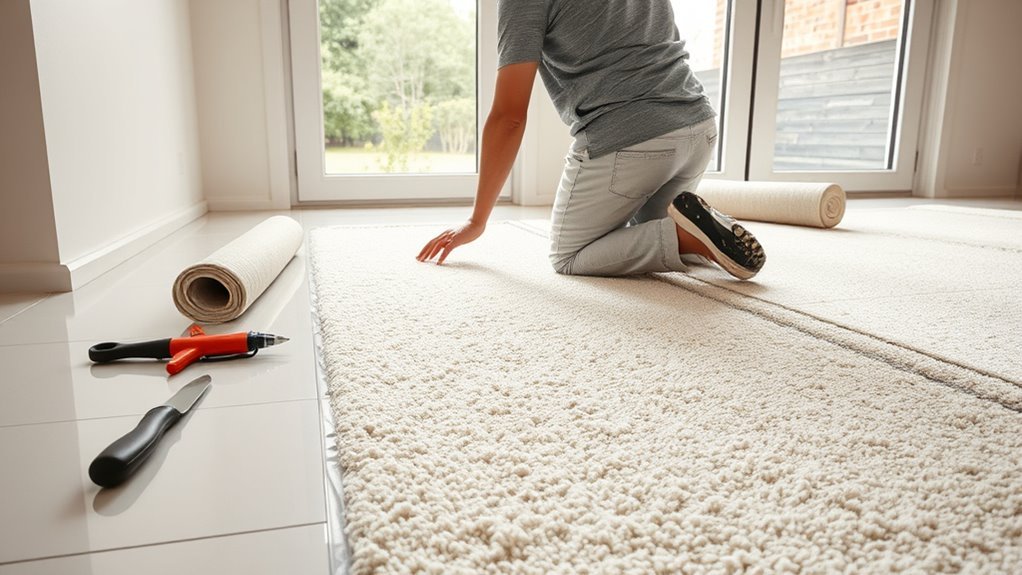
After that, roll out your carpet carefully, making sure to align it properly with the room’s edges.
Now, apply adhesive evenly on the tile. Press the carpet firmly onto the adhesive to remove any bubbles and stretch it for a snug fit.
Finally, trim any excess carpet along the edges and secure them neatly for a clean, finished look.
Keep following these steps, and you’ll find the process easier and more effective than you might expect!
Key Takeaways
- Clean and repair the tile surface, making sure it’s smooth, dry, and free of any debris before you start the installation. This step is really important to get a good finish.
- Next, choose a thick underlay along with a carpet that’s compatible. This combo will boost comfort and help hide any tile imperfections underneath.
- Now, apply a suitable adhesive evenly over the tile. Press the carpet down firmly to make sure it sticks well and stays in place.
- After that, trim any excess carpet edges carefully. You can secure these edges under baseboards or use seam seaming tools to keep everything neat.
- Finally, check the installation for any wrinkles or loose spots. Clean up the area, then let the adhesive fully cure before you walk on it or move furniture back in.
Benefits of Installing Carpet Over Tile
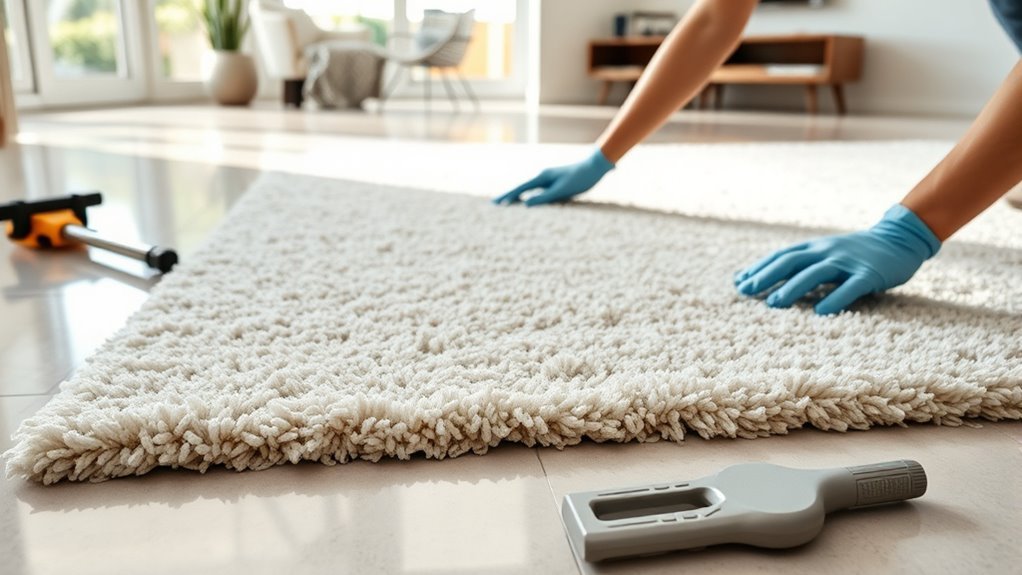
While tile floors are durable and easy to clean, installing carpet over them adds immediate warmth and softness that makes your space more comfortable, especially during colder months.
One of the key benefits of carpet over tile is its ability to serve as a thermal barrier. This improves insulation and helps reduce energy costs.
Beyond warmth, carpet also offers noise reduction, dampening echoes and creating a quieter environment.
If your existing tile flooring has imperfections or cracks, covering tile imperfections with carpet is a smart way to enhance your room’s look without costly repairs.
Installing carpet over tile is a cost-effective upgrade that spares you the hassle and expense of tile removal. Plus, it adds warmth and comfort to your home quickly and efficiently.
Assessing the Tile Floor Condition
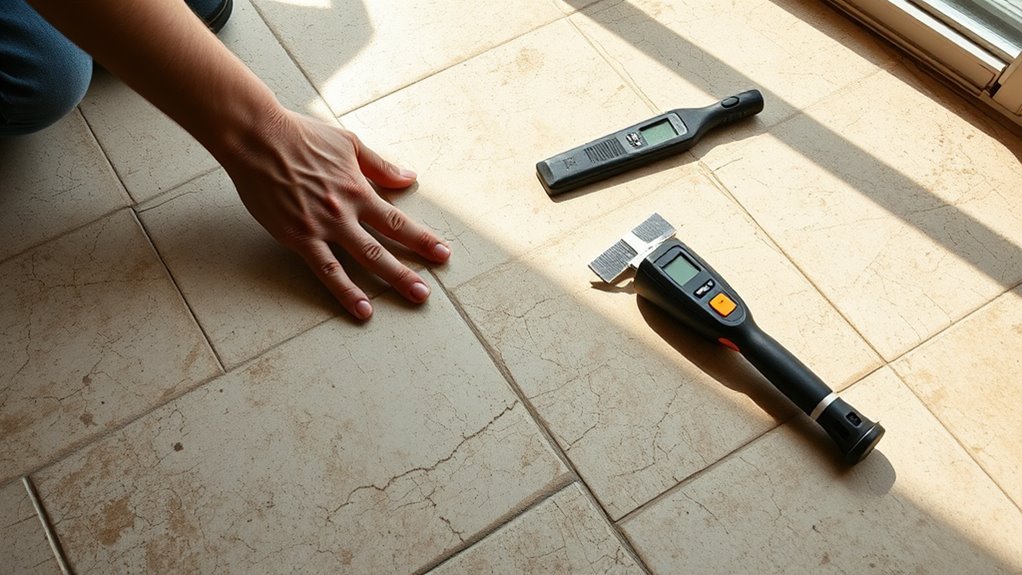
Before you lay carpet over tile, take a close look at the tile surface for any cracks, chips, or loose pieces. You’ll want to repair or replace damaged tiles to guarantee a stable base.
Cleaning the tile thoroughly will also help the carpet adhere properly. It’s a simple step, but it makes a big difference in the long run.
Check Tile Surface
Since the tile surface forms the foundation for your carpet, you need to examine it carefully for cracks, chips, and loose tiles. This step guarantees a smooth, stable base and prevents future problems.
Here’s what to check:
- Inspect the tile surface closely for any damage like cracks or chips that might weaken the base.
- Verify the grout lines are intact and not too wide or uneven to maintain flatness.
- Make sure the tiles feel clean, dry, and free from dust, grease, or residues that can affect adhesion.
- Confirm all loose tiles are secure, providing a solid condition for your carpet installation.
Repair Damaged Tiles
If you find any damaged or loose tiles, you’ll need to repair or replace them to create a solid foundation for your carpet. Start by inspecting tiles carefully for cracks, chips, or looseness.
Use appropriate repair materials like rapid-set cement to fix or replace damaged tiles. Next, fill grout lines that are wide or uneven to guarantee a level surface, which helps prevent bumps under the carpet.
Make sure to repair cracks thoroughly to avoid future problems. Once repairs are done, clean tile surfaces completely to remove dust, grease, or residues that might interfere with adhesion.
Finally, guarantee the tiles are dry and free from moisture before moving on. Proper repair and preparation set the stage for a smooth, durable carpet installation.
Choosing the Right Carpet and Underlay
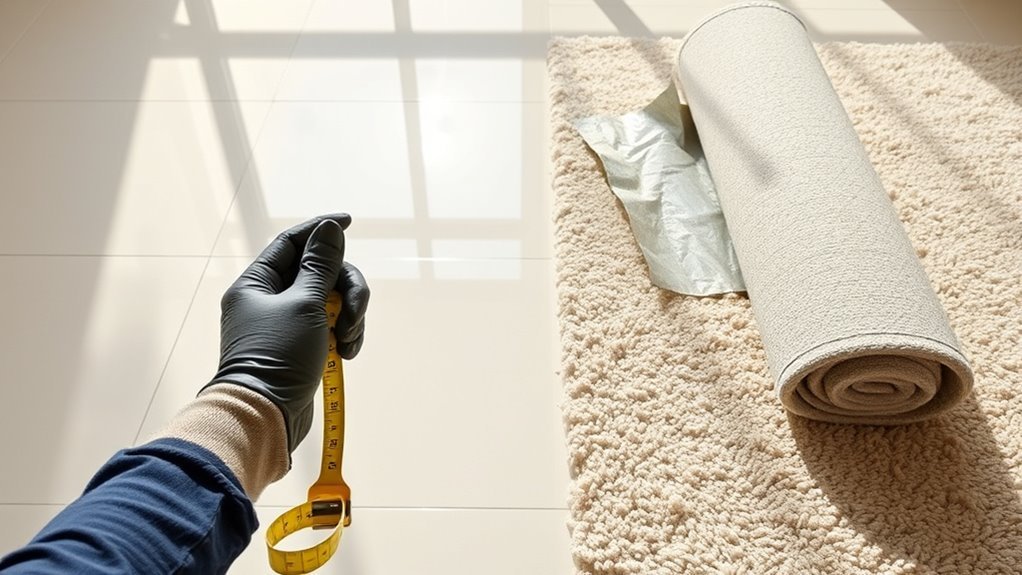
You’ll want to pick a thick, plush carpet like wool or dense synthetics to soften the hard tile beneath. Adding an underlay at least 10mm thick will boost comfort, cover minor imperfections, and improve insulation.
Make sure your carpet and underlay match in size and style. Also, choose an underlay with non-slip backing for safety and durability. That way, everything stays in place and feels cozy underfoot.
Carpet Material Selection
Although selecting carpet material might seem straightforward, choosing the right combination of carpet and underlay is crucial for comfort and durability over tile floors. You’ll want to focus on these key factors during installation:
- Pick a plush carpet made from wool or high-density fibers to soften the hard tile beneath. It really makes a big difference underfoot.
- Choose a quality underlay—ideally 10mm thick—to cushion your steps and smooth minor tile imperfections. This helps the carpet feel more comfortable.
- Opt for durable carpets with dense piles to handle foot traffic without quick wear. You don’t want your carpet looking worn out too soon.
- Select carpets with moisture-resistant backing, especially in humid areas, to prevent mold and mildew. That’s a smart move for longevity.
Also, match the carpet style and texture to your room’s aesthetic for a cohesive look. This careful selection ensures your carpet feels great and lasts long over tile floors.
Underlay Thickness Benefits
Why does underlay thickness matter when laying carpet over tile? The right underlay thickness provides essential cushioning, making your carpet feel soft and comfortable underfoot.
A thicker underlay, around 10mm, helps level minor uneven surfaces on the tile, ensuring stability and preventing bumps. It also improves insulation and soundproofing, reducing noise and maintaining room temperature.
By absorbing impact, a thicker, denser underlay reduces wear and tear, extending your carpet’s lifespan. Impact absorption also makes walking more comfortable, especially on hard tile floors.
Plus, the proper underlay thickness ensures better adhesion between carpet and tile, preventing shifting or buckling. Choosing the right thickness balances comfort, durability, and performance, making your carpet installation over tile both practical and long-lasting.
Matching Style and Function
When choosing the right carpet and underlay to lay over tile, consider both style and function to create a comfortable and visually pleasing space. Your carpet style should complement the room decor, balancing texture and pattern for visual harmony.
Don’t forget underlay thickness and material—they support comfort and durability while smoothing tile imperfections. Focus on design elements that ensure style matching and decor coordination throughout your space.
- Pick a dense, plush carpet like wool for softness over hard tile floors.
- Choose an underlay about 10mm thick for insulation and support.
- Match carpet texture and pattern to your existing room decor.
- Consider eco-friendly or textured carpets as focal points or subtle blends.
This approach guarantees lasting comfort with a cohesive look.
Preparing the Tile Surface for Installation
Before you lay carpet over tile, you need to prepare the surface properly to guarantee lasting adhesion and a smooth finish. Start by sweeping and vacuuming the tile surface thoroughly to remove dust, dirt, and debris.
Next, inspect the tiles carefully for any cracks, chips, or loose sections. Repair or replace damaged tiles to prevent unevenness. Use a suitable leveling compound to fill grout lines and cracks, ensuring the surface is even and flat.
After leveling, clean the tile with a damp cloth or mild detergent to remove stains, grease, or residue that could hinder adhesion. Finally, let the surface dry completely before moving on.
Proper preparation guarantees your carpet will lay smoothly and stay securely in place over time. So, take your time with this step—it really makes a difference!
Applying Adhesive and Securing the Carpet
How exactly do you guarantee your carpet sticks firmly to the tile beneath? Start by selecting a high-quality adhesive designed specifically for carpet-to-tile bonding. It’s important to choose the right glue to ensure a strong hold.
Then, follow these steps:
- Apply the adhesive evenly with a trowel or roller. Spread it in small sections so it stays fresh and tacky.
- Carefully position the carpet, making sure it aligns perfectly with your desired layout.
- Press the carpet firmly from the center outward. This helps get rid of air bubbles and stops wrinkles from forming.
- Finally, use a weighted roller or your hands to press the carpet securely. This ensures full contact between the carpet and adhesive for a lasting bond.
Laying the Carpet and Smoothing Out Wrinkles
As you unroll the carpet, align it carefully with the room’s layout and smooth it out to prevent wrinkles from forming. Use a knee kicker or hand roller to press the carpet firmly onto the tile, especially along edges and seams.
If wrinkles appear, gently pull and stretch the carpet toward the edges, repositioning it as needed. Apply extra adhesive to loose spots for a secure hold.
Keep a utility knife handy to trim excess carpet, ensuring a tight, wrinkle-free fit.
| Step | Action | Feeling |
|---|---|---|
| Unroll & Align | Smooth carpet | Anticipation |
| Press & Stretch | Remove wrinkles | Satisfaction |
| Reposition | Apply adhesive | Confidence |
| Trim Edges | Perfect finish | Pride |
Trimming Edges and Finalizing the Installation
Once you’ve smoothed out all wrinkles, trim the excess carpet along walls, corners, and obstacles using a utility knife or scissors. This helps guarantee a snug fit that follows the room’s contours precisely.
After smoothing wrinkles, carefully trim excess carpet for a perfect, contour-fitting finish around walls and corners.
Trimming edges carefully is key to finalizing the installation and achieving a professional look. Here’s how to finish strong:
- Use precise trimming to cut along edges, preventing gaps or overlaps.
- Secure edges with a seam seamer or hot glue to stop fraying or shifting.
- Tuck trimmed edges under baseboards or molding for a clean, finished appearance.
- Check for wrinkles or bubbles near edges and smooth them out for a flawless finish.
Frequently Asked Questions
Can You Put Carpet Directly Over Tile?
Yes, you can put carpet directly over tile if it’s clean and smooth.
Just make sure to use an appropriate underlay and secure the carpet with adhesive or double-sided tape. This helps prevent slipping and wrinkles.
How Do You Lay Carpet Over Tiles?
Laying carpet over tiles is like dressing a floor in a cozy blanket. You’ll clean, smooth, and add padding, then stick the carpet down carefully.
Trim the edges for a snug, wrinkle-free fit that feels like home. It’s all about making the floor comfy and inviting!
What Is the Cheapest Way to Cover up a Tile Floor?
The cheapest way to cover tile floors is using peel-and-stick vinyl tiles or carpet tiles with double-sided tape.
You’ll save money and time, plus these options are easy to install and remove when needed.
It’s super convenient if you’re looking for a quick fix without a big hassle. Just peel, stick, and you’re done!
What Is the Best Way to Transition From Carpet to Tile?
The best way to shift from carpet to tile is by using a transition strip like T-molding. You’ll want to prep both surfaces, install the strip securely, and neatly trim the carpet edge for a smooth, safe finish.
This approach keeps things looking clean and prevents tripping hazards. Plus, it lets the two different flooring types meet nicely without damage.
Conclusion
Putting carpet over tile perfectly provides a plush, peaceful place to relax. By preparing the pristine tile properly, picking the perfect padding, and pressing the plush pile precisely, you prevent problems and promote a pretty, polished finish.
With careful cutting, cushioning, and consistent care, you create a cozy, comfortable corner that complements your home’s charm. So, step smartly, smooth steadily, and settle into soft surroundings that satisfy every step.
When you put carpet over tile, start by cleaning the tile thoroughly to ensure the carpet adhesive sticks well. Next, select a high-quality carpet padding that adds comfort and durability.
Then, measure and cut the carpet carefully to fit your space perfectly. Use a knee kicker or carpet stretcher to smooth out any wrinkles or bumps.
Finally, secure the carpet edges properly to avoid fraying and maintain a neat appearance. This step-by-step approach helps you achieve a beautiful carpet installation over tile that enhances your home’s comfort and style.