Do Bed Bugs Live in Carpet and How to Detect Them
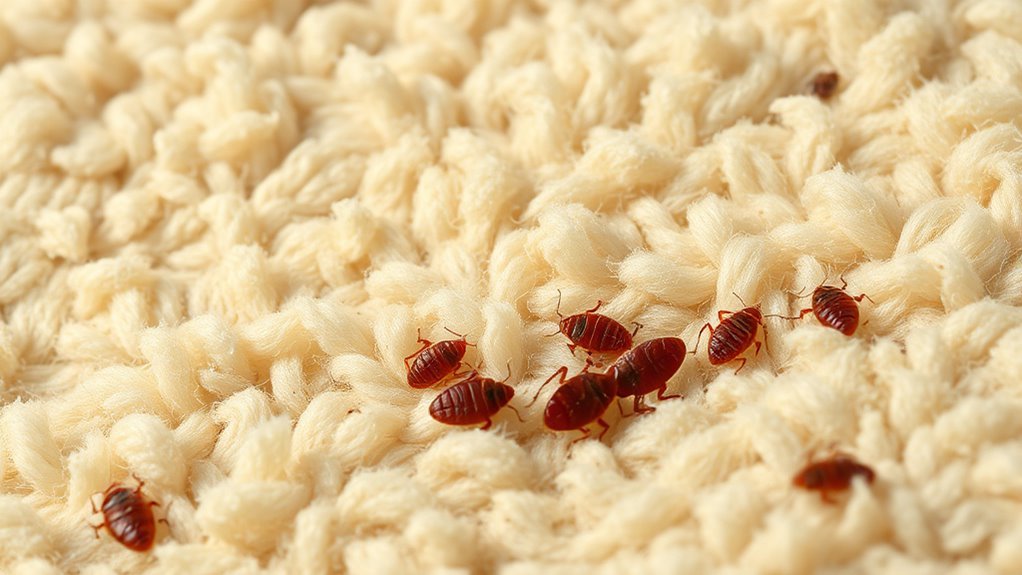
Yes, bed bugs can hide in your carpet—especially along edges, seams, and near furniture bases. These spots offer dark, undisturbed shelter close to you, making them ideal hiding places.
You’ll spot signs like tiny dark fecal spots, shed skins, or rusty blood stains in these areas. Use a flashlight to check seams and under furniture legs for bugs or eggs.
Want to know how to get rid of them effectively and avoid confusing them with other pests? Keep exploring further.
Key Takeaways
- Bed bugs do not live inside carpet fibers but hide in edges, seams, cracks, and under furniture legs near carpets. They prefer these spots because they offer dark, tight places to stay close to their human hosts.
- Signs of bed bugs in carpets include rusty stains, black fecal spots, shed skins, eggshell fragments, and live bugs near carpet edges. If you notice any of these, it’s a good idea to take a closer look.
- When inspecting, focus on carpet edges, seams, and under furniture using a flashlight to spot small, flat brown bugs and dark spots. These areas are their favorite hiding places.
- Bed bugs tend to choose carpets for the dark, undisturbed shelter they provide, especially near carpet edges and beneath area rugs. It’s all about staying close to where people rest.
- To detect them effectively, combine a visual inspection for signs with vacuuming and steam treatments that target carpet edges and crevices. This approach helps remove bugs and their eggs.
Understanding Bed Bugs and Their Habitats
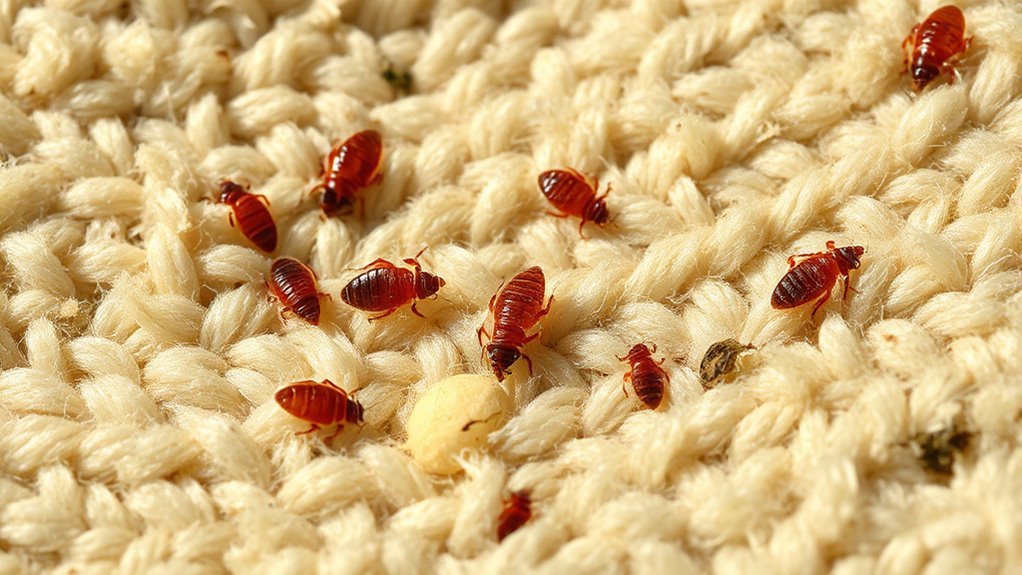
Although bed bugs are famously associated with mattresses and bed frames, they can also hide in carpets, especially along edges and near furniture bases. These small, oval insects don’t live inside carpet fibers but use carpets as part of their bed bug habitats.
You’ll often find them in cracks and crevices close to where you sleep. Bed bugs prefer to stay within 5 to 20 feet of their host, making carpet edges an ideal hiding spot.
To detect their presence, watch for signs of bed bugs like rusty stains, dark fecal spots, shed skins, or tiny white eggs near or in the carpet. Knowing these details helps you identify and address infestations before they spread.
Why Bed Bugs Choose Carpets as Hiding Places
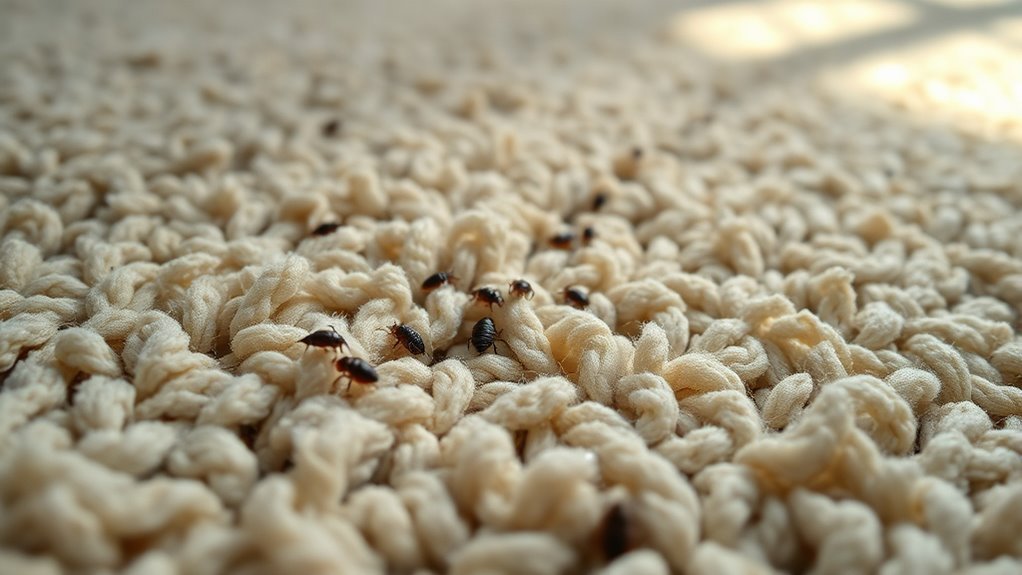
Because bed bugs seek out narrow, undisturbed spaces, carpets offer them an ideal hiding place along edges, seams, and beneath furniture. You’ll find these insects favor carpets because they provide a dark environment, giving excellent shelter from light and human activity.
Carpets create numerous hiding spots, especially at edges and *junctions*, where bed bugs can easily remain undetected. Though bed bugs don’t feed on carpet fibers, they stay close to their human hosts by using carpets as convenient shelters.
The complex structure of carpets makes inspection challenging, so you might overlook an infestation until it becomes severe. Understanding why bed bugs choose carpets as hiding places helps you focus your detection and treatment efforts in these critical areas.
Common Areas in Carpets Where Bed Bugs Hide
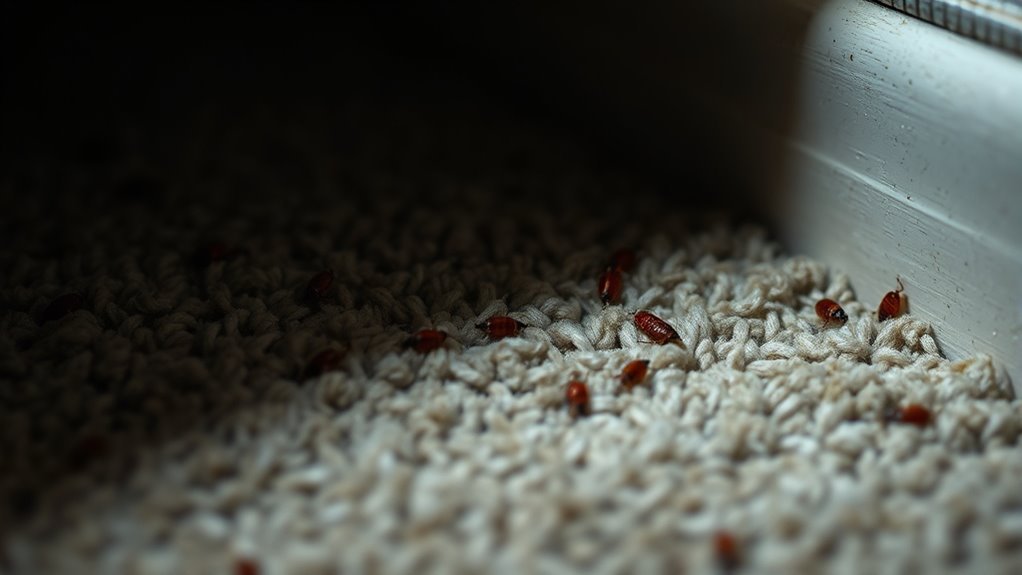
You’ll often find bed bugs hiding along carpet edges and seams where they stay out of sight.
Check under furniture legs and beneath area rugs, as these spots provide dark, protected spaces for them to gather.
Knowing these common hiding places helps you target your inspections more effectively.
Carpet Edges and Seams
When inspecting your home for bed bugs, pay close attention to carpet edges and seams, as these narrow, undisturbed spaces offer perfect hiding spots. Bed bugs hide especially along carpet edges near baseboards where they avoid disturbance.
The seams of your carpet provide tight crevices that these pests favor, often congregating there in cluttered or high-traffic areas close to where you sleep.
To detect an infestation early, carefully check these areas for telltale signs such as dark fecal spots, which look like tiny black dots, and shed skins left behind as bed bugs grow.
Regularly inspecting carpet edges and seams helps you catch infestations before they spread. This way, you can take swift action and protect your home effectively.
Under Furniture Legs
Besides carpet edges and seams, check under furniture legs for bed bugs. These areas serve as common hiding spots because bed bugs love the dark, tight spaces between furniture legs and the carpet.
During the day, they shelter here, making it a prime location to find signs of infestation. When you perform an inspection, look closely for dark fecal spots and shed skins around furniture legs.
Bed bugs can crawl along the underside of legs to reach the carpet or nearby hiding spots, so don’t overlook this area. Regularly inspecting under furniture legs can help you catch an infestation early before it spreads further into your carpet or home.
Staying vigilant in these key spots makes detection and control much easier. It’s a simple step that can save you a lot of trouble down the road.
Beneath Area Rugs
Although often overlooked, the space beneath area rugs offers bed bugs a perfect hiding spot, especially along edges and corners where they can easily access wall cracks and baseboards.
Bed bugs love to hide in the thick fibers and folds of area rugs, making detection tricky. You should carefully inspect these spots to catch an infestation early.
Here’s what to look for beneath your area rugs:
- Tiny dark fecal spots
- Shed skins from molting
- Small white eggs tucked in crevices
- Bed bugs themselves in tight spaces between rug and floor
To effectively deal with bed bugs under area rugs, use heat treatments and thorough vacuuming. Detecting them early prevents a full-blown infestation.
Recognizing the Signs of Bed Bugs in Carpet
If you spot rusty or reddish stains on your carpet, especially near edges and baseboards, you might have crushed bed bugs or blood spots indicating an infestation. Look closely for tiny white eggshell fragments tucked under furniture or along carpet seams. These are telltale signs that bed bugs have been laying eggs nearby.
You should also check for small dark fecal spots, which resemble ink dots, scattered on or near carpet fibers. Shed skins from nymphs, pale yellow or translucent, can often be found in cracks or along carpet edges.
Finally, if you see live bed bugs crawling near furniture legs or in dense carpet areas, it confirms their presence. Recognizing these signs early helps you address a bed bug problem before it worsens.
Effective Methods to Eliminate Bed Bugs From Carpets
You’ll want to start by vacuuming your carpets thoroughly, focusing on edges and under furniture to remove bugs and eggs.
Using heat treatments, like steam or professional heating, can kill bed bugs effectively without harsh chemicals.
You can also try natural options like diatomaceous earth to target bed bugs safely while avoiding toxins.
Vacuuming Techniques
When tackling bed bugs in your carpet, vacuuming plays a crucial role in removing both the insects and their eggs. Bed bugs often hide in carpets, making thorough vacuuming essential for detecting pests and reducing infestations.
To maximize effectiveness, follow these steps:
- Vacuum edges, seams, and under furniture where bed bugs and bed bug eggs hide in carpets.
- Use a vacuum with a HEPA filter to trap tiny debris and prevent re-infestation.
- Focus on high-traffic and hidden spots like corners, baseboards, and under beds.
- Seal and dispose of the vacuum bag immediately outside to stop bugs from escaping.
Repeat vacuuming weekly during treatment to continually reduce bed bugs and eliminate newly hatched nymphs.
It might seem like a lot, but sticking to this routine really helps keep those pesky bugs at bay!
Heat Treatment Benefits
Because heat treatment raises room temperatures above 113°F (45°C), it kills bed bugs at every stage, including their eggs. If you suspect bed bugs live in your carpet, this method effectively penetrates deep fibers and cracks where bugs hide, unlike chemical sprays.
Professional pest control teams maintain high heat for about 30 minutes to ensure a thorough carpet infestation eradication. Heat treatment kills bed bugs without chemicals, making it safe for homes with children and pets.
Investing in this approach not only eliminates current infestations but also reduces the chance of re-infestation by targeting all hiding spots. So, if you want a reliable, non-toxic way to kill bed bugs in carpets, heat treatment is one of the most efficient solutions available today.
Natural and Chemical Options
How can you tackle bed bugs in your carpet without relying solely on heat treatment? You can use a mix of natural and chemical options to effectively manage infestations.
Here’s a straightforward bed bug treatment approach:
- Vacuum your carpet regularly to remove live bed bugs, eggs, and debris.
- Apply diatomaceous earth along carpet edges; this natural option dehydrates and kills bed bugs.
- Use steam cleaning at temperatures above 120°F to kill bed bugs and their eggs deep in the carpet fibers.
- Apply insecticide sprays formulated specifically for carpets. Ideally, combine this with vacuuming and steam for the best results.
Advantages of Heat Treatment for Carpet Bed Bug Infestations
Although bed bugs can be notoriously difficult to eliminate, heat treatment offers a highly effective solution for carpet infestations. When bed bugs live in carpets and rugs, heat treatment can penetrate deeply, raising room temperatures to 120°F or higher to eradicate all bed bug life stages—including eggs that resist chemicals.
This chemical-free method is safer for homes with children or pets and guarantees the entire area heats evenly, reducing chances of re-infestation. Professional heat systems, like Convectex, distribute heat uniformly, targeting bed bug infestations hidden in carpets and surrounding spaces.
Differentiating Bed Bugs From Other Carpet Pests
When you’re dealing with pests in your carpet, it’s important to tell bed bugs apart from other common intruders like carpet beetles. Distinguishing them helps you choose the right treatment.
Here’s how to detect and differentiate these pests:
- Appearance: Bed bugs are small, flat, and brownish oval-shaped insects, while carpet beetle larvae are fuzzy, caterpillar-like, and bristly.
- Feeding habits: Bed bugs feed on blood; carpet beetle larvae consume natural fibers.
- Hiding spots: Bed bugs hide in cracks and near bedding; carpet beetle larvae prefer closets, under rugs, and stored fabrics.
- Signs: Look for blood spots or shed skins to detect bed bugs versus fabric damage from carpet beetles.
Knowing these points helps you effectively identify and address your carpet pest problem. Just a little attention can make a big difference!
Frequently Asked Questions
What Kills Bed Bugs in the Carpet?
You can kill bed bugs in your carpet by vacuuming thoroughly and steam cleaning above 130°F.
Applying diatomaceous earth also helps, and using heat treatments over 120°F is effective too.
Spraying insecticides designed for carpets works well. Combining methods works best for total elimination.
What Is the Fastest Way to Check for Bed Bugs?
The fastest way to check for bed bugs is by using a flashlight to inspect mattress seams, bed frame cracks, and carpet edges at night.
Look for live bugs, rust-colored stains, or shed skins to confirm their presence quickly. It’s a simple method that helps you catch them early before they spread.
Is It Harder to Get Rid of Bed Bugs if You Have Carpet?
If you’ve ever tried treating bed bugs in a carpeted hotel room, you know it’s tougher. You’ll need multiple treatments and deep cleaning since bugs hide in fibers.
This makes eradication more challenging and time-consuming for you. It’s definitely not a quick fix when carpet is involved.
What Time of Year Is Worst for Bed Bugs?
The worst time for bed bugs is late spring through early fall, especially summer. You’ll find they multiply faster and infest more during warm months, so stay extra vigilant from June to September to prevent outbreaks.
It’s really when things heat up that these pests get busy. So, keeping an eye out during these months can save you a lot of hassle later on. Just a little extra caution goes a long way!
Conclusion
Now that you know bed bugs can hide deep in your carpets, are you ready to take action before they multiply? Don’t wait for itchy bites or visible signs to appear—early detection and treatment are key.
By staying vigilant and using effective methods like heat treatment, you can protect your home from these pesky invaders. Remember, a clean carpet isn’t just about looks; it’s about keeping your space bed bug-free and comfortable.
Detecting bed bugs in carpet early can save you a lot of trouble down the road. Regularly inspect your carpets, especially along edges and seams, where bed bugs love to hide. Using a flashlight and magnifying glass can help spot these tiny pests.
Treating carpets properly, whether through professional heat treatments or thorough vacuuming, is essential to eliminate bed bugs completely. Don’t forget to combine carpet care with cleaning other areas like furniture and bedding for the best results.
In conclusion, bed bugs do live in carpets, and being proactive is your best defense. Early detection, regular carpet inspections, and effective treatments like heat methods are critical to keeping your home free of bed bugs. Taking these steps ensures your living space stays comfortable and pest-free, so don’t delay—start protecting your carpets today!