How Can I Get Rid of Carpet Moths Step by Step?
To get rid of carpet moths, start by carefully inspecting your carpet for signs like holes, larvae, or the moths themselves. This step is important because identifying the problem early helps you act faster and more effectively.
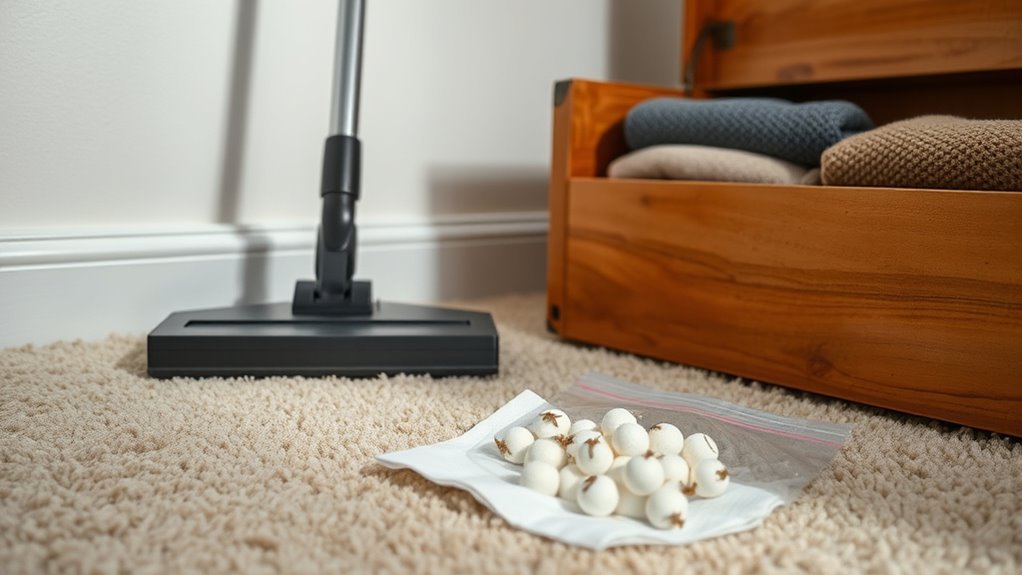
Once you spot any damage or moth activity, vacuum the carpet thoroughly to remove eggs and larvae. Be sure to immediately dispose of the vacuum bag to prevent re-infestation.
You can also use moth-specific sprays designed to kill both the moths and their larvae. For smaller items, freezing them for a few days is a simple and effective way to eliminate eggs and larvae hiding in fabrics.
If the infestation is severe or if you have valuable carpets, it might be a good idea to call in professional pest control services. They have specialized treatments that can handle tough moth problems safely and efficiently.
After treatment, give your carpet a deep clean to remove any residues and repair minor damage caused by the moths.
To prevent carpet moths from coming back, keep the humidity low in your home, as moths thrive in moist environments. Regular vacuuming is also key to stopping those pesky invaders before they settle in again.
Stick around for more detailed steps on effective removal and prevention—you’ve got this!
Key Takeaways
- Thoroughly vacuum carpets, rugs, and upholstery to remove larvae, eggs, and moths. Then, immediately seal and dispose of the vacuum contents.
- Freeze small infested items below 0°F (-18°C) for 48 hours. This effectively kills eggs and larvae.
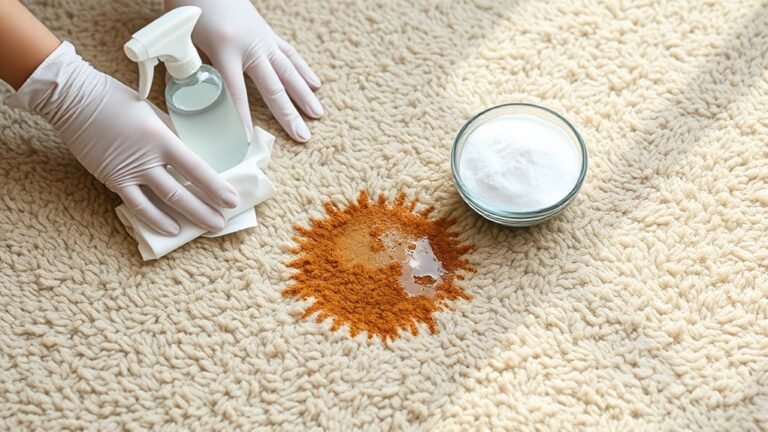
- Apply moth-specific insecticides or powders according to the product instructions on affected areas.
- Clean carpets with detergent and improve room ventilation. This helps reduce humidity and discourages moth growth.
- Keep repeating inspections and vacuuming regularly. If the infestation is persistent or widespread, consider professional treatment.
Understanding Carpet Moths and Their Lifecycle
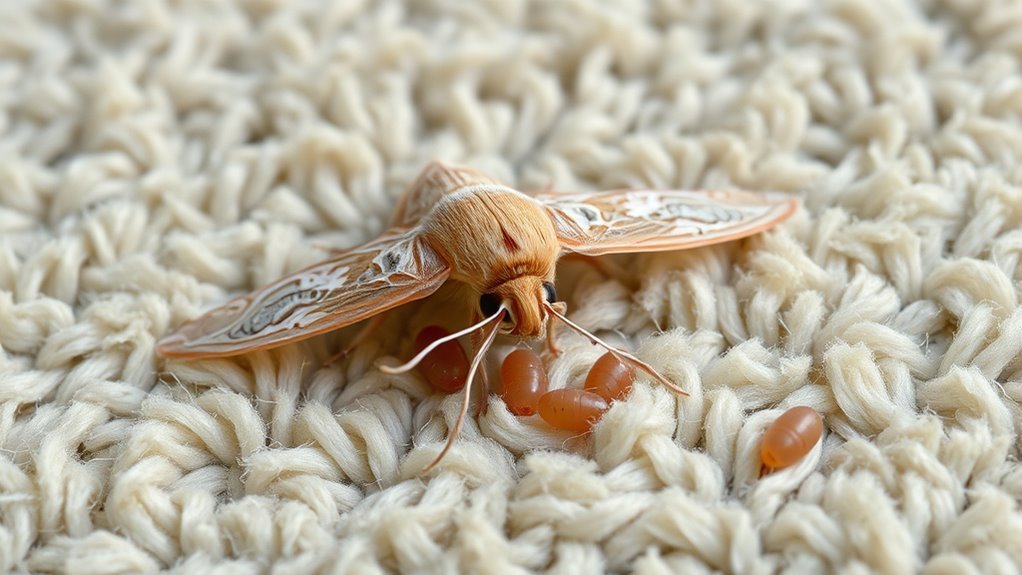
Although carpet moths may seem harmless, understanding their lifecycle is essential if you want to protect your fabrics. Female moths lay their eggs directly on or near carpets, rugs, or other fabric materials, often embedding them within the fibers.
Once hatched, carpet moth larvae begin feeding on keratin-rich fibers like wool and silk, which can cause significant damage. This larval stage is the longest, lasting anywhere from two months to two and a half years.
Since adult moths don’t feed and live only about 15 to 30 days to reproduce, your main focus should be on targeting the carpet moth larvae. Knowing this lifecycle helps you act effectively and stop damage before it spreads throughout your home.
Identifying Signs of a Carpet Moth Infestation
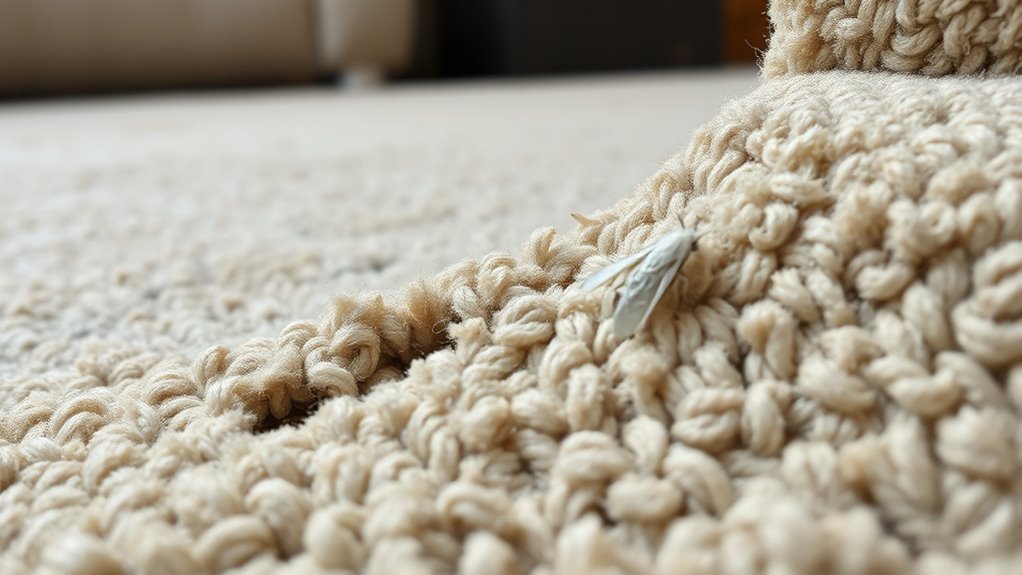
Knowing the carpet moth lifecycle helps you recognize the early signs of an infestation before the damage worsens. You can spot trouble by closely inspecting your carpets, rugs, and upholstery for telltale signs.
Early detection lets you act fast to protect your home. Watch out for these common indicators:
- Small, irregular holes or frayed patches in fibers caused by larvae feeding.
- Fine silken webbing or cocoons along carpet edges, under furniture, or hidden crevices.
- A musty, mothball-like odor coming from affected areas.
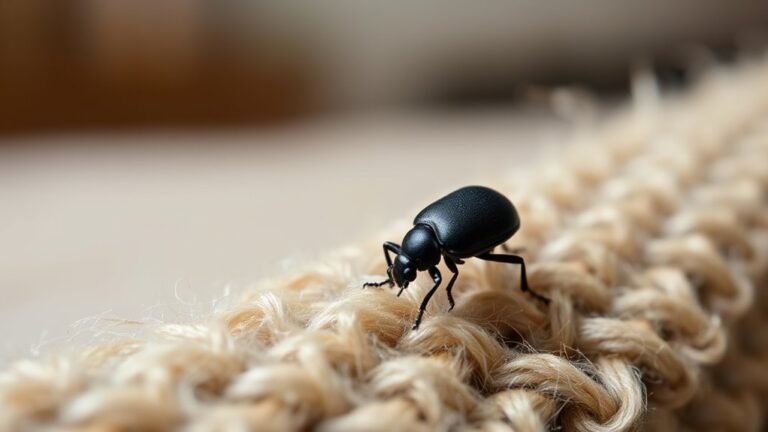
You might also notice tiny translucent larvae moving within carpet fibers or adult moths fluttering near infested spots, especially in warmer months. Keeping an eye out for these signs really helps you catch infestations early.
Effective DIY Methods to Remove Carpet Moths
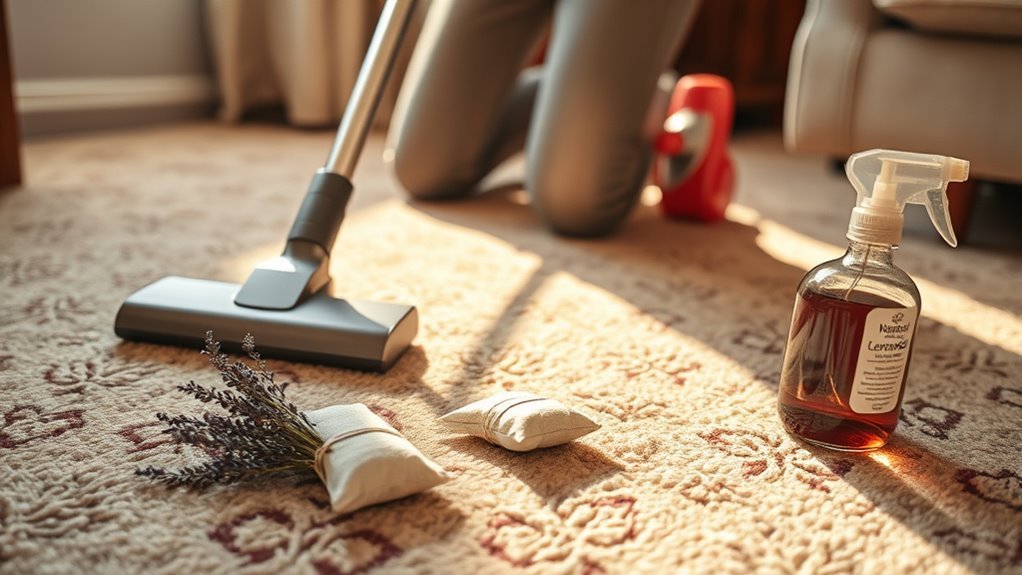
When you spot carpet moths, acting quickly with effective DIY methods can stop their spread and protect your belongings. Start by vacuuming all affected carpets, rugs, and upholstery thoroughly to remove eggs, larvae, and moths.
Quick action with thorough vacuuming can halt carpet moths and safeguard your belongings effectively.
Make sure to immediately seal and dispose of the vacuum contents to prevent reinfestation. For small rugs or cushions, you can freeze them at temperatures below 0°F (-18°C) for at least 48 hours to kill eggs and larvae.
Next, apply moth sprays or powders specifically designed for carpets, but be sure to follow the product instructions carefully. Finally, clean the area with detergent and improve ventilation to reduce humidity, creating an environment less favorable for moths.
If you stick to these steps, you can really reduce or even eliminate your carpet moth problem without needing professional help. It just takes some diligence and care!
When to Consider Professional Carpet Moth Treatment
If you’ve tried DIY methods several times and still see carpet moths, it’s time to contemplate professional treatment. Persistent infestations can be tricky to handle alone, especially if larvae keep reappearing despite your efforts.
You should consider calling in experts when multiple rooms show signs of infestation, requiring a thorough approach. Or if you own high-value or delicate wool or antique carpets needing careful, targeted care.
Also, if long-term moth problems resist all home remedies, that’s a clear signal to get licensed pest control involved. Professionals use specialized techniques and treatments that effectively eradicate moths while protecting your carpets.
Don’t wait too long. Early intervention by experts often prevents further damage and saves you time and stress in the long run.
The Role of Carpet Cleaning After Moth Removal
Although eliminating carpet moths is essential, thorough carpet cleaning afterward plays an equally important role in preventing reinfestation. You need to remove dead larvae, eggs, and residual insecticides that can attract new moths.
Deep cleaning also restores your carpet’s fibers and appearance, repairing damage from larvae feeding. Don’t forget to clean creases and areas under furniture where eggs or larvae might hide.
Regular cleaning removes dust and skin particles, cutting off food sources for future moths.
| Cleaning Task | Benefit |
|---|---|
| Remove dead larvae | Prevents new moth development |
| Eliminate eggs | Stops hatching of new infestations |
| Deep fiber cleaning | Repairs damage and improves appearance |
| Clean hidden areas | Removes hidden eggs and larvae |
| Dust and debris removal | Cuts off food supply for moths |
This step solidifies your moth removal efforts.
Long-Term Strategies to Prevent Carpet Moth Recurrence
To keep carpet moths from coming back, you’ll want to schedule professional cleanings every 6 to 12 months and stick to a consistent vacuuming routine, focusing on hidden spots.
Also, controlling indoor humidity below 50% helps create an environment that moths don’t like. These steps work together to protect your carpets long-term.
Regular Professional Cleaning
When you schedule professional carpet cleaning every 6 to 12 months, you tackle carpet moth eggs, larvae, and adults before they multiply. Professionals use specialized equipment and insecticides that safely and effectively reach hidden spots like carpet fibers, under skirting boards, and creases—where moths often hide and feed.
This thorough approach removes potential food sources and disrupts the moth lifecycle. To maximize results, focus on these key points:
- Ensure cleaners target concealed areas to fully eliminate eggs and larvae.
- Use safe, professional-grade treatments that address all moth life stages.
- Plan periodic inspections and treatments to maintain a moth-free carpet long-term.
Pairing professional cleaning with your own maintenance keeps your carpet protected from future infestations. It’s a great way to stay ahead of any moth problems and keep your carpet looking fresh.
Consistent Vacuuming Routine
Since carpet moths lay eggs and hide in hard-to-reach spots, you need to vacuum thoroughly and consistently to keep them at bay. Vacuum your carpets, rugs, and upholstery at least once a week, focusing on creases, edges, and hidden areas like under furniture and along skirting boards where moths often lay eggs.
Use high-suction settings and attachments such as a brush or crevice tool to reach deeply embedded larvae. After vacuuming, immediately dispose of the vacuum contents in a sealed bag or container to prevent reinfestation.
Keep up this routine especially during peak moth activity seasons and after any treatments you’ve applied. Staying consistent with your vacuuming is key to long-term control and preventing carpet moths from making a comeback.
Humidity Control Measures
Although carpet moths thrive in humid environments, you can substantially reduce their presence by controlling indoor humidity levels. Keeping humidity below 50% makes it tough for carpet moth larvae to develop.
You should regularly check humidity with a hygrometer and adjust as needed. Quick drying of spills and avoiding damp storage also minimize attractive food sources.
To manage humidity effectively, try these steps: Use dehumidifiers or air conditioners to lower moisture in vulnerable rooms. Improve ventilation by opening windows and ensuring good airflow.
Also, monitor humidity levels consistently with a hygrometer for precise control. These simple habits can make a big difference in keeping those moths away.
Frequently Asked Questions
How to Rid of Carpet Moths?
You should vacuum thoroughly, especially creases and edges, then dispose of the vacuum bag immediately.
Use a carpet moth spray or powder. Freeze small items if needed, clean with detergent afterward, and improve ventilation to prevent return.
Does Washing Clothes Kill Moths?
Think of washing clothes like a fiery sword—yes, it kills moths and eggs when water hits 50°C or higher.
You’ve got to dry thoroughly and combine methods to fully vanquish those pesky invaders.
How Do I Get Rid of Moths in My Wool Rug?
You should vacuum your wool rug thoroughly to get rid of any moth eggs or larvae hiding deep in the fibers.
For small items, freezing them for 48 hours can kill off any moths without damaging the fabric.
Next, apply moth repellent powder specifically designed for wool. It helps keep the moths away.
Make sure to clean your rug with a wool-safe detergent to avoid harming the material.
And don’t forget to regularly inspect your rug for any signs of moth activity.
If the moths just won’t quit, it might be time to consider professional treatment to fully eliminate them.
Where Do Carpet Moths Lay Their Eggs?
You might be surprised where carpet moths lay their eggs—hidden deep within carpet fibers, under furniture, and in creases.
They choose dusty, cozy spots where larvae can feast unnoticed, making detection tricky but essential to stopping them early.
Conclusion
Don’t worry if you think getting rid of carpet moths is too complicated or time-consuming—you can handle it step by step. By identifying signs early, using effective DIY methods, and keeping your carpets clean, you’ll stop these pests in their tracks.
If needed, professionals are there to help. With consistent effort and prevention strategies, you’ll protect your home and keep your carpets moth-free for good.
Remember, the key to eliminating carpet moths lies in early detection and thorough cleaning. Regular vacuuming, washing fabrics, and using natural repellents can make a big difference. Taking these steps not only removes existing moths but also prevents future infestations. So, stay proactive and maintain your carpets well. You’ve got this!