Can Any Mattress Be Used on an Adjustable Bed?
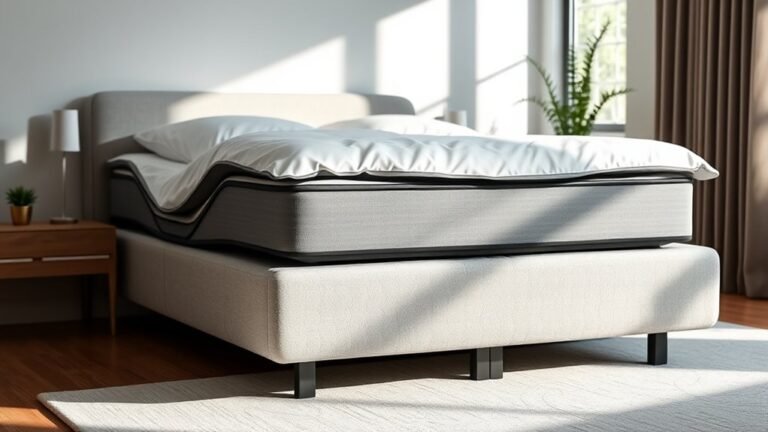
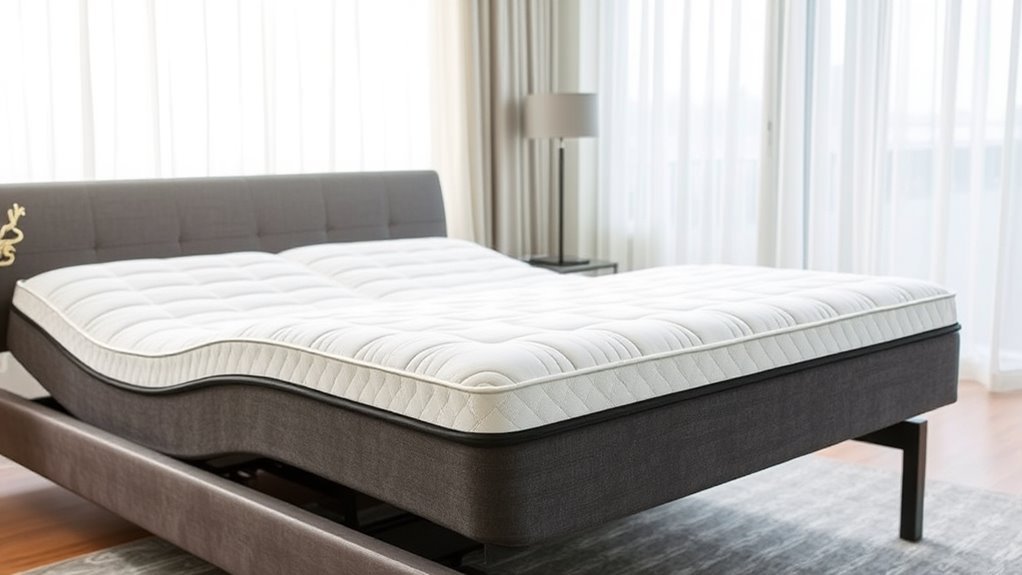
You can’t use just any mattress on an adjustable bed because it needs to bend and flex smoothly without losing support or comfort. Not every mattress is designed for the constant movement an adjustable base requires.
Memory foam, latex, and hybrid mattresses usually work best since they’re flexible and contour well to movements.
Thick or rigid mattresses with stiff coils can restrict adjustability and may wear out faster. So, if you try using a mattress that’s too firm or bulky, it might not bend properly or could get damaged over time.
Choosing the right mattress guarantees comfort and durability. Understanding key features will help you pick the perfect fit for your adjustable base, making sure you get a good night’s sleep every night.
Key Takeaways
- Not all mattresses are compatible; flexible materials like memory foam, latex, or hybrids work best with adjustable beds. Traditional innerspring mattresses often lack flexibility and may hinder frame movement or cause damage.
- The ideal mattress thickness ranges between 8 to 14 inches for proper bending and support on adjustable bases. It’s a good idea to test mattress flexibility and durability by lying on it during adjustments to ensure compatibility and comfort.
- Mattresses with rigid coils or border wires should be avoided. They can cause lifting and reduce adaptability, which isn’t great for adjustable bed frames.
What Makes a Mattress Compatible With an Adjustable Bed
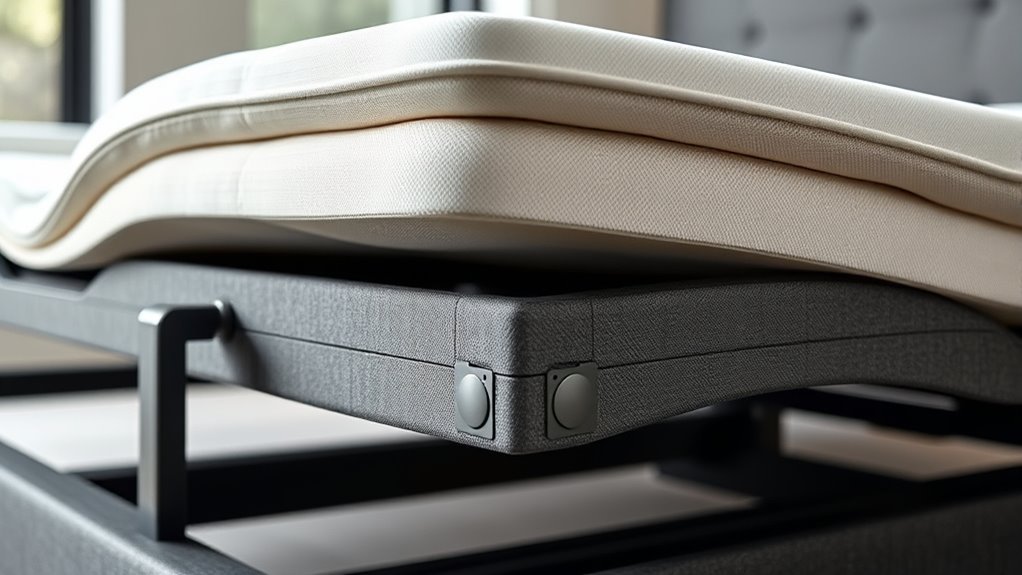
When you choose a mattress for an adjustable bed, it needs to bend and flex smoothly with the frame’s movements without buckling or causing damage. To be compatible, the mattress must be flexible enough to contour with every adjustment while maintaining even support.
Mattresses that are too rigid, like traditional innerspring types with connected coils, often struggle to adapt and can buckle or lift away from the frame. Instead, look for designs with moderate thickness and supportive layers that help the mattress move seamlessly.
This flexibility ensures you get consistent comfort and prevents damage to both mattress and base. Prioritizing these features means your adjustable bed will perform well, providing the right support no matter how you position it.
Best Mattress Materials for Adjustable Beds: Memory Foam, Latex, and More
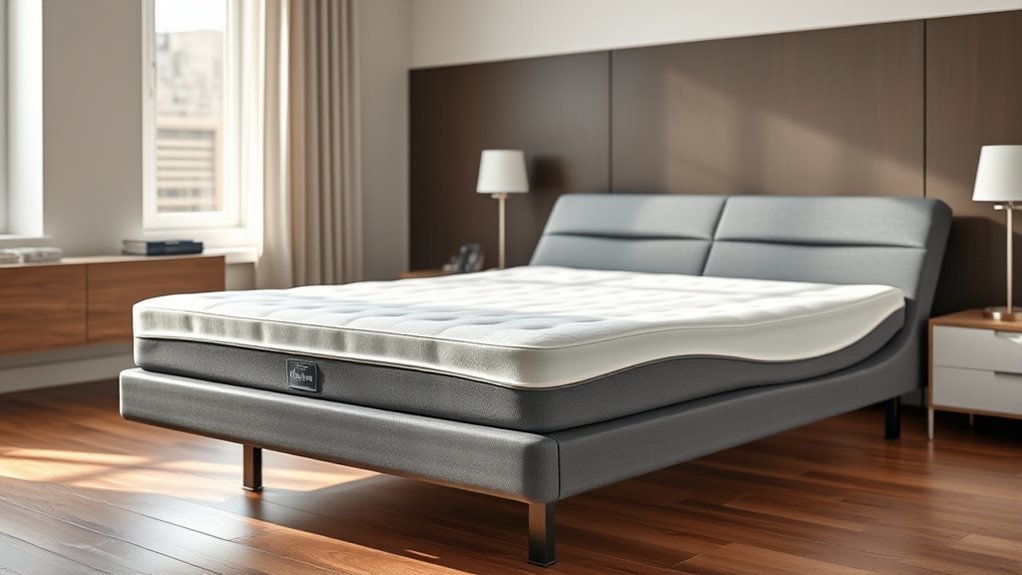
You’ll find memory foam mattresses adapt perfectly to adjustable beds because they flex easily and contour to your body.
Latex mattresses also offer great benefits with their natural resilience and breathability. Both materials guarantee your mattress bends smoothly without losing support or comfort.
Memory Foam Flexibility
Because memory foam mattresses contour effortlessly and bend without damage, they stand out as one of the best choices for adjustable beds. Their flexibility comes from the viscoelastic properties that allow the foam to recover quickly after movement, so you won’t worry about wear or sagging when adjusting positions.
When choosing a memory foam mattress, you should consider its density and construction, as these factors affect compatibility with your adjustable base. High-resilience or gel-infused memory foam options offer enhanced flexibility and cooling, making your sleep experience even better.
Thanks to their responsiveness, memory foam mattresses conform smoothly to various angles, providing excellent pressure relief and support. Overall, memory foam’s unique flexibility makes it a practical and comfortable option for adjustable beds.
Latex Mattress Benefits
Memory foam’s flexibility makes it a top pick for adjustable beds, but latex mattresses offer their own set of impressive benefits. Latex mattresses are highly flexible and bend seamlessly on adjustable beds without buckling or damage.
Their natural elasticity provides excellent contouring and pressure relief, adapting quickly to your movements and changes in position. You’ll also appreciate latex’s durability—it can last 15-20 years with proper care, maintaining support and preventing sagging even with frequent adjustments.
Plus, latex mattresses are naturally hypoallergenic, resisting dust mites, mold, and bacteria, which boosts sleep hygiene. If you want a mattress that combines responsiveness, longevity, and cleanliness, latex is a smart choice for your adjustable bed, ensuring comfort and support throughout the night.
Why Memory Foam and Latex Work Best on Adjustable Beds
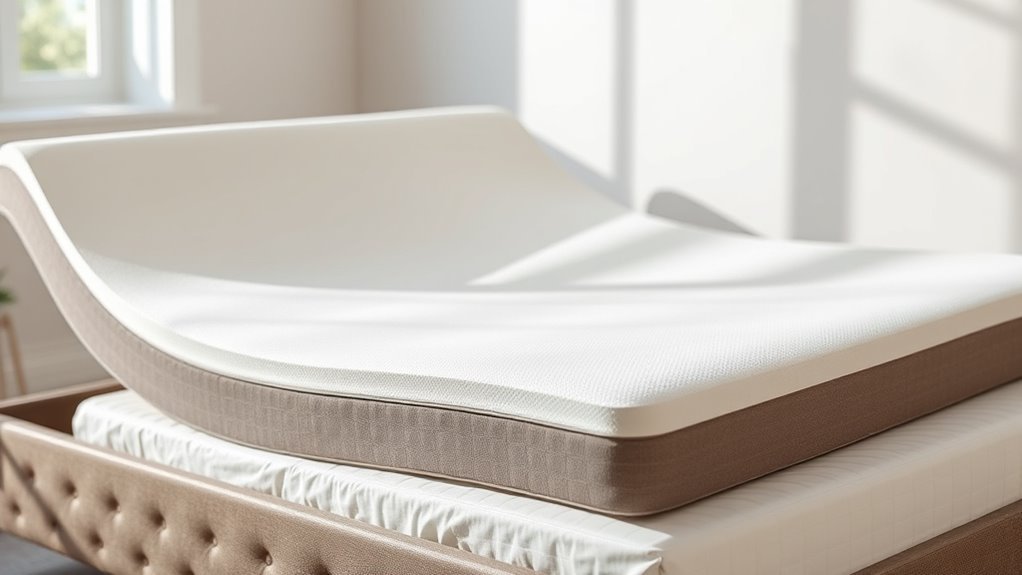
When you adjust your bed to different angles, you need a mattress that moves with you without losing support or shape. Memory foam and latex are highly flexible materials that contour easily to adjustable beds, preventing buckling or damage.
They bend smoothly at multiple angles while maintaining support and integrity, making them perfect for various positions. Because they’re lightweight and responsive, these mattresses quickly adapt to your movements, ensuring comfort.
Plus, memory foam and latex evenly distribute weight, reducing pressure points when your bed is elevated or reclined. Unlike innerspring mattresses, they keep their shape and durability even when flexed.
Choosing a memory foam or latex mattress guarantees both flexibility and lasting performance on your adjustable bed frame. It’s really the best choice if you want a mattress that works as hard as you do!
How Hybrid Mattresses Perform on Adjustable Bed Frames
If you want a mattress that combines the contouring comfort of foam with the supportive bounce of coils, a hybrid mattress is an excellent choice for your adjustable bed frame. Hybrid mattresses perform well on adjustable bed frames because their flexible foam layers and individually wrapped coils bend easily with the frame’s movements.
This flexibility means the mattress contours comfortably without buckling or losing support, even in various positions. Hybrids with thinner comfort layers and responsive coils adapt better and resist damage over time.
Testing shows high-quality hybrid mattresses maintain pressure relief and support without sliding or gapping, making them one of the most compatible options for adjustable beds. So, if you want a mattress that balances support, durability, and flexibility, hybrid mattresses are a smart pick for your adjustable bed frame.
Mattress Features to Avoid on Adjustable Beds
Although adjustable beds offer great flexibility, not every mattress is designed to bend and move with them. You should avoid mattresses made with rigid materials, like certain innerspring models that have interconnected coils or stiff internal frameworks. These features prevent the mattress from flexing smoothly with the adjustable base.
Also, stay clear of mattresses with border wires, as they can lift away from the frame during adjustments and reduce comfort. Thick mattresses are another concern; their dense layers resist bending and may buckle or get damaged when repeatedly adjusted.
Choosing a mattress without these limiting features ensures it will conform properly to your adjustable bed’s movements. This way, you get better comfort and durability over time.
How Mattress Thickness Impacts Adjustability and Comfort
Since mattress thickness plays a crucial role in how well your adjustable bed functions, choosing the right size is necessary. Mattresses thicker than 14 inches often limit the bed’s flexibility, making it hard for the base to bend properly.
Mattress thickness is key—over 14 inches can restrict your adjustable bed’s flexibility.
On the other hand, mattresses thinner than 8 inches might not offer enough support or comfort when adjusted. Ideally, you want a mattress thickness between 10 and 14 inches to balance flexibility and support.
Keep in mind, excessively heavy or dense mattresses can strain the bed’s motor, regardless of thickness. Before buying, test the mattress’s flexibility or check manufacturer specs to confirm it works well with adjustable beds.
This way, you’ll enjoy both comfort and smooth adjustability.
Using Your Existing Mattress With an Adjustable Bed: Is It Possible?
You’ll want to check if your mattress is flexible enough to bend with an adjustable bed without damage. Look for stiff layers or border wires that might limit movement.
Testing your mattress on the adjustable base or reviewing manufacturer guidelines can help you decide if it’s a good fit. It’s always better to be sure before making the switch!
Mattress Flexibility Requirements
When considering an adjustable bed, you might wonder if your current mattress will work. Mattress flexibility is key to compatibility with adjustable beds.
Flexible materials like memory foam, latex, or hybrid mattresses bend easily with the base’s movements, ensuring comfort and durability. In contrast, traditional innerspring mattresses with rigid coils or border wires often lack the necessary flexibility. This can risk damage or discomfort.
Thickness also matters—overly thick or dense mattresses may resist bending, limiting the adjustable bed’s range of motion. To guarantee compatibility, look for mattresses designed with flexible foam layers or individually wrapped coils that can flex smoothly.
Without the right mattress flexibility, your adjustable bed won’t function properly, and neither will you.
Compatibility Testing Tips
Although many mattresses claim compatibility, testing your existing mattress before pairing it with an adjustable bed is essential. Evaluate its construction, focusing on flexibility and materials like memory foam or latex, which typically perform better than rigid innerspring coils.
Check thickness and any border wires that may limit movement. Performing a practical test by adjusting the bed while lying on the mattress helps assess real-world compatibility. If you’re unsure, consult manufacturer specs or experts to avoid discomfort or damage.
| Test Aspect | What to Look For |
|---|---|
| Material Type | Memory foam, latex, hybrid |
| Thickness | Avoid overly thick mattresses |
| Coil Type | Flexible coils over rigid |
| Physical Test | Mattress bends smoothly |
| Manufacturer Advice | Confirm compatibility |
How to Test Mattress Flexibility and Durability for Adjustable Beds
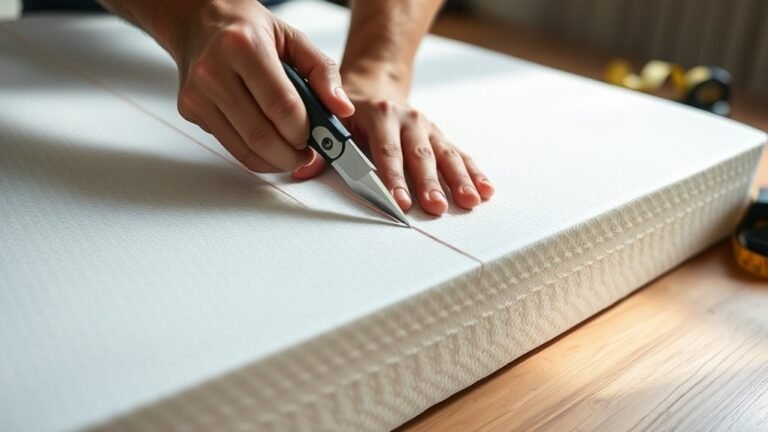
Because adjustable beds require mattresses that move seamlessly with their frames, testing flexibility and durability becomes essential before making a purchase. To check mattress flexibility, bend and fold the mattress in different positions, ensuring it contours smoothly without buckling or lifting.
Assess durability by applying pressure with your hands or weights, observing if the mattress maintains its shape and support after repeated flexing. If possible, lie down on a showroom adjustable bed and adjust the head and foot sections to see how well the mattress conforms during movement.
Watch for creasing, cracking, or permanent deformation, which signal durability problems. A good mattress for an adjustable bed should bend easily at multiple points, offer consistent support, and quickly recover after flexing to guarantee long-lasting comfort and functionality.
Tips for Choosing a Flexible, Durable Mattress for Your Adjustable Bed
Selecting the right mattress for your adjustable bed means focusing on flexibility and durability to guarantee comfort and longevity. Look for mattresses made from materials like memory foam, latex, or hybrids with individually wrapped coils; these offer the flexible support your bed needs.
Choose flexible, durable mattresses like memory foam, latex, or hybrid coils for optimal comfort and longevity on adjustable beds.
Avoid traditional innerspring mattresses with rigid coils that resist bending and could damage the base. Check the mattress thickness—ideally between 8 to 14 inches—to ensure it bends smoothly without bunching.
Always verify compatibility by reviewing manufacturer specifications or labels, as many brands clearly state if their mattress suits adjustable beds. Finally, test the mattress in-store on an adjustable bed to assess its flexible support and comfort firsthand before buying.
This way, you’ll choose a mattress that lasts and feels great every night.
Frequently Asked Questions
Why Are People No Longer Buying Memory Foam Mattresses?
You’re likely avoiding memory foam because it traps heat, smells when new, and feels too soft or slow to respond.
You want cooler, more supportive mattresses that adjust easily and feel comfortable, which newer materials provide better.
Why Do My Sheets Keep Coming off My Adjustable Bed?
Your sheets are playing a slippery game because standard ones don’t stretch with your adjustable bed’s movements.
Use deep-pocket, elastic sheets designed for adjustable beds, and you’ll keep them snug, no matter how much you bend or flex.
What Are the Downsides of Using Adjustable Beds?
You might experience discomfort from improper support, increased mattress wear, and potential damage.
Adjustable beds can also cause sheets to slip off. Plus, some setups may be noisy or more expensive than traditional beds.
Which Adjustable Firmness Mattress Is the Best?
You’ll want a hybrid mattress with adjustable coil systems for the best adjustable firmness. It offers versatile support, contouring, and durability, letting you customize firmness easily.
Plus, it promotes pressure relief and proper spinal alignment every night. That way, you get comfort tailored just for you, night after night.
Conclusion
Choosing the right mattress for your adjustable bed is key to comfort and durability. Did you know that 70% of adjustable bed users prefer memory foam for its flexibility and support?
Not every mattress will bend without damage, so focus on materials like memory foam or latex. These materials flex easily and help you avoid any wear and tear.
Avoid overly thick or rigid options to guarantee smooth adjustability. It’s a good idea to test your mattress’s flexibility before buying.
When you pick a mattress designed for adjustable beds, like memory foam or latex, you ensure better sleep and a longer-lasting bed setup. So, if you want comfort and durability, choosing the right mattress really makes a difference!