Do Black Carpet Beetles Bite and How to Protect Yourself
Black Carpet Beetles don’t bite you—they aren’t built to. But here’s the thing: their larvae have tiny hairs that can irritate your skin. If you touch them, you might notice redness and itching.
So, how do you protect yourself? It’s simple. When cleaning infested areas, wear gloves, long sleeves, and a mask. This helps keep those irritating hairs away from your skin.
Regular vacuuming is key. Also, wash fabrics regularly and seal items in airtight containers to keep these pests at bay.
If you want to know more about handling and preventing Black Carpet Beetles, there’s useful information ahead. Stick around to learn how to keep your home pest-free and protect yourself effectively!
Key Takeaways
- Black Carpet Beetles do not bite humans; their mouthparts are not designed for biting or feeding on skin or blood. So, no need to worry about getting bitten by these little guys.
- If you notice skin irritation or rashes, it’s actually from contact with the larvae’s tiny bristly hairs, not from any beetle bites. Those hairs can be quite irritating!
- When you’re cleaning areas that might be infested, it’s a good idea to wear protective clothing, gloves, and masks. This helps you avoid any skin irritation caused by the larvae hairs.
- To keep these pests at bay, regularly vacuum and clean your home. Also, storing textiles in airtight containers can really help prevent infestations and reduce your exposure to larvae.
- If the infestation gets large or you start experiencing skin irritation, it’s best to call in professional pest control. Experts can provide effective treatment and help prevent future problems.
Understanding Black Carpet Beetles and Their Lifecycle
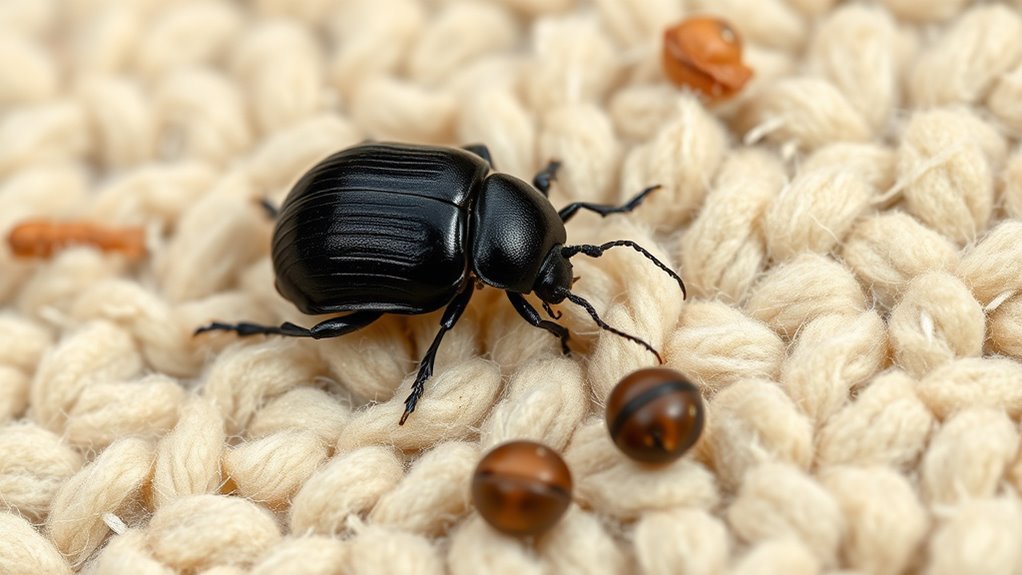
Although black carpet beetles don’t bite or feed on human blood, understanding their lifecycle is key to managing them effectively.
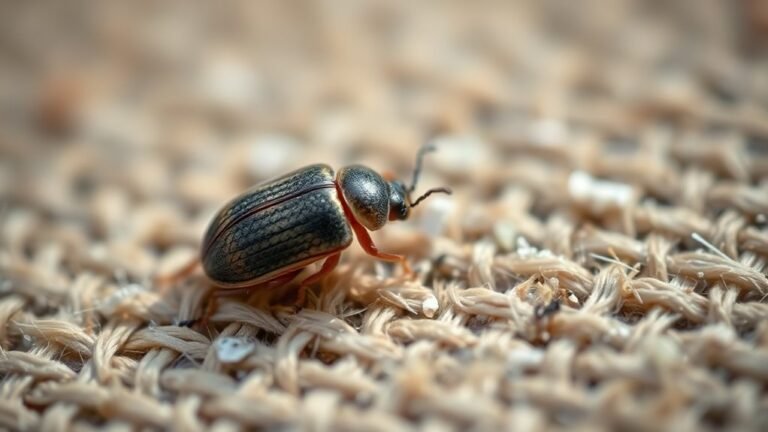
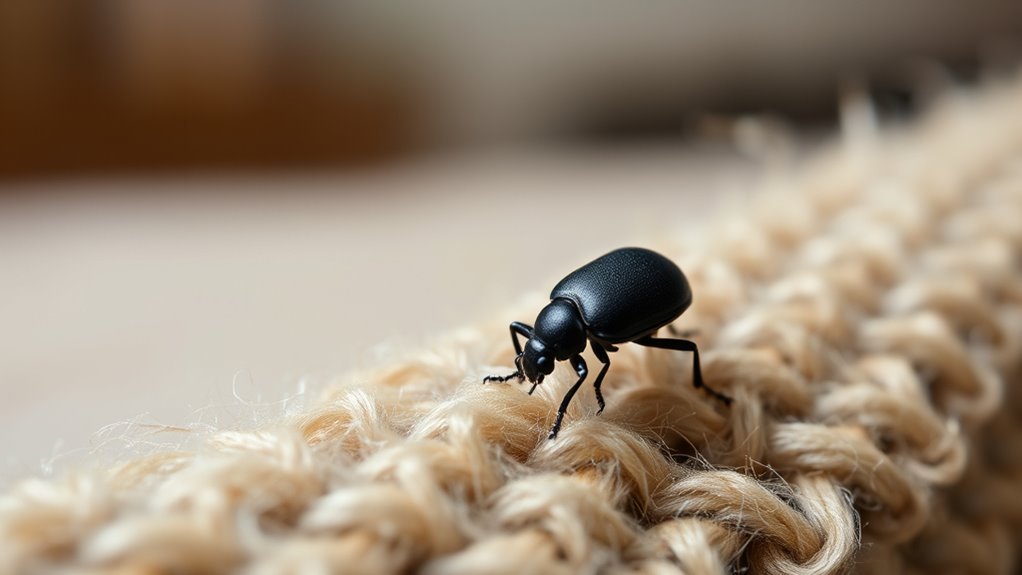
You’ll find that these beetles go through several stages: eggs, larvae, pupae, and adult beetles. It’s the larvae that cause the most damage during an infestation because they feed on food sources like leather, fur, and other dried organic materials.
Adult beetles usually emerge in spring or summer, drawn to light as they search for places to lay eggs. Knowing this life cycle helps you identify when and where infestations might start.
Do Black Carpet Beetles Bite Humans?
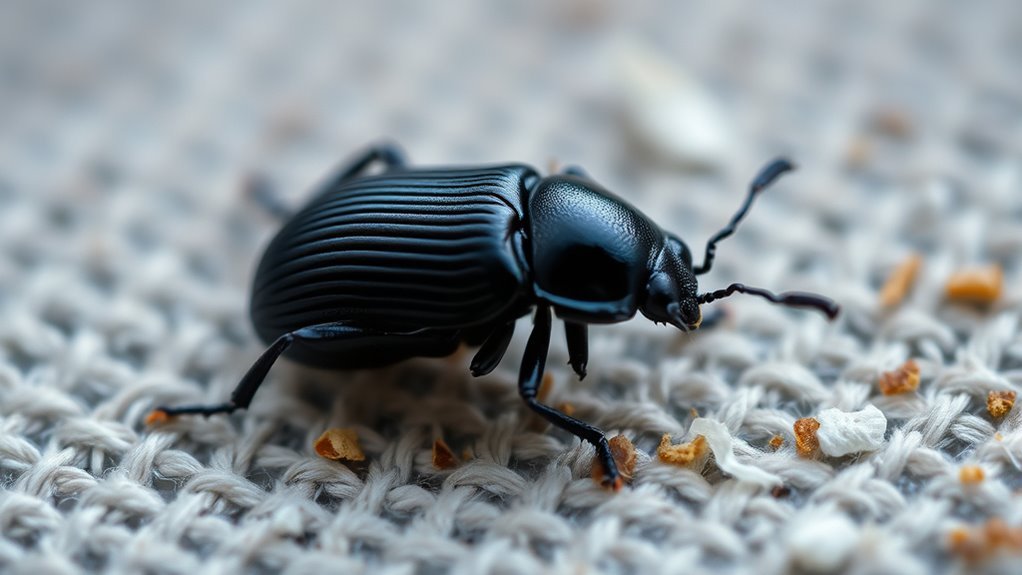
You might wonder if black carpet beetles bite humans, but they actually don’t since they feed on natural fibers, not skin.
However, their larvae have tiny hairs that can cause itching or rashes when they come into contact with you.
If you notice skin irritation near infested areas, it’s best to check with a medical professional for proper advice.
Bite Behavior Explained
While black carpet beetles might seem alarming, they don’t bite humans or animals because their mouthparts aren’t designed to chew on skin. Unlike some pests, these beetles feed mainly on natural fibers and organic materials, avoiding any biting behavior.
However, the larvae, which look like fuzzy caterpillars, can cause skin irritation if you come into contact with their bristly hairs. Understanding this distinction is important for effective pest management—it’s not bites you need to worry about but potential irritation from larvae.
To keep carpet beetle populations under control, focus on regular cleaning and removing infested materials. This approach helps prevent larvae buildup and reduces any skin irritation risks, ensuring you manage carpet beetles safely without fear of bites.
Skin Irritation Causes
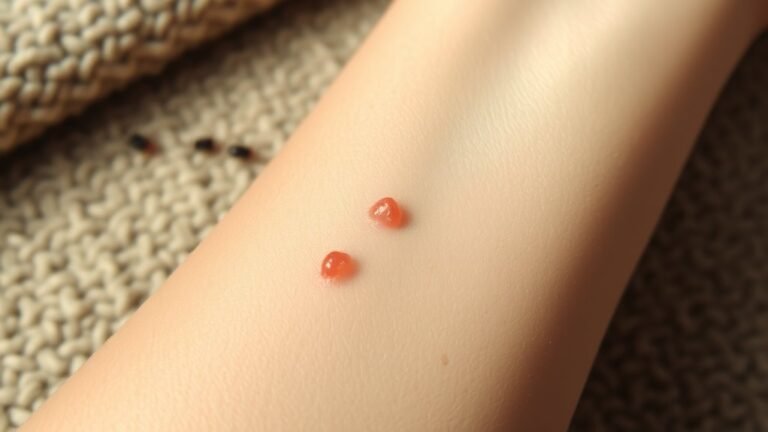
Even though black carpet beetles don’t bite humans, their larvae can cause skin irritation through the tiny bristly hairs covering their bodies. These bristles may trigger hypersensitivity and allergic reactions, leading to itchy rashes or bumps on your skin.
It’s important to recognize that the adult beetles are harmless and don’t feed on or bite people. If you experience unexplained skin irritation, it could be from contact with larvae rather than bites from other pests.
Effective pest control targeting larvae helps prevent these skin issues.
| Cause | Effect |
|---|---|
| Larvae bristles | Skin irritation, rashes |
| Hypersensitivity | Allergic reactions, dermatitis |
| Adult beetles | No biting or feeding |
| Pest control | Reduces larvae, prevents irritation |
How Black Carpet Beetle Larvae Affect Skin
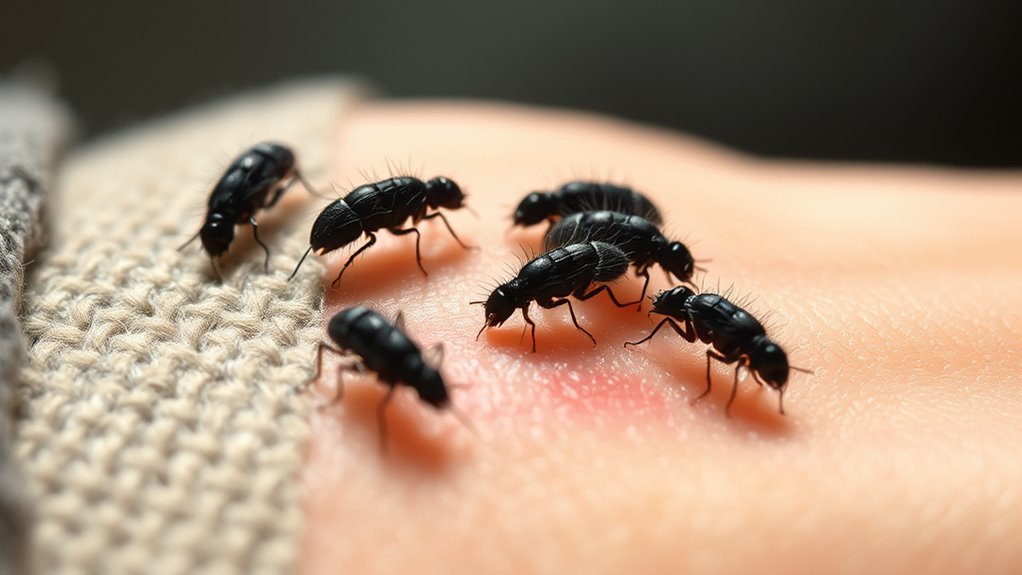
Although black carpet beetle larvae don’t bite, their bristly hairs can irritate your skin and cause itching or rashes when they come into contact with it. These hairs may trigger allergic reactions, leading to redness, swelling, or itchy bumps.
If you handle infested textiles or spend time in areas where black carpet beetle larvae dwell, you risk skin irritation or dermatitis, especially if you’re sensitive. The larvae don’t bite, but crawling on exposed skin can still cause discomfort.
To protect yourself, avoid direct contact with infested fabrics and clean affected areas thoroughly. Proper handling reduces exposure to the larvae’s bristly hairs, lowering the chance of allergic reactions and skin problems.
Understanding how these larvae affect your skin helps you manage and prevent irritation effectively. So, it’s good to stay cautious and keep your environment clean to avoid any issues.
Common Signs of a Black Carpet Beetle Infestation
If you notice small holes or chew marks on your wool or silk items, black carpet beetles might be the cause. You might also find tiny larvae or shed skins in hidden spots around your home.
Keep an eye out for these signs to catch an infestation early. It’s easier to handle before they spread too much!
Visible Damage Indicators
You can often spot a black carpet beetle infestation by looking for small holes or irregular patches in your fabrics, carpets, or upholstery. These visible damage indicators reveal where larvae have been feeding.
You might also find shed larval skins and tiny black droppings near these areas, which are clear signs of ongoing infestation. Check hidden corners and storage spaces closely—fragments of hair, feathers, or organic debris often accumulate where larvae feed undisturbed.
Damage tends to concentrate along baseboards, closets, and storage areas, so inspect these spots thoroughly. Recognizing these signs early helps you address the problem before it worsens, protecting your belongings from further damage caused by these persistent larvae.
Larval Presence Signs
When black carpet beetle larvae are present, you’ll often notice shed skins that look small, fuzzy, and brownish scattered near infested areas. These larvae leave clear signs of infestation, including tiny black or mottled brown fecal pellets near fabrics they feed on.
You may also find small, irregular holes in woolen clothing, carpets, or upholstery, indicating larval stage damage. Spotting adult beetles near windows or light sources often points to an ongoing larval problem.
Seeing fuzzy larvae, about 1/4 inch long, confirms active pest presence.
| Sign | Description |
|---|---|
| Shed Skins | Small, fuzzy, brownish |
| Fecal Pellets | Tiny black or mottled brown |
| Fabric Holes | Small, irregular, in woolens |
| Adult Beetle Sightings | Near windows, lights |
| Visible Larvae | Fuzzy, up to 1/4 inch long |
How Black Carpet Beetles Enter Your Home
Although black carpet beetles are tiny, they find numerous ways to slip into your home. These pests often enter your home through open doors, windows, or small cracks in the structure.
Adults are attracted to flowering plants near your house and may fly indoors while searching for food or mates. You might also unknowingly bring black carpet beetles inside on infested items like woolen clothing, upholstered furniture, or stored organic materials.
Black carpet beetles enter homes by flying in from nearby flowers or hitchhiking on infested fabrics and furniture.
Larvae can hitch a ride on dried pet food, herbs, or other accessible stored products. Additionally, infested bird nests or animal carcasses outside can serve as sources for indoor entry.
Understanding these entry points helps you recognize how black carpet beetles invade your space and highlights the importance of monitoring potential sources.
Effective Cleaning and Preventative Measures
Since black carpet beetles can hide in the smallest crevices, regular and thorough cleaning is essential to keep them at bay. You should vacuum baseboards, under furniture, and upholstery to remove carpet beetle larvae, eggs, and adults.
Steam cleaning kills larvae and eggs effectively, while wiping surfaces with vinegar discourages infestation. Storing textiles in airtight containers helps prevent eggs from hatching.
Maintaining cleanliness by removing dust and pet hair reduces food sources and hiding spots, which really helps control these pests.
| Cleaning Area | Action Taken | Benefit |
|---|---|---|
| Baseboards | Vacuum regularly | Removes eggs and larvae |
| Upholstery | Steam clean | Kills larvae and eggs |
| Shelves/Window Sills | Wipe with vinegar | Discourages beetle presence |
| Storage Areas | Use airtight containers | Prevents egg laying |
| General Home | Remove dust/pet hair | Reduces infestation sources |
When to Seek Professional Pest Control Assistance
If you spot large numbers of black carpet beetles or larvae in your home, especially near stored textiles, you should consider calling a professional pest control service. A carpet beetle infestation can cause significant damage to textiles, making timely intervention vital.
Professional pest control experts conduct thorough inspections of homes and buildings to identify the infestation’s extent and locate hidden larvae. They provide targeted treatments that are more effective than DIY methods, ensuring larvae and adult beetles are eliminated.
If you notice persistent infestations or skin rashes linked to larvae, it’s even more important to seek expert help. Regular inspections by professionals can also prevent future outbreaks, protecting your belongings and maintaining a pest-free environment in your home.
Don’t wait until damage worsens—call for professional pest control early. It’s always better to be safe and keep your home pest-free!
Tips for Protecting Yourself During Infestation Cleanup
When cleaning up a black carpet beetle infestation, you’ll want to protect your skin and lungs from irritating larvae hairs and dust. Wear long sleeves, pants, gloves, and a mask to minimize contact and inhalation.
Vacuum thoroughly, dispose of bags immediately, and wash or dry clean infested fabrics to kill larvae and eggs. Seal vulnerable items in airtight containers to prevent future infestations and protect yourself during handling.
| Action | Purpose | Tips |
|---|---|---|
| Wear protective gear | Minimize skin contact | Long sleeves, gloves, mask |
| Vacuum thoroughly | Remove larvae, eggs, dust | Dispose of vacuum bag promptly |
| Wash fabrics | Kill larvae and eggs | Use hot water or dry cleaning |
| Seal items | Prevent future infestations | Airtight containers |
Frequently Asked Questions
Are Black Carpet Beetles Harmful to Humans?
Black carpet beetles aren’t harmful to you directly since they don’t bite or feed on skin. However, their larvae can cause irritation or allergic reactions.
What Kills Carpet Beetles Immediately?
Steam cleaning kills carpet beetles instantly by destroying their larvae and eggs.
You can also freeze infested items at 0°F (-18°C) for 72 hours. That method guarantees 100% elimination of all life stages.
Can Carpet Beetles Live in a Mattress?
Yes, carpet beetle larvae can live in your mattress if it contains natural fibers or debris.
You should regularly clean and inspect your bedding to prevent infestations. This helps keep those pesky larvae from settling in.
Do Carpet Mites Bite?
You might wonder if carpet mites bite—well, they don’t.
But don’t relax just yet; their presence can trigger itchy skin and allergies.
Keep cleaning regularly to avoid irritation and protect your health effectively.
Conclusion
While black carpet beetles don’t bite you like mosquitoes do, their larvae can cause itchy skin irritation, which might feel like bites. Understanding this helps you realize that the real issue isn’t the beetles themselves but their larvae’s presence.
By staying vigilant and cleaning thoroughly, you can reduce the chances of larvae developing and causing irritation. Protect yourself during cleanup by wearing gloves and long sleeves to avoid contact with the larvae.
Don’t wait for an infestation to worsen; act early to safeguard your home and skin. Regular vacuuming and storing clothes properly can keep black carpet beetles at bay. Remember, while black carpet beetles don’t bite, their larvae can still cause discomfort, so taking preventive measures is key to protecting yourself and your living space.