How Do You Get Carpet Glue Off Cement in 7 Easy Steps
To get carpet glue off cement in seven easy steps, you’ll need a few tools like scrapers, a heat gun, adhesive remover, and some safety gear.
This process is straightforward and perfect if you want a clean, glue-free floor without much hassle.
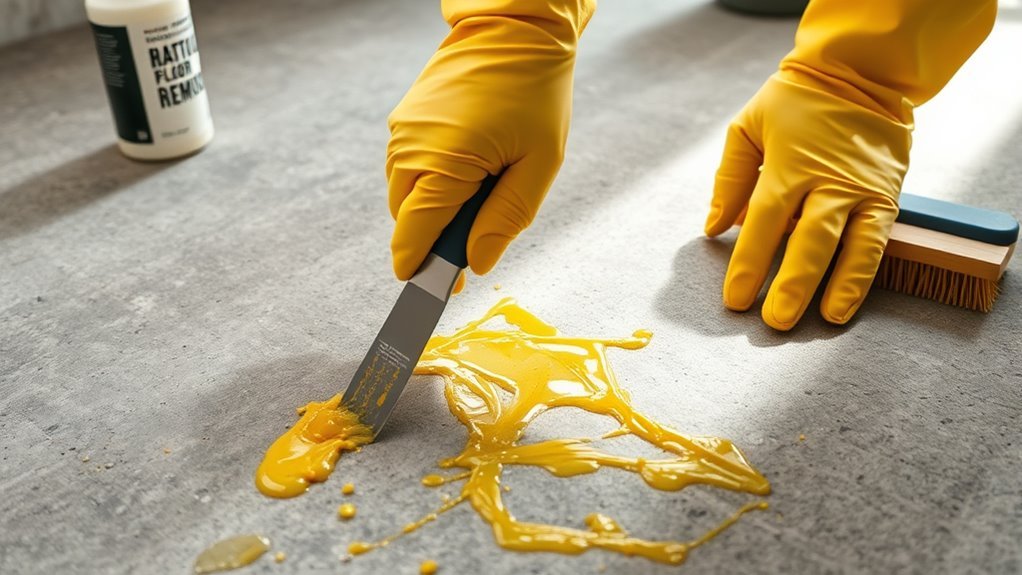
Start by scraping off as much glue as you can with your scraper.
Next, soften the remaining glue using the heat gun – it makes everything easier to remove.
After that, apply a commercial adhesive remover and let it sit for a while.
Then, scrub the area thoroughly to lift off the stubborn glue.
Finally, rinse the surface well with water and let the cement dry completely.
Follow these simple steps, and you’ll have a smooth, glue-free cement floor ready for your next project!
Key Takeaways
- Scrape off excess carpet glue using a sturdy floor scraper or putty knife with steady pressure.
- Apply a commercial adhesive remover to soften remaining glue. Let it sit for 10-30 minutes before scrubbing.
- Use a heat gun carefully to warm and loosen stubborn glue without damaging the cement surface.
- Scrub the area with a stiff-bristled brush and rinse thoroughly with water to remove residue and chemicals.
- Allow the cement to dry completely (24-48 hours) before applying further treatments or coatings.
Gather the Right Tools and Materials
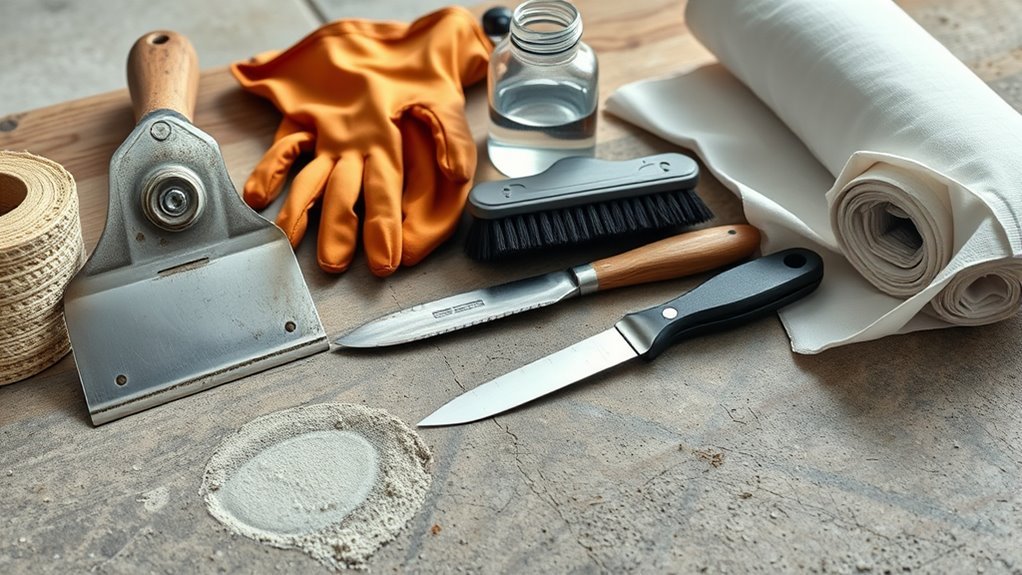
Before you begin removing carpet glue from cement, make sure you gather the right tools and materials. Proper preparation guarantees the job goes smoothly and safely.
Start by collecting heavy-duty tools like concrete grinders or scrapers, which tackle stubborn glue effectively. For larger areas, consider renting equipment such as Diamabrush grinding wheels or pressure washers to save time and effort.
Use concrete grinders or scrapers for tough glue; rent Diamabrush wheels or pressure washers for bigger jobs.
You’ll also need chemical adhesive removers or solvents specifically designed for old glue to help break down residue. Don’t forget safety gear—gloves and eye protection are essential when handling grinding tools or chemicals.
Clear the area of debris and test a small section to find the best method. With the right tools and chemical solutions ready, you’ll be set for efficient carpet glue removal from cement.
Scrape Off Excess Carpet Glue
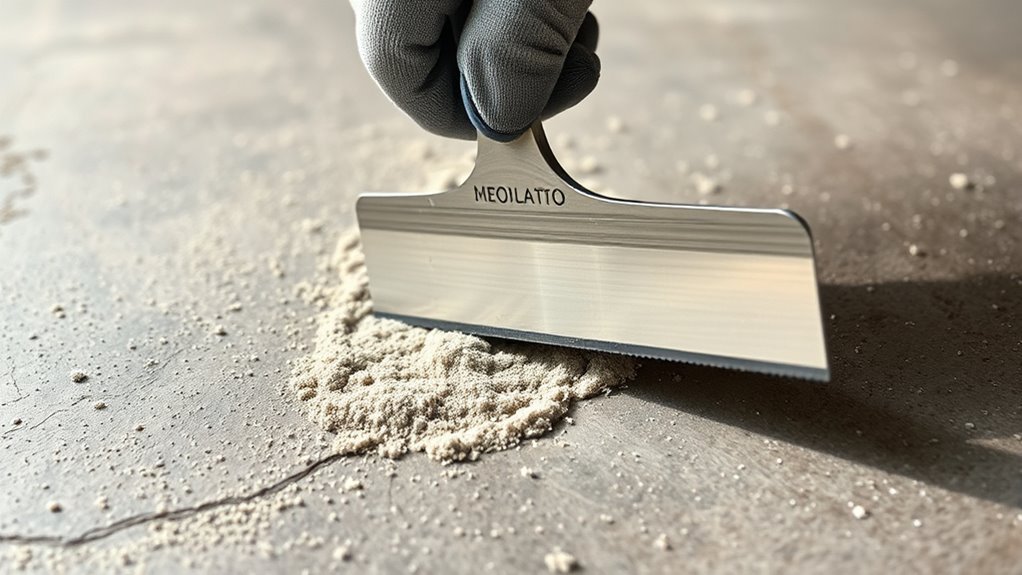
When you start scraping off excess carpet glue, use a sturdy floor scraper or putty knife to lift large sections without damaging the cement. Apply steady, even pressure and work in small areas to avoid scratching the concrete.
If the carpet glue is thick or stubborn, score it gently with the scraper to create breaks that make removal easier. Remember to wear safety gloves and eye protection throughout the process.
After scraping, sweep or vacuum the loosened glue pieces to keep the area clean. If you’re managing a new account or just tackling this for the first time, this thorough scraping step sets the foundation for deeper cleaning.
Avoid using hot water here—that’s for softening the glue later. Just focus on careful scraping to protect your cement surface.
Soften the Glue With Heat
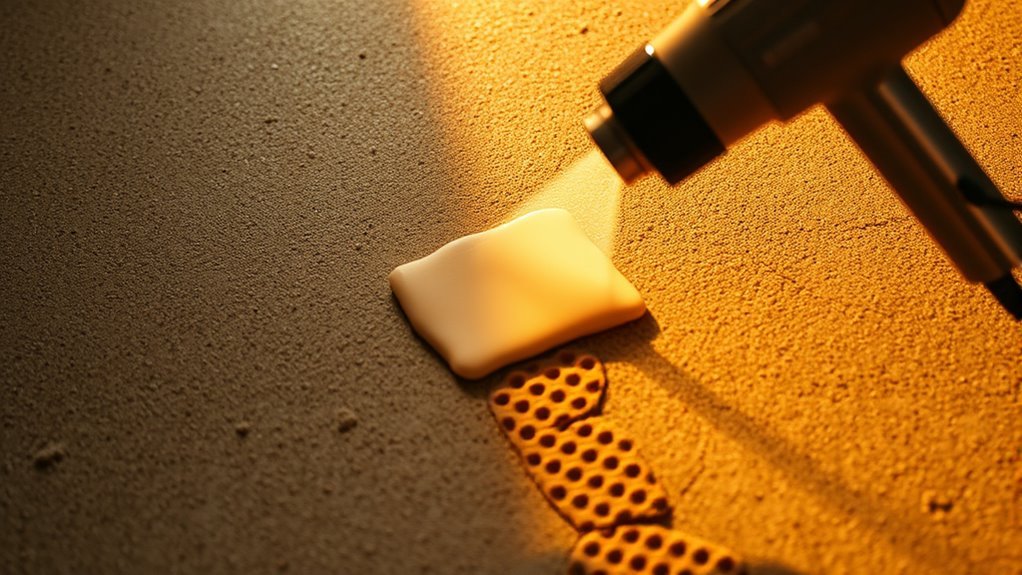
Although scraping removes much of the carpet glue, applying heat softens the residue. This makes it easier for you to scrape off the remaining adhesive from the cement.
Use a heat gun or a commercial adhesive remover with heat to gently warm the glue. This makes the glue more pliable, reducing your scraping effort.
Be careful not to overheat to avoid fumes or damage to the cement. Always wear protective gloves and a mask for safety.
| Tool | Effect on Glue | Safety Tip |
|---|---|---|
| Heat Gun | Softens adhesive | Avoid overheating |
| Adhesive Remover | Enhances heating | Use gloves and mask |
| Manual Scraper | Removes softened glue | Work carefully on cement |
Apply a Suitable Adhesive Remover
You’ll want to pick a commercial adhesive remover made for cement to break down that stubborn glue effectively. Apply it generously with a brush or sprayer to cover all the residue, then let it sit for the recommended time to soften the adhesive.
Afterward, use a stiff brush or scraper to lift the glue. Rinse the area thoroughly to clear away any leftover chemicals. Easy as that!
Choosing Effective Removers
Since carpet glue can be tough to remove, choosing the right adhesive remover is essential for breaking down the residue effectively. You should select a commercial adhesive remover made specifically for old carpet glue to tackle stubborn buildup efficiently.
Before applying it broadly, test the remover on a small, hidden patch to ensure it won’t harm your cement surface. Always follow the manufacturer’s instructions carefully, allowing enough dwell time for the product to soften the glue.
Keep in mind that safety is key—wear gloves and a mask when handling these chemicals. After the remover does its job, you can use tools like a floor scraper or grinder to clear away the loosened glue, but that step comes next.
For now, focus on picking an effective, safe remover.
Application Techniques
When you apply a suitable adhesive remover, make sure to cover the entire glue area thoroughly using a brush or spray. Choose a commercial remover designed for cement, like citrus-based or solvent-based products, to guarantee effectiveness and surface safety.
Apply the remover generously, saturating the glue completely, then let it sit for the recommended time—usually between 10 and 30 minutes—to soften the adhesive. After the wait, use a floor scraper or a stiff-bristled brush to gently lift and scrape away the loosened glue. Just be careful not to damage the cement underneath.
Finally, rinse the area with water or a neutralizing solution to clear any residue. This will prepare the surface for any further cleaning or treatment steps.
Scrub the Area Thoroughly
Start by choosing the right cleaning solution to break down the glue effectively. Use a stiff-bristled brush to scrub the area with consistent, firm motions.
Keep at it patiently to lift the adhesive without damaging the cement. Just take your time and make sure you don’t rush through it.
Choose Appropriate Cleaning Solution
Before scrubbing, apply a heavy-duty degreasing cleaner or adhesive remover made for cement surfaces to break down the carpet glue effectively. You want to use a product specifically designed for cement to guarantee it penetrates the glue without damaging the concrete.
Pour or spray the solution generously over the affected area, then let it sit for 10 to 15 minutes. This waiting time loosens the adhesive, making it easier to remove.
After the solution has worked in, rinse the area with clean water or use a pressure washer to wash away the softened glue and debris. If glue remains, just reapply the cleaner and repeat the process until the cement is free from residue.
That way, you’ll have a clean surface ready for your next flooring project.
Use Stiff Bristle Brush
Although the cleaning solution loosens the carpet glue, you’ll need a stiff bristle brush to scrub the area thoroughly and break down any stubborn residue.
Apply firm, consistent pressure while working in small sections to avoid spreading the glue further across the cement surface. Use water or your cleaning solution to help lift the adhesive particles as you scrub.
Be sure to rinse or wipe the brush regularly to remove accumulated glue, preventing it from redepositing onto the cement. This method ensures you tackle residual glue effectively without damaging the concrete underneath.
Taking your time with each section will give you better control and a cleaner finish, making the removal process more efficient.
Apply Consistent Scrubbing Motion
When you apply consistent pressure with a stiff-bristled brush or scrub pad, you’ll break down the glue more effectively. Scrub in circular or back-and-forth motions, focusing on small sections at a time.
Keep your strokes steady and even to loosen the adhesive thoroughly. Don’t hesitate to reapply cleaning solutions to keep the area wet; this helps the glue soften and become easier to remove.
Continue scrubbing until you see the glue lift or soften enough to scrape or rinse away.
| Action | Tip |
|---|---|
| Scrubbing motion | Use circular or back-and-forth strokes |
| Area focus | Work on small sections |
| Pressure applied | Maintain steady, even pressure |
| Solution reapplication | Keep the surface wet |
Rinse and Clean the Surface
Since removing carpet glue starts with a clean base, you’ll want to rinse the cement thoroughly with water to loosen debris and any leftover adhesive. Use a pressure washer on a low to medium setting to clear surface residues without damaging the concrete.
Make sure the area is free of dust and small particles before moving on. If you encounter stubborn glue patches, apply a concrete degreaser or adhesive remover, then scrub gently with a stiff-bristled brush.
After scrubbing, rinse the surface again with clean water to wash away any loosened glue and cleaning solution. This thorough rinsing and cleaning prepare your cement for the next steps in glue removal or any coating you plan to apply afterward.
Allow the Cement to Dry Completely
After thoroughly rinsing and cleaning the cement surface, you’ll need to let it dry completely before tackling the carpet glue removal. Wet glue is tougher to scrape or dissolve, and moisture can weaken the effect of grinders or solvents.
Drying times vary, but plan for at least 24-48 hours depending on glue thickness and weather. Patience here prevents smearing and repeated efforts.
| Factor | Importance |
|---|---|
| Dry Surface | Ensures effective glue removal |
| Drying Time | 24-48 hours typical |
| Avoids Smearing | Minimizes adhesive spreading |
Take your time to let the cement dry thoroughly—you’ll save time and effort in the long run. Trust me, it’s worth the wait!
Frequently Asked Questions
How to Get Carpet Glue Residue off Concrete?
You can remove carpet glue residue from concrete by applying a commercial adhesive remover, then scraping with a floor scraper.
If you encounter tough spots, try using a pressure washer or grinder to break down the stubborn glue.
Once the residue is gone, finish by polishing the surface to ensure it’s smooth and clean.
This should help get your concrete looking good as new!
What Type of Machine Can Remove Carpet Glue From Concrete?
You can use a concrete grinder with diamond wheels or a floor scarifier to remove carpet glue from concrete. These machines are really effective at getting rid of stubborn glue.
For smaller spots, an oscillating tool with a scraping attachment works well. It’s perfect for those hard-to-reach areas or tiny patches.
Renting these machines makes the job easier. Plus, it saves you from having to buy expensive equipment you might only use once.
Is Goo Gone Good for Removing Carpet Glue?
Yes, Goo Gone works well for removing carpet glue, especially if it’s fresh or semi-set. Just apply it, let it sit, then scrub.
Remember to test it first to avoid damaging your cement surface. It’s always better to be safe than sorry!
What Solvent Dissolves Carpet Glue?
Like a key releasing a stubborn door, acetone dissolves carpet glue effectively. You’ll also find mineral spirits or commercial adhesive removers work well.
Just apply, wait, then scrape—the glue will come off easier than you expect. It’s pretty straightforward once you get the hang of it!
Conclusion
Now that you’ve tackled the carpet glue like a pro, your cement surface is looking fresh and clean—almost like you’ve transported it back to the days of rotary phones and handwritten letters.
By following these simple steps, you won’t just remove the glue; you’ll restore your space with ease and confidence. Remember, patience and the right tools are your best allies.
So, roll up your sleeves and enjoy the satisfaction of a job well done! Removing carpet glue from cement might seem tricky at first, but with the right approach, it’s totally doable.
Stick to the steps, use effective cleaning agents, and give yourself some time. Soon enough, your cement floor will be glue-free and ready for whatever comes next.