7 Tips You Can Use to Clean Your Mattress With a Carpet Cleaner
When cleaning your mattress with a carpet cleaner, start by vacuuming it thoroughly and removing all bedding. This helps get rid of dust and debris before you begin the deep cleaning process.
Use the upholstery attachment on your carpet cleaner and set the machine to low moisture. This is important because too much moisture can damage the foam inside the mattress.
Pre-treat any stains gently with mild cleaning solutions to avoid harsh chemicals.
Next, apply only light sprays of cleaner to the mattress. Don’t soak it—just enough to refresh and clean the surface.
Make sure to extract as much moisture as possible using your cleaner’s suction feature.
Finally, let the mattress dry completely in a well-ventilated spot. This helps prevent mold and keeps your mattress fresh for a good night’s sleep.
These simple tips protect your mattress and keep it feeling clean and comfortable. There’s always more to learn for ideal mattress care!
Key Takeaways
– Remove all bedding and vacuum the mattress thoroughly before using the carpet cleaner to eliminate dust and debris.
This step really helps get rid of the surface stuff so the cleaner can do its job better.
– Use the upholstery attachment and select low-pressure, low-moisture settings to protect the foam layers inside the mattress.
You want to be gentle here to avoid soaking the mattress too much.
– Pre-treat stains with gentle cleaners and test solutions on hidden areas to avoid fabric damage.
It’s always smart to check first so you don’t accidentally ruin your mattress fabric.
– Apply cleaning solution lightly and use suction immediately to minimize moisture absorption.
This helps keep the mattress from getting too wet, which can cause problems later.
– Dry the mattress completely in a well-ventilated area using fans or dehumidifiers before reuse to prevent mold growth.
Patience here pays off—make sure it’s fully dry before putting the bedding back on.
Understand Why Mattresses Require Special Cleaning Methods
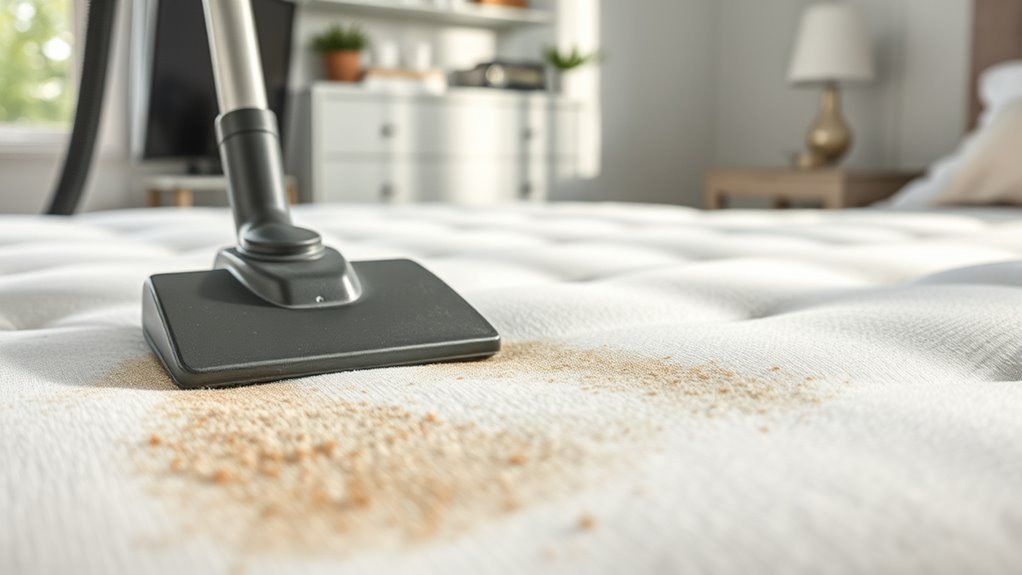
Because mattresses trap sweat, dead skin, and allergens, you need to use gentle cleaning methods that won’t damage their delicate materials. Unlike carpets, foam mattresses are sensitive to excess moisture, which can lead to mold growth and unpleasant odors if not controlled properly.
During mattress cleaning, avoid harsh stain remover chemicals or soaking the mattress, as deep cleaning techniques meant for carpets can harm the foam layers inside. Instead, focus on moisture control by using minimal water and allowing thorough drying.
Using specialized cleaning methods designed for mattresses ensures you remove stains and allergens effectively without risking material deterioration. Remember, careful moisture management is key to keeping your mattress fresh and prolonging its lifespan while maintaining a healthy sleeping environment.
Prepare Your Mattress Before Using a Carpet Cleaner
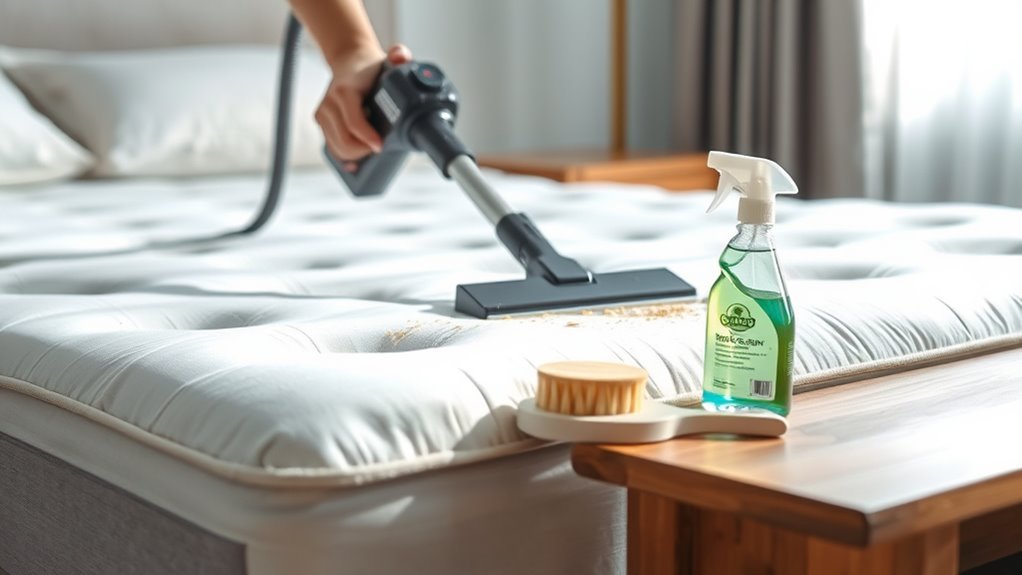
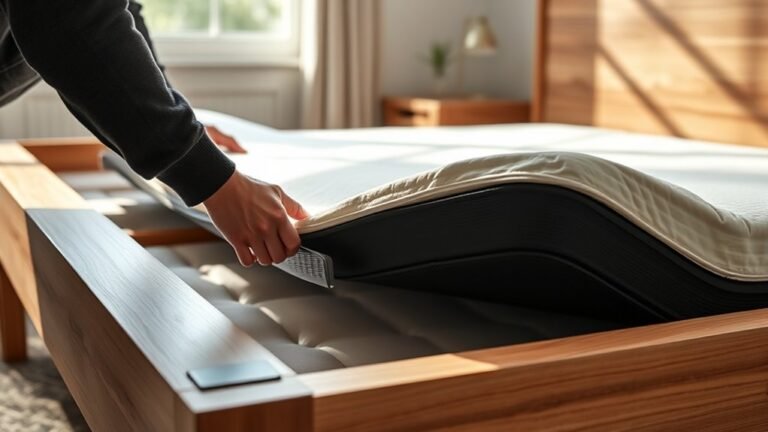
Before you start cleaning your mattress with a carpet cleaner, make sure to remove all bedding, pillows, and mattress protectors so you can access the entire surface.
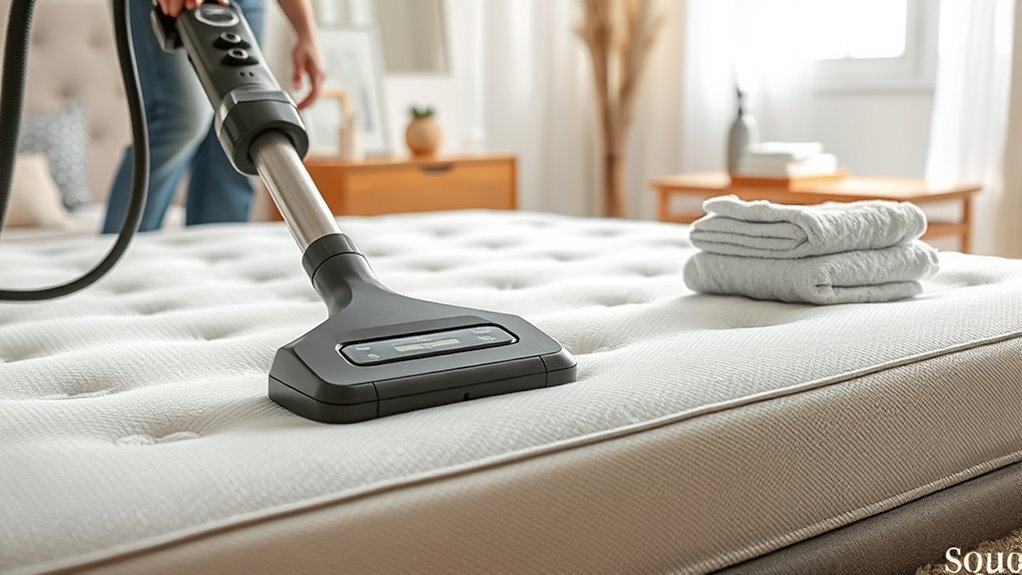
Next, vacuum the mattress thoroughly using an upholstery attachment to remove dust, hair, and debris. Check the manufacturer’s care guide to see if your mattress is double-sided or single-sided, as this affects how you clean it.
Always test any cleaning solution on a small, hidden area first to avoid damage or discoloration. Verify the mattress is completely dry and aired out before cleaning to prevent moisture from getting trapped.
| Step | Action | Reason |
|---|---|---|
| Remove Bedding | Strip sheets and pillows | Access entire mattress surface |
| Vacuum | Use upholstery tool | Remove dust and debris |
| Test & Dry | Spot test and air out | Prevent damage and moisture buildup |
Choose the Right Carpet Cleaner Settings and Attachments
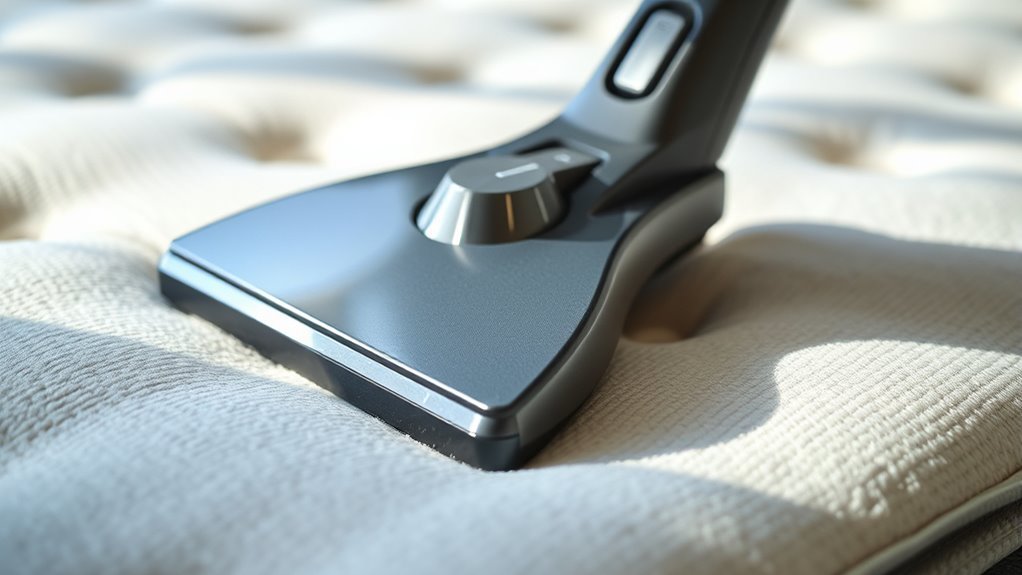
When you clean your mattress, choosing the right carpet cleaner settings and attachments makes a big difference in protecting its materials. To clean effectively while minimizing moisture damage, follow these tips:
Use the upholstery attachment to focus on mattress surfaces without soaking the foam. Select a low-pressure cleaning mode to reduce moisture absorption and protect delicate layers.
Adjust nozzle settings to control water flow and suction strength, ensuring thorough cleaning with minimal dampness. Avoid deep steam or high-moisture modes; opt for dry or light wet cleaning to prevent residual moisture buildup.
Always check your carpet cleaner’s manual for recommended settings specific to mattresses. This approach keeps your mattress fresh without risking damage from excess moisture.
Pre-Treat Stains Carefully for Best Results
Before you start, identify the type of stain on your mattress to pick the right cleaning solution. Use a gentle stain remover or a mix of dish soap and water to avoid damaging the fabric.
Always test your solution on a hidden spot first to make sure it won’t cause discoloration. That way, you can clean confidently without any surprises!
Identify Stain Types
How you treat a stain depends largely on its type, so you need to identify what caused it before applying any cleaning solution. Different stain types like blood stains, urine, sweat, and food require specific pre-treatment to guarantee effective stain removal without damaging your mattress.
Here’s how to approach various stains:
- Fresh stains: Blot gently and treat with a mild dish soap and water mixture.
- Dried stains: Use specialized stain removers or baking soda paste.
- Blood stains: Try a baking soda paste or diluted hydrogen peroxide, but spot test first.
- Urine: Pre-treat promptly with enzyme cleaners designed for urine.
Proper pre-treatment tailored to each stain type improves cleaning results and preserves your mattress’s fabric. So, taking a moment to identify the stain can save you a lot of trouble later on.
Use Gentle Solutions
Knowing the type of stain you’re dealing with helps you choose the right cleaning solution to avoid damage. To pre-treat stains effectively, use gentle solutions like a mix of dish soap and cold water or a mild upholstery cleaner.
Avoid harsh chemicals that can harm the mattress fabric or foam. Always test your stain remover on a hidden area first to prevent discoloration.
Apply the solution with a soft cloth or sponge, gently dabbing rather than rubbing to avoid spreading the stain or damaging the fabric. For protein-based stains such as blood or sweat, stick to cold water-based mild solutions, as heat can set the stain.
Let the pre-treated stains sit for several minutes before continuing with your cleaning and stain removal process for the best results. It really makes a difference!
Use Minimal Moisture to Avoid Mattress Damage
If you want to keep your mattress in good shape, use minimal moisture when cleaning with a carpet cleaner. Excessive water can cause soaking, leading to mold and mildew inside the foam.
To prevent damage, follow these moisture control tips: Apply only a light spray of cleaning solution—avoid soaking the mattress. Use the carpet cleaner’s suction to extract moisture promptly after cleaning.
Place the mattress in a well-ventilated area to aid drying. You might also consider using fans or a dehumidifier to speed up drying and reduce trapped dampness.
Ensure Thorough Drying After Cleaning
After carefully controlling moisture during cleaning, the next step is to guarantee your mattress dries completely. To assure thorough drying, air out the mattress in a well-ventilated space for at least 24 hours.
Position it vertically or on its side to promote ventilation on all surfaces. Use fans or dehumidifiers directed at the mattress to speed up drying and prevent lingering moisture.
Position your mattress vertically or on its side and use fans or dehumidifiers to speed up drying.
Avoid covering or sleeping on the mattress until you achieve complete dryness, as trapped dampness can lead to mold or mildew. Before replacing bedding, check for any residual dampness by pressing a dry cloth or your hand firmly against the mattress.
Proper drying minimizes moisture build-up and keeps your mattress fresh and safe for use. Taking these steps really helps keep things clean and comfy!
Maintain Mattress Freshness With Natural Deodorizers
While cleaning your mattress removes dirt and moisture, maintaining freshness requires a regular touch-up with natural deodorizers. Baking soda is your best friend for odor removal and mattress freshness.
Here’s how to use it effectively:
- Sprinkle baking soda evenly over your mattress surface using a fine sieve to avoid clumps.
- Mix a few drops of essential oils like lavender with baking soda before applying for a pleasant scent.
- Let the baking soda sit for several hours or overnight to absorb odors deeply.
- Use a vacuum cleaner to thoroughly remove all baking soda and trapped smells.
It’s a simple trick that really makes a difference. Give it a try and enjoy a fresher mattress!
Frequently Asked Questions
How to Clean a Mattress Without a Shampooer?
You can vacuum your mattress to start with. Spot-clean stains using a mix of water and dish soap.
For disinfecting, vinegar works great. Just blot gently and let it air dry.
After that, sprinkle some baking soda to absorb odors. Then, vacuum it all up again. Easy and effective!
How Much Is It to Professionally Clean a Mattress?
You can expect to pay between $75 and $200 to professionally clean your mattress. Costs vary by size and condition, but it’s usually cheaper than replacing your mattress.
Can You Clean a Mattress With a Rug Shampooer?
You can tame the beast of dirt with a rug shampooer, but don’t drench it like a rainstorm. Use gentle strokes, minimal water, and dry it quickly to keep your mattress fresh without damage or mold lurking.
Think of it like giving your mattress a light bath instead of a swim. This way, you avoid soaking it, which can lead to a soggy mess and potential mold growth.
Just take it slow and easy, and your mattress will thank you!
How Do You Get Urine Smell Out of a Mattress?
You get urine smell out of a mattress by blotting the stain first. Then, spray a vinegar-water mix over the area.
Next, sprinkle baking soda on top and let it sit overnight. The baking soda helps absorb the odor.
In the morning, vacuum up the baking soda. If the smell lingers, just repeat the process.
For really stubborn odors, you might want to try using an enzyme cleaner. It breaks down the urine molecules and gets rid of the smell better.
Conclusion
Cleaning your mattress with a carpet cleaner can be a game-changer for your sleep quality. Did you know mattresses can harbor up to 10 million dust mites? That’s a lot of tiny critters affecting your rest!
By following these tips—prepping properly, using the right settings, and drying thoroughly—you’ll protect your mattress and keep it fresh longer. It’s not just about looking clean; it’s about creating a healthier sleeping environment.
Remember, a clean mattress not only feels better but also supports your health. Taking care of your mattress with a carpet cleaner helps reduce allergens and dust mites, which can improve your breathing and overall comfort. So, investing a little time into mattress cleaning will pay off with better sleep and a fresher bed every night!