How You Can Safely Use a Heated Mattress Pad With Memory Foam
You can safely use a heated mattress pad with memory foam by choosing a low-voltage, safety-certified pad that offers adjustable heat settings and automatic shutoff features. These features are essential for preventing overheating and protecting your mattress.
Make sure to place the heated pad beneath the memory foam, never on top. This helps avoid direct heat contact that could damage the foam.
Also, use breathable mattress protectors or sheets to prevent heat buildup and keep the mattress fresh.
Keep the heat at low or medium levels for the best balance between warmth and safety.
It’s a good idea to regularly check the pad and wiring for any signs of damage.
Following these simple tips helps safeguard your foam’s structure and ensures you stay comfortable all night long.
There’s more to know about optimizing safety and durability with heated memory foam setups, so stay curious and informed!
Key Takeaways
- Use a low-voltage heated mattress pad with adjustable heat settings and automatic shutoff for safe, controlled warmth on memory foam. This helps keep things cozy without overheating.
- Place the heated pad flat beneath the memory foam mattress or topper, never directly on top. Doing this prevents any heat damage to your mattress.
- Always use breathable, moisture-wicking mattress protectors and cotton sheets. These promote airflow and help avoid heat buildup, keeping you comfortable all night.
- Set heat levels to low or medium and limit usage to 10–12 hours. This protects the foam and stops overheating before it starts.
- Regularly inspect the heated pad and mattress for signs of wear or damage. And don’t forget to follow all manufacturer safety instructions to stay safe.
Understanding Memory Foam and Heat Sensitivity
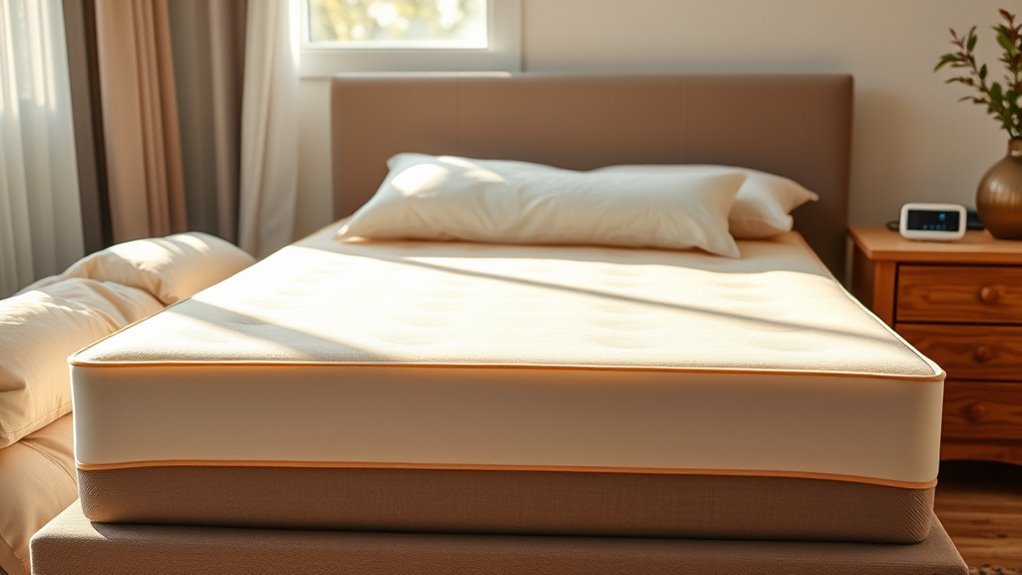
Although memory foam offers excellent comfort and support, it’s sensitive to heat and can deform or soften if exposed to high temperatures. When you use heated mattress pads with memory foam, you need to be cautious.
Excessive or prolonged heat can compromise the foam’s structure, reducing its ability to support your body properly and shortening its lifespan. Memory foam also tends to trap heat, which might make your sleeping surface uncomfortably warm.
Too much heat weakens memory foam and traps warmth, making your bed less supportive and uncomfortably hot.
Plus, heat can speed up off-gassing, releasing volatile organic compounds (VOCs) that you’d want to avoid breathing in. So, to protect your memory foam mattress, it’s essential to control the heat levels carefully when using heated mattress pads.
That way, you can enjoy warmth without damaging the mattress or sacrificing comfort.
Choosing the Right Heated Mattress Pad for Memory Foam
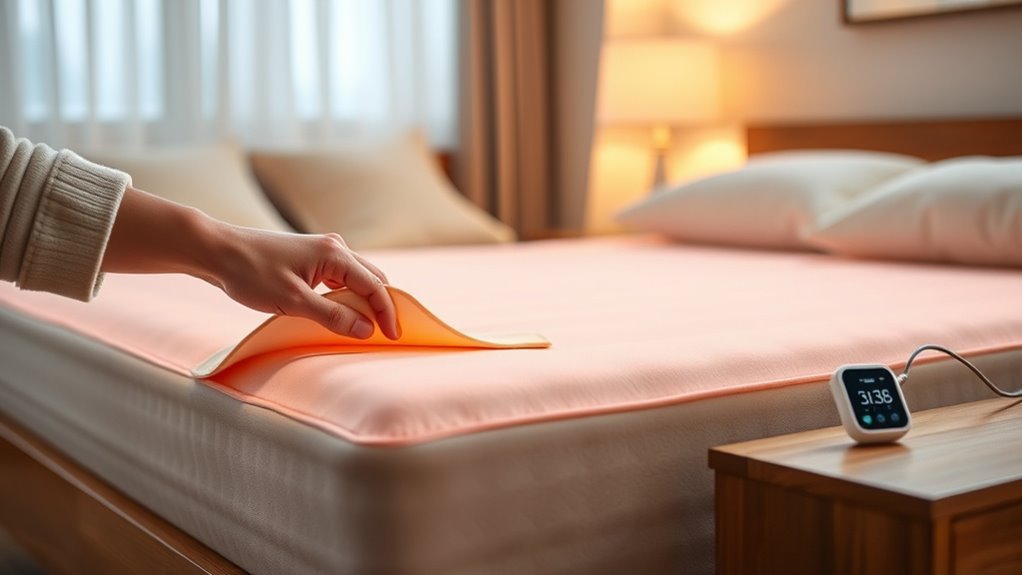
When choosing a heated mattress pad for your memory foam mattress, focus on materials and features that prevent overheating and protect the foam. Look for low-voltage options with adjustable heat settings to keep the temperature safe and comfortable.
Also, consider pads with soft covers and even wiring to avoid pressure points while maintaining breathability. This way, you stay cozy without compromising the memory foam’s support and longevity.
Material Compatibility Considerations
Since memory foam is sensitive to heat and pressure, you’ll want to choose a heated mattress pad designed specifically to protect its structure. Material compatibility is key to avoid damage or discomfort.
When selecting your heated mattress pad, consider these factors:
- Opt for a pad with a low-voltage or DC power supply to minimize heat stress on the foam.
- Choose a soft, plush cover made from fabric that won’t irritate or compress the memory foam.
- Avoid pads with embedded wires or coils that create uneven pressure points, potentially deforming the foam.
Optimal Heating Settings
Choosing the right heated mattress pad for your memory foam mattress means paying close attention to its heating settings and controls. Look for a heated pad with multiple heat settings and an automatic shut-off feature to prevent overheating, which can damage the foam.
Start by using the lowest heat setting and gradually increase it to find a comfortable temperature that won’t cause excessive expansion or deformation. Models with electronic controls allowing independent side adjustments are ideal, so you and your partner can customize warmth without affecting the memory foam.
Also, choose a pad with a soft, plush top layer to protect the foam’s surface. Always follow the manufacturer’s instructions for placement and use to maintain your mattress’s integrity while enjoying cozy warmth safely.
Importance of Safety-Certified, Low-Voltage Heating Systems
Although heated mattress pads offer cozy comfort, you need to prioritize safety by selecting models with safety certifications like UL or ETL approval.
Choosing a safety-certified, low-voltage heating system helps protect you and your memory foam mattress from potential hazards. Here’s why:
- Safety-certified pads meet strict electrical standards, reducing the risk of fire or electrical faults.
- Low-voltage systems operate at safer, reduced voltages, minimizing electrical shock risk.
- These pads often include automatic shutoff timers, preventing overheating and extending mattress life.
Proper Placement of Heated Mattress Pads With Memory Foam
When placing a heated mattress pad under your memory foam, make sure it lies flat and directly beneath the mattress for even heat distribution. Avoid folding or bunching the pad to prevent hot spots and potential damage.
It’s also a good idea to follow your mattress and pad manufacturer’s guidelines. That way, you’ll ensure compatibility and enjoy safe, effective warming every night.
Optimal Pad Placement
To guarantee even heat distribution and protect your memory foam mattress, place the heated mattress pad directly beneath the foam layer, making sure it lies flat. Avoid putting the heated mattress pad on top, as uneven heat can damage the foam.
Once positioned, secure everything with a fitted sheet to keep the pad from shifting during the night. Follow these steps for ideal pad placement:
- Lay the heated mattress pad flat beneath the memory foam mattress or topper.
- Cover both with a fitted sheet to hold the pad firmly in place.
- Regularly check the pad’s position and condition to maintain safe, consistent warmth.
Mattress Compatibility Tips
Ensuring your heated mattress pad works safely with your memory foam mattress means choosing one designed specifically for soft surfaces and placing it correctly beneath the foam layer.
For proper compatibility, place the heated mattress pad flat under the memory foam, never on top. This avoids uneven heat and potential damage.
Opt for low-voltage or DC-powered pads that flex gently with your mattress. That way, you reduce pressure points and keep things comfy.
Always match the pad size to your mattress, and remember to inspect wiring regularly to stay safe.
| Compatibility Factor | Recommendation |
|---|---|
| Placement | Underneath memory foam, lying flat |
| Power Type | Low-voltage or DC-powered for safety |
| Mattress Size & Flexibility | Match size; choose soft, flexible pads |
Heat Distribution Strategies
Although memory foam mattresses provide excellent comfort, you need to place your heated mattress pad flat beneath them to achieve even heat distribution. Proper placement ensures consistent warmth and prevents hot spots that could damage the foam or cause discomfort.
To optimize heat distribution and maintain temperature regulation, follow these steps:
- Lay the heated mattress pad flat directly under the memory foam mattress or topper without folding or bunching it.
- Choose a pad with automatic shutoff and built-in temperature regulation to avoid overheating.
- Regularly inspect your pad for any damage or uneven heating, especially under thick memory foam layers.
Using Mattress Protectors and Breathable Layers
When you place a waterproof or fitted mattress protector beneath your heated mattress pad, you reduce the risk of heat damage by preventing direct contact with the foam. Mattress protectors that are thin and moisture-wicking help maintain airflow and prevent excess moisture buildup, which can affect the heated pad’s performance.
Using breathable layers like cotton sheets or futon covers allows heat to dissipate evenly. This enhances comfort and protects your memory foam from overheating.
Avoid thick or insulating mattress toppers between the heated pad and memory foam, as they trap heat and cause uneven temperatures.
Remember to regularly inspect and replace your protective layers to ensure they stay breathable. You don’t want them interfering with heat transfer or your heated mattress pad’s safety features.
Recommended Heat Settings and Usage Duration
After setting up breathable layers and mattress protectors to prevent heat buildup, you’ll want to focus on choosing the right heat settings and usage time for your heated mattress pad.
To use it safely with memory foam, follow these guidelines:
Use your heated mattress pad safely with memory foam by following recommended heat settings and usage times.
- Stick to the recommended heat settings by selecting the lowest or medium level to avoid overheating your mattress.
- Limit usage duration to no more than 10-12 hours continuously to reduce electrical risks and prevent heat buildup.
- Always adhere to the manufacturer’s instructions and regularly check comfort and temperature during initial use.
That way, you can enjoy warmth without worrying about damage or safety issues. Just keep an eye on things, especially when you’re trying it out for the first few times.
Benefits of Automatic Shutoff and Timer Features
You’ll want to use automatic shutoff and timer features to prevent your heated mattress pad from overheating, reducing fire risks. These functions also help you save energy by ensuring the pad only runs when you need it.
Setting a timer gives you control and peace of mind while keeping your sleep environment safe. It’s a simple way to stay cozy without worrying about leaving the pad on all night.
Prevents Overheating Risks
Because heated mattress pads can pose overheating risks, using models with automatic shutoff and timer features is essential for your safety. These functions help you avoid excessive heat buildup that could damage your memory foam mattress or create fire hazards.
Here’s how they protect you: automatic shutoff turns the pad off after a set time (usually 1–12 hours), preventing it from running all night. Timers make sure you don’t forget to switch off the device, which reduces electrical malfunction risks.
Also, safety certifications like UL or ETL guarantee the pad meets strict safety standards, especially when it comes to automatic shutoff performance. So, choosing a certified product adds an extra layer of protection.
Enhances Energy Efficiency
Beyond safety, automatic shutoff and timer features also help you save energy by preventing your heated mattress pad from running longer than necessary. With programmable timers, you can set your mattress pad to warm up only when you need it, ensuring it doesn’t waste power by staying on all night.
This controlled heating reduces energy consumption, which lowers your utility bills and minimizes overheating risks that lead to energy waste. Additionally, using automatic shutoff protects your mattress pad’s components by avoiding prolonged use, helping extend its lifespan.
Regular Inspection and Maintenance Tips
Although heated mattress pads provide warmth and comfort, you must regularly inspect and maintain them to guarantee safe use. Regular inspection is vital to identify any damage or wear that could compromise safety.
Here are three essential tips to help you maintain your heated mattress pad:
- Before each use, check for frayed wires, damage, or unusual signs on the controller and wiring.
- Always unplug and disconnect the control unit before cleaning, and follow the manufacturer’s instructions to avoid electrical hazards.
- Ensure the pad is completely dry after washing to prevent electrical malfunctions or mold growth.
If you notice persistent malfunctions or damage, replace the mattress pad immediately. Regular inspection and proper maintenance keep your heated mattress pad safe and reliable.
Avoiding Common Mistakes When Combining Heat and Memory Foam
Maintaining your heated mattress pad’s safety doesn’t stop at regular checks and cleaning. One common mistake is placing the heated mattress pad directly on your memory foam mattress without a protective barrier.
Always use a mattress protector or fitted sheet to prevent direct heat contact, which can cause damage. Also, avoid cranking the heat to the highest setting; memory foam is sensitive to excessive warmth, so stick to moderate or low levels.
Choose a heated mattress pad with automatic shutoff and temperature controls to prevent overheating. In conclusion, regularly inspect both the pad and memory foam for any signs of wear, deformities, or odors.
If you notice any damage, stop using the heated pad immediately to protect your mattress and ensure your safety. It’s better to be safe than sorry!
Enhancing Comfort and Longevity of Your Heated Mattress Setup
To enhance both comfort and longevity when using your heated mattress pad, you should prioritize proper layering and temperature control.
First, place a breathable mattress protector between the heated pad and your memory foam mattress. This helps prevent direct heat contact and extends your mattress’s life.
Second, choose a heated mattress pad with automatic shutoff and adjustable temperature settings. This way, you can avoid overheating easily.
Third, always use low to medium heat levels and a low-voltage power supply. Doing so minimizes the risk of heat damage to your mattress.
Also, make sure to regularly inspect your setup for any wear or damage. If you notice any problems, stop using it right away.
Frequently Asked Questions
Do Memory Foam Mattresses Retain Heat?
Yes, memory foam mattresses retain heat because their dense material traps your body warmth.
You’ll often feel warmer on them, especially without proper ventilation or cooling.
Can You Provide a Review of a Heated Mattress Pad?
You might expect a heated mattress pad to overheat, yet many models deliver consistent warmth with safety features like automatic shutoff.
They’re cozy, easy to use, and a smart addition for chilly nights. You’ll really notice the difference when you slip into a warm bed after a cold day.
Do You Really Need to Wait 24 Hours for a Memory Foam Mattress?
Yes, you should wait 24 hours for your memory foam mattress to fully expand and off-gas.
This waiting time helps reduce odors and improve comfort. Plus, it guarantees the mattress performs at its best before you add a heated mattress pad.
Can You Use a Heated Mattress Pad With a Memory Foam Topper?
You can use a heated mattress pad with a memory foam topper, but don’t place it directly on the foam.
Think of it as a gentle hug—always put the pad underneath to keep warmth safe and cozy.
Conclusion
Think of your heated mattress pad and memory foam as dance partners—each with their own rhythm and needs. When you choose the right pad, use protective layers, and respect safety features, they move in harmony, creating warmth without harm.
Neglect these steps, and the dance falters, risking discomfort or damage. It’s all about finding that delicate balance.
By tending to this balance, you guarantee your sleep space remains a cozy sanctuary. Comfort and care gracefully intertwine every night, making your heated mattress pad with memory foam a safe and soothing combo. It’s the perfect way to enjoy warmth without compromising your memory foam’s integrity or your safety.