
How Do You Use a Carpet Cleaner on Your Mattress
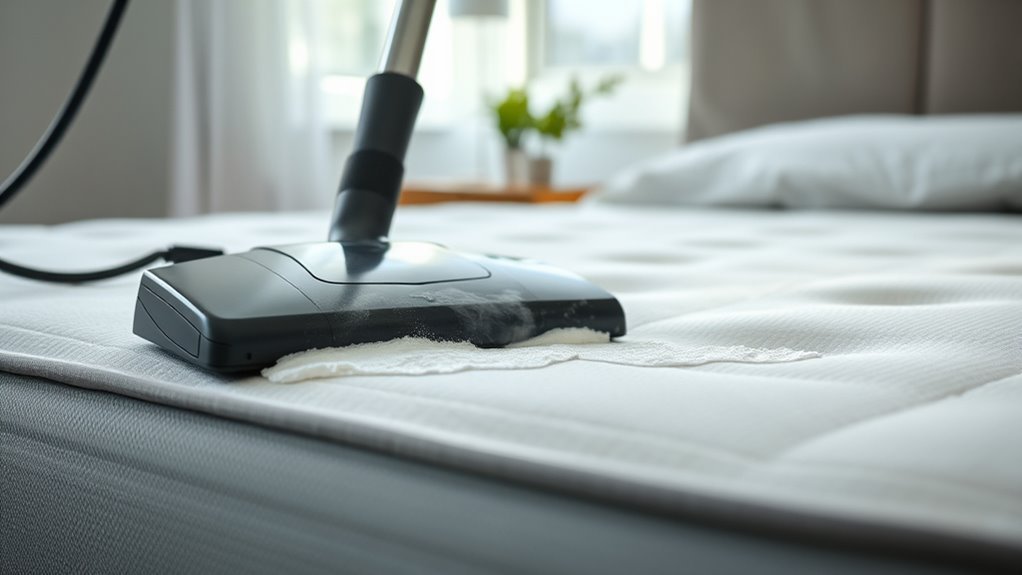
To use a carpet cleaner on your mattress, start by removing all bedding and vacuuming thoroughly. This helps get rid of dust, dirt, and allergens trapped in the mattress.
Choose a carpet cleaner that comes with an upholstery attachment to make the job easier and more effective.
Use minimal water during cleaning to avoid soaking the mattress, which can lead to mold or mildew.
Before you begin, pre-treat any stains with a mild cleaner.
Then, clean the mattress using gentle, even strokes to lift dirt without damaging the fabric.
After cleaning, it’s super important to let your mattress dry completely.
You can speed up drying by improving airflow in the room or exposing the mattress to sunlight.
This helps prevent mold growth and keeps your mattress fresh.
If you want to keep your mattress fresh and extend its life, understanding the full process and maintenance tips can really help.
Key Takeaways
- Choose a carpet cleaner with upholstery attachments designed for delicate mattress surfaces to avoid damage.
- Pre-treat stains with a mild cleaning solution before using the carpet cleaner for better stain removal.
- Use minimal water and move the cleaner in long, even strokes to prevent over-saturation.
- Ensure thorough drying by using fans or placing the mattress in sunlight after cleaning to prevent mold growth.
- Avoid harsh chemicals and high-pressure settings to protect mattress integrity and warranty coverage.
Just keep it gentle and take your time, and your mattress will thank you!
Why Mattress Cleaning Is Important
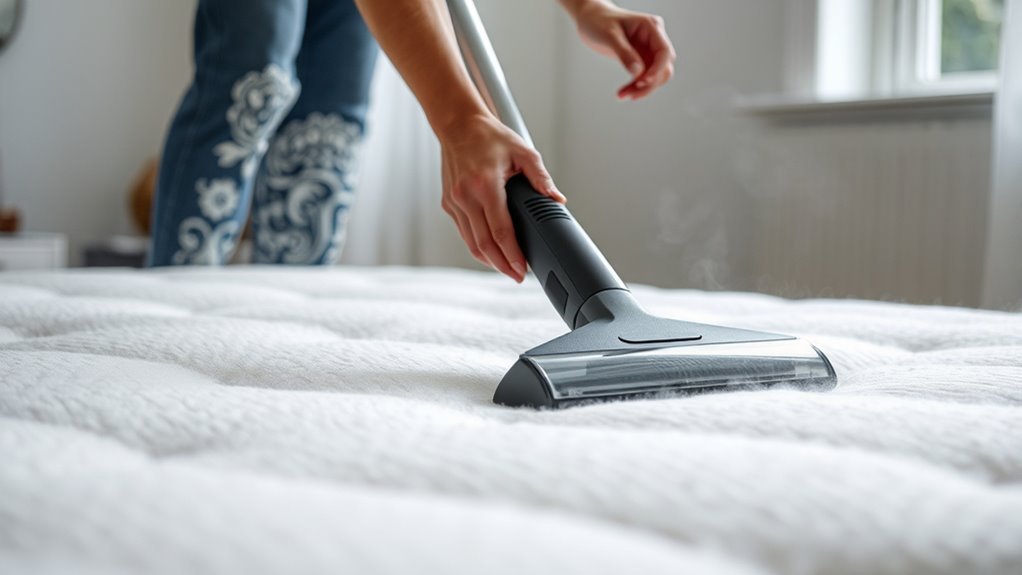
Although you might not see them, your mattress harbors millions of dust mites, dead skin cells, and allergens that can trigger allergies and respiratory problems.
Regular mattress cleaning is essential to remove these irritants and maintain a hygienic sleeping surface.
A deep clean every 3 to 6 months helps eliminate stubborn stains and odor removal, preventing bacteria buildup.
Dust mites thrive in warm, humid environments, so neglecting your mattress can increase allergen levels and risk mold growth.
By committing to regular maintenance, you not only extend your mattress’s lifespan but also improve sleep quality.
Keeping your mattress clean creates a healthier environment, reducing allergy symptoms and promoting restful nights.
Prioritizing mattress cleaning is key to a comfortable, safe sleep space.
Preparing Your Mattress for Cleaning
Keeping your mattress clean starts with proper preparation. First, remove all bedding, including sheets and mattress protectors, to expose the entire surface.
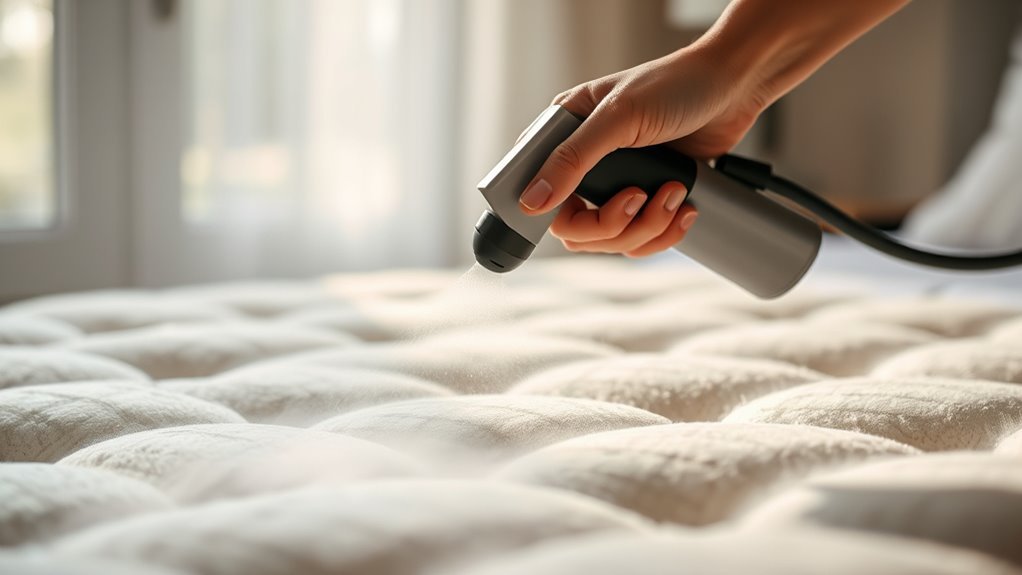
Next, vacuum the mattress thoroughly using an upholstery attachment to eliminate dust, skin flakes, and surface debris. Before you move on, check the manufacturer label for cleaning instructions and any warnings about water or cleaning solutions.
If you spot stains, make sure to spot treat them with a mild cleaner or enzyme-based stain remover. It’s super important that your mattress is dry and free of moisture before deep cleaning to prevent mold and mildew buildup.
Following these steps ensures your mattress is ready for effective cleaning and helps maintain its condition over time.
Selecting the Right Carpet Cleaner and Cleaning Solution
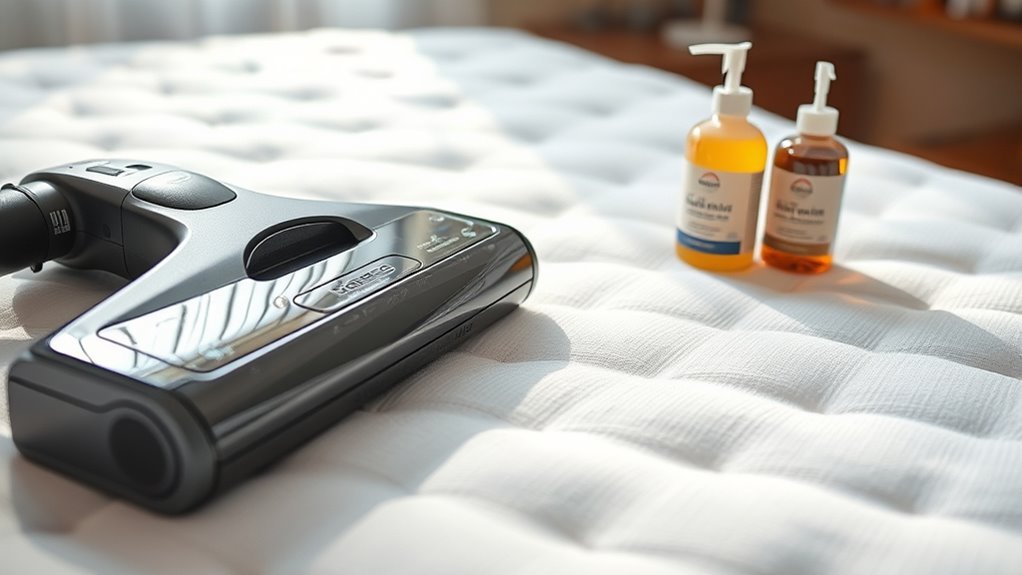
When selecting a carpet cleaner for your mattress, focus on models with upholstery or soft surface attachments designed specifically for delicate materials. Choose a carpet cleaner that heats water for deep cleaning, but avoid steam cleaners with harsh chemicals or high pressure on foam mattresses.
Pick a cleaning solution compatible with your mattress type—options like enzyme cleaner or vinegar solution are safe for fabrics and effective. Always check the manufacturer recommendation to avoid damaging your mattress or voiding the warranty.
| Mattress Type | Cleaning Solution | Carpet Cleaner Feature |
|---|---|---|
| Foam | Vinegar solution | Upholstery attachment |
| Innerspring | Enzyme cleaner | Heated water |
| Memory Foam | Mild detergent | Soft surface attachment |
| Hybrid | Manufacturer approved | Deep cleaning |
Step-by-Step Mattress Cleaning Process
Start by stripping your mattress of all bedding and giving it a thorough vacuum to remove dust and debris.
Next, spot-treat stains with a gentle cleaning solution before using your carpet cleaner to refresh the entire surface.
Finally, make sure your mattress dries completely in a well-ventilated area to prevent moisture buildup.
Preparation and Inspection
Before you begin cleaning your mattress with a carpet cleaner, remove all bedding, sheets, and mattress protectors to expose the entire surface.
Next, perform a thorough inspection to spot any damage, mold, or leaks. Check the manufacturer’s label for specific cleaning instructions and restrictions.
Then, vacuum the mattress using an upholstery attachment to remove dust, hair, and debris from seams and crevices.
Finally, identify any visible stains and pre-treat them with a cleaning solution suitable for your mattress type—whether memory foam or innerspring—making sure it won’t cause damage or void warranties.
- Remove bedding and expose the mattress surface
- Inspect for damage and review manufacturer’s label
- Vacuum thoroughly to eliminate debris
- Pre-treat visible stains based on mattress type and cleaning instructions
Cleaning and Drying
Although it might seem tricky, cleaning your mattress with a carpet cleaner is straightforward if you follow the right steps. Start by vacuuming the mattress thoroughly using an upholstery attachment to remove dust and debris.
Next, use your carpet cleaner with a nozzle suited for upholstery, applying minimal water and moving in long, consistent strokes. Treat any visible stains first with a gentle cleaning solution before cleaning the entire surface.
After cleaning, focus on drying: improve ventilation by opening windows or using fans, and if possible, place the mattress in sunlight for natural disinfection. To ensure there’s no lingering moisture, press a clean, dry towel into the mattress surface and wait several hours.
Only make your bed once the mattress is fully dry to prevent mold and odors. It’s worth the wait to keep things fresh and clean!
Drying Techniques to Prevent Mold and Odors
Since moisture left in your mattress can quickly lead to mold and unpleasant odors, you need to dry it thoroughly within 24 to 48 hours after cleaning. Effective drying techniques help prevent mold and guarantee odor control. Follow these steps:
- Use a dehumidifier and fans to boost ventilation and reduce humidity around the mattress. This really speeds up the drying process and keeps the air moving.
- Elevate or stand the mattress on its side to maximize airflow through all layers. Getting air all around the mattress is super important.
- Place the mattress in direct sunlight when possible, as sunlight naturally inhibits mold growth. Plus, it gives your mattress a nice fresh boost.
- Check moisture levels with a moisture meter before remaking the bed to ensure no dampness remains. You definitely don’t want to put sheets back on if it’s still wet.
Avoid plastic covers during drying, as they trap humidity and promote mold. Proper drying is key to maintaining a fresh, mold-free mattress. So, be patient and give your mattress the time it needs to dry completely!
Post-Cleaning Mattress Care and Maintenance
Once your mattress is completely dry, you’ll want to focus on ongoing care to keep it fresh and durable. Proper drying and ventilation after cleaning prevent mold and odors.
Regular inspection helps you spot moisture or musty smells early. For odor absorption, sprinkle baking soda, let it sit, then vacuum.
Maintain airflow by using fans or dehumidifiers during drying. Rotate or flip your mattress every 3–6 months to promote even wear and prolong lifespan.
A mattress protector minimizes stains and debris, reducing the need for frequent cleaning.
| Task | Purpose | Frequency |
|---|---|---|
| Inspection | Detect moisture/odor | Monthly |
| Rotate/Flip | Even wear, durability | Every 3–6 months |
| Baking Soda Use | Absorb odors/moisture | After each cleaning |
When to Consider Professional Mattress Cleaning
If your mattress has stubborn stains, strong odors, or allergen buildup, it’s time to think about professional cleaning. Experts use specialized tools that can get deeper and cleaner than DIY methods.
Choosing the right service ensures your mattress stays safe, especially if it’s delicate or under warranty. It’s worth getting the pros involved to keep your bed fresh and comfy!
Signs You Need Help
When you notice persistent stains, odors, or mold on your mattress that don’t respond to your cleaning efforts, it’s time to call in professional help.
Ignoring these signs can lead to discoloration, moisture damage, or worsening health symptoms.
Here are four key indicators you need expert assistance:
- Stubborn stains, odor, or visible mold remain after DIY cleaning attempts.
- Moisture or water damage creates a musty smell or mold growth that won’t fade.
- Heavy infestation of bed bugs or dust mites requires deep cleaning beyond home methods.
- You experience allergy flare-ups or respiratory problems tied to your mattress condition.
Recognizing these signs early and seeking professional help can protect your health and extend your mattress’s lifespan.
Benefits of Professionals
Although DIY cleaning can tackle surface dirt, professionals bring specialized equipment and expertise that deeply sanitize your mattress. They remove allergens, dust mites, and stubborn stains far more effectively.
When you hire a professional, an expert assesses your mattress type and condition to select the safest, most effective deep cleaning techniques. This tailored approach minimizes damage risk often caused by improper DIY methods.
Professionals also ensure thorough drying, preventing mold, mildew, and moisture retention that can harm your mattress over time. Their advanced equipment controls over-wetting and promotes proper ventilation, preserving your mattress warranty and extending its lifespan.
These benefits are especially important for delicate or memory foam mattresses. Expert sanitization and drying prevent irreversible damage, making professional cleaning a smart investment for your mattress’s health and longevity.
Choosing a Cleaning Service
Deciding to hire a professional mattress cleaning service depends on your mattress’s condition and your cleaning goals. You might consider professional mattress cleaning when you need a deep clean that DIY methods can’t match. Professionals use expert techniques and specialized cleaning agents to get the job done right.
Also, if you’re dealing with stubborn stains or persistent odors, home equipment often falls short. Professional services offer effective stain removal and odor neutralization that really works.
Another thing to keep in mind is proper drying. This is crucial to prevent mold and mildew, which can be a big problem for your mattress. Experts make sure your mattress is dried thoroughly to keep it in good shape.
If you have a delicate or warranty-protected mattress, it’s even more important to get professional care. This helps avoid damage and keeps your mattress lasting longer.
In the end, professional cleaning services provide thorough sanitizing while reducing moisture risks. They tailor treatments specifically to your mattress type and ensure it’s dried properly. Choosing experts means your mattress gets the care it deserves, which extends its life and improves your sleep quality.
Frequently Asked Questions
Is It Okay to Use a Carpet Cleaner on a Mattress?
It’s okay to use a carpet cleaner on innerspring or hybrid mattresses, but avoid memory foam or latex. Always check your mattress care instructions before you start.
Use minimal water to clean the mattress, and make sure it dries thoroughly. This helps prevent any damage or mold growth, which is really important.
What Is the Best Thing to Clean a Mattress With?
Back in the days of quills and inkpots, you’d clean a mattress best with mild soap and water or enzyme cleaner. Sprinkle baking soda first, then vacuum.
Always dry thoroughly to avoid mold or mildew—no time machines needed!
What Is the Best Carpet Cleaner for Cleaning a Mattress?
You’ll want a portable carpet cleaner like the Bissell SpotClean Pro or Hoover PowerDash with upholstery attachments. These are super handy for getting into those tight mattress spots.
Steam cleaners like Dupray Neat also work great, especially if they have adjustable controls and HEPA filters. They’re perfect for a deep, gentle clean that won’t damage your mattress.
Can I Use a BISSELL Carpet Cleaner on a Mattress?
Yes, you can use a BISSELL carpet cleaner on your mattress, but avoid memory foam. Use minimal water and upholstery attachments to prevent damage.
Always follow the instructions to keep your mattress fresh without soaking it. It’s all about being gentle and careful!
Conclusion
Regularly cleaning your mattress is essential since dust mites and allergens can increase by up to 10 times in unclean mattresses, affecting your health. By using a carpet cleaner properly, you’re not just removing stains but also improving your sleep environment.
Remember to prepare your mattress, choose the right cleaner, and dry it thoroughly to avoid mold. With consistent care, your mattress will stay fresh and comfortable for years to come.
Using a carpet cleaner on your mattress helps tackle stubborn stains and allergens effectively. It’s important to follow the instructions carefully and ensure the mattress dries completely to prevent moisture buildup. Keeping your mattress clean not only enhances hygiene but also promotes better sleep quality and overall well-being.
So, by regularly using a carpet cleaner on your mattress, you’re investing in a healthier, more comfortable sleeping space that lasts longer and feels fresh every night.