
How You Use Any Mattress on an Adjustable Bed Frame
You can use any mattress on an adjustable bed frame as long as it’s flexible, about 10-14 inches thick, and designed to bend without damage. Adjustable bed frames are great for enhancing comfort and support, but not every mattress type works well with them. Memory foam, latex, or hybrid mattresses with pocketed coils are your best bets because they flex smoothly with the frame’s movement.
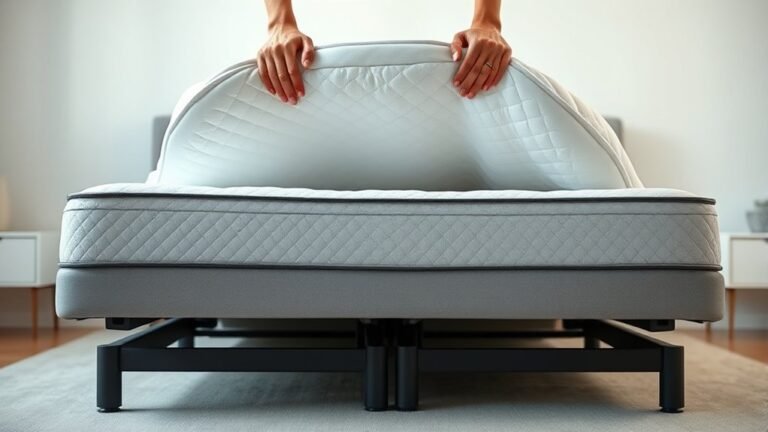
Avoid rigid innerspring mattresses since they may crack or even void your warranty when bent. It’s a good idea to test your mattress by gently bending it before placing it on the adjustable frame. This way, you can make sure it will hold up over time.
Remember, keeping these factors in mind will help guarantee both comfort and durability as you explore your mattress options for an adjustable bed.
Key Takeaways
- Ensure the mattress is flexible, preferably memory foam, latex, or a hybrid with pocketed coils for smooth bending on the adjustable frame. These materials adapt well when the bed moves, so you won’t feel any awkward bumps.
- Keep mattress thickness between 10-14 inches to allow proper bending without causing damage or voiding warranties. Thicker mattresses might not bend as easily, so it’s best to stay within that range.
- Manually test mattress flexibility by bending it gently before use to confirm it won’t resist or damage when adjusted. This quick check can save you from any unpleasant surprises later on.
- Follow manufacturer guidelines and compatibility recommendations to maintain warranty coverage and avoid frame or mattress damage. It’s always a good idea to double-check what your mattress maker says about adjustable bases.
- Regularly rotate and maintain the mattress to promote even wear and preserve comfort and performance on the adjustable bed. A little upkeep goes a long way in keeping your bed feeling great over time.
Understanding Adjustable Bed Frames and Their Movement
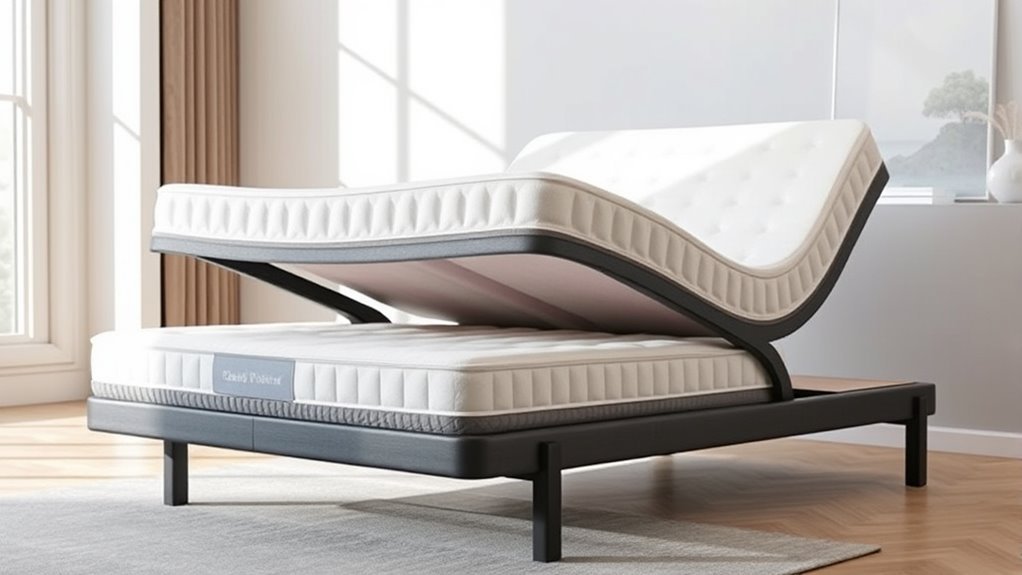
Although adjustable bed frames might seem complex, they offer simple, customizable comfort by bending, lifting, and lowering at the head and foot sections. You’ll find these frames use motorized mechanisms that smoothly control the movement, often through a remote, app, or voice commands.
This range of motion lets you position yourself ergonomically, reducing issues like snoring and back pain. Importantly, adjustable bed frames are designed to support various mattresses without causing damage, making them compatible with many types.
Understanding how the frame moves helps you use it safely and ensures your mattress stays in good shape. Once you grasp these basics, you’ll appreciate how adjustable bed frames combine flexible movement with solid support for a better night’s sleep.
Key Features That Affect Mattress Compatibility
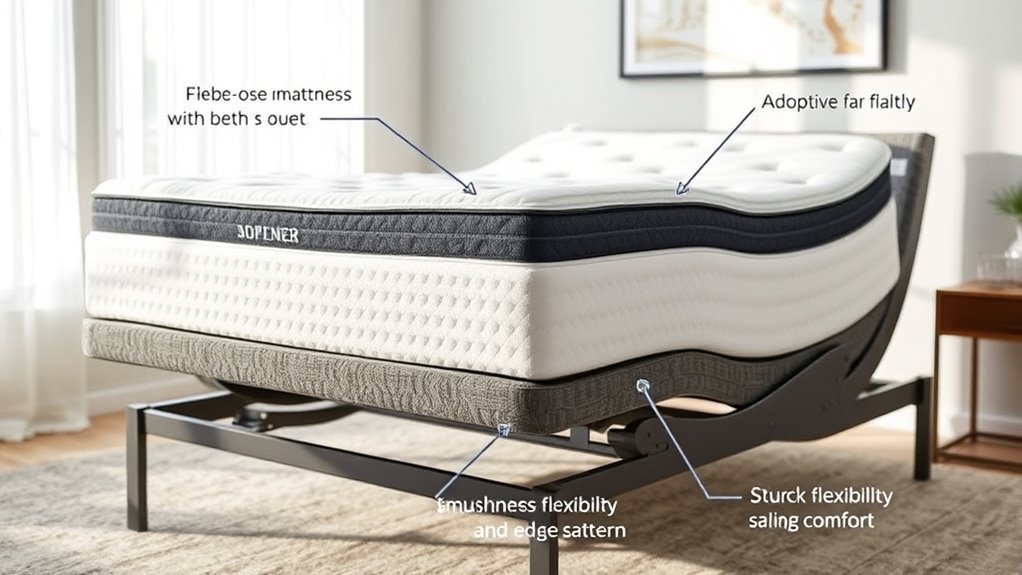
When choosing a mattress for your adjustable bed frame, you need to take into account features like flexibility, thickness, and material composition to guarantee proper fit and function. Mattress compatibility depends largely on how well the mattress bends without damage and supports your body evenly.
Choosing a mattress with the right flexibility and thickness ensures perfect fit and comfort on your adjustable bed frame.
Here are key features affecting bed compatibility:
- Use memory foam mattresses or hybrids with flexible coils for smooth adjustments.
- Avoid rigid innerspring mattresses with non-pliable coils as they resist bending.
- Opt for mattresses between 10 to 14 inches thick to ensure proper flexibility.
- Ensure the mattress relieves pressure points for comfort during adjustment.
Selecting the right mattress maintains both your adjustable bed frame’s performance and your sleep quality. So, picking the right one really makes a difference!
Flexibility Requirements for Mattresses on Adjustable Bases
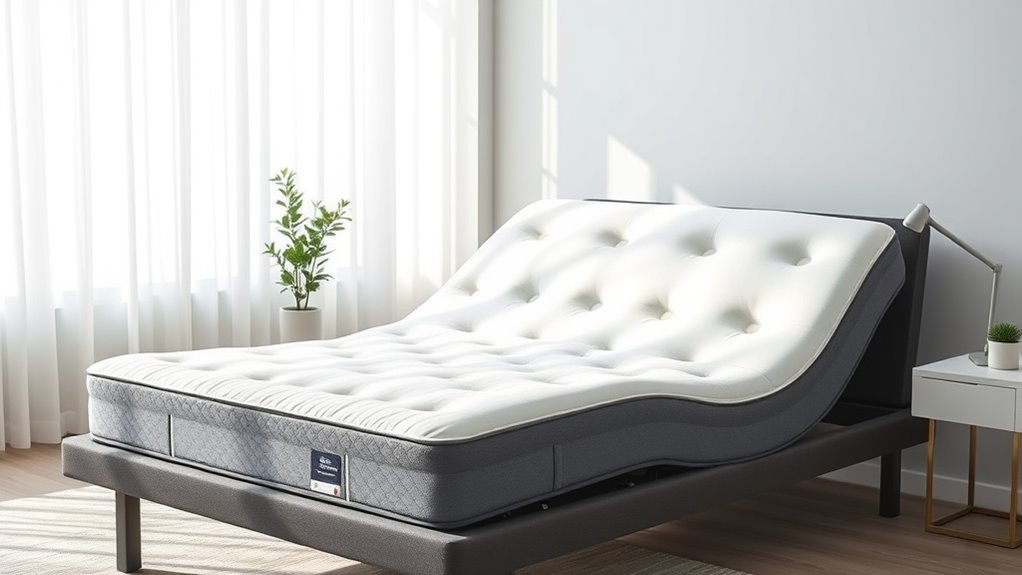
You’ll want a mattress that bends easily without feeling stiff or risking damage, which means materials like foam, latex, or flexible hybrids work best.
Thickness also matters—aim for something between 10 and 14 inches to balance support and flexibility.
Keep in mind that rigid innerspring mattresses often won’t flex enough, so they’re usually not a good fit for adjustable bases.
Mattress Flexibility Essentials
Since adjustable bed frames require smooth bending, your mattress must be flexible enough to move without damaging its internal structure. Mattress flexibility is key for comfort and durability, especially when using an adjustable bed.
Not all mattresses are compatible with adjustable bases, so knowing what works is essential. Latex mattresses and memory foam typically offer excellent flexibility, adapting well to bed frames that bend.
Avoid thick mattresses over 14 inches or those with rigid coil systems, like traditional innersprings, as they may resist bending.
To ensure bed frame compatibility, keep these essentials in mind:
- Choose mattresses with individually wrapped coils or flexible foam layers
- Test flexibility by manually bending the mattress before purchase
- Prioritize latex mattresses for natural flexibility
- Avoid mattresses that creak or resist folding
This guarantees your mattress works smoothly with your adjustable bed.
Material Impact on Flexibility
Although adjustable bed frames offer great versatility, not all mattress materials bend easily enough to work well with them. You’ll find memory foam and latex mattresses highly flexible, allowing smooth bending without damage, making them ideal choices.
Innerspring mattresses, especially those with rigid coil systems like Bonnell or offset coils, often resist bending and may not perform well on adjustable bases. Hybrid mattresses vary—those with pocketed coils combined with flexible comfort layers handle bending better than models with stiff coil systems.
Choosing mattresses made from adaptable materials ensures your bed adjusts comfortably while preserving durability. Understanding how these materials react to bending helps you pick the right mattress to fully enjoy the benefits of your adjustable bed frame.
Thickness and Bending Limits
Beyond the mattress material, thickness plays a key role in how well your mattress bends on an adjustable bed frame. Most mattresses between 10 and 14 inches thick offer the best balance of flexibility and support, adapting smoothly to your adjustable bed’s movements.
Thicker mattresses can be too rigid or heavy, which might cause damage when bent. On the other hand, thinner ones may lack durability and support over time, so it’s a bit of a balancing act.
The internal materials, like foam or latex, also affect how the mattress flexes without tearing or losing shape. Choosing the right thickness and construction not only improves comfort but also helps your mattress last longer by preventing damage.
- Ideal thickness: 10-14 inches for maximum flexibility
- Avoid mattresses thicker than 14 inches to reduce damage risk
- Internal materials impact bending and durability
- Proper thickness support prolongs mattress lifespan
Types of Mattresses Best Suited for Adjustable Bed Frames
When choosing a mattress for your adjustable bed frame, you’ll want one that bends easily without losing its shape or comfort. Adjustable mattresses made from flexible mattress materials like memory foam or latex offer excellent compatibility with adjustable beds due to their natural mattress flexibility.
Hybrid mattresses, which combine pocketed coil systems with foam or latex layers, also provide great innerspring compatibility while maintaining the flexibility needed for smooth movement. Avoid traditional innerspring mattresses with rigid coils, as they lack the necessary flexibility and can damage the frame or mattress.
Aim for a mattress thickness between 10 to 14 inches to ensure proper bending and comfort. Selecting durable mattresses designed for adjustable beds guarantees long-lasting performance and protects your investment.
How to Test Your Current Mattress for Adjustable Base Compatibility
Since not all mattresses are designed to work with adjustable bases, you’ll want to test your current mattress before pairing it with an adjustable frame. Start by checking the mattress labels and manufacturer guidelines for any notes on compatibility with adjustable bases.
Next, test mattress flexibility by manually bending it—watch for stiffness or creaking. Then, place the mattress on your adjustable bed frame and raise the head or foot to see if it flexes smoothly without damage.
Finally, evaluate if the mattress maintains its shape and flexes well at seams and edges.
- Review mattress labels for model and compatibility info
- Test mattress flexibility by bending it manually
- Adjust the bed frame to check mattress response
- Consult manufacturer guidelines or customer service for confirmation
Common Issues When Using Non-Compatible Mattresses
After you test your mattress for adjustable base compatibility, it’s important to understand the problems that can arise if you use one that’s not designed for these frames. Incompatible mattresses, especially traditional innersprings with rigid coils, resist bending and can cause damage to your adjustable bed frame.
This resistance often reduces the bed’s functionality, preventing it from returning smoothly to a flat position. Additionally, inflexible mattresses may create uncomfortable pressure points or uneven support when you elevate or angle the bed.
Over time, these non-compatible mattresses are prone to sagging and premature wear due to repeated bending stresses. Using such mattresses can also void warranties and lead to costly repairs or replacements for both the mattress and the adjustable bed frame.
Tips for Choosing the Right Mattress for Your Adjustable Bed
Choosing the right mattress is crucial to get the most out of your adjustable bed frame and guarantee lasting comfort. You want a mattress that bends easily without damage and supports your body well throughout the night.
Pay close attention to mattress compatibility to avoid issues.
Here are tips for picking the perfect mattress:
Opt for flexible materials like memory foam, latex, or hybrid designs with pocketed coils for adjustable-friendly performance.
Keep mattress thickness between 10-14 inches to ensure smooth bending and durability.
Check manufacturer recommendations to confirm the mattress works with adjustable bases.
Consider buying a complete sleep system that pairs the mattress and adjustable bed frame for ideal fit and lasting support.
Following these guidelines helps you enjoy a comfortable, long-lasting adjustable bed setup.
Maintaining Mattress Longevity With an Adjustable Base
To keep your mattress performing well on an adjustable bed frame, you need to focus on proper care and maintenance. Using a mattress compatible with an adjustable base—like memory foam or latex—prevents damage from bending.
Regularly rotating and flipping the mattress helps distribute wear evenly, which keeps your mattress lasting longer. Avoid heavy or rigid mattresses that resist bending; they can sag and get damaged over time.
Also, choose a mattress thickness between 10-14 inches for better flexibility. Investing in a mattress designed specifically for adjustable beds ensures it stays durable for the long haul.
| Care Tip | Benefit | Recommendation |
|---|---|---|
| Use adjustable-friendly mattress | Prevents bending damage | Choose memory foam or latex |
| Regularly rotate | Even wear distribution | Flip every 3 months |
| Proper thickness | Reduces material stress | Stay within 10-14 inches |
| Avoid rigid mattresses | Prevents sagging/damage | Opt for flexible materials |
Frequently Asked Questions
Can I Put Any Mattress on My Adjustable Bed Frame?
You can use most mattresses on your adjustable bed frame, especially memory foam, latex, or hybrids. Avoid rigid innerspring types.
Check your mattress flexibility by bending it gently to make sure it won’t get damaged. It’s a simple way to see if your mattress will work well with the frame.
Can You Use Any Bed With an Adjustable Frame?
You can’t just toss any bed on an adjustable frame and expect it to dance perfectly.
You’ll need a flexible mattress like memory foam or latex—rigid ones won’t bend, causing discomfort or damage over time.
Can You Put a 14 Inch Mattress on an Adjustable Bed?
Yes, you can put a 14-inch mattress on an adjustable bed if it’s flexible, like memory foam or hybrid.
Just check the manufacturer’s thickness limits to avoid strain and guarantee smooth adjustments without damage.
What Mattresses Are Not Compatible With an Adjustable Base?
You shouldn’t use traditional innerspring mattresses with rigid coils on adjustable bases. These types don’t bend well and can damage the frame or mattress.
Also, avoid thick mattresses over 14 inches or rigid foam types. Mattresses with solid border wires are a no-go too, since they won’t flex properly with the base.
Conclusion
Using any mattress on an adjustable bed frame is all about flexibility and fit. Remember, “you can’t fit a square peg in a round hole”—some mattresses just won’t bend right. By understanding your bed’s movement and choosing a mattress designed to flex, you’ll enjoy comfort and durability.
Test your current mattress, watch for common issues, and pick wisely to keep both your mattress and adjustable base working perfectly together for years to come. When selecting the right mattress for an adjustable bed frame, consider materials like memory foam or latex, which naturally adapt to movement. Avoid overly firm or thick mattresses that resist bending, as they can damage both the mattress and the frame.
In the end, the key to using any mattress on an adjustable bed frame lies in compatibility and care. A well-chosen mattress enhances the adjustable bed’s benefits, promoting better sleep and long-lasting comfort. So, take the time to find the perfect fit, and your adjustable bed setup will serve you well for years ahead.