Are Memory Foam Mattresses Bad for Your Back?
Memory foam mattresses aren’t bad for your back; in fact, they can actually help relieve back pain by supporting your spine’s natural curves and reducing pressure points.
These mattresses conform to your body, offering targeted lumbar support that many find beneficial. Plus, they evenly distribute weight to prevent misalignment, which is key for a healthy back.
Choosing the right firmness and high-quality foam density is important because it guarantees proper support and durability over time.
If you’re curious about how memory foam helps your back and what to consider when buying one, there’s plenty more to explore ahead.
So, let’s dive in and find out why memory foam could be a great option for your back health!
Key Takeaways
- Memory foam mattresses support proper spinal alignment by contouring to your body shape. This can help reduce back pain for nearly 50% of users within just 28 days.
- Medium-firm memory foam options are great because they balance support and pressure relief. This helps prevent spinal misalignment and uncomfortable pressure points.
- High-quality, dense memory foam (above 2 lbs/cu ft) keeps its shape and firmness over time. That means no sagging or uneven weight distribution, which is important for your back.
- On the flip side, poor-quality or overly soft memory foam can cause you to sink in too much. This leads to slouching and can actually make back pain worse due to lack of proper support.
- Many memory foam mattresses now include cooling technologies to help prevent overheating. Staying cool can reduce muscle tension, which might otherwise contribute to back discomfort.
Can Memory Foam Mattresses Help Your Back Pain?

Although many mattress options exist, memory foam mattresses stand out because they conform to your body’s shape and support proper spinal alignment. When you lie down, memory foam’s contouring ability evenly distributes pressure, providing excellent pressure relief to your hips, shoulders, and lower back.
This even distribution helps reduce the stress points that often contribute to back pain. Plus, memory foam offers targeted spinal support, especially in the lumbar region, which can further ease discomfort.
By minimizing movement transfer, it prevents disturbances that might worsen your back pain during sleep. Clinical studies show that using a memory foam mattress consistently can reduce back pain by nearly half in just 28 days.
Common Mattress Problems That Cause Back Pain
Memory foam mattresses can offer great support, but not every mattress is designed to protect your back. If the softness is off, your spine might slouch, causing back pain from poor support.
On the flip side, mattresses that are too hard create pressure points on your hips and shoulders. This leads to misalignment and discomfort.
Over time, a sloped or misshapen mattress won’t distribute weight evenly. That increases pressure and back pain.
Also, low-quality materials can degrade quickly, reducing support and risking chronic discomfort.
If your memory foam mattress overheats, it can disrupt your sleep and cause muscle tension that worsens back issues.
Paying attention to these common problems helps you avoid unnecessary back pain and maintain proper spinal alignment.
How Memory Foam Supports Spinal Alignment
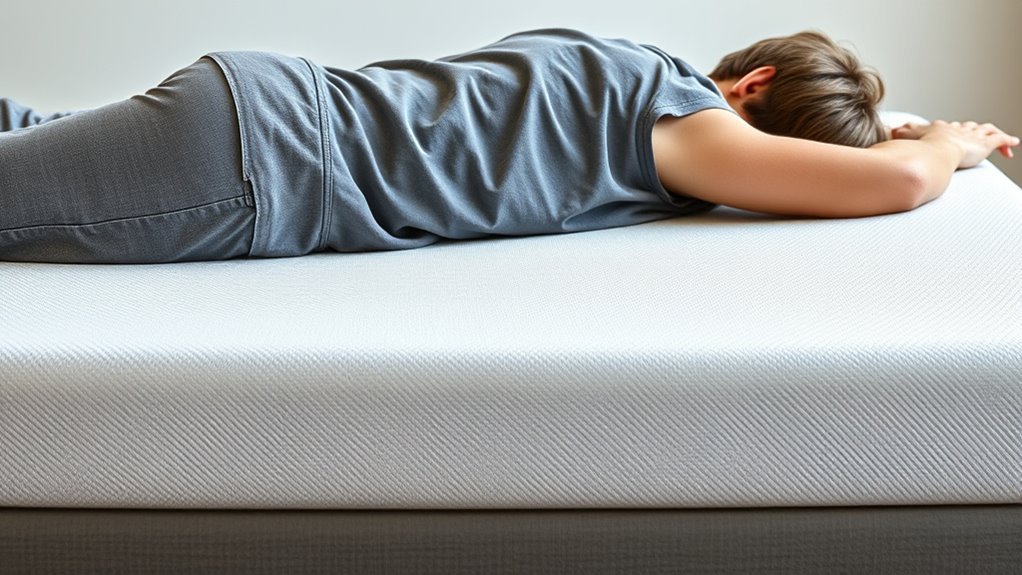
When you lie down, the foam molds to your body’s shape, supporting your spine’s natural curve throughout the night. This contouring support evenly distributes your body weight, preventing pressure points that can lead to discomfort.
The support layers in memory foam mattresses are designed to maintain proper spinal alignment by reducing unnatural sloping or curving of the spine. Some mattresses include zoned support layers that focus on the lumbar region, enhancing spinal support where you need it most and reducing lower back stress.
Combined with a stable base, memory foam promotes healthy spinal alignment and helps alleviate back pain. By conforming closely to your body, it guarantees your spine stays properly aligned, giving your back the support it needs for restorative sleep.
How Mattress Firmness Affects Your Back
You need a mattress firmness that keeps your spine aligned without letting you sink too much or feel too much pressure.
If your mattress is too soft, your back can slouch. But if it’s too firm, pressure points can cause discomfort.
Finding the right balance helps support your natural curves and reduces strain on your back. It really makes a difference!
Firmness And Spinal Alignment
Although mattress firmness might seem like a minor detail, it plays a crucial role in maintaining your spinal alignment while you sleep. Choosing the right firmness in a memory foam mattress ensures proper mattress support, helping your spine stay aligned naturally.
If the mattress is too soft, your body sinks too deeply, causing misalignment and increasing back pain. On the other hand, an overly firm memory foam mattress can create uncomfortable pressure points and hinder your spine’s natural curve.
Clinical research shows that medium-firm memory foam options provide the best balance, evenly distributing your body weight and reducing stress on your lower back. By picking the right firmness, you promote spinal alignment and minimize back pain, enhancing your overall sleep quality and back health.
Softness Versus Support
Because mattress firmness directly impacts spinal support, finding the right balance between softness and support is essential for your back health. If your mattress is too soft, your spine may sag, disrupting spinal alignment and causing back pain.
On the other hand, a mattress that’s too firm can create uncomfortable pressure points at your hips and shoulders, leading to strain. A medium-firm mattress often offers the best solution, combining firm support with enough contouring to maintain a healthy support system.
This balance helps evenly distribute your body weight, supporting your spine’s natural curves without sacrificing comfort. Choosing the right firmness guarantees your back stays properly aligned throughout the night, promoting restful sleep and reducing the risk of discomfort or injury.
Impact On Pressure Points
When mattress firmness misses the mark, it can create pressure points that leave your back aching. If your mattress is too soft, it won’t provide enough support, causing pressure points that lead to discomfort and poor spinal alignment.
On the other hand, a mattress that’s too firm can put excessive pressure on your hips and shoulders. This disrupts spinal alignment and increases back pain.
Memory foam mattresses with medium-firm mattress firmness offer the best balance of pressure relief and support. Zoned support layers in these mattresses target pressure points, promoting even weight distribution and maintaining proper spinal alignment.
The Importance of Memory Foam Mattress Support Systems
Understanding the importance of a memory foam mattress’s support system can make a big difference in your back health. The support system plays a key role in maintaining proper spinal alignment by ensuring the mattress keeps its shape and doesn’t sag over time.
High-quality support layers, like dense foam or innersprings, provide the firmness needed to keep your spine level, especially if you’re a heavier sleeper. Without stable support, you risk uneven pressure points and misalignment that can cause discomfort and back pain.
When the support system works well, it allows the memory foam to contour effectively around your body while offering the stability necessary for a healthy back. So, choosing a mattress with a solid support system is essential for lasting comfort and spinal health.
How Sleep Position Influences Memory Foam Comfort
Since your sleep position affects how your body interacts with a memory foam mattress, choosing the right firmness and support becomes essential for comfort and back health. Memory foam contours differently based on your position, influencing spinal alignment and overall support.
Here’s a quick guide:
| Sleep Position | Recommended Firmness | Key Benefit |
|---|---|---|
| Back | Medium-firm | Maintains alignment |
| Side | Soft | Cushions pressure |
| Stomach | Firm | Prevents sinking |
| Combination | Medium | Balanced support |
| N/A | Varies | Customized comfort |
Why Foam Density and Quality Matter for You
You want a mattress that supports your back properly, and foam density plays a big role in that. Higher-density foam offers better durability and keeps your spine aligned.
Low-quality foam, on the other hand, can lose support quickly. So, choosing the right foam guarantees comfort and long-lasting benefits for your back health.
Foam Density Importance
Although foam density might seem like a small detail, it plays an essential role in how well your mattress supports your back. Choosing the right foam density guarantees your mattress offers consistent support, maintains spinal alignment, and reduces pressure points. This is critical for back health.
Here’s why foam density matters:
- Higher foam density (above 2 lb/ft³) means better durability and long-lasting support.
- Low-density foam breaks down quickly, losing shape and compromising support.
- Dense foam adapts to your body weight, providing firmer, more reliable support.
- Proper foam density helps keep your spine aligned during sleep.
- It reduces pressure points, easing discomfort and preventing pain.
Quality Impacts Support
How does foam quality affect your mattress’s support? When you choose a mattress with high-quality foam, especially one with a foam density above 2 pounds per cubic foot, you get better mattress support and durability.
High-quality foam maintains its shape longer, preventing premature sagging that can throw off your spinal alignment and cause back pain. On the other hand, low-quality foam—often sourced cheaply—tends to soften or break down quickly, reducing the support your back needs.
Your mattress’s firmness and support depend heavily on the core materials used. By investing in a mattress made with high-density, high-quality foam, you guarantee consistent support that protects your spine over time. This improves both comfort and back health.
Types and Features of Memory Foam Mattresses
When choosing a memory foam mattress, understanding the different types and features can help you find the right fit for your back health. Memory foam mattresses contour to your body, providing personalized support and pressure relief.
Here are key types of memory foam to evaluate for ideal spinal alignment and comfort:
- Traditional memory foam: Offers consistent support by molding to your body shape.
- Gel-infused foam: Regulates temperature and reduces heat buildup.
- Open-cell foam: Enhances breathability for a cooler sleep.
- Zoned memory foam: Varies firmness to support different body areas and improve spinal alignment.
- Hybrid designs: Combine foam layers with innerspring coils for added durability and support.
Each type impacts support and pressure relief differently, so choose based on your specific back needs. It’s all about finding what works best for you!
Testing a Memory Foam Mattress for Back Support
To make certain a memory foam mattress supports your back properly, you should lie down in your normal sleep position and check if your spine stays aligned without sinking or feeling pressure points.
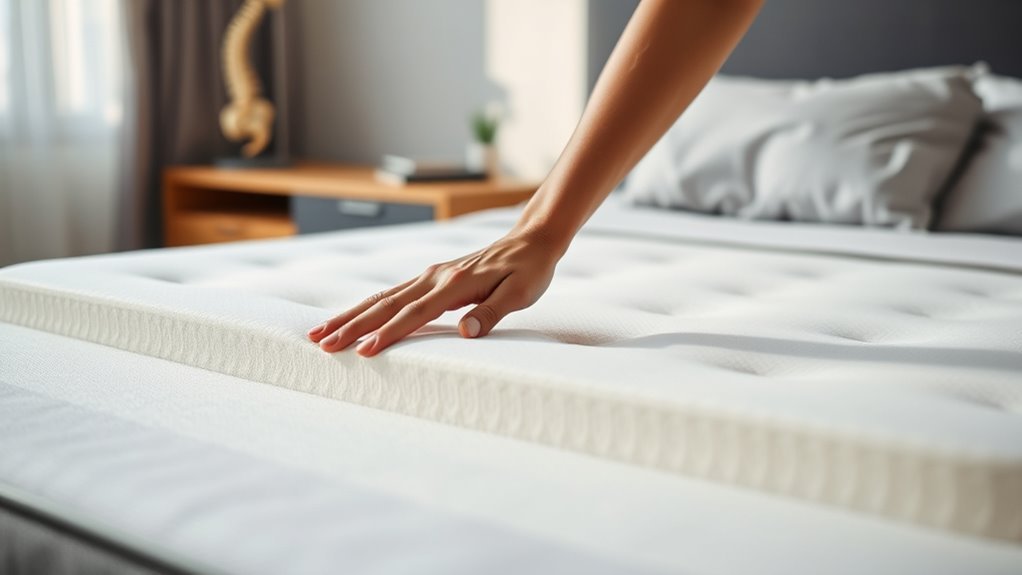
During testing, slide your hand beneath your lower back to assess if the mattress offers adequate lumbar support or creates unwanted gaps or compression.
Spend at least 15 minutes on different mattresses to evaluate how well each one maintains proper mattress alignment and spinal support under natural conditions.
Feeling how the memory foam contours to your body weight and shape helps determine if it provides consistent back support or causes misalignment.
Hands-on testing is essential to make certain the mattress relieves pressure without compromising your spine’s natural curve.
What to Look For When Buying a Memory Foam Mattress for Back Pain
When buying a memory foam mattress for back pain, focus on a medium-firm feel that supports your spine properly. Look for zoned lumbar support to give extra stability where your lower back needs it most.
Also, choose one with cooling technology to keep you comfortable throughout the night. It makes a big difference when you don’t wake up feeling hot or restless.
Firmness Level Matters
Although choosing the right firmness level might seem straightforward, it plays a critical role in managing back pain with a memory foam mattress. The firmness affects how well the mattress supports your spine and relieves pressure points.
Opting for a medium-firm mattress usually strikes the best balance. It prevents excessive sinking and promotes spinal alignment.
Foam density is equally important. Higher-density foams provide better support and last longer.
To find your ideal firmness, test mattresses in your typical sleeping position. This way, you can avoid pressure points and discomfort.
Keep in mind:
- Medium-firm offers balanced support and contouring
- Too soft causes deep sinking and misalignment
- Firmer layers enhance lumbar support
- Higher foam density improves durability and support
- Testing firmness firsthand helps avoid pressure points and discomfort
Zoned Lumbar Support
Since proper spinal alignment is essential for reducing back pain, choosing a memory foam mattress with zoned lumbar support can make a significant difference. Zoned lumbar support provides targeted firmness in the lower back area, helping maintain a neutral spine position throughout the night.
When buying memory foam mattresses, look for models with varying firmness levels across different zones to accommodate the natural curves of your body. This design improves pressure distribution, preventing sinking or sagging in the lumbar region, especially if you’re a heavier sleeper.
Cooling Technology Benefits
If you want to prevent overheating and improve your sleep quality, choosing a memory foam mattress with effective cooling technology is essential. This technology helps regulate your body heat and reduces heat retention, creating a comfortable sleep environment that supports back pain relief.
Look for features that enhance airflow and temperature regulation to keep you cool throughout the night.
When buying a memory foam mattress for back pain, consider these cooling technology benefits:
- Gel-infused layers that absorb and disperse body heat
- Breathable covers promoting better airflow
- Open-cell foam structures improving temperature regulation
- Phase-change materials adapting to your body temperature
- Reduced heat retention preventing nighttime discomfort
These features help maintain proper temperature without sacrificing memory foam’s pressure relief.
Frequently Asked Questions
What’s the Worst Thing You Can Do for Lower Back Pain?
The worst thing you can do for lower back pain is ignore proper support and choose a mattress that’s too soft or too firm.
You’ll worsen spinal alignment and discomfort if you skip testing mattress firmness beforehand.
It’s really important to find the right balance that supports your back properly. Otherwise, you might just be making the pain worse without even realizing it.
Can Endy Mattresses Help With Back Pain?
Endy mattresses cradle you gently while supporting your spine firmly, so you won’t sink too deep or stay too stiff.
You’ll find improved posture and less pain, making restful sleep feel like a true relief.
What Mattress Do Chiropractors Recommend for Back Pain?
Chiropractors recommend medium-firm mattresses that support proper spinal alignment. You’ll want one with balanced support, like zoned memory foam or targeted lumbar layers, to reduce back pain.
It’s a good idea to test mattresses yourself to find what feels best for you. Everyone’s different, so what works for one person might not work for another. Give yourself some time to decide!
Can a Too Firm Mattress Cause Sciatica?
Yes, a too firm mattress can cause sciatica by increasing pressure on your sciatic nerve and preventing proper spinal alignment.
You’ll want a medium-firm mattress that cushions your body while supporting your spine to avoid pain. It’s all about finding that balance between comfort and support.
Conclusion
If you’re struggling with back pain, choosing the right memory foam mattress can make a huge difference. Did you know that 85% of people report improved sleep quality after switching to memory foam? That’s because memory foam supports spinal alignment and reduces pressure points.
Just remember to take into account firmness, density, and support systems to find your perfect match. With the right mattress, you could finally wake up feeling refreshed and pain-free.
In conclusion, memory foam mattresses can be great for your back when you pick the right one. They help maintain proper spinal alignment and ease pressure on sensitive areas, which is key for reducing back pain. So, if you want better sleep and less discomfort, consider factors like firmness and support before buying. A good memory foam mattress isn’t just comfortable—it’s an investment in your back health and overall well-being.