How You Can Steam Clean a Memory Foam Mattress Step by Step
You’ll want to start by vacuuming your memory foam mattress thoroughly to remove dust. This step is crucial because it gets rid of surface dirt and allergens, making your steam cleaning more effective.
Prepare your steam cleaner on a low-moisture setting, then test a small hidden area with light steam to avoid damage.
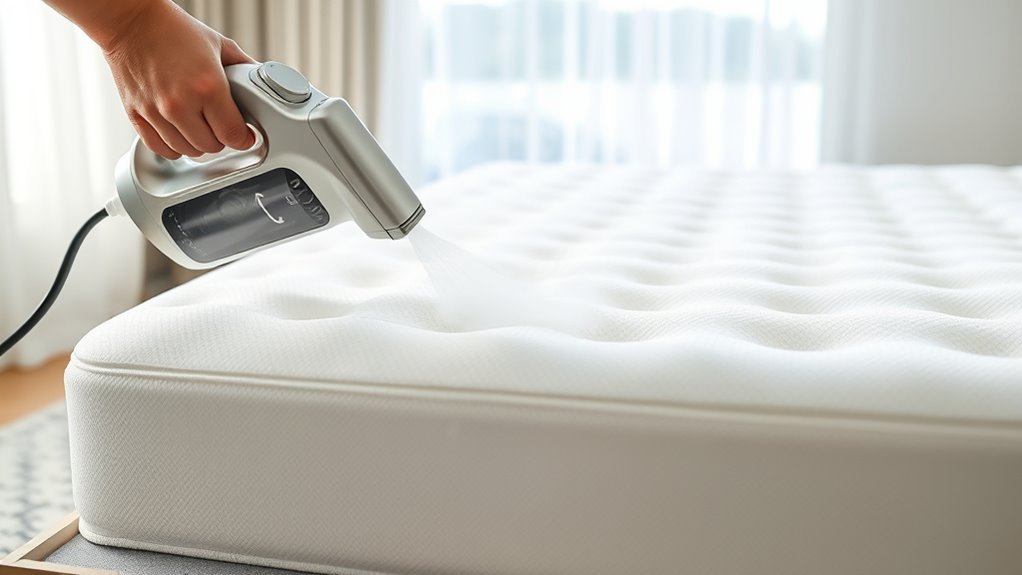
Slowly steam clean your mattress in small sections, keeping the device 4–6 inches away. This careful approach helps protect the delicate foam from excess moisture.
Immediately blot excess moisture with dry towels and sprinkle baking soda after cleaning to neutralize odors.
Let it air dry completely before using again. If you keep going, you’ll uncover the best way to safeguard your mattress while deep cleaning.
Taking these steps ensures your memory foam mattress stays fresh and lasts longer.
Key Takeaways
- Remove all bedding and vacuum the mattress thoroughly before steam cleaning to eliminate dust and prepare the surface.
- Test steam on a hidden area using low moisture and observe for 24 hours to ensure no damage or discoloration occurs.
- Use a handheld steam cleaner 4-6 inches from the mattress, applying steam in small sections without oversaturating the foam.
- Immediately blot excess moisture with dry towels and use fans or open windows to accelerate drying and prevent mold growth.
- Confirm the mattress is fully dry before remaking the bed and regularly apply baking soda to maintain freshness and odor control.
Understand the Risks of Steam Cleaning Memory Foam
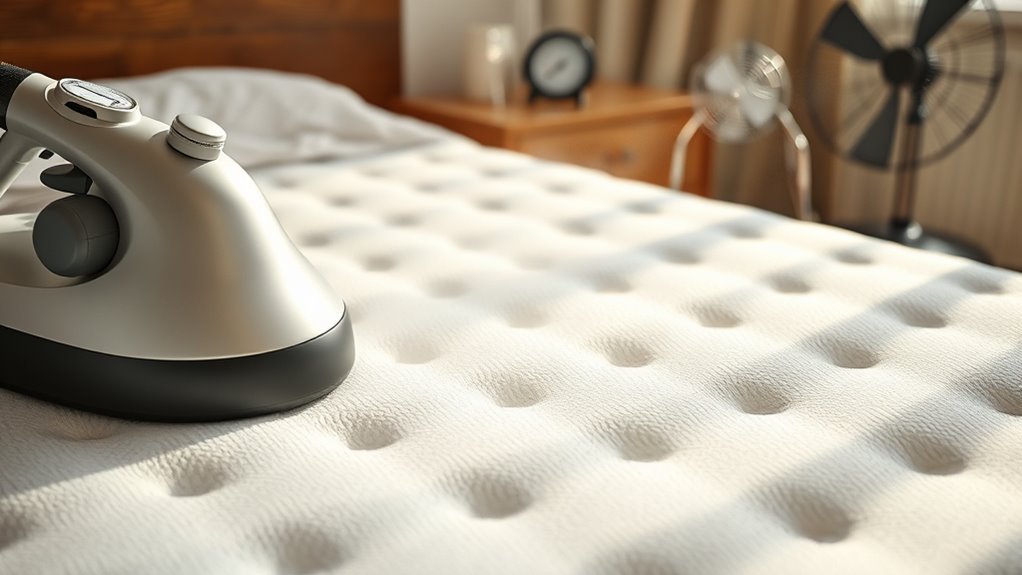
Although steam cleaning seems like a quick fix, you should understand the risks it poses to your memory foam mattress. Steam cleaning uses high-temperature moisture that can damage memory foam’s cellular structure, reducing its support and comfort.
The moisture from steam can get trapped inside the foam since memory foam lacks open-air channels, making thorough drying difficult. If moisture isn’t fully removed, mold and mildew may develop, causing odor and health risks.
Additionally, the heat from steam can warp or melt the foam, potentially ruining your mattress and voiding warranties. While professionals use specialized equipment to minimize these risks, DIY steam cleaning often leads to unintended damage.
Gather Necessary Cleaning Supplies and Equipment
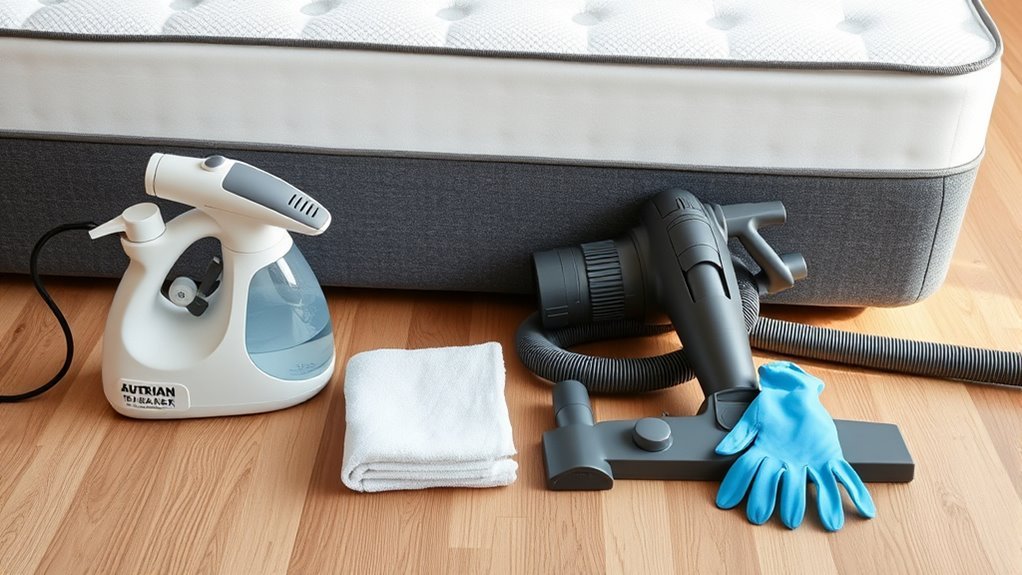
Before you start steam cleaning, gather all essential tools like a vacuum with an upholstery attachment and a steam cleaner that heats water to at least 212°F. Prepare a gentle cleaning solution in a spray bottle, and have baking soda and soft towels ready for aftercare.
Making sure your equipment is set up properly will help you clean your memory foam mattress safely and effectively. It’s all about being prepared so you can breeze through the process without any hiccups.
Essential Cleaning Tools
To steam clean your memory foam mattress effectively, you’ll need a few essential tools and supplies. Start with a vacuum cleaner equipped with an upholstery attachment to remove dust and debris.
A steam cleaner designed for mattresses, ideally with adjustable steam control, ensures thorough cleaning without damage. Don’t forget cleaning solutions like baking soda and mild detergent to pre-treat stains and odors.
Finally, have microfiber cloths or clean towels ready to wipe away moisture and residue.
Here’s a quick checklist:
- Vacuum cleaner with upholstery attachment
- Steam cleaner with adjustable temperature
- Cleaning solutions (baking soda, mild detergent)
- Microfiber cloths or clean towels
Also, consider protecting your mattress with a mattress cover after cleaning. It’ll help keep it fresh longer!
Preparing Steam Cleaner
When you prepare your steam cleaner, make certain it has an upholstery attachment and heats water to at least 212°F for effective disinfection. Gather essential cleaning solutions like white vinegar, baking soda, and mild laundry detergent.
Mix vinegar and water in a spray bottle for spot treatment. Before steaming, vacuum your mattress with a brush attachment to remove dust and debris.
Check the manufacturer instructions for both your steam cleaner and memory foam mattress to guarantee compatibility and avoid damage. Following these guidelines will help you set up your equipment correctly and clean safely while achieving ideal disinfection.
Proper preparation ensures your steam cleaner works effectively without risking harm to the mattress or voiding warranties.
Vacuum the Mattress Thoroughly
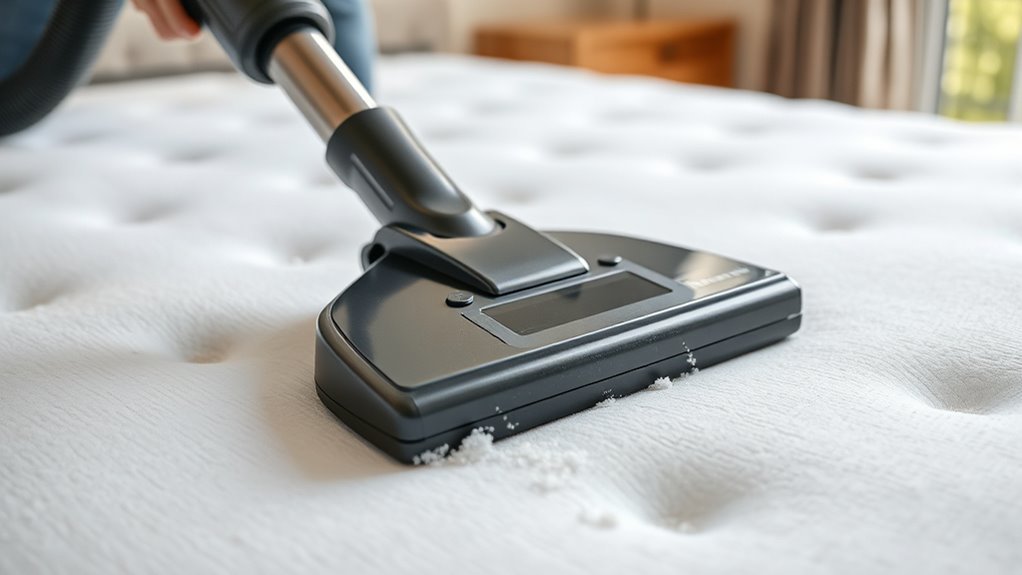
Although steam cleaning tackles stains and odors, you’ll want to vacuum the mattress thoroughly first to remove dust, dirt, hair, and dead skin cells.
Start by using a vacuum cleaner with an upholstery or brush attachment to capture all debris effectively. Focus on slow, overlapping strokes to reach every part of the mattress, including seams and edges.
Don’t forget to vacuum both the top surface and the sides to remove embedded dust and dirt. Also, pay attention to crevices, corners, and underneath to eliminate hidden dust mites and allergens.
Make sure to clean areas where hair and skin cells tend to accumulate. Try to do this regularly—at least once every one to two months—to maintain hygiene and extend your mattress’s life.
This thorough vacuuming sets the stage for effective steam cleaning by reducing allergens and surface particles.
Prepare the Steam Cleaner With Low-Moisture Setting
Before you start, set your steam cleaner to a low-moisture or dry steam setting. This helps avoid soaking the memory foam.
Use the upholstery attachment to gently clean without pressing too hard. That way, you’ll sanitize effectively and keep your mattress safe from excess water.
Adjust Steam Settings
Since memory foam is sensitive to moisture, you’ll want to set your steam cleaner to a low-moisture or dry steam mode. This helps prevent excess water from saturating the mattress and causing damage.
Before you start, adjust your settings carefully: set the steam temperature to at least 212°F (100°C) to sanitize effectively. Choose a gentle, continuous steam flow to protect the foam’s structure.
It’s a good idea to test the low-moisture setting on a small, hidden spot first. That way, you can make sure it doesn’t harm the mattress.
Also, keep the steam cleaner moving steadily. This avoids concentrating heat or moisture in one area, which could cause damage.
Use Minimal Moisture
When you prepare your steam cleaner, make sure to use the low-moisture or dry steam setting to prevent excess water from soaking into your memory foam mattress. Add only a small amount of distilled water to generate minimal moisture, which helps reduce dampness and protects the foam.
Hold the steam nozzle a few inches above the mattress surface to avoid direct contact and limit water transfer. Move the steam cleaner slowly and in short passes so you can control moisture effectively across each area.
Keep a close eye on the mattress surface for any signs of wetness, and stop steaming immediately if it feels damp. Using dry steam and minimal moisture ensures your mattress stays fresh without risking damage from excess water.
Test a Small Hidden Area First
To avoid damaging your memory foam mattress, you should test a small hidden area with steam first. This patch test helps you spot any adverse reactions before cleaning the whole mattress.
Pick a dry, inconspicuous spot like a corner or a seam. Apply minimal steam or moisture and then watch it carefully for 24 hours.
Keep an eye out for any signs of damage such as discoloration or color changes. Also, notice if there’s any softening, texture changes, warping, or structural issues.
And of course, make sure nothing goes against the manufacturer’s guidelines. It’s always better to be safe than sorry!
Steam Clean the Mattress in Small Sections
Dividing your memory foam mattress into small sections makes steam cleaning more manageable and effective. Start by marking off about 3 feet by 3 feet areas to focus on one section at a time.
Use a handheld steam cleaner with an upholstery attachment, holding it 4-6 inches away from the mattress surface. Work slowly, applying steam in overlapping passes to sanitize each section thoroughly without soaking the foam.
After steaming, immediately blot any moisture with a dry cloth to keep the mattress from getting too wet. Let each section dry completely before moving on, ensuring good airflow to prevent mold.
Blot Excess Moisture Immediately
Although steam cleaning refreshes your mattress, you’ll need to blot excess moisture immediately to stop it from seeping deeper into the foam. Acting quickly prevents stains and mold growth.
Here’s how to handle moisture after steaming: use clean, dry towels or cloths to blot the mattress gently. Apply light pressure to absorb as much liquid as possible without pushing it further in.
Make sure to replace towels frequently to keep absorbing excess moisture effectively. And remember, avoid rubbing or scrubbing the stain—that can spread it and damage the foam.
Use Baking Soda to Neutralize Odors After Cleaning
Once you finish steam cleaning your memory foam mattress, sprinkle a generous layer of baking soda evenly across the surface to absorb any lingering odors. Baking soda works through odor absorption, chemically neutralizing both acidic and basic molecules to deodorize and help your mattress smell fresh.
Let it sit for at least 8 to 10 hours, or overnight, to effectively neutralize odors after cleaning. When the time’s up, use a vacuum with an upholstery attachment to thoroughly remove all baking soda residue from the mattress surface.
This step ensures your mattress stays clean without any leftover powder. Regularly applying baking soda after each cleaning session helps maintain a deodorized sleeping environment and keeps your memory foam mattress smelling fresh and inviting.
Allow the Mattress to Air Dry Completely
To prevent mold and keep your memory foam mattress fresh, you need to let it air dry completely after steam cleaning. Proper mattress drying is essential to avoid dampness and musty odors.
Here’s how to guarantee your mattress is completely dry: Open windows and use fans to improve ventilation and speed up the air dry process. Allow at least 4-6 hours, or longer if humidity is high, for thorough drying.
Check the mattress surface and core for any signs of moisture before replacing bedding. And try to avoid covering the mattress or remaking the bed until you’re sure it’s completely dry. That way, you’ll keep it fresh and mold-free!
Frequently Asked Questions
Is It Okay to Steam Clean a Memory Foam Mattress?
It’s generally not okay to steam clean a memory foam mattress because heat and moisture can damage it.
If you do decide to steam clean, make sure to use low heat and minimal water.
Also, dry it thoroughly afterward to prevent any mold or mildew from forming.
And hey, don’t forget to check your manufacturer’s care instructions before you start.
What Is the Best Way to Deep Clean a Memory Foam Mattress?
Want the best deep clean for your memory foam? Start by vacuuming thoroughly.
Spot-clean stains gently with mild detergent, then air it out completely.
Just remember, avoid soaking it—moisture’s the enemy of memory foam freshness and durability.
How Long Does a Mattress Dry After Steam Cleaning?
Your mattress usually takes 4 to 24 hours to dry after steam cleaning.
You can speed this up by improving airflow with fans or open windows.
Make sure it’s fully dry before using it again to avoid mold.
How Do I Clean Urine From a Memory Foam Mattress?
You should blot the urine immediately, spray a vinegar-water mix, let it sit, then blot again.
Next, sprinkle baking soda, wait 8-10 hours, vacuum thoroughly, and guarantee the mattress dries completely to prevent odors and mold.
Conclusion
Now that you’ve mastered steam cleaning your memory foam mattress, you’re basically a cleaning superhero! With just a few simple steps, you’ve tackled grime and odors like a pro, turning your mattress into a fresh, dreamy cloud of comfort.
Remember, patience is your secret weapon—don’t rush drying or you’ll feel like you’re sleeping on a soggy sponge. Taking your time ensures the memory foam dries completely, preventing mold and maintaining its supportive qualities.
Follow these tips, and your mattress will thank you with nights so cozy, you’ll never want to leave bed! Steam cleaning your memory foam mattress not only refreshes it but also extends its lifespan by keeping it clean and hygienic. So go ahead, enjoy that fresh, clean sleep surface—you deserve it!