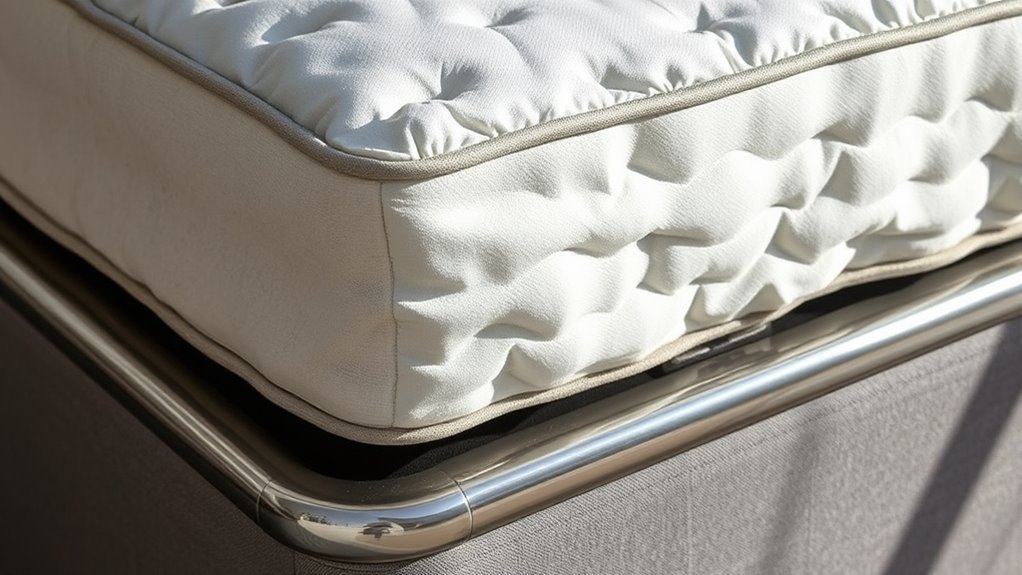
How Do Adjustable Bases Ruin Mattresses?
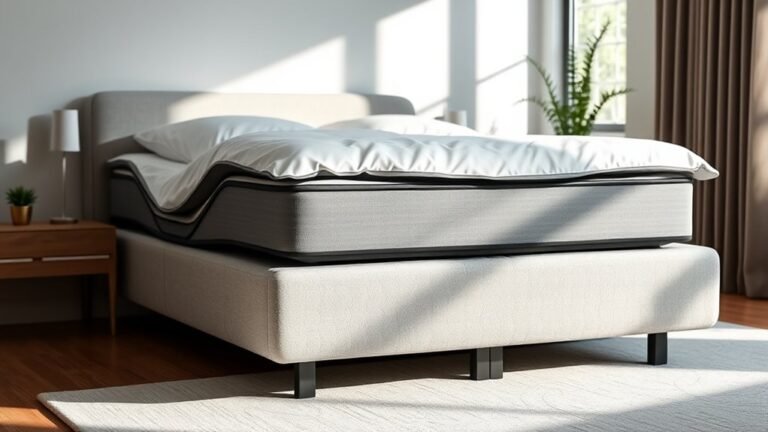
If you use a mattress that’s too thick, rigid, or has stiff coils on an adjustable base, you risk damaging it. These mattresses can’t bend properly with the base’s movements, causing stress on the materials.
Over time, this leads to creases, sagging, or broken coils, reducing support and comfort. Using an incompatible mattress may even void your warranty.
Keep in mind, understanding which mattresses work best can help you avoid costly damage and extend your bed’s life.
So, it’s worth choosing the right mattress to protect your investment and enjoy better sleep.
Key Takeaways
– Adjustable bases cause mechanical stress by repeatedly bending mattresses, leading to material fatigue and coil or foam breakdown.
It’s like your mattress is constantly getting a workout, which isn’t always a good thing.
– Rigid innerspring mattresses resist flexing, causing internal damage to coils and border wires when used on adjustable bases.
They’re just not built to bend, so this can really mess them up over time.
– Thick mattresses over 14 inches struggle to bend properly, increasing strain, tearing risk, and reducing mattress durability.
The thicker the mattress, the harder it is for it to flex without damage.
– Frequent flexing creates creases and cracks in foam layers, fabric, and seams, accelerating wear and sagging.
You’ll start to notice sagging and worn spots much sooner than expected.
– Using incompatible mattresses voids warranties and shortens mattress lifespan due to increased structural damage and uneven support.
So, if your mattress isn’t designed for an adjustable base, you could be risking way more than just comfort.
Mattress Compatibility and Adjustable Bases
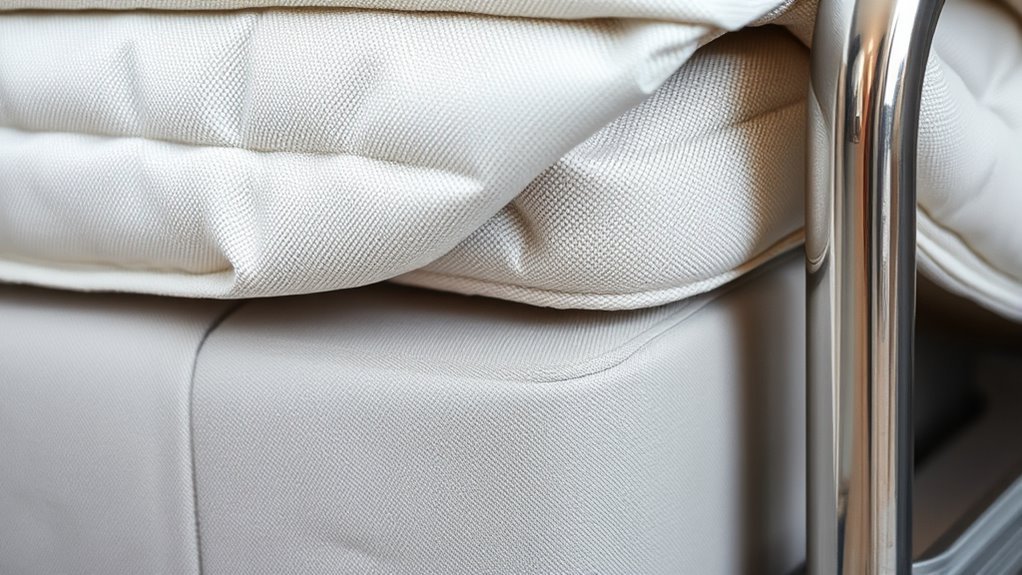
How do you know if your mattress will work with an adjustable base? Mattress compatibility depends largely on mattress types and construction.
Incompatible mattresses—like those with rigid springs, continuous coils, or stiff border wires—resist bending. This can cause structural damage and accelerate wear and tear.
Flexible foam layers found in all-foam and hybrid mattresses bend easily. They allow for proper flexing without creases or breaking.
Mattress thickness also matters; overly thick mattresses can hinder bending, increasing stress and potential damage.
Using an incompatible mattress on an adjustable base risks voiding your warranty due to damage caused by improper use.
Impact of Mattress Thickness and Construction
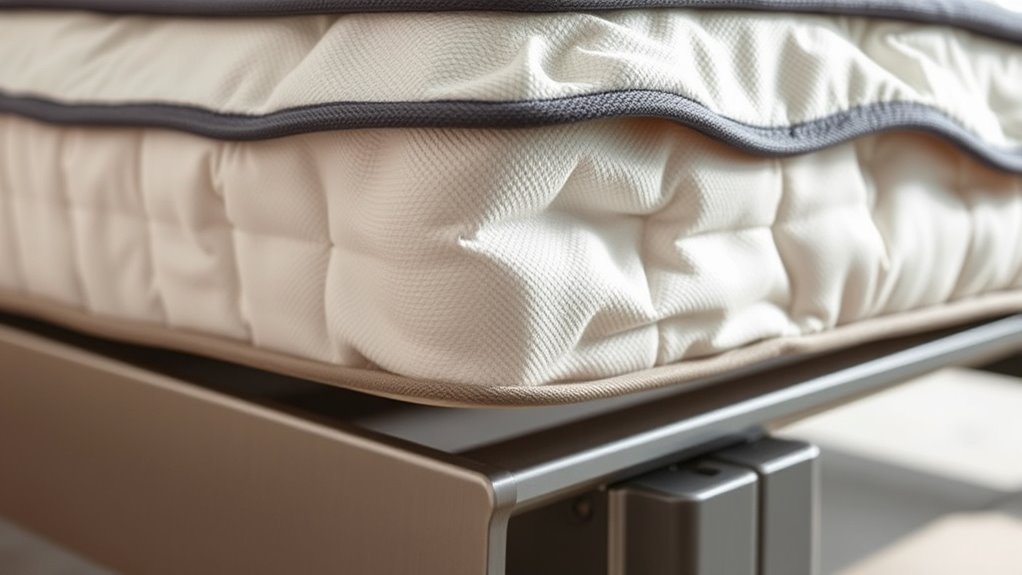
When choosing a mattress for an adjustable base, thickness and construction play a major role in how well it performs. If your mattress thickness exceeds 14 inches, it may become too rigid or heavy to allow proper flexing. This increases the risk of strain or internal damage.
Mattresses with rigid coil systems, like continuous coils or stiff border wires, resist bending. They can suffer material wear or sagging when forced to flex repeatedly.
Rigid coil systems resist bending and may wear or sag with repeated flexing on adjustable bases.
On the other hand, mattresses made with flexible materials—such as all-foam or hybrids combining foam layers and pocketed coils—typically adapt better. Still, too many foam layers can crease and hinder smooth articulation.
To avoid damage, choose construction features that promote flexibility and resist bending stress. This will help ensure your mattress lasts longer on an adjustable base.
Common Mattress Types Unsuitable for Adjustable Bases
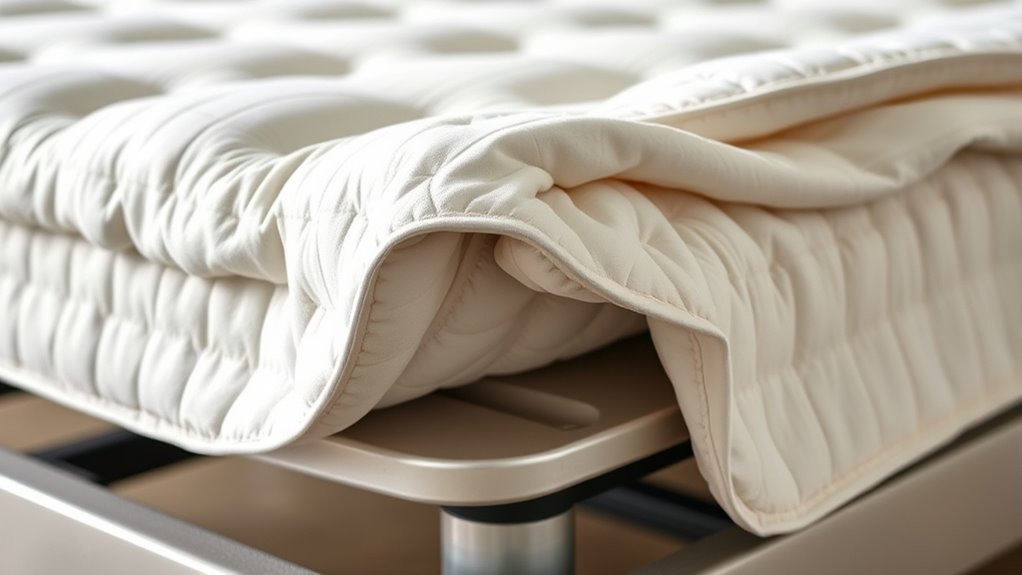
Although adjustable bases offer great comfort and versatility, not all mattresses are suited to work well with them. Traditional innerspring mattresses often resist flexing due to rigid border wires and non-encased coils.
When you use these on an adjustable base, the mattress may suffer coil breakage or damage to the mattress cover.
Firm mattresses, especially those made from low-quality materials, don’t bend easily. This can lead to creasing or cracking.
Heavyweight mattresses exceeding 14 inches also struggle to flex properly. This increases the risk of damage from internal strain.
If your mattress is too rigid or thick, it won’t adapt well. That causes stress points that shorten its lifespan.
Choosing the wrong mattress type can quickly undo the benefits of an adjustable base. So, it’s important to pick the right one!
Mechanical Stress and Structural Damage Risks
Since adjustable bases constantly bend and flex your mattress, they put unique mechanical stresses on its materials. This repeated flexing causes stress points that lead to structural fatigue and mattress wear over time.
Your mattress’s internal materials, like foam and coils, face constant strain. Foam breakdown weakens cushioning, while coil damage compromises the support system.
Rigid innerspring mattresses resist bending, intensifying mechanical stress and causing structural damage to coils and border wires. If your mattress is excessively thick or heavy, it increases the risk of tearing or deformation during adjustments.
Continuous pressure at angled positions can create creases or cracks in fabric and internal layers. Overall, these factors combine flexing damage and structural fatigue, gradually reducing your mattress’s durability and comfort.
Signs of Mattress Wear From Adjustable Base Use
How can you tell if your mattress is suffering from wear due to an adjustable base? Look for visible sagging or creasing across the surface. This usually signals structural stress and material fatigue.
Uneven support is another key sign. When the mattress bends repeatedly, it strains the support system inside, causing internal damage.
If your mattress has rigid coils or stiff border wires, these parts resist flexing. That resistance can worsen fabric wear or even cause seam damage.
Over time, this material deterioration reduces how well your mattress supports you and how comfortable it feels. You might also notice premature fabric wear or thinning in areas that bend frequently because of the adjustable base.
These signs suggest your mattress isn’t handling the mechanical stress well. That means a shorter lifespan and declining sleep quality.
Catching these symptoms early helps you understand the toll an adjustable base can take on your mattress. It’s good to keep an eye out so you can take action before things get worse.
Preventative Measures for Mattress Longevity
To prolong your mattress’s life on an adjustable base, you need to choose one that flexes easily and matches the base’s movement. Prioritize mattress compatibility by selecting a flexible mattress designed for bending to ensure proper support and pressure relief.
Avoid thick or rigid mattresses with firm coils, as they increase material fatigue and risk damage. Always place your mattress on a supportive foundation or bed frame that evenly distributes weight to prevent uneven stress and premature wear.
Regularly check that the mattress aligns well with the adjustable base’s contours to avoid creasing or internal strain. By focusing on mattress durability and a supportive setup, you’ll prevent damage and extend your mattress’s lifespan substantially.
Frequently Asked Questions
Are Adjustable Bases Bad for Your Mattress?
Adjustable bases aren’t bad for your mattress if you choose one designed for flexibility.
Using the wrong mattress can cause damage, so always check compatibility. This helps you avoid sagging, creases, or premature wear from constant bending.
It’s pretty simple—just make sure your mattress and base work well together!
Can You Put a 14 Inch Mattress on an Adjustable Bed?
Think of your adjustable bed as a dance partner—yes, you can put a 14-inch mattress on it, but it needs to bend gracefully with the moves.
Otherwise, they might step on each other’s toes, causing damage.
How Long Should a Mattress Last on an Adjustable Bed?
You can expect your mattress to last around 7 to 10 years on an adjustable bed if it’s flexible and compatible.
Using the wrong type could shorten its life due to creasing and internal damage.
Who Should Not Use an Adjustable Bed?
If your mattress is a stubborn oak tree, you shouldn’t bend it on an adjustable bed. Avoid using one if your mattress’s too thick, rigid, or low-quality foam—it’ll strain and damage both bed and mattress over time.
Honestly, if your mattress doesn’t flex easily, it’s just not going to work well with an adjustable base. So, it’s better to stick with a mattress designed for adjustment to keep everything in good shape.
Conclusion
If you’re not careful, using an adjustable base can be like opening a can of worms for your mattress, causing wear and damage over time. But don’t worry, it’s not all bad news. By choosing the right mattress type, you can make a big difference.
Consider the thickness and construction of your mattress carefully. These factors really matter when it comes to durability and comfort. Taking some preventative steps can also help protect your mattress from unnecessary wear.
A little extra care goes a long way in making sure your mattress and adjustable base work together seamlessly. With the right approach, you’ll enjoy comfort without cutting corners. So, if you want to avoid how adjustable bases ruin mattresses, focus on compatibility, quality materials, and regular maintenance. This way, your mattress will stay supportive and cozy for years to come.