How You Can Use a Regular Mattress on an Adjustable Bed
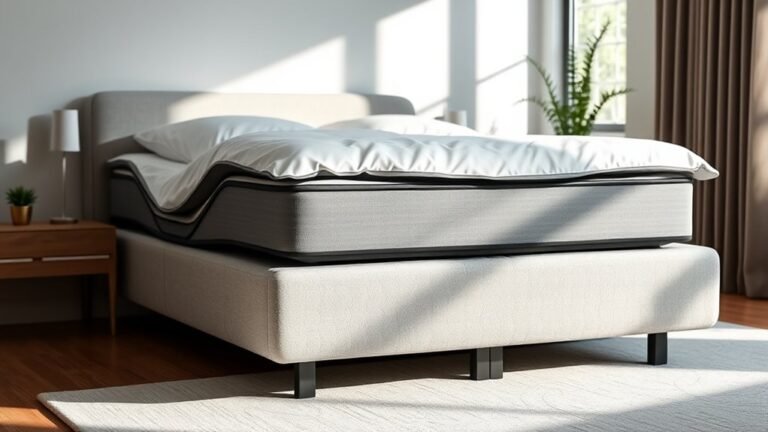
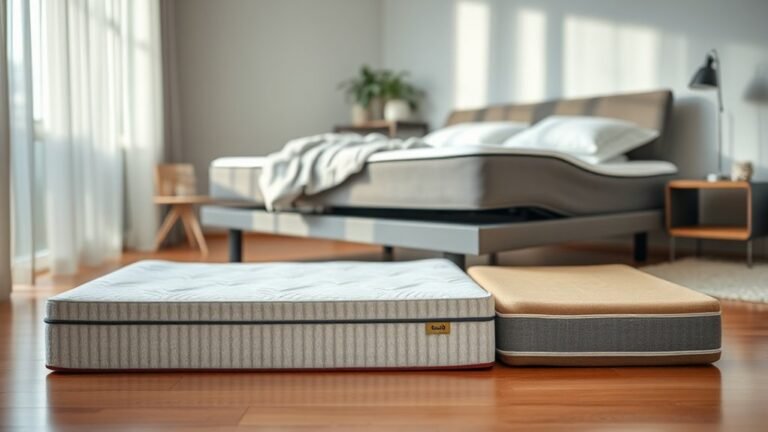
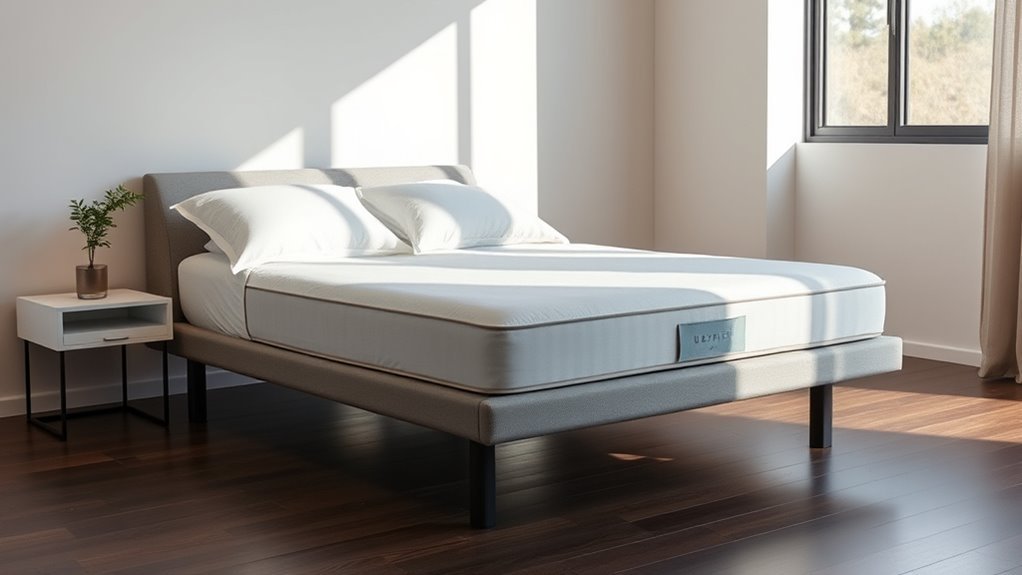
You can use a regular mattress on an adjustable bed by choosing one with flexible materials like memory foam, latex, or hybrids with pocketed coils. These materials bend easily, making them ideal for adjustable bases.
Just make sure to keep the thickness between 8 and 12 inches so the mattress bends smoothly without causing damage to itself or the bed frame.
Avoid thick, rigid innerspring mattresses or those with stiff border wires, as they don’t flex well and can cause discomfort.
It’s a good idea to test how well your mattress flexes before using it on an adjustable bed. This helps prevent unnecessary wear and ensures you stay comfortable.
Taking some time to explore mattress compatibility can really improve your overall comfort and the durability of both your mattress and adjustable base.
Key Takeaways
- Choose a mattress made of flexible materials like memory foam, latex, or pocketed coils. These types bend better on adjustable beds, making them a great fit.
- Make sure the mattress thickness is between 8 to 12 inches. This range helps the mattress bend smoothly without putting too much stress on it or the bed mechanism.
- Before placing it on an adjustable frame, test the mattress by gently folding it. Check for any resistance or stiffness so you know it will work well.
- Try to avoid mattresses with rigid border wires or dense coil systems. These can limit movement and might even cause damage when the bed adjusts.
- You might also want to modify or remove any stiff bed frame parts. Plus, keep an eye on the mattress for signs of wear after using it on an adjustable base.
Understanding Mattress Compatibility With Adjustable Bases
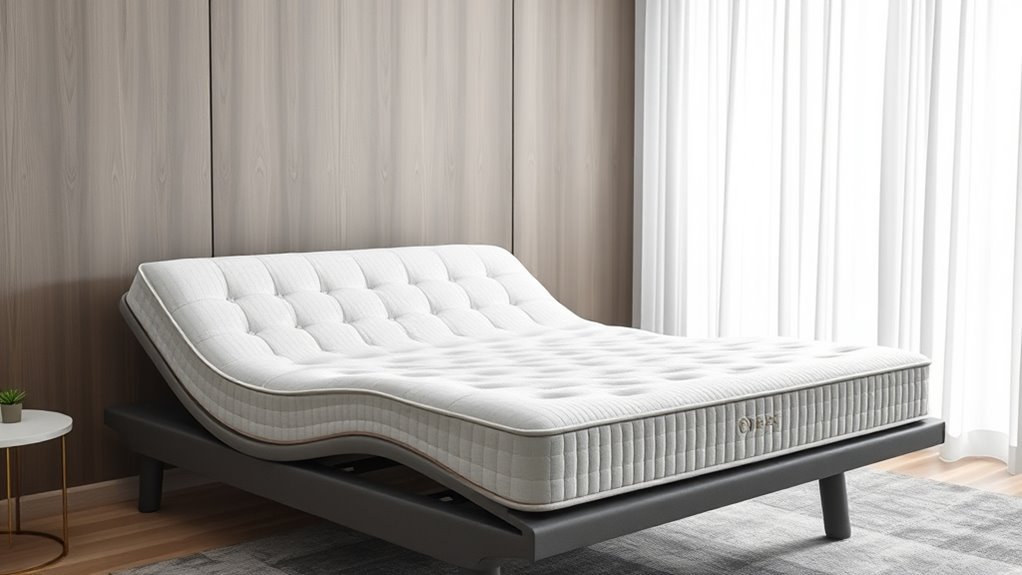
Although not every mattress pairs well with an adjustable base, most modern memory foam, latex, and hybrid mattresses flex easily and return to flat without issue.
When considering mattress compatibility, you’ll want to focus on flexibility to guarantee smooth bending and comfort.
Traditional innerspring mattresses with rigid coils often struggle with adjustable bases, but those featuring pocketed coils offer better adaptability.
Always check the mattress labels or manufacturer guidelines to confirm it’s designed for adjustable beds.
Keep in mind, mattresses over 15 years old or made with dense foam layers might lack the necessary flexibility, making them less suitable.
Also, thinner mattresses—around 10 to 12 inches—typically bend more effortlessly, enhancing compatibility with adjustable bases and improving your overall experience.
Key Factors That Affect Mattress Flexibility and Fit
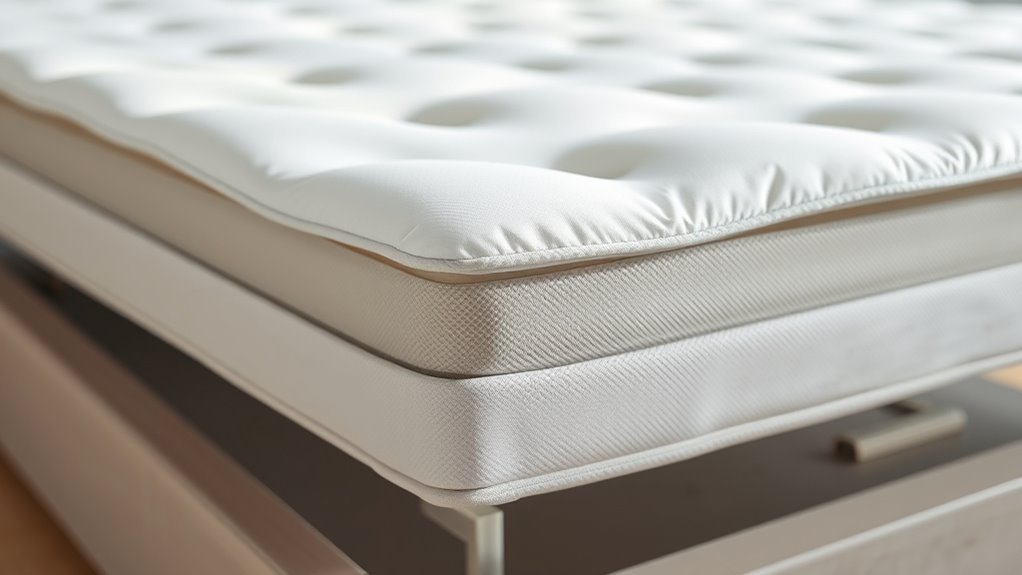
When choosing a mattress for your adjustable bed, you need to take into account thickness limits to ensure smooth bending. Material flexibility plays a key role in how well the mattress adapts to different positions.
Plus, durability matters since the mattress will undergo frequent adjustments over time. So, it’s important to pick one that can handle all that movement without wearing out too quickly.
Mattress Thickness Limits
Because mattress thickness directly affects how well it bends and fits on an adjustable bed, choosing the right thickness is essential. You want a mattress that offers ideal adjustable bed compatibility without compromising comfort.
Here’s what to take into account:
- Mattresses around 8 to 10 inches thick conform better to bed frame support and various positions.
- Thickness over 12 inches may reduce flexibility, limiting smooth bending and adjustment.
- Excessively thick mattresses risk exceeding weight limits, potentially harming your adjustable base.
- Thinner mattresses help minimize pressure points by bending seamlessly and returning smoothly to flat positions.
Material Flexibility Importance
Since mattress flexibility directly affects how well it fits and functions on an adjustable bed, you need to contemplate the materials used. A memory foam mattress, latex, or hybrid design usually offers superior material flexibility, allowing smooth bending with adjustable bed frames.
Thinner mattresses, around 10-12 inches, also adapt better than thicker ones. If you’re considering an innerspring mattress, pay close attention to its coil system.
Rigid coils and border wires can limit flexibility, especially if the coil system uses interconnected coils rather than pocketed coils, which contour more easily. Choosing a mattress with flexible materials ensures it moves seamlessly with your adjustable bed, providing consistent comfort and support without restricting motion or causing damage over time.
Durability for Adjustments
Understanding material flexibility helps you choose a mattress that bends easily with your adjustable bed, but durability plays an equally important role in maintaining that fit over time.
When selecting a mattress, consider these key factors to ensure long-lasting performance and comfort:
- Materials like memory foam, latex, and hybrids offer better flexibility and durability than traditional innerspring models.
- Thinner mattresses (10-12 inches) adapt more easily to adjustments, reducing wear and tear.
- Coil systems matter; pocketed or individually wrapped coils provide more flexibility and resist damage better than interconnected coils.
- Repeated movement can cause strain, so high-quality, durable materials help the mattress retain its shape and function on your adjustable bed.
Ideal Mattress Thickness for Adjustable Bed Frames
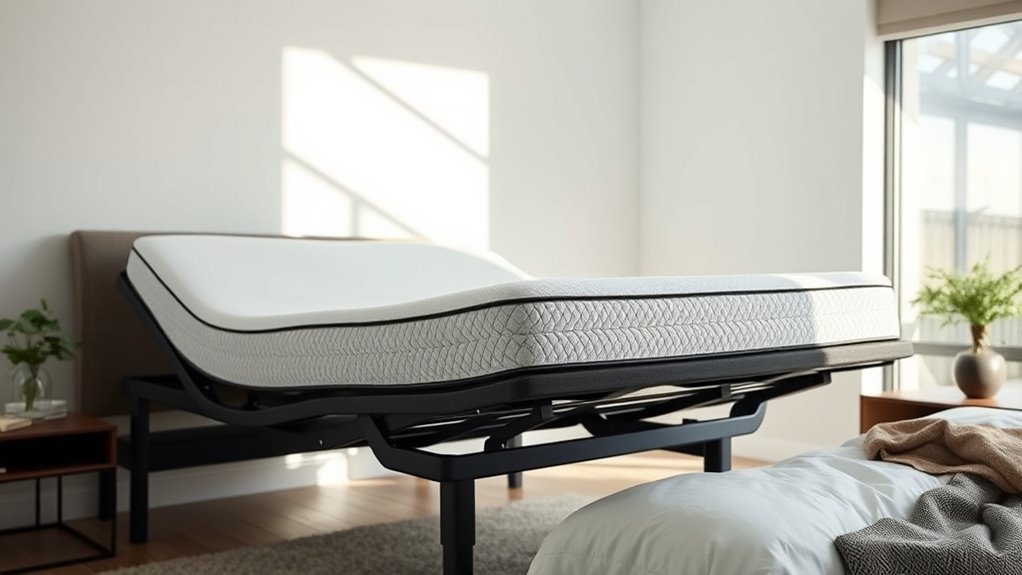
When you choose a mattress thickness between 8 and 12 inches, you guarantee your adjustable bed frame can bend smoothly without putting stress on the mattress or mechanism. This thickness range offers the ideal balance of support and flexibility necessary for an adjustable bed to function properly.
Mattresses thicker than 12 inches may limit the bed’s range of motion, making adjustments awkward or difficult. On the other hand, mattresses thinner than 8 inches might not provide enough support or comfort for a good night’s sleep.
Materials That Work Best on Adjustable Bases
Choosing the right mattress thickness sets the stage, but the material you pick plays an equally important role in how well your bed adjusts. To get the most from your adjustable base, focus on mattresses made from flexible materials that bend without damage.
Here are the top options:
Memory foam, latex, hybrid, and gel foam mattresses flex easily for optimal comfort with adjustable bases.
- Memory foam adapts perfectly to movement, offering consistent support.
- Latex provides durability and flexibility, maintaining comfort while adjusting.
- Hybrid mattresses combine foam and coils, balancing flexibility and support.
- Gel foam mattresses retain shape during frequent bending, enhancing comfort.
These materials ensure your mattress moves smoothly with the base, giving you comfort without compromising durability. Avoid rigid or overly thick mattresses, as they won’t conform well.
Choosing the right material means your adjustable bed works seamlessly with your mattress for a restful night. It’s all about finding that perfect match!
Evaluating the Suitability of Spring Mattresses
Although spring mattresses have traditionally been less compatible with adjustable beds, certain types—like those with pocketed coils—offer the flexibility needed to move smoothly with your base.
When evaluating spring mattresses for coil compatibility, focus on models with individually wrapped coils. They provide better mattress flexibility and conform more easily to different positions.
Avoid rigid or interconnected coil mattresses since their structure can restrict movement and may even damage your adjustable bed over time.
Thinner spring mattresses, typically 10-12 inches thick, bend more readily and suit adjustable beds better.
Before making a decision, check with the manufacturer to ensure your chosen spring mattress is designed to handle repeated bending and positioning.
This way, you’ll enjoy both comfort and durability on your adjustable bed.
Benefits of Using Memory Foam and Latex Mattresses
Since adjustable beds need mattresses that can bend without getting damaged, memory foam and latex are great choices. These materials flex smoothly with the frame, which means they last longer and stay comfy.
When you pick memory foam or latex for your adjustable bed, you get some real benefits. For starters, they offer superior pressure relief by molding to your body’s shape.
Latex mattresses are quick to respond, so they keep supporting you even when the bed moves. Plus, these mattresses don’t have rigid border wires, which means they bend easily without wearing out.
Both memory foam and latex bounce back to flat shape effortlessly, making them really durable. Using these mattresses keeps your adjustable bed comfortable and supportive no matter how you position it.
All in all, the flexibility and pressure relief you get from memory foam and latex make them perfect for improving your sleep on adjustable beds.
How Hybrid Mattresses Perform on Adjustable Bases
When you use a hybrid mattress on an adjustable base, you get the perfect mix of flexibility and support thanks to its coil system design. The individually wrapped coils let the mattress bend easily without losing durability.
Plus, the 12-14 inch thickness balances comfort and resilience. Choosing a high-quality hybrid guarantees your mattress flexes smoothly with your bed’s movements and stands up to repeated adjustments. It’s a win-win for comfort and functionality!
Flexibility and Support
If you want a mattress that moves effortlessly with your adjustable bed, hybrid mattresses offer an excellent balance of flexibility and support. They combine foam or latex layers with pocketed coils, allowing smooth movement and precise contouring.
When you choose a hybrid mattress, consider these benefits:
- Individually wrapped coils enhance contouring and adapt to your body’s shape during adjustments.
- Foam or latex layers provide gentle support, enabling smooth bending with your adjustable bed.
- Thinner hybrids (10-12 inches) bend more easily, improving compatibility with frequent movement.
- Durable design ensures lasting support and comfort despite regular positioning changes.
With hybrid mattresses, you get a blend of flexibility and support that keeps you comfortable no matter how you adjust your bed. It’s a smart choice if you want comfort and ease combined.
Coil System Design
Although hybrid mattresses combine different materials, their coil system design plays a crucial role in how well they perform on adjustable bases. You’ll find that hybrid mattresses often use pocketed coil systems with flexible coils, which bend easily without damage.
This design boosts adjustable bed compatibility by allowing the mattress to conform smoothly to various positions. The individually wrapped coils contour to your body and reduce motion transfer, enhancing comfort during adjustments.
Hybrids with thinner coil layers or coils made from flexible wire gauges adapt even better to changes in angle. When the coil system is thoughtfully engineered, your hybrid mattress can handle repeated bending without losing support or durability.
That makes it an excellent choice for use with an adjustable bed.
Thickness and Durability
Since hybrid mattresses typically range between 10 and 14 inches thick, they strike a balance between support and flexibility that works well with adjustable bases.
When choosing a hybrid mattress for your adjustable bed, consider these points:
- Thickness impacts how easily the mattress bends; hybrids over 14 inches may reduce flexibility.
- The combination of foam and pocketed coils in hybrid mattresses enhances both comfort and adaptability.
- High-quality hybrids with thinner coil layers tend to last longer on adjustable beds due to better flexibility.
- Durability depends on materials; well-constructed hybrids withstand frequent adjustments without damage.
Practical Tips for Testing Mattress Compatibility
When testing a mattress for an adjustable bed, you’ll want to start by bending or flexing it to guarantee it comfortably follows the bed’s movements without damage. Test mattress flexibility by gently folding the mattress to see if it adapts well to different angles.
Next, check mattress thickness—ideally between 10-12 inches—to ensure it fits and bends smoothly on the adjustable base. Inspect border wires or any rigid materials, as these can restrict flexibility or cause discomfort when the bed moves.
Finally, use the bed’s controls to raise and lower the mattress, and observe position support to confirm it maintains comfort and proper support in each setting. Following these practical tips helps you choose a mattress that works seamlessly with your adjustable bed.
Enhancing Comfort and Support With Adjustable Bases
You’ll enjoy better comfort and support when your mattress works well with your adjustable base. Choosing the right mattress type and thickness helps it bend smoothly without compromising support.
This adaptability ensures your bed adjusts to your needs, improving sleep quality and spinal alignment. It’s all about making your sleep space work for you, not the other way around.
Adjustable Base Benefits
Although many standard beds offer basic comfort, adjustable bases let you tailor your sleeping position to suit your needs perfectly. With advanced sleep technology, you gain customizable comfort that targets pressure relief and supports your body uniquely.
An adjustable base enhances your sleep quality by allowing precise adjustments to head and foot elevation.
Here’s why you’ll appreciate an adjustable base:
- Improves spinal alignment and reduces pressure on your lower back
- Elevates legs to boost circulation and decrease swelling
- Offers zero gravity and massage modes to ease muscle tension
- Helps manage health issues like acid reflux and sleep apnea
Pretty neat, right? It’s like having a sleep setup that works just for you!
Mattress Adaptability Factors
Since adjustable bases move and flex to support various positions, your mattress must adapt seamlessly to maintain comfort and support. Mattress compatibility hinges on key flexibility factors, primarily the mattress materials used.
Memory foam, latex, and hybrid mattresses bend easily, making them ideal for an adjustable bed. Thinner mattresses, around 10-12 inches, enhance adaptability compared to thicker ones.
Avoid mattresses with border wires or stiff support layers, as they resist bending. If you prefer innerspring models, look for pocketed coil systems that improve flexing ability.
Durability matters too—high-quality, flexible materials withstand repeated bending without losing comfort or support. By considering these factors, you’ll ensure your mattress works well with your adjustable bed, providing both comfort and longevity.
Common Challenges and Solutions When Using Regular Mattresses
When you place a regular mattress on an adjustable bed, it often struggles to bend smoothly. This can lead to discomfort and potential damage. The compatibility between your mattress and bed’s movement is essential.
Thicker or innerspring mattresses can restrict motion and wear out faster. To address these challenges, consider choosing a thinner, flexible mattress like memory foam or latex for better adaptability.
You might also want to modify the bed frame or remove slats to improve mattress flexibility. Plus, make sure the mattress matches the adjustable bed’s weight capacity to prevent sagging.
And don’t forget, be mindful of potential noise from springs or stiffness during adjustments. These small details can make a big difference in your comfort and the lifespan of your mattress.
Frequently Asked Questions
Can a Regular Mattress Go on an Adjustable Base?
Yes, you can use a regular mattress on an adjustable base if it’s flexible enough, like foam or hybrid types. Just avoid stiff innerspring models, and always check your mattress’s guidelines to guarantee compatibility.
It’s all about the mattress’s flexibility. So, if it bends easily, you’re good to go! Just remember to double-check with the manufacturer to be sure.
Why Do My Sheets Keep Coming off My Adjustable Bed?
Your sheets love to dance because your bed shifts and changes angles. They slip off since standard sheets aren’t made to cling tightly.
Try deep-pocket, elasticized sheets or add straps to keep them snug and secure. It really helps keep everything in place, so no more annoying slipping!
What Is the Lifespan of an Adjustable Bed?
You can expect your adjustable bed to last around 10 to 15 years with proper care.
Motors usually last 8 to 12 years, so regular maintenance and inspections will help you extend its lifespan effectively.
Are All Bed Frames Compatible With Adjustable Bases?
You’d think every bed frame’s ready for an adjustable base, but nope. Most wooden frames with fixed slats won’t cooperate.
You’ll need metal or flexible slats, so check compatibility before you get comfy and disappointed.
Conclusion
You might think a regular mattress won’t work on an adjustable bed, but that’s not entirely true. With the right thickness, flexibility, and material—like memory foam or hybrids—you can enjoy both comfort and adjustability.
Just test your mattress carefully and tweak your setup if needed. Don’t let myths stop you; many regular mattresses can adapt well, giving you the support and flexibility you want without buying a new one.
Using a regular mattress on an adjustable bed is definitely possible when you choose the right type. Mattresses made of flexible materials like memory foam or hybrid designs bend easily with the adjustable base, maintaining comfort and support. Thickness matters too; thinner mattresses generally work better for smooth adjustments. So, if you’re wondering how to use a regular mattress on an adjustable bed, focus on flexibility and fit. This way, you can enjoy the benefits of an adjustable bed without the extra cost of a specialized mattress. Give it a try—you might be surprised how well your current mattress works!