Do Carpet Bugs Bite Humans and How to Protect Yourself
Carpet beetles don’t actually bite humans, but their larvae can cause some trouble. These little guys have tiny hairs that might irritate your skin, leading to itching or a rash that feels like bites. It’s not the beetles themselves, but their larvae you need to watch out for.
To protect yourself, try storing natural fiber items in airtight containers. Sealing entry points around your home and vacuuming regularly to remove larvae and shed skins can also help a lot.
Keeping your living space clean is key to reducing both irritation and infestations. Want to learn how to spot these pests and handle them effectively? Keep reading for all the details.
Key Takeaways
- Carpet beetles do not bite humans or feed on blood; skin irritation is caused by larvae hairs, not bites.
- Those larvae hairs can cause itching, redness, and small bumps that look like insect bites after you come into contact with them.
- To protect yourself, try storing natural fibers in airtight containers.
- Also, make sure to vacuum your carpets and stored fabrics regularly to keep the larvae at bay.
- Another good tip is to seal any cracks and entry points around your home.
- This helps prevent adult beetles from sneaking inside.
- When it comes to treatment, you can use cleaning, steam, freezing, or insecticides.
- If the infestation sticks around, don’t hesitate to call in professional help.
Understanding Carpet Beetles and Their Behavior
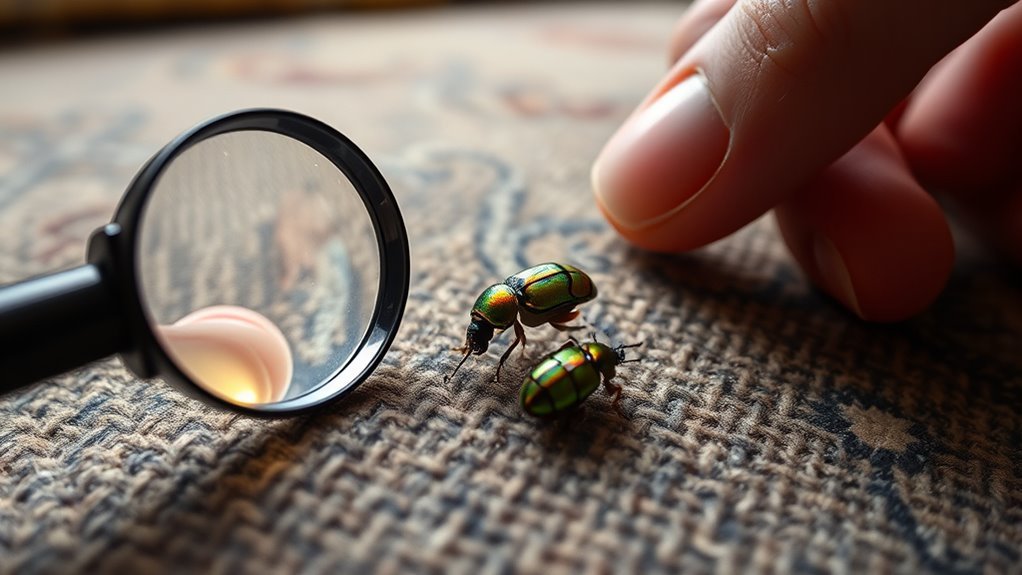
How can you tell if carpet beetles are causing your skin irritation? Unlike bites, these pests don’t feed on your skin, but their larvae can trigger reactions.
The larvae are fuzzy, brownish, and often hide in dark corners where natural fibers accumulate. When their tiny hairs brush against your skin, they can cause itchy rashes and discomfort.
You won’t see blood spots or bite marks like with other pests, but you might notice damaged fabrics, signaling infestations. Carpet beetles mainly feed on pollen outdoors, so their presence indoors often relates to larvae seeking food in wool, silk, or other natural fibers.
Spotting larvae early and storing these fibers in airtight containers can help you prevent infestations and avoid skin irritation from these unwelcome visitors.
Can Carpet Beetles Bite Humans?
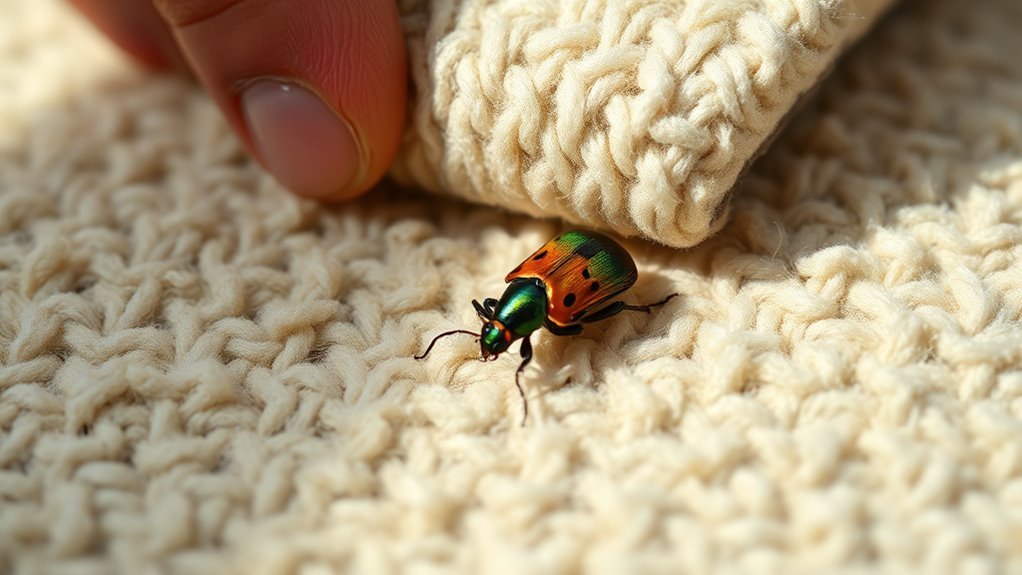
Although carpet beetles might cause skin irritation, they don’t actually bite humans. The adult carpet beetles feed on pollen and nectar outside and pose no biting threat.
It’s their larvae that cause concern; tiny hair-like bristles on larvae can trigger a skin reaction in some people. These bristles don’t bite or sting but may cause itching or rash when they come into contact with your skin.
Often, skin reactions result from airborne hairs or shed skins during an infestation rather than actual bites. Understanding this can help you avoid unnecessary worry.
Identifying Carpet Beetle Larvae and Adults
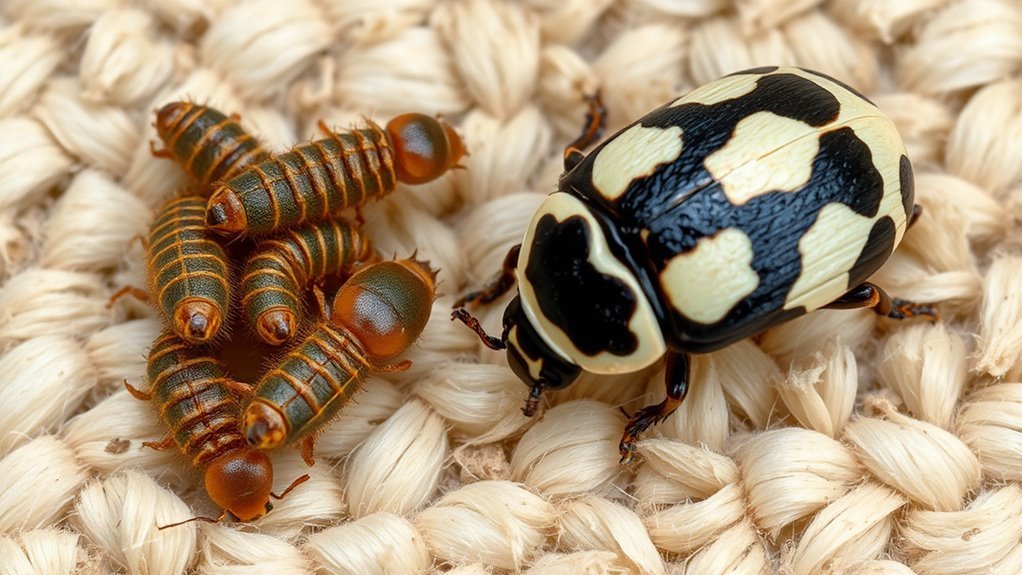
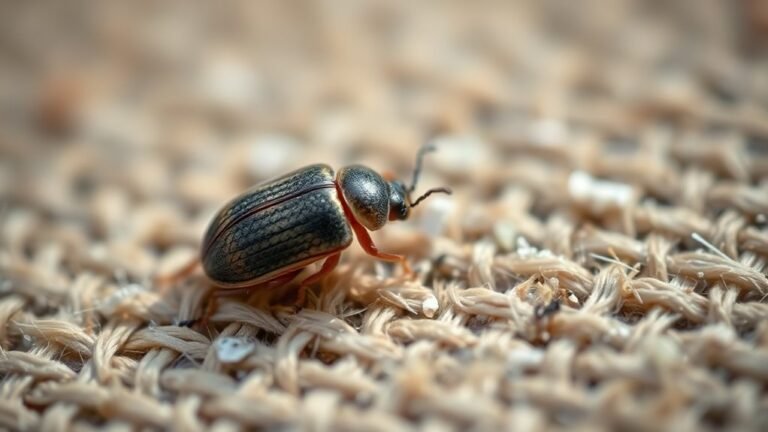
To recognize carpet beetles in your home, you need to know what both the adults and larvae look like. Adult carpet beetles are small, oval-shaped insects about 1/8 to 3/16 inches long, with mottled black, brown, white, yellow, or orange patterns.
You’ll often spot them near windows or outdoor plants. In contrast, carpet beetle larvae are fuzzy, elongated, brownish, and 2-6mm long, hiding in dark areas like closets or under furniture.
To identify carpet beetles, focus on the adults’ rounded shape and distinctive coloration and the larvae’s hairy, carrot-shaped bodies. Remember, carpet beetle larvae cause the fabric damage you might notice, while adult beetles indicate infestation signs.
Spotting both stages helps you confirm and address a carpet beetle problem quickly.
Common Signs of a Carpet Beetle Infestation
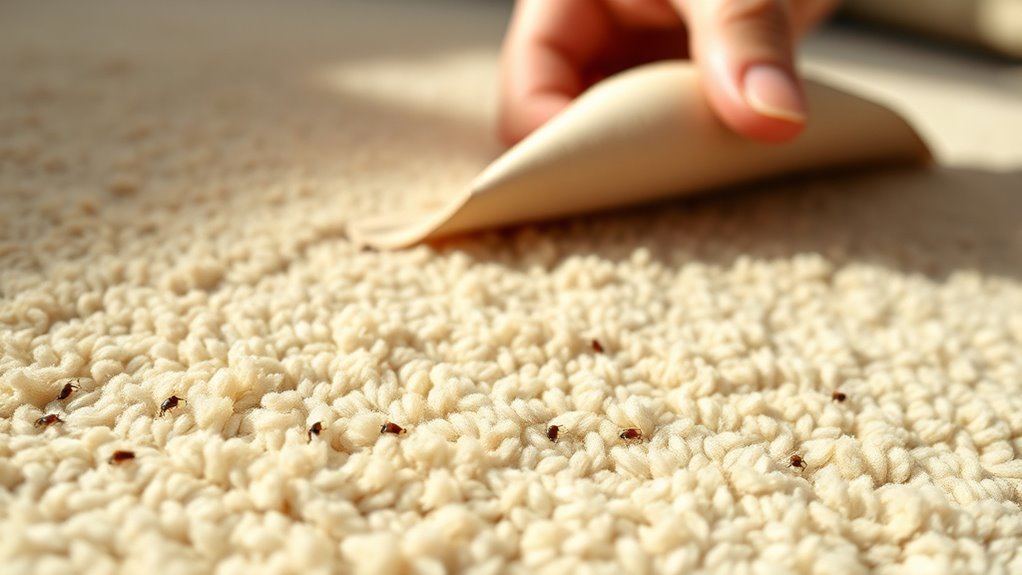
You’ll notice irregular holes in your natural fiber fabrics and carpets when carpet beetles are around. Keep an eye out for fuzzy larvae or tiny white eggs hidden in fabric folds or cracks.
Spotting these signs early helps you tackle the infestation before it worsens. It’s always better to catch it sooner rather than later, right? So, stay alert and check your fabrics regularly.
Fabric Damage Indicators
When you notice irregular holes or thinning in wool, silk, or other animal-based fabrics, it often signals carpet beetle damage. These bugs target natural fibers, leaving clear signs of their presence.
To spot an infestation early, watch for these fabric damage indicators:
- Tiny, irregular holes or thin patches in stored clothing, upholstery, or rugs.
- Fuzzy, brownish larvae or shed skins in hidden areas like closets or under furniture.
- Small white eggs tucked into fabric seams or folds.
These signs show larvae feeding and eggs hatching, which can quickly worsen the damage if left unchecked. So, keep an eye on undisturbed spots like attics or basements, where larvae thrive.
Spotting these indicators early helps you protect your fabrics before serious harm occurs. It’s better to catch them sooner rather than later!
Larvae and Eggs
Although carpet beetle larvae and eggs are small and often hidden, spotting them early can help you stop an infestation before it spreads. Carpet beetle larvae are fuzzy, brownish, and tend to hide in dark, undisturbed places like closets or under rugs.
You might notice tiny, white eggs laid in fabric folds or cracks near infested items—these eggs are less than 1 millimeter and tough to see without close inspection. Another key infestation sign is finding shed skins around fabrics, furniture, or storage areas, left behind as larvae grow.
If you observe damage to natural fibers alongside these signs, you’re likely dealing with an active carpet beetle infestation. Catching larvae and eggs early lets you protect your belongings and prevent further damage.
How Carpet Beetles Affect Human Skin
You might notice redness, itching, or small bumps after coming into contact with carpet beetle larvae. These symptoms happen because their tiny, hair-like bristles can irritate your skin or trigger allergic reactions.
Understanding these signs helps you identify and manage any discomfort caused by these pests. It’s good to know what to look out for so you can take action quickly.
Skin Irritation Causes
Since carpet beetles don’t bite or feed on blood, you might not expect them to cause skin problems. However, their tiny carpet beetle hairs can lead to skin irritation and allergic reactions.
When these hairs or shed skins touch your skin, you may notice itchy bumps or contact dermatitis resembling insect bites. Here are the main causes of skin irritation from carpet beetles:
- Direct contact with carpet beetle hairs or shed larval skins.
- Prolonged exposure to infested fabrics, carpets, or stored clothing.
- Sensitivity resulting in allergic reactions causing rash, itching, or burning sensations.
To avoid these issues, regularly clean and vacuum your living spaces to reduce contact with larvae and their hairs. It really helps keep those irritating hairs away from your skin.
Allergic Reaction Symptoms
Carpet beetle hairs don’t bite, but they can still cause noticeable allergic reactions on your skin. When you come into contact with airborne fibers or shed skins from carpet beetle larvae, you might experience skin irritation marked by itchy skin, redness, and small bumps.
These symptoms often resemble a rash and can be uncomfortable. Unlike bed bugs, carpet beetles don’t feed on your blood, but their tiny hair-like bristles can trigger allergic reactions, including skin welts or burning sensations.
You may also notice watery eyes or sneezing if you’re sensitive. To ease these symptoms, remove the larvae source promptly and clean the affected area thoroughly. Doing so helps reduce skin irritation and prevents the allergic reaction from worsening.
Differences Between Carpet Beetles and Bed Bugs
Although both carpet beetles and bed bugs can cause skin issues, they differ substantially in behavior and appearance. Understanding these differences helps you identify and manage infestations effectively.
- Bites vs. Irritation: Bed bugs bite exposed skin and feed on blood, causing itchy welts. Carpet beetles don’t bite but their larvae’s tiny hairs can trigger skin irritation.
- Appearance: Carpet beetles are small, oval, and multicolored; their fuzzy larvae are carrot-shaped. Bed bugs are larger, flat, reddish-brown, with translucent nymphs near sleeping areas.
- Behavior: Bed bugs hide close to where you sleep, actively feeding at night. Carpet beetle larvae prefer dark, undisturbed spots like carpets and furniture.
Knowing these distinctions helps you address bites and skin irritation properly and choose the right treatment for carpet beetles or bed bugs.
How Carpet Beetles Enter Your Home
Understanding how these pests get inside your home can help you prevent an infestation before it starts. Carpet beetles often enter homes through open windows and doors. This is especially common during spring and summer when adults are active outdoors.
They also hitchhike inside on infested items like cut flowers, secondhand furniture, or clothing contaminated with larvae or eggs. Natural fibers such as wool, silk, and leather in stored rugs or clothing attract carpet beetles and provide entry points.
Additionally, pet hair, lint, or dead insects carrying eggs or larvae can unknowingly bring them indoors. Cracks, gaps, and vents around windows, doors, and utility lines offer easy access for adults to infest your living spaces. So, it’s important to identify these vulnerabilities early.
Preventing Carpet Beetle Infestations
If you want to keep carpet beetles from invading your home, taking proactive steps is essential. Preventing carpet beetle infestations starts with cutting off their access to your fabrics and entry points.
Here’s what you can do:
- Store natural fiber clothing, linens, and fabrics in airtight containers to block larvae from feeding.
- Seal cracks and gaps around windows, doors, and vents to stop adult beetles from coming inside.
- Vacuum regularly, focusing on carpets, baseboards, and stored items to remove eggs, larvae, and shed hairs.
Doing these things might seem simple, but trust me, they really help keep those pesky beetles out!
Effective Methods for Removing Carpet Beetles
To get rid of carpet beetles, you first need to inspect and identify the affected areas carefully. Then, focus on thorough cleaning and vacuuming to remove larvae and eggs.
It’s really important to be thorough here because missing some spots could mean they come back. Finally, consider using chemical or natural treatments to eliminate any remaining beetles and prevent future infestations.
There are plenty of options out there, so you can pick what works best for you.
Inspection and Identification
Where should you start when trying to remove carpet beetles? Begin with a thorough inspection to identify signs of infestation.
Here’s how you can effectively inspect and identify carpet beetles and their larvae:
- Use a flashlight to examine hidden areas like mattress seams, under furniture, and inside closets. Look for larvae, shed skins, or adult beetles.
- Check stored wool, pet hair, and lint for small, fuzzy larvae or tiny beetles, especially in dark, undisturbed spots.
- Inspect window sills, baseboards, and attic vents for adult beetles, often near light sources in spring and summer.
Also, look for irregular holes or shredded fabric on clothing and carpets, as these are key signs of carpet beetle activity. That way, you can catch the problem early and take action fast.
Cleaning and Vacuuming
After identifying carpet beetles and their larvae during your inspection, the next step is tackling the infestation through thorough cleaning and vacuuming. Regular vacuuming removes adult beetles, larvae, and shed skins, especially from seams, edges, under furniture, and cracks where they hide.
Use a vacuum with a HEPA filter to capture tiny larvae and irritants. After vacuuming, immediately dispose of bags or clean the canister to prevent re-infestation. Combine vacuuming with steam cleaning at temperatures above 160°F to kill larvae and eggs deep in fibers.
| Task | Focus Areas | Purpose |
|---|---|---|
| Vacuuming | Carpets, rugs, upholstery | Remove beetles, larvae, skins |
| Targeted Cleaning | Seams, edges, under furniture | Reach larvae and eggs |
| HEPA Filter Usage | Vacuum device | Capture tiny larvae, irritants |
| Steam Cleaning | Carpet fibers | Kill larvae and eggs |
Chemical and Natural Treatments
Although thorough cleaning is essential, combining chemical and natural treatments offers the most effective way to eliminate carpet beetles. You can enhance your pest management efforts by following these steps:
- Use residual insecticides carefully on infested areas to kill larvae and adults, always following label instructions. It’s important to apply them safely to avoid any health risks.
- Apply natural methods like steam cleaning at 160°F or freezing items at 0°F for 72 hours to destroy eggs and larvae without chemicals. These options are great if you prefer a chemical-free approach.
- Regular vacuuming targets hidden eggs and shed skins, disrupting the beetles’ reproductive cycle. Keep up with this routine to stay ahead of infestations.
Additionally, sprinkling diatomaceous earth in cracks can dehydrate and kill carpet beetles on contact. It’s a simple, natural way to boost your control efforts.
When to Seek Professional Pest Control Assistance
If your carpet beetle problem persists despite your efforts, it’s time to call in professional pest control. When you notice signs of carpet beetles like larvae, fabric damage, or experience allergic reactions and skin irritation, a licensed pest specialist can assist.
Extensive infestation or recurring issues after DIY treatments signal the need for expert intervention to prevent further damage. Professionals can locate hidden larvae in hard-to-reach areas and apply targeted treatments that are more effective.
If you’re dealing with multiple pests, such as carpet beetles along with bed bugs, professional pest control ensures a thorough and safe eradication. Don’t wait too long—early professional help can save your belongings and health from escalating harm.
Frequently Asked Questions
Can Carpet Beetles Bite You in Bed?
No, carpet beetles can’t bite you in bed. You might get skin irritation from their larvae’s hairs, though.
To stay safe, clean regularly, wash bedding, and vacuum to reduce their presence effectively. It really helps keep things under control.
What Kills Carpet Bugs Instantly?
You can kill carpet bugs instantly by using high-temperature steam treatments at 160°F (71°C) on fabrics and furniture. This heat directly eradicates both adults and larvae, providing quick and effective control of infestations.
It’s a pretty straightforward method. Just make sure the steam is hot enough, and you’ll see results fast!
Does It Mean You’re Dirty if You Have Carpet Beetles?
Having carpet beetles doesn’t mean you’re dirty; it’s like finding dandelions in a well-kept garden.
You attract them with natural fibers and pet hair, so focus on cleaning and storage, not guilt or shame.
Is It Safe to Sleep in a Room With Carpet Beetles?
Yes, it’s safe to sleep in a room with carpet beetles since they don’t bite or feed on you.
Just keep your space clean to reduce irritation from their hairs or shed skins, and you’ll be fine.
Conclusion
Now that you know carpet beetles rarely bite but can still cause skin irritation, the real question is—are they lurking in your home right now? Don’t wait for itchy bites or damaged fabrics to find out.
Take action early by inspecting your carpets and closets. Use the prevention tips we’ve shared to keep these pests at bay.
Because once these tiny invaders settle in, getting rid of them can become a real challenge you don’t want to face. Protect yourself from carpet bugs by maintaining cleanliness and regularly checking areas where they like to hide.
Remember, early detection and prevention are key to avoiding skin irritation and damage to your belongings. Stay proactive and keep your home bug-free!