How to Do You Need a Box Spring for Your Memory Foam Mattress?
You don’t need a traditional box spring for your memory foam mattress because it requires a flat, sturdy foundation to stay supportive and avoid sagging.
Box springs tend to flex too much, which can shorten your mattress’s lifespan and reduce comfort.
Instead, go for a platform bed or a solid base with closely spaced slats. This setup provides even support and better airflow, keeping your mattress in great shape.
Choosing the right foundation is key to maintaining your mattress’s durability and shape.
If you’re curious about the best support options for your memory foam mattress, keep reading. There are plenty of alternatives that can help you get the most out of your mattress and enjoy a comfortable night’s sleep.
Key Takeaways
- Memory foam mattresses need a flat, solid foundation, not a traditional box spring designed for innerspring mattresses. Using a box spring can cause excessive flexing, which reduces mattress support, comfort, and lifespan.
- A platform bed or a slatted base with slats no more than 3 inches apart provides the best support for memory foam. This setup helps prevent sagging and keeps your mattress in great shape.
- Plus, proper support protects your warranty, which is definitely something you want to keep in mind. Don’t forget to regularly inspect and maintain your foundation to ensure stability.
- Taking care of the base can really extend the durability of your mattress, so it’s worth the effort!
What Is a Box Spring and Its Traditional Role
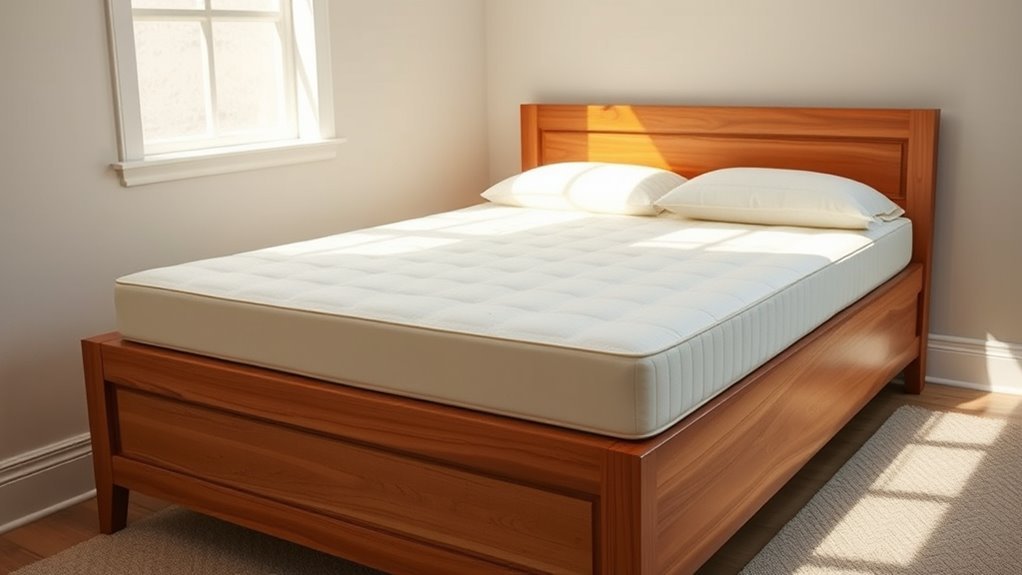
Although box springs were originally designed to support traditional innerspring mattresses, you might wonder if they’re still necessary today. A box spring is a foundation made from a wooden or metal frame filled with coils or springs, creating a sturdy support system for your mattress.
Its primary role is to absorb shock, maintain the mattress’s structure, and prevent sagging by working with the mattress’s coils. You’ll usually find box springs resting on a bed frame or wooden slats, adding height and promoting airflow beneath the mattress.
This setup extends the mattress’s lifespan and provides a comfortable elevation, making it easier to get in and out of bed. Plus, box springs offer a cushioned surface that complements and enhances the overall support of your mattress.
Characteristics of Memory Foam Mattresses
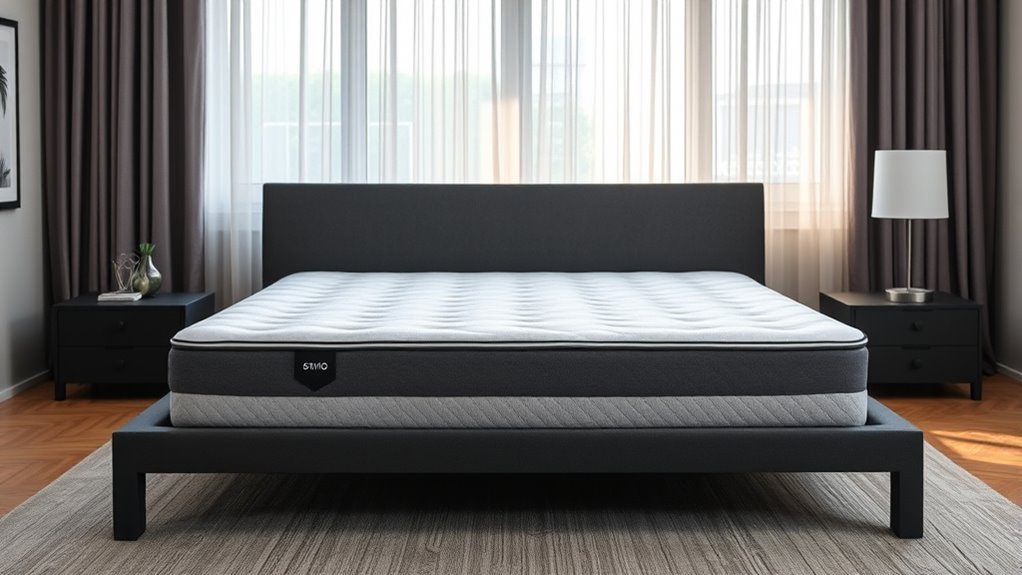
Since memory foam mattresses rely on dense foam layers rather than coils, they need a solid, flat surface to maintain their shape and support your body properly. This foundation prevents sagging and preserves the mattress’s structural integrity.
Memory foam excels in contouring to your body, offering personalized support that traditional mattresses can’t match. However, improper support like flexible box springs can cause unnecessary flexing, which reduces the mattress’s lifespan.
To ensure proper support for your memory foam mattress, consider these options:
- Solid foundation for even weight distribution
- Platform beds with flat surfaces
- Slatted bases with closely spaced slats
- Avoiding overly flexible or uneven surfaces
Choosing the right base really makes a difference. It enhances comfort, airflow, and durability, ensuring your memory foam mattress performs at its best.
Why Memory Foam Mattresses Typically Don’t Require a Box Spring
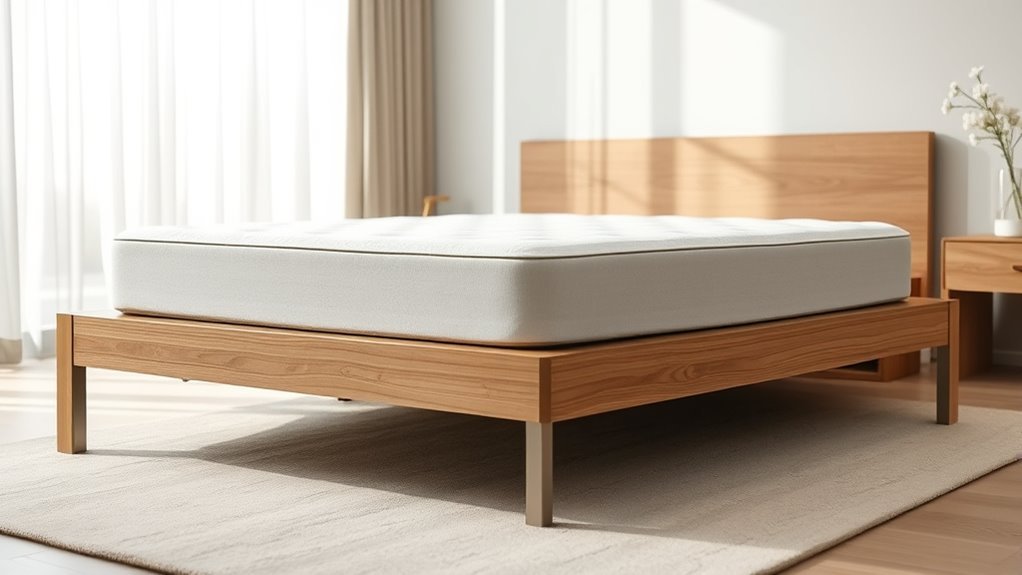
When you choose a memory foam mattress, you don’t need a traditional box spring because the mattress itself provides the necessary support through its dense foam layers. Memory foam mattresses are designed to work best on a flat surface or solid foundation, such as a platform bed or slatted base, ensuring even support and preventing sagging.
Unlike innerspring mattresses, which rely on coil support and shock absorption from a box spring, memory foam doesn’t require this. Using a box spring can cause unnecessary flexing, reducing the mattress’s lifespan and compromising comfort.
Manufacturers recommend a sturdy, flat foundation for ideal compatibility and durability. So, for proper support and to avoid sagging, stick with a solid foundation rather than a traditional box spring when using memory foam.
How a Box Spring Affects Memory Foam Mattress Performance
If you use a box spring with your memory foam mattress, you risk reducing its support and causing excessive flexing that leads to sagging. Memory foam needs a solid foundation to provide support and maintain its shape.
A traditional box spring often fails to offer a supportive surface, which can compromise support and stability. So, it might not be the best match for your memory foam mattress.
Here’s how a box spring affects your mattress:
- It can create uneven support, leading to pressure points and discomfort.
- It may allow excessive movement, reducing the mattress’s durability.
- It often restricts airflow, trapping heat and affecting temperature regulation.
- It doesn’t provide the solid foundation memory foam requires for adequate support.
For best performance, opt for a foundation that ensures even support and stability. That way, your mattress stays comfortable and lasts longer.
Best Foundations for Memory Foam Mattresses
You’ll get the best support for your memory foam mattress with a sturdy platform bed or a solid foundation.
These options prevent sagging and help distribute weight evenly, keeping your mattress in great shape.
Let’s explore why these foundations outperform traditional box springs.
Platform Bed Benefits
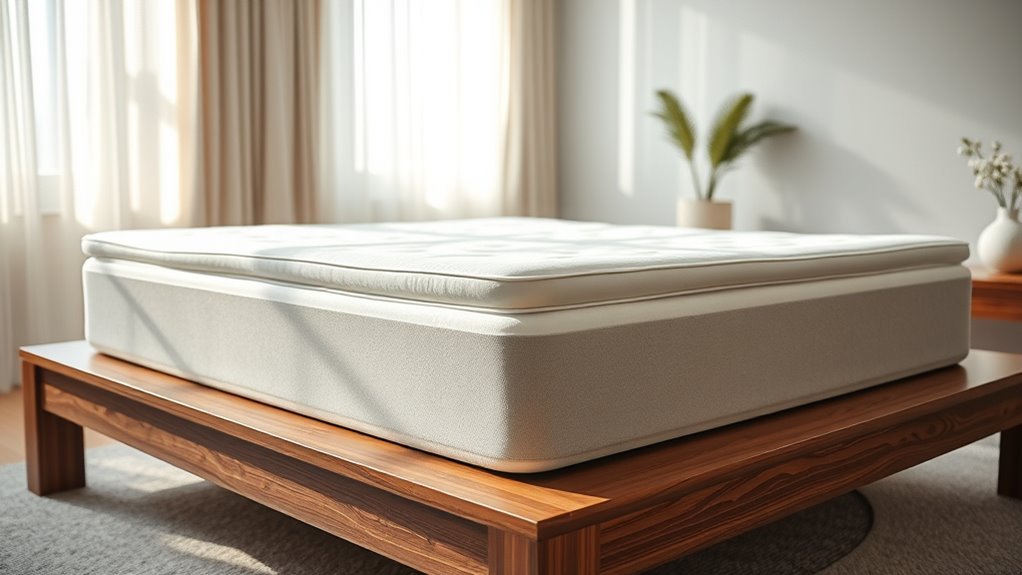
Because memory foam mattresses need solid support, platform beds offer an ideal foundation that eliminates the need for a traditional box spring. A platform bed provides a flat, sturdy base that guarantees proper support and even weight distribution, which helps extend the lifespan of your memory foam mattress.
Its slatted design promotes airflow, preventing heat buildup and moisture retention. Plus, platform beds feature a low-profile frame that enhances a modern aesthetic and makes getting in and out of bed easier.
Benefits of a platform bed include:
- Solid support tailored for memory foam mattresses
- Slatted design improving airflow and mattress breathability
- Even weight distribution to reduce sagging
- Low-profile frame offering a sleek, contemporary look
Choosing a platform bed means you get durability, comfort, and style all in one foundation. It’s a smart choice if you want a bed that works well and looks great.
Solid Foundation Options
Platform beds offer one excellent way to support your memory foam mattress, but they’re not the only option to contemplate. Solid foundation choices like slatted bases and solid box frames provide firm support that ensures proper weight distribution and prevents sagging.
These options also enhance airflow, which helps with temperature regulation and moisture control. That means your mattress stays fresh and comfortable for longer.
| Foundation Type | Benefits |
|---|---|
| Platform Beds | Firm support, prevents sagging |
| Slatted Bases | Airflow, temperature regulation |
| Solid Box Frames | Moisture control, even support |
Choosing a durable, compatible solid foundation is essential. It maximizes comfort, protects your mattress warranty, and keeps your memory foam mattress in great shape.
Pros and Cons of Using a Box Spring With Memory Foam
You might appreciate how a box spring adds height and can reduce noise under your memory foam mattress.
However, it could cause too much flexing, leading to sagging and shorter mattress life.
Understanding these pros and cons helps you decide if a box spring fits your needs.
Benefits of Box Springs
Although box springs can enhance airflow and help regulate temperature, they may not always be the best match for memory foam mattresses.
However, they do offer several benefits you might find useful. A box spring acts as a supportive foundation that works with your bed frame to maintain mattress structure and stability.
It can improve airflow beneath the mattress, helping prevent overheating. Additionally, the added height from a box spring can make getting in and out of bed easier for some people.
Here are key benefits to contemplate:
- Provides stable support that complements your bed frame
- Enhances airflow to help regulate sleeping temperature
- Adds height for easier access to the bed
- Helps maintain mattress durability by distributing weight evenly
Keep these benefits in mind when deciding on your mattress foundation.
Drawbacks for Memory Foam
When using a box spring with a memory foam mattress, you risk causing excessive flexing that leads to premature sagging and shortens the mattress’s lifespan. Box springs often provide uneven support due to their coil structure, which can create indentations and discomfort in your memory foam.
This lack of support compromises the mattress’s ability to distribute weight evenly, reducing its effectiveness and further accelerating wear. Plus, box springs add unnecessary height, making it harder to get in and out of bed comfortably.
Instead, consider foundation alternatives like platform beds that offer a solid, supportive surface. These provide proper support, helping your memory foam mattress maintain its shape and durability for a longer period. This way, you ensure a more comfortable and durable sleep experience.
Alternatives to Box Springs for Memory Foam Mattress Support
Since memory foam mattresses need firm, even support to maintain their shape, you’ll find that solid foundations or slatted platforms with gaps no wider than 3 inches work best.
These foundation types assure proper memory foam support by preventing sagging and promoting airflow.
Instead of a traditional box spring, consider these bed frame alternatives as a supportive base:
- Solid foundation: offers a flat, solid surface that evenly supports your mattress.
- Slatted platform: features slats with gaps under 3 inches for balanced support.
- Adjustable bed: allows you to customize your sleeping position while providing stable support.
- Platform bed frame: combines style with a sturdy bed foundation ideal for memory foam.
Choosing the right foundation keeps your mattress comfortable and extends its lifespan.
How to Choose the Right Support System for Your Memory Foam Mattress
Choosing the right support system for your memory foam mattress makes a big difference in comfort and durability. You want a solid foundation or slatted support with slats no more than 3 inches apart to guarantee proper support and prevent sagging.
A platform bed or sturdy bed frame provides even support and enhances air circulation, protecting your mattress’s lifespan. Avoid box springs since they cause flexing and unnecessary height.
| Support Type | Comfort Level | Durability Impact |
|---|---|---|
| Solid Foundation | High | Long-lasting |
| Slatted Support | Moderate | Good with airflow |
| Box Spring | Low | Can cause damage |
Choose wisely to keep supporting your mattress effectively and boost your sleep quality. It really pays off in the long run!
Maintenance Tips for Foundations Supporting Memory Foam Mattresses
To keep your memory foam mattress performing at its best, you should regularly maintain the foundation supporting it. Proper foundation maintenance guarantees even support and prevents sagging, extending your mattress’s lifespan.
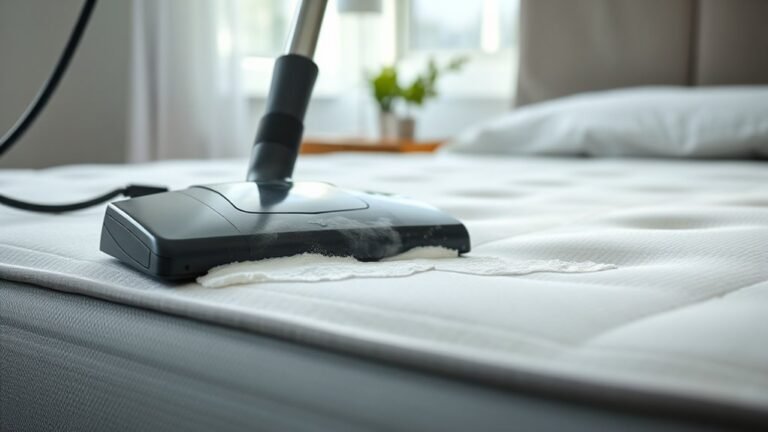
Make sure to inspect foundation components frequently for wear and tear, loose slats, or broken supports. Cleaning the foundation surface periodically using a vacuum or damp cloth also helps enhance airflow and hygiene.
Ensure the foundation provides a level and stable surface to avoid discomfort and structural issues. If possible, rotate the foundation every six months to promote even support and prevent uneven wear.
Avoid placing heavy objects on the foundation to prevent structural damage. By following these tips, you’ll maintain reliable support for your memory foam mattress and prevent sagging or foundation wear and tear.
Frequently Asked Questions
Do Foam Mattresses Need a Box Spring?
No, you don’t need a box spring for foam mattresses. Instead, place your memory foam mattress on a flat, sturdy surface like a platform bed or slatted foundation.
This helps guarantee proper support, durability, and warranty protection. It’s all about giving your mattress the right base to keep it comfortable and long-lasting.
What Is a Platform Bed Frame?
A platform bed frame is a low-profile structure with a solid or slatted surface that supports your mattress directly. It provides sturdy, even support without needing a box spring,
offering a sleek, modern look for your bedroom. It’s a great choice if you want something simple but stylish. Plus, it often saves space compared to traditional bed frames.
Why Are People No Longer Buying Memory Foam Mattresses?
You’re turning to trendy hybrids because memory foam’s heat holds you hostage, harms your happiness, and has harmful odors.
You want bounce, breathability, and better support, so you’re choosing mattresses that match modern needs more effectively.
Are Box Springs Still Used?
Box springs are less common nowadays, especially with memory foam mattresses. You’ll usually find platform beds or solid foundations providing better support.
While some still use box springs, they’re generally not necessary or recommended for memory foam. So, if you’ve got a memory foam mattress, you might want to skip the box spring altogether.
Conclusion
You don’t usually need a box spring for your memory foam mattress because it’s designed to work best on solid, sturdy surfaces. In fact, studies show that 80% of memory foam mattress owners prefer platform beds or slatted foundations over box springs for better support and longer mattress life.
Choosing the right base not only enhances comfort but also protects your investment. So, pick a foundation that keeps your mattress stable and helps you sleep soundly every night. When it comes to memory foam mattress support, a solid platform or slatted frame is often the best choice. This setup ensures your mattress maintains its shape and durability, giving you the restful sleep you deserve without the need for a box spring.