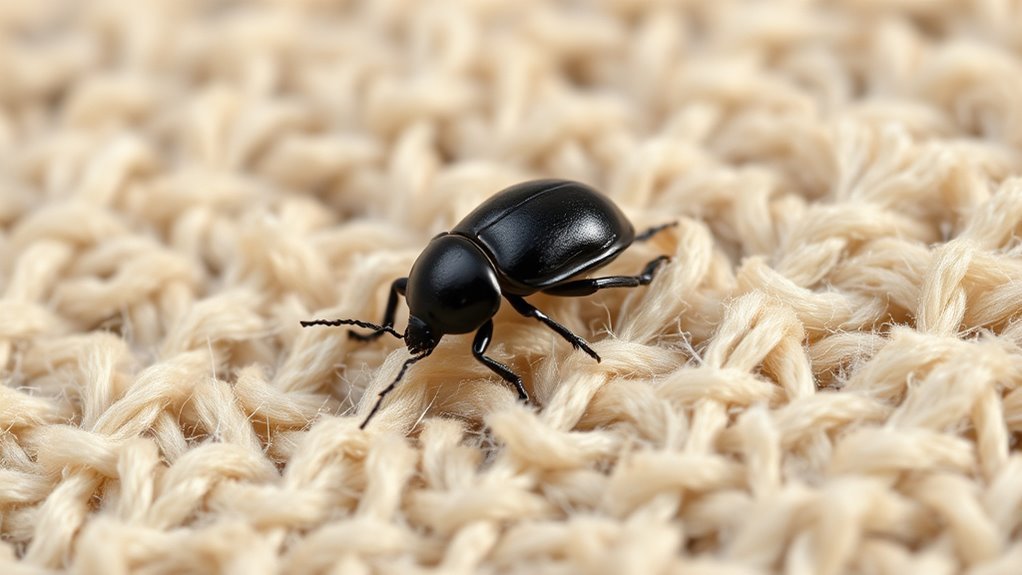
Are Black Carpet Beetles Dangerous and How to Protect Your Home
Black carpet beetles can cause serious damage to your fabrics by creating holes and weakening natural fibers like wool and silk. These pests aren’t just a nuisance—they can affect the condition of your clothes, upholstery, and other household items.
Plus, their larvae shed tiny hairs that may trigger skin irritation, rashes, or allergies. If you breathe in these hairs, it could even worsen respiratory problems, which makes these beetles more than just a fabric threat.
So, protecting your home from black carpet beetles is really important.
To keep these pests out, start by sealing all entry points and making sure your windows have secure screens. Storing clothes in airtight containers is a great way to stop larvae from reaching your fabrics.
Regular cleaning helps, too—it removes larvae and eggs before they become a bigger problem.
Taking these steps can prevent infestations and keep your belongings safe. Keep exploring to uncover effective control methods and treatments.
Key Takeaways
- Black Carpet Beetle larvae damage natural fibers like wool and silk, causing holes and fabric deterioration in your home. They can really mess up your favorite clothes or upholstery if left unchecked.
- Their shed hairs can cause skin irritation, allergic reactions, and respiratory issues, especially for asthma sufferers. So, it’s not just about your stuff getting ruined; it can affect your health too.
- To keep them out, try sealing cracks, using window screens, and checking plants or fabrics before bringing them indoors. These simple steps can make a big difference.
- Regular vacuuming and deep cleaning help a lot, and storing natural fibers in airtight containers can really reduce the risk of an infestation. It’s all about staying ahead of the problem.
- If things get really bad, you might need professional pest control. And if you use insecticides like bifenthrin or permethrin, be sure to do so cautiously. Safety first!
Identifying Black Carpet Beetles
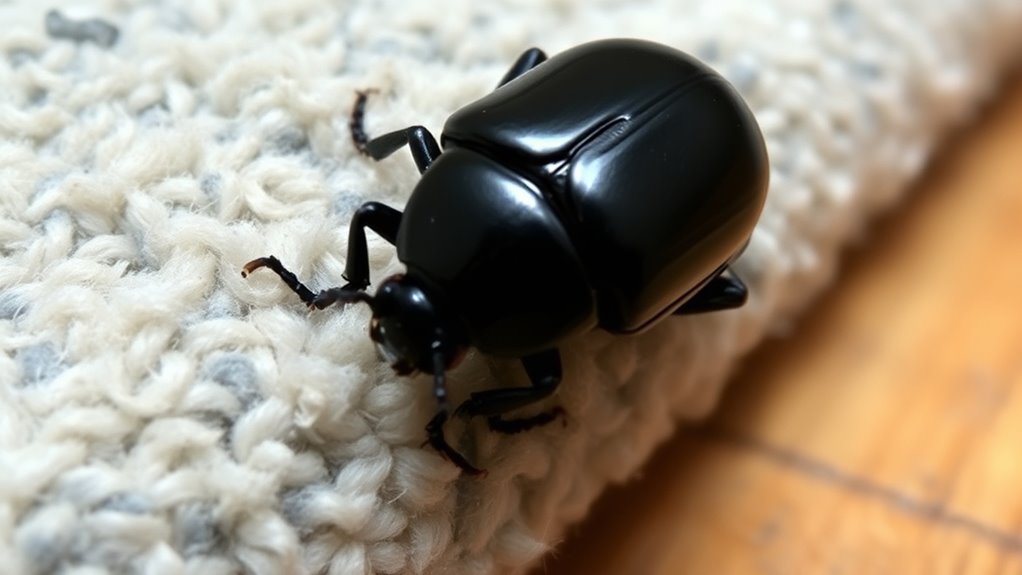
Although black carpet beetles are small, you can identify them by their shiny, oval-shaped black bodies measuring about 1/8 to 3/16 inch long. Adults have round bodies with short antennae and often display scales in colors ranging from white and yellow to brown and black. But their glossy black appearance is a key identifier.
The larvae look very different—they’re carrot-shaped, golden to dark brown, and can grow up to 1/2 inch long. Covered in dense bristles, these fuzzy larvae resemble maggots and cause most fabric damage.
To identify black carpet beetles, focus on the adults’ shiny black bodies and the larvae’s hairy appearance. Recognizing these features early helps you spot an infestation before it becomes a bigger problem.
How Black Carpet Beetles Enter Your Home
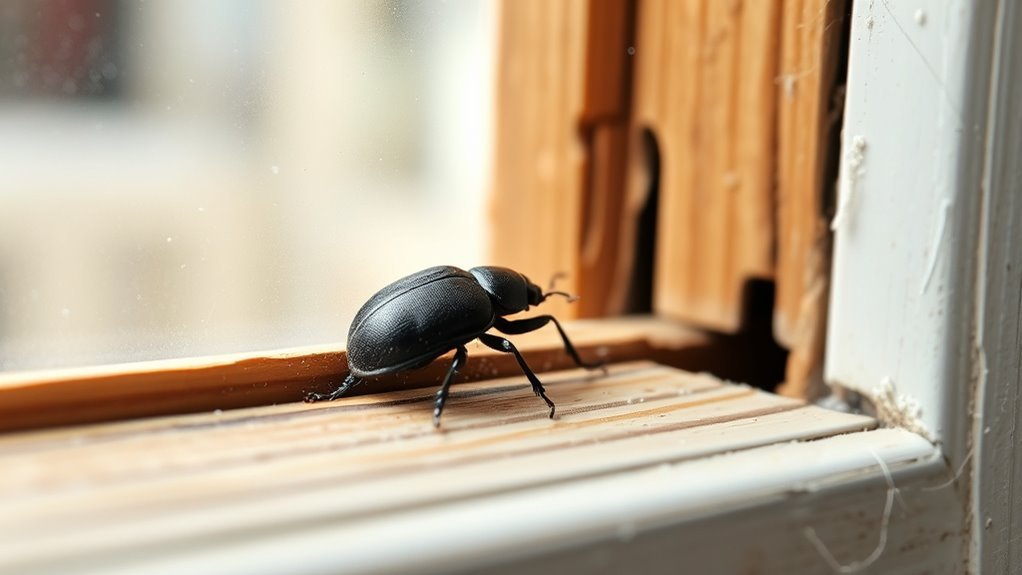
When you bring cut flowers indoors or leave windows and doors open, you create easy entry points for black carpet beetles. These beetles are attracted to flowering plants and can fly inside through open windows or doors.
They may hitch a ride on cut flowers, carrying eggs or larvae that start infestations. Besides flowers, black carpet beetles often enter your home through infested fabrics or natural fibers found in stored clothing and household items.
Gaps around windows, doors, and vents also serve as common entry points, allowing these pests to slip inside. Since black carpet beetles are drawn to light sources, they tend to gather near windows and lamps, increasing the chance of finding their way indoors.
Taking care of these entry points helps keep them out. So, it’s a good idea to keep windows and doors closed or screened and check any flowers or fabrics before bringing them inside.
Where Black Carpet Beetles Hide Indoors and Outdoors
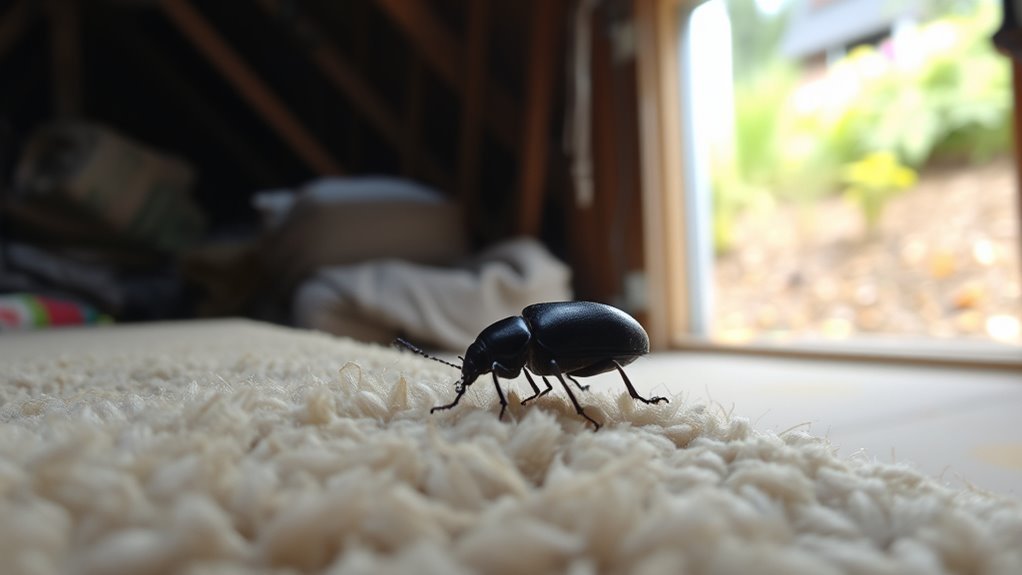
You’ll often find black carpet beetles hiding in dark, undisturbed spots like closets, under furniture, or inside stored fabrics.
Outdoors, they prefer sheltered places such as bird nests, tree bark cracks, and leaf litter.
Knowing where they hide helps you spot and address infestations early. It’s a handy trick to keep these pests under control!
Indoor Hiding Spots
Because black carpet beetles prefer dark, undisturbed spaces, you’ll often find them hiding indoors in closets, drawers, attics, and behind baseboards where natural fibers are stored. These beetles thrive in dark storage areas, especially where wool, silk, or other natural materials accumulate.
Larvae burrow into fabric folds, beneath stored clothing, upholstery, and carpets, making hidden areas tough to inspect. They also shelter in cracks and crevices around baseboards and wall voids, places you might overlook during cleaning.
Adult beetles may rest on windowsills but spend most time in these concealed spots. So, to protect your home, focus on thoroughly cleaning these dark, undisturbed zones regularly. Pay special attention to baseboards and storage areas where larvae and beetles can easily remain unnoticed.
Outdoor Habitats
Although black carpet beetles are notorious for hiding indoors, they spend much of their time outdoors in dark, undisturbed places like bird and rodent nests, sheds, and beneath logs or plant debris. These outdoor habitats provide plenty of food, as beetles feed on natural fibers and animal debris found in bird nests.
You should watch for infested outdoor items, such as outdoor furniture or stored fabrics, because bringing them inside can introduce beetles into your home. During flowering seasons, beetles are attracted to pollen and can enter through open windows or doors.
In colder months, black carpet beetles overwinter as larvae or adults in these outdoor shelters, often hiding under leaves, bark, or within animal nests. Being aware of their outdoor habitats helps you prevent infestations indoors.
Signs of Black Carpet Beetle Infestations
When black carpet beetles invade your home, early signs often show up as tiny larvae or shed skins in closets, carpets, or under furniture. You might notice carpet beetle larvae crawling or find shed skins left behind as they grow.
These signs of infestation often come with small holes in your clothing, upholstery, or other fabrics, indicating damage to fabrics. You may also spot tiny black frass pellets near baseboards or stored items, a common clue of their presence.
Seeing adult beetles on windowsills or near lights points to an active infestation close by. Sometimes, a musty or unusual odor in storage areas signals that beetle activity has increased.
Recognizing these signs early helps you tackle the problem before it worsens. It’s better to catch them sooner rather than later!
How Black Carpet Beetle Larvae Damage Your Belongings
Noticing larvae or shed skins is more than just an annoyance; these black carpet beetle larvae actively feed on natural fibers like wool, silk, feathers, and even pet hair. Their feeding causes damage to your clothing, upholstery, and carpets by creating small holes and weakening fabric integrity.
Along with visible damage, you’ll find frass—powdery debris signaling larvae presence. They can also contaminate pantry items, damaging stored grains and cereals.
| Larvae Target | Type of Damage | Signs to Watch For |
|---|---|---|
| Wool & Silk | Holes, weakened fabric | Shed skins, frass |
| Feathers & Pet Hair | Surface erosion | Larvae presence |
| Stored Food | Contamination | Powdery debris |
| Upholstery & Carpet | Structural weakening | Visible larval damage |
Health Risks of Black Carpet Beetles
You might notice skin irritation or rashes caused by the tiny hairs black carpet beetles shed.
If you have allergies or asthma, inhaling these hairs can trigger respiratory issues.
Understanding these allergic reactions helps you protect your health and your home.
Skin Irritation Symptoms
Although black carpet beetles don’t bite, their shed larvae hairs can cause skin irritation that might catch you off guard. These tiny, barbed hairs easily embed in your skin, leading to itching, redness, or dermatitis, especially if you’re sensitive.
This skin irritation often shows up as a rash known as carpet beetle rash. If you come into contact with an infestation, the risk of allergic reactions increases. With prolonged exposure, you might even see more severe responses.
Even though the adult beetles aren’t harmful through biting, it’s the larval hairs you need to watch out for. To protect yourself, try to avoid direct contact with infested items.
And be sure to treat infestations promptly. That way, you can minimize skin irritation and allergic reactions.
Respiratory Effects Risks
When black carpet beetle larvae shed their tiny hairs, these particles can become airborne and irritate your respiratory system if you breathe them in. The larval hairs mix with airborne dust, causing respiratory irritation. This is especially true if you have asthma or other lung issues.
Proper pest control and regular cleaning help reduce these airborne irritants. That way, you can better protect your health.
| Exposure Factor | Potential Effect |
|---|---|
| Larval hairs | Respiratory irritation |
| Airborne dust | Increased asthma symptoms |
| Lack of pest control | Higher concentration of irritants |
Allergic Reaction Causes
How do black carpet beetles trigger allergic reactions? You can experience allergic reactions mainly from the larvae hairs and shed skins these beetles leave behind. When these tiny hairs become airborne allergens, inhaling them may lead to respiratory irritation or worsen asthma symptoms.
Skin contact with larvae hairs or shed skins can also cause itching, rashes, or dermatitis, especially if you’re sensitive. Prolonged exposure to an infestation raises your risk of developing or worsening these allergic reactions.
Key causes include:
- Airborne larvae hairs triggering respiratory issues
- Shed skins acting as persistent allergens
- Direct skin contact causing itching or dermatitis
- Frass and insect debris worsening allergy symptoms
Understanding these causes helps you protect your home and health effectively.
Preventing Black Carpet Beetles at Home
To keep black carpet beetles from invading your home, start by sealing cracks and gaps around windows, doors, and vents. These simple steps help prevent carpet beetles from gaining easy access and causing an infestation.
Store natural fibers like wool, silk, and feathers in airtight containers to protect them from beetle damage. Regularly inspect and clean closets, attics, and storage areas to eliminate hiding spots and spot signs of beetle activity early.
Before bringing fresh flowers or indoor plants inside, check them for adult beetles to avoid introducing new pests. Use physical barriers such as window and door screens, repairing any tears promptly.
Non-Chemical Control of Black Carpet Beetles
You can keep black carpet beetles at bay by sealing cracks and storing natural fibers in airtight containers. Regular vacuuming and deep cleaning remove larvae and eggs before they become a bigger problem.
These simple, non-chemical steps help protect your home effectively. It’s an easy way to stay ahead of these pests without using harsh chemicals. Just a little effort goes a long way!
Prevention And Exclusion
Although black carpet beetles can be pretty persistent pests, you can keep them out by sealing cracks and gaps around windows, doors, and vents. Physical exclusion is really the key to preventing infestations.
You’ll want to take proactive steps to make your home less inviting to these beetles. Here’s what you can do:
- Seal cracks and gaps to block entry points.
- Store natural fibers like wool and silk in airtight containers or garment bags.
- Inspect and remove flowering plants near your home, since beetles are attracted to pollen.
- Install or repair window screens to stop beetles from flying indoors.
Thorough Cleaning Practices
Sealing entry points and storing fabrics properly help keep black carpet beetles out, but maintaining a clean environment inside your home also plays a big role in controlling them. Start with thorough cleaning by vacuuming frequently, especially under furniture, along baseboards, and in corners to remove eggs, larvae, and adult beetles.
Use a stiff-bristled brush to clean cracks and carpet edges where beetles hide. Wash infested fabrics like clothing and bedding in hot water or dry-clean them to kill all life stages.
Regularly dust storage areas, closets, and attics to eliminate debris and food sources for larvae. If you find heavily infested items that can’t be cleaned, remove and discard them promptly to prevent further spread of black carpet beetles in your home.
When and How to Use Pesticides for Control
Before applying pesticides for black carpet beetle control, make sure you’ve confirmed the infestation. Take some time to thoroughly inspect your home and identify the pests accurately. Use insecticides only when you’re certain an infestation exists.
Confirm the infestation first by thoroughly inspecting your home before using any insecticides for black carpet beetle control.
Focus your application on areas where beetles and larvae like to hide, such as cracks and edges.
Here’s how to use pesticides effectively:
Apply insecticides like bifenthrin or permethrin directly to cracks, edges, and other hiding spots. You can also use residual insecticide dusts or sprays for those hard-to-reach places, like wall voids and under furniture.
Just be careful to avoid spraying on fabrics or near food to prevent contamination.
Always follow the manufacturer’s instructions carefully. This ensures you’re applying the pesticide safely and effectively.
Taking this targeted approach helps control black carpet beetles without unnecessary exposure.
Professional Treatment for Severe Infestations
If you find that pesticides aren’t enough to control a severe black carpet beetle infestation, it’s time to consider professional treatment options. Professional pest control experts often use targeted fumigation with gases like sulfuryl fluoride or phosphine, which effectively eliminate all beetle life stages in sealed environments.
These treatments require licensed operators due to strict safety protocols. Additionally, professionals apply insecticidal dusts or sprays containing bifenthrin, permethrin, or lambda-cyhalothrin directly into cracks and crevices, reaching hidden areas you can’t access.
For chemical-free options, dry ice fumigation raises CO₂ levels in sealed spaces, suffocating pests over weeks. When infestations are widespread or persistent, relying on professional methods ensures thorough eradication, going beyond what DIY efforts can achieve.
Don’t hesitate to call experts if you need lasting results. They’ve got the tools and know-how to get rid of those beetles for good.
Frequently Asked Questions
Do Carpet Beetles Live in Beds?
Carpet beetles don’t usually live in beds, but their larvae can infest your bedding and fabrics.
To keep them away, you should regularly clean and store natural fibers properly. This helps prevent larvae from settling in your sleeping area.
What Is the Name for a Small Black Bug With Brown Spots?
That small black bug with brown spots is called a black carpet beetle, or *Attagenus unicolor*. You’ll spot them near windows or flowers.
Their fuzzy larvae can sometimes resemble tiny hairy caterpillars indoors. They’re pretty common in homes, especially where natural fibers are around.
Are Carpet Beetles Dangerous to Humans?
You might think carpet beetles are harmless, but they can cause skin irritation and allergic reactions.
While they don’t bite, their tiny hairs can trigger rashes or respiratory issues, especially if you’re sensitive or have allergies.
How Can I Treat Carpet Beetle Larvae?
You can treat carpet beetle larvae by vacuuming thoroughly and washing infested fabrics in hot water. This helps remove the larvae and their eggs effectively.
Applying insecticide dusts on cracks is also a good step. Sealing entry points prevents new beetles from coming in.
If the infestation is severe, calling professionals is the best way to guarantee complete elimination. They have the tools and knowledge to handle tough cases.
Conclusion
Now that you know how to spot and stop black carpet beetles, you can keep your home safe and sound. Remember, “an ounce of prevention is worth a pound of cure.” Regular cleaning and early action go a long way in protecting your belongings from damage.
If things get out of hand, don’t hesitate to call in the pros. Taking these steps will help you maintain a pest-free home.
By staying vigilant and using these protection tips against black carpet beetles, you ensure your carpets, clothes, and furniture stay safe. A clean home and quick response are your best defenses. With these simple habits, you’ll enjoy peace of mind knowing your home is protected from these pests.