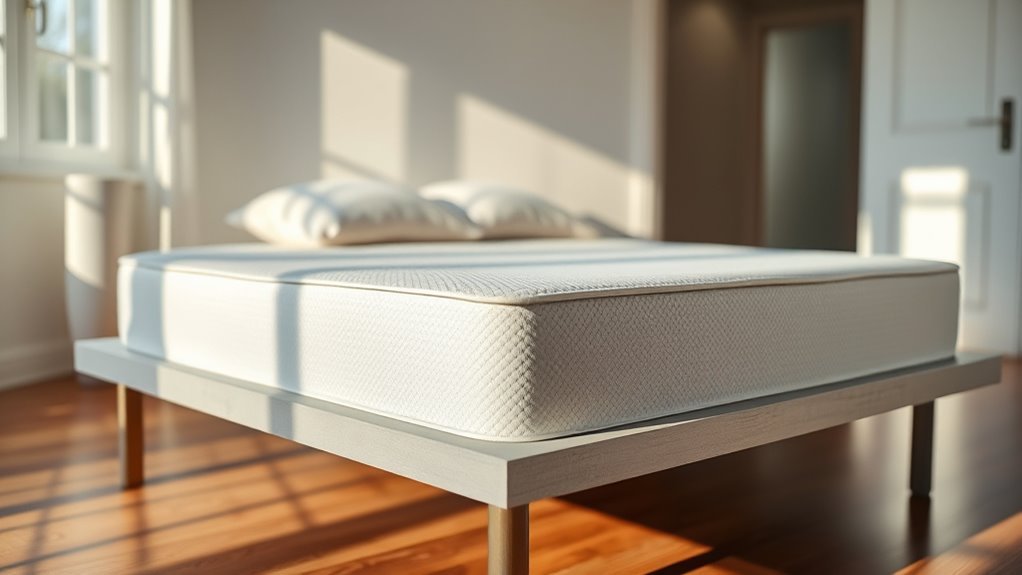
Do Memory Foam Mattresses Need a Box Spring?
You don’t need a box spring for your memory foam mattress because it requires a firm, flat surface to provide proper support and maintain its shape.
Box springs, with their flexible coils, can actually cause sagging and uneven pressure. This reduces both comfort and durability.
Instead, go for a solid foundation, a platform bed, or closely spaced slats. These options keep your mattress in great condition by offering the right kind of support.
Want to keep your memory foam mattress feeling fresh and supportive? Stick with a sturdy base and avoid anything that might create dips or uneven spots.
Keep exploring to discover the best support options and how to protect your mattress investment.
Key Takeaways
– Memory foam mattresses require a firm, flat surface and do not need the flexibility of a box spring.
Box springs can actually cause sagging and reduce the support that memory foam mattresses need to maintain their shape.
– Using a box spring might even void your mattress warranty because it’s considered an improper foundation.
So, it’s best to avoid them if you want to keep your warranty intact.
– Instead, consider platform beds, solid foundations, or bunkie boards.
These options provide better support for memory foam mattresses.
– Proper support not only improves the mattress’s durability and comfort but also enhances airflow.
Box springs typically don’t offer these benefits, which can affect how well your mattress performs over time.
Understanding Box Springs and Their Purpose
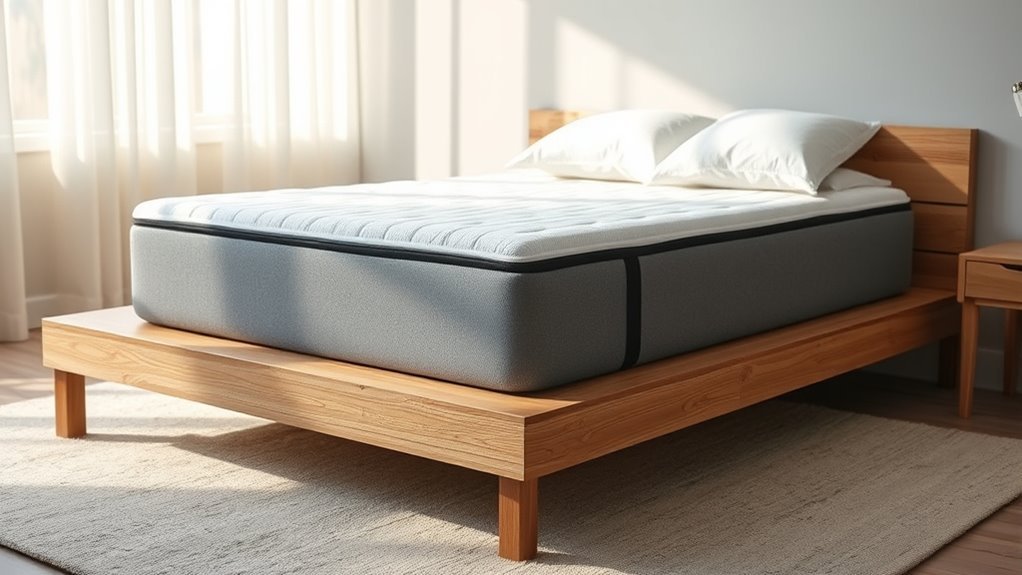
Although box springs have long been a staple in traditional bedding setups, you might not need one if you’re using a memory foam mattress.
A box spring is a support foundation made with a wooden or metal frame that includes coils or springs. It’s designed primarily for innerspring mattresses, providing shock absorption, added height, and improved airflow.
The coils offer bounce and flexibility, enhancing comfort for these mattress types. However, memory foam mattresses require a firm, flat surface to keep their shape and deliver proper support.
Instead of a box spring, a solid foundation or platform bed frame offers modern support that suits memory foam. Using the right foundation ensures your mattress performs well and lasts longer without sacrificing comfort.
How Memory Foam Mattresses Differ From Traditional Mattresses
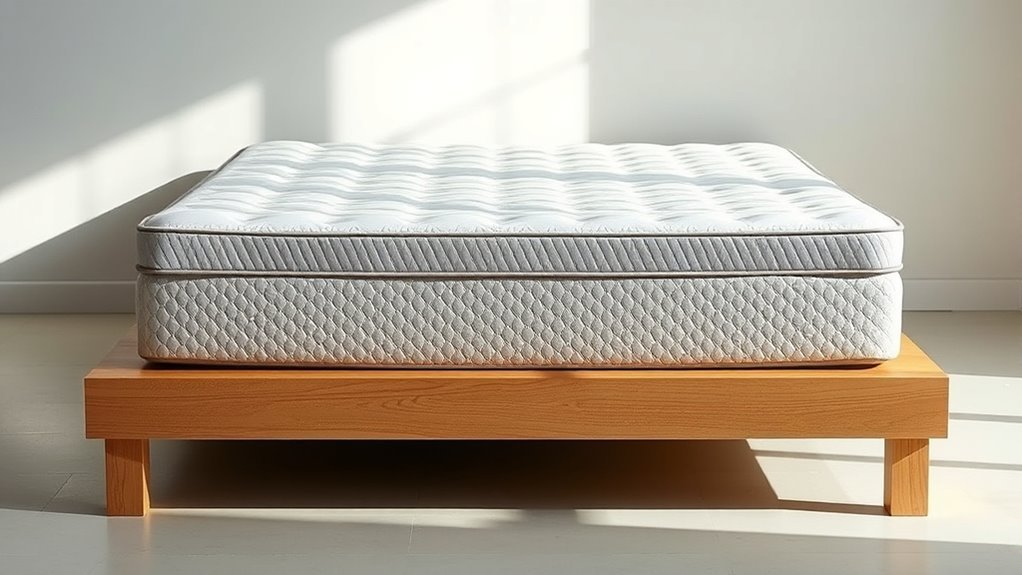
When choosing the right foundation for your mattress, it helps to understand how memory foam mattresses differ from traditional innerspring models. Unlike traditional mattresses, which rely on a box spring to provide bounce and shock absorption, memory foam needs a firm, flat foundation to maintain proper support and contouring.
Using a box spring with memory foam can cause sag, reduce support, and even risk voiding the warranty. Instead, memory foam mattresses perform best on platform beds, solid bases, or reinforced slatted frames that offer rigid, non-flexing support.
These foundations preserve the mattress’s shape and durability, unlike the flexible coil system in box springs designed for innerspring mattresses. So, choosing the right foundation really ensures your memory foam mattress delivers comfort and longevity.
Reasons Memory Foam Mattresses Typically Don’t Need Box Springs
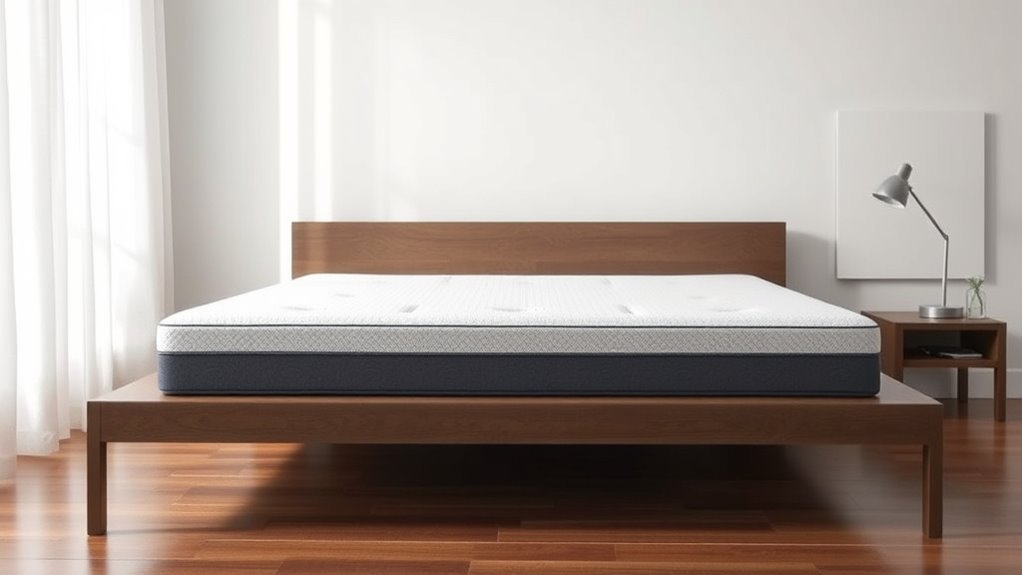
Since memory foam mattresses need a firm, flat surface to keep their shape and support your body properly, they usually don’t require a box spring. Using a box spring can cause unnecessary flexing, which leads to indents and reduces the mattress’s durability.
Instead, memory foam benefits from a foundation that offers proper support with minimal give, like a solid base or a slatted foundation with closely spaced slats. This firm, flat surface prevents sagging and helps the mattress distribute your weight evenly.
Also, a proper foundation enhances airflow beneath the mattress, reducing moisture buildup that a traditional box spring might trap. Following these guidelines guarantees your memory foam maintains its shape, provides lasting comfort, and preserves the mattress’s overall lifespan.
Alternative Foundations Suitable for Memory Foam Mattresses
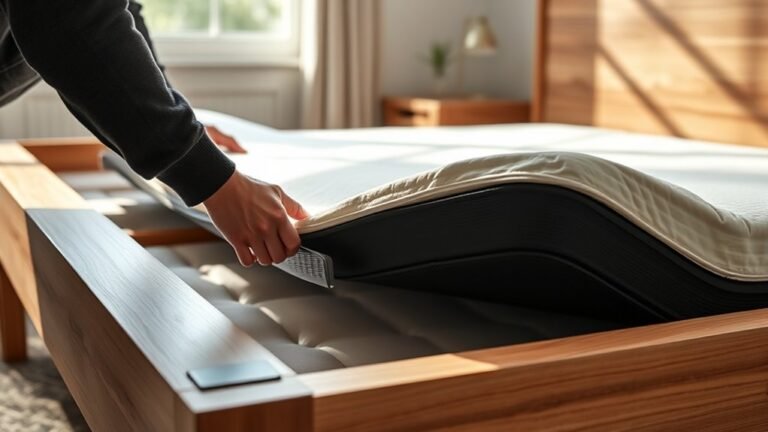
You’ll want a foundation that keeps your memory foam mattress flat and firm to avoid sagging. Platform beds offer solid, even support without the need for a box spring, making them a popular choice.
Solid foundations, like wooden or metal bases, also provide the consistent support your mattress needs to last longer. These options help maintain your mattress’s shape and comfort over time.
Platform Bed Benefits
Because platform beds offer a flat, solid surface with slats spaced less than three inches apart, they provide excellent support and ventilation for your memory foam mattress without requiring a box spring. This spacing guarantees proper ventilation, which helps prevent sagging and extends your mattress’s lifespan.
You’ll find platform beds made from durable materials like wood or metal, giving you sturdy support that lasts. Plus, using a platform bed creates a modern aesthetic by eliminating the extra height of a box spring.
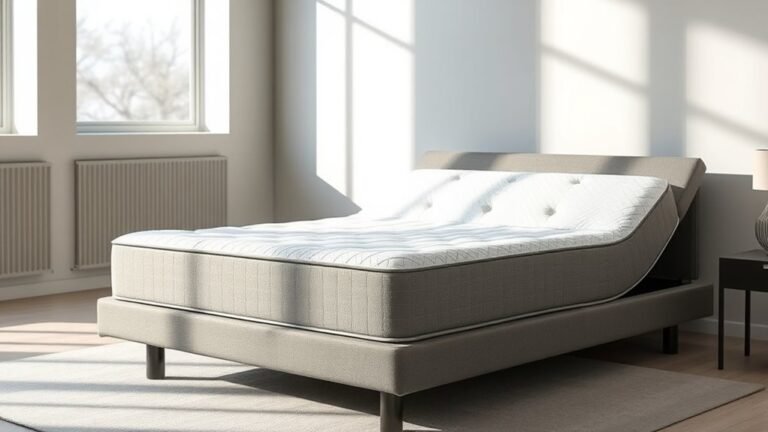
Many models also accommodate adjustable bases, letting you customize your comfort. Additionally, platform beds often come with storage options such as built-in drawers, combining functionality with style.
Choosing a platform bed offers you a reliable, sleek foundation that perfectly suits your memory foam mattress. It’s a smart choice that brings both practicality and a clean look to your bedroom.
Solid Foundation Options
Choosing the right foundation is essential for supporting your memory foam mattress and preserving its shape. Solid foundation options like platform beds, slatted bases, and bunkie boards provide the flat support foam mattresses need.
Platform beds often feature a solid or slatted base with gaps less than 3 inches. This creates a sturdy support surface that prevents sagging.
Bunkie boards offer a low-profile, rigid support made from plywood. They’re perfect for adding flat support on existing frames.
These foundation options form a reliable support system that maintains mattress shape and longevity. Plus, they enhance airflow and reduce moisture buildup.
Potential Risks of Using Box Springs With Memory Foam Mattresses
Although box springs have long been a common foundation choice, using them with memory foam mattresses can lead to several issues. The coil-based support structure in box springs tends to flex excessively, causing sagging that undermines your mattress’s durability and comfort.
These coils create uneven pressure points, which interfere with the memory foam’s ability to contour and provide proper support. Over time, this can damage the support base, reducing the mattress’s lifespan.
Additionally, the coils may generate noise and vibrations, disrupting your sleep’s quietness. An old or worn box spring with dips or sags further compromises the even support system memory foam requires.
Honestly, using a box spring as a support foundation might even void your mattress warranty due to improper support. So, it’s something to think about before making your choice.
Choosing the Best Support System for Your Memory Foam Mattress
When you invest in a memory foam mattress, you need a firm, flat foundation that supports its unique structure without sagging.
Choosing the best support system means selecting a platform bed or slatted frame with slats less than 3 inches apart to provide a solid foundation.
Avoid traditional box springs, as their excessive flexing can damage your mattress and void warranties.
Instead, opt for a bed frame designed to offer consistent bed support and a stable supporting surface.
Adjustable bases and bunkie boards also work well, allowing customizable elevation while maintaining proper support.
Be sure to regularly check your foundation’s condition to make sure it continues to deliver ideal support.
With the right foundation, you’ll preserve your mattress’s contouring benefits and extend its lifespan.
Frequently Asked Questions
Does My Mattress Need a Box Spring?
No, your mattress doesn’t need a box spring. You’ll get better support and durability using a solid platform or slatted base.
Avoid box springs unless the manufacturer specifically says it’s compatible. That way, you can keep your warranty intact.
Why Are People No Longer Buying Memory Foam Mattresses?
You’re not alone if memory foam feels like a heavy anchor; people avoid it because it’s tough to move and handle.
Plus, newer, lighter mattress options make your life easier and sleep more comfortable.
What Is the Best Thing to Put Under a Memory Foam Mattress?
You should put your memory foam mattress on a solid platform, slatted foundation with less than 3 inches between slats, or a bunkie board.
These provide firm, even support and prevent sagging or moisture buildup.
Basically, you want something that keeps your mattress stable and helps it last longer.
Avoid foundations with wide gaps or springs, as they can cause damage over time.
Can I Put a Mattress Directly on a Bed Frame?
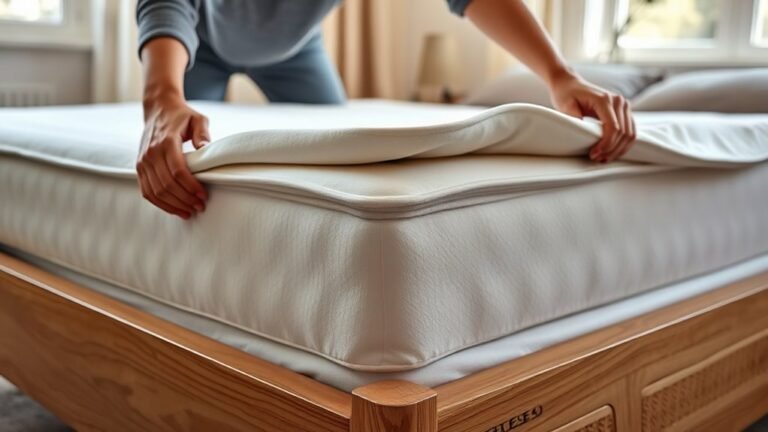
You can put a mattress directly on a bed frame, but make sure the slats are less than 3 inches apart.
This prevents sagging and keeps your mattress supportive and comfortable for years to come.
It’s a simple way to set up your bed without needing a box spring or additional foundation. Just double-check those slats to keep everything in good shape!
Conclusion
Think of your memory foam mattress like a sleek sailboat—it glides smoothly over calm waters with the right support beneath. A box spring is more like a rocky dock, unnecessary and even risky for your boat’s hull.
Instead, choose a solid foundation or platform that lets your mattress breathe and perform at its best. This kind of base provides the stability your memory foam mattress needs without damaging its structure.
By giving your memory foam the right support, you’re setting sail on nights of comfort and restful sleep, free from unnecessary bumps. So, no, memory foam mattresses do not need a box spring. Instead, opt for a sturdy platform or foundation to ensure durability and maximum comfort. This will help your mattress last longer while providing the perfect surface for deep, rejuvenating sleep.