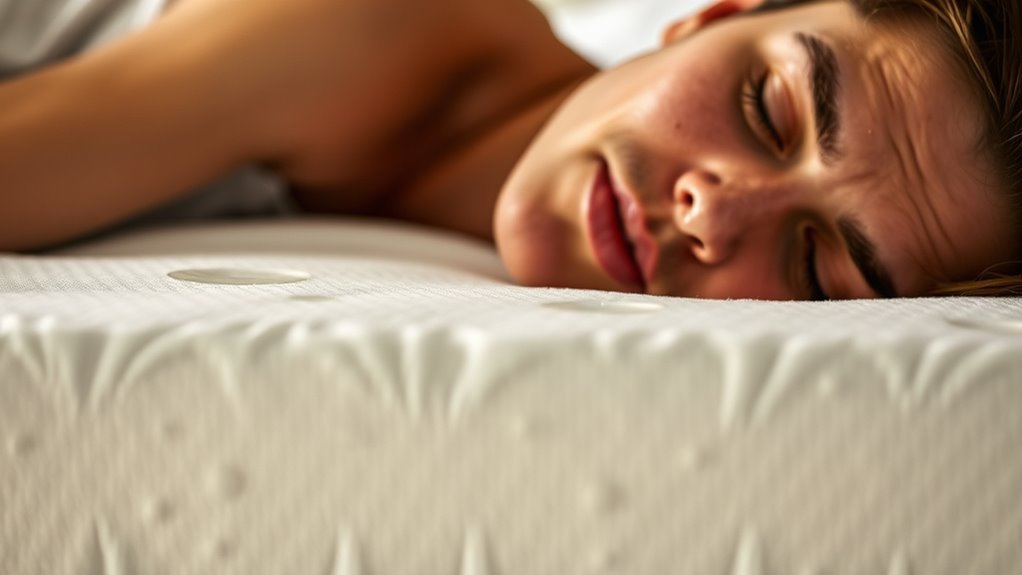
What Do Memory Foam Mattresses Do to Make You Sweat?
Memory foam mattresses trap your body heat because their dense, closed-cell structure limits airflow and molds closely to your body, increasing heat buildup.
This means less air circulates around you, so the warmth your body produces gets trapped.
This close contact and reduced ventilation reflect heat back to your skin, raising your temperature and causing sweating to cool down.
Memory foam’s slow response to pressure keeps warmth near you longer, making it harder to stay cool.
If you’re curious about how bedding, mattress design, and cooling techniques affect this, there’s more to explore.
Understanding these factors can help you find ways to stay comfortable and sweat less at night.
Key Takeaways
- Memory foam’s dense, closed-cell structure limits airflow, trapping heat close to the body and raising skin temperature. This means you might feel warmer than usual when lying down.
- The foam molds tightly to the body, increasing contact area and retaining more body heat. It’s like the mattress hugs you, but that can hold in your warmth.
- Memory foam softens with heat, enhancing its snug fit but reducing ventilation and trapping warm air. So, while it feels comfy, it doesn’t let your body breathe as well.
- High-density foam layers slow heat dissipation, causing surface temperatures to rise and trigger sweating. Your body then tries to cool down by producing sweat.
- Heat buildup from memory foam stimulates the body’s cooling response, leading to night sweats during sleep. That’s why some people wake up feeling sweaty after a night on a memory foam mattress.
How Memory Foam Retains Body Heat
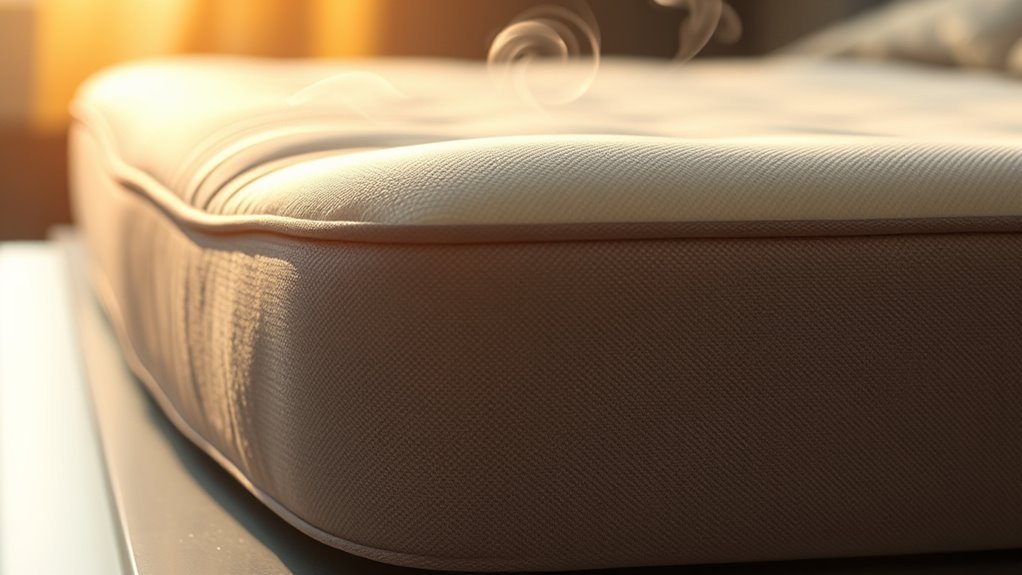
Because memory foam is made from dense, viscoelastic polyurethane with a closed-cell structure, it traps heat instead of letting it escape. When you lie down, the foam molds to your body, increasing contact and transferring your body heat to the mattress.
Memory foam’s dense, closed-cell structure traps heat by molding closely to your body.
Its slow response to pressure means the heat you generate stays near the surface rather than dispersing. Since memory foam lacks breathability, airflow is limited, which prevents heat from escaping and causes noticeable heat buildup.
Additionally, the foam reflects your body heat back toward you, raising your skin temperature. This trapped warmth is why you often feel hot and sweat when sleeping on memory foam.
Understanding how memory foam retains body heat can help you better manage your sleeping environment and stay comfortable at night.
The Role of Density and Material Composition
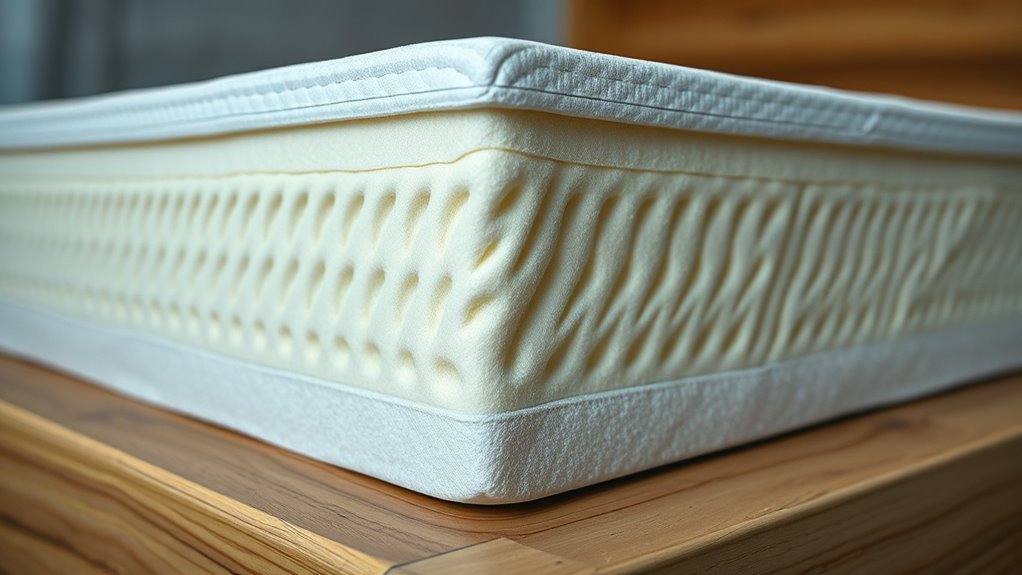
Although memory foam provides excellent support by molding to your body, its density and material composition play a major role in how much heat it retains. Higher density foam has a tightly packed structure that limits airflow, causing more heat to build up around you.
Traditional memory foam’s petroleum-based polyurethane is dense and less breathable, which traps heat between you and the mattress. Because dense foam layers slow heat dissipation, the surface temperature rises as you sleep.
However, variations in material composition, like gel-infused or open-cell designs, work to reduce density and improve airflow. This helps to keep you cooler. Understanding these factors can help you choose a memory foam mattress that manages heat better and reduces sweating.
Body Contouring and Heat Trapping Effects
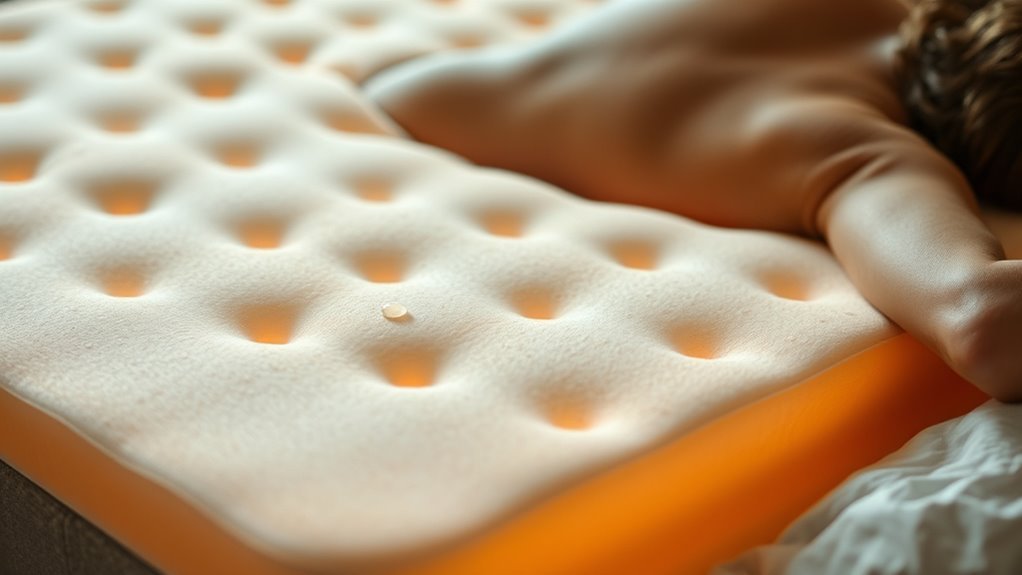
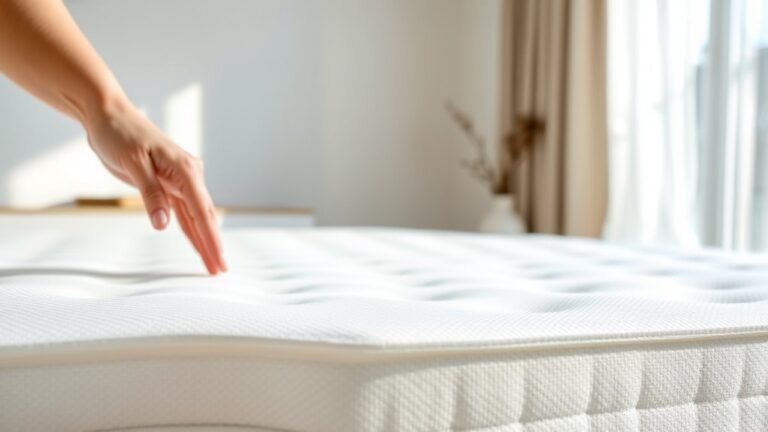
When you lie on a memory foam mattress, it molds closely to your body, increasing contact and trapping heat against your skin. The foam absorbs your body heat, raising the surface temperature and reducing airflow around you.
This heat retention can make you feel warmer and contribute to sweating throughout the night. It’s one of the trade-offs of that cozy, contouring feel.
Heat Retention Mechanism
If you’ve ever noticed waking up feeling hotter than usual on a memory foam mattress, it’s due to how the foam molds to your body and traps heat. The dense, closed-cell structure of memory foam limits airflow, which prevents heat from escaping and causes heat retention to build up around you.
As the foam reacts to your body temperature, it softens and contours more closely, increasing the contact area and trapping warmth between you and the mattress surface. This combination of tight body contouring and poor ventilation makes it harder for heat to dissipate, causing your body temperature to rise.
To cool down, your body produces sweat, which explains why memory foam mattresses can make you sweat during sleep. So, it’s not just you feeling warm—it’s how the mattress works!
Body Heat Absorption
Because memory foam molds closely to your body, it increases the contact area where heat gets trapped between your skin and the mattress. This close contouring means more body heat transfers into the foam, which softens in response.
As it softens, the mattress holds you more snugly, but that also means less airflow and more heat retention. The dense, closed-cell structure of memory foam limits heat dissipation, trapping warmth near your skin.
Since the foam slowly returns to its shape, the heat lingers longer, prolonging the sensation of warmth throughout the night. This buildup of body heat can make you sweat as your body tries to cool down. That’s why memory foam mattresses often feel hotter compared to other bedding options.
Sleep Surface Contact
As your body sinks into a memory foam mattress, the material closely contours to your shape, increasing the area where heat gets trapped between your skin and the surface. This enhanced sleep surface contact means more of your body’s warmth stays locked in.
Because memory foam has a dense, closed-cell structure, airflow is limited, reducing heat dissipation and boosting heat retention. As the foam softens with your body heat, it creates a layer of trapped warm air beneath you.
This combination of increased contact and poor ventilation raises local temperatures, prompting your body to sweat in an effort to cool down. Ultimately, the heightened heat retention and moisture buildup can leave you feeling uncomfortably warm throughout the night.
Common Complaints About Heat and Night Sweats
Though memory foam mattresses offer comfort by molding to your body, they often trap heat and moisture, leading to common complaints about overheating and night sweats. Because memory foam has a dense, closed-cell structure, it holds onto your body heat instead of letting it escape.
Memory foam mattresses provide comfort but often trap heat and moisture, causing overheating and night sweats.
This creates a warm layer between you and the mattress, making you feel hotter as you sleep. Many people find themselves waking up soaked in sweat, as trapped moisture from your body can’t dissipate properly.
Night sweats become a frequent issue, disrupting your rest and leaving you uncomfortable. If you’re sensitive to temperature changes, this heat retention in memory foam can be especially frustrating.
It can cause restless nights and persistent discomfort, making it tough to get a good night’s sleep.
Impact of Reduced Airflow on Mattress Temperature
When airflow reduces in memory foam mattresses, the heat your body generates gets trapped close to the surface, making the sleeping environment warmer than you’d expect. The dense, closed-cell structure limits air circulation beneath and within the mattress, causing reduced airflow.
This limited ventilation prevents your body heat from dissipating efficiently, raising the mattress temperature as the heat accumulates. Because memory foam molds closely to your body, it further blocks airflow pathways, intensifying heat retention.
As a result, the mattress surface becomes noticeably warmer, increasing moisture and sweat buildup. Poor airflow also enhances the foam’s heat reflection properties, making it harder for you to stay cool during the night.
Understanding this impact helps explain why memory foam mattresses often feel hotter than other types. It’s all about the way they trap heat and restrict air movement.
Differences Between Traditional and Gel Memory Foam
If you’ve ever wondered why some memory foam mattresses feel cooler than others, the key lies in their materials and design. Traditional memory foam and gel memory foam differ markedly in how they manage heat.
Traditional memory foam uses dense polyurethane with a closed-cell structure. This traps heat and limits airflow. Not the coolest setup, right?
Gel memory foam contains cooling gel particles. These absorb and disperse body heat more effectively, helping you stay comfy. Plus, gel-infused foam often has an open-cell design, which boosts breathability and cuts down on heat retention.
Some gel memory foam mattresses go a step further and include extra cooling tech, like phase change materials, to keep temperature regulated even better.
Bedding Choices That Affect Heat Retention
Because your bedding directly influences how heat escapes or stays trapped, choosing the right materials can make a big difference in your sleep temperature. Your bedding choices impact heat retention considerably—synthetic fabrics like polyester trap heat and moisture, increasing sweat.
Thick blankets and heavy comforters also insulate your body heat, preventing it from dissipating and making you sweat more. Additionally, high thread count or tightly woven sheets reduce airflow, locking in heat close to your skin.
To combat this, opt for natural fibers such as cotton, linen, or wool. These materials improve breathability and wick moisture away, helping reduce heat buildup.
Avoid layering multiple bedding items or using non-breathable fabrics, as they heighten heat retention and cause discomfort during the night. So, keeping things light and breathable really helps you stay comfortable while you sleep.
Ventilation Techniques to Cool Memory Foam Mattresses
Although memory foam mattresses provide excellent support, they tend to trap heat. So, ventilation becomes essential for a cooler sleep experience.
Memory foam offers great support but often traps heat, making ventilation key for a cooler night’s sleep.
You can improve air circulation and reduce sweating by applying effective ventilation techniques. Try these four tips:
- Use a bed frame with evenly spaced slats to boost airflow beneath your mattress.
- Add a breathable mattress protector to enhance ventilation and help dissipate heat.
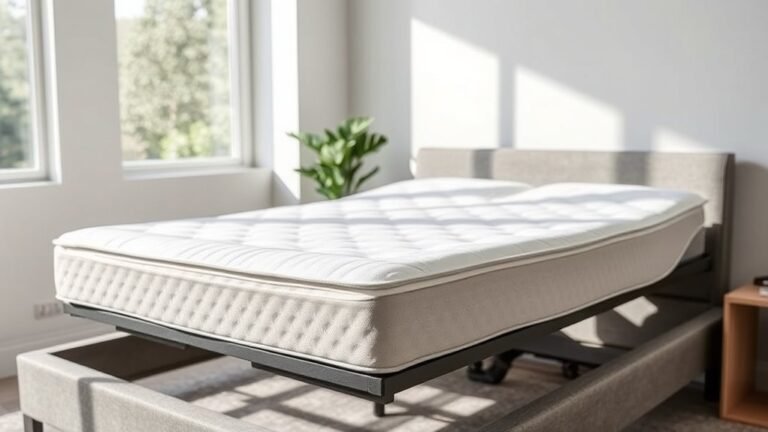
- Elevate the head of your bed with a platform or adjustable base to promote better air exchange.
- Employ fans or forced-air systems like BedJet to actively circulate air around the mattress.
These simple steps can make a big difference in how cool and comfortable you feel at night. Give them a try and enjoy a better sleep!
Mattress Accessories to Reduce Night Sweats
When you add the right mattress accessories, you can markedly reduce night sweats caused by memory foam’s heat retention. Start with breathable cotton or bamboo mattress protectors that wick moisture away from your body, keeping you dry throughout the night.
Opt for natural fiber sheets and blankets, which improve airflow and dissipate heat effectively. Deep pocket sheets made from breathable fabrics fit snugly, allowing better air circulation around the mattress surface.
You can also add cooling mattress toppers or covers made from wool or cooling gels to regulate temperature and minimize moisture buildup. Pair these mattress accessories with fans or cooling systems to enhance airflow further.
This combo creates a dry, comfortable sleep environment and markedly reduces night sweats linked to memory foam mattresses. It’s all about keeping things cool and breathable for a better night’s rest!
Alternative Mattress Options for Hot Sleepers
If you struggle with overheating at night, consider mattresses made from breathable materials like latex or innerspring coils to improve airflow. These options let air circulate better, which helps keep you cooler.
Cooling technologies, such as gel-infused or open-cell foams, also help disperse heat more effectively than traditional memory foam. They work by pulling heat away from your body, so you don’t wake up feeling sweaty.
Choosing the right mattress can make a big difference in reducing night sweats and keeping you comfortable. It’s definitely worth exploring these alternatives if you’re tired of waking up hot and uncomfortable.
Breathable Mattress Materials
How can you stay cool on a memory foam mattress prone to trapping heat? Choosing breathable mattress materials is key.
These materials improve airflow and reduce sweat buildup, making your sleep more comfortable.
Consider these options:
- Gel memory foam – Infused with gel beads, it enhances ventilation and prevents heat buildup compared to traditional memory foam.
- Latex – Naturally breathable, it allows air to circulate freely, keeping you cool all night.
- Wool and natural fibers – These materials wick moisture away from your body, maintaining a drier, cooler sleep environment.
- Breathable covers and toppers – Bamboo or linen fabrics boost airflow and help regulate temperature effectively.
Switching to these breathable mattress materials can markedly reduce night sweating and improve your overall sleep quality.
Cooling Mattress Technologies
Beyond choosing breathable materials, cooling mattress technologies offer innovative solutions for hot sleepers seeking comfort without sacrificing support. Gel-infused memory foam stands out by dispersing heat more effectively than traditional memory foam, helping you stay cooler throughout the night.
Many mattresses also use phase-change materials that absorb and release heat, maintaining a stable, chillier surface temperature as you sleep. Hybrid options combine memory foam with breathable latex or innerspring coils, enhancing airflow and reducing heat buildup.
Advanced designs feature ventilated covers and forced-air systems that actively circulate air, wicking away excess heat and moisture. These cooling mattress technologies let you enjoy the pressure-relief benefits of memory foam without the uncomfortable sweating, making your sleep environment much more comfortable and invigorating.
Frequently Asked Questions
How to Stop Sweating on a Memory Foam Mattress?
You can stop sweating on a memory foam mattress by using breathable bedding like cotton. Adding a cooling gel-infused topper also helps keep things comfortable.
Make sure your room is well-ventilated and cool. Staying hydrated is key too, as it helps regulate your body temperature overnight.
Why Are People No Longer Buying Memory Foam Mattresses?
You’re avoiding memory foam mattresses because they trap heat, making you sweat uncomfortably.
You want cooler, breathable options, so you’re choosing hybrid or gel-infused mattresses instead.
These offer better airflow and a more comfortable night’s sleep.
What Are the Symptoms of Memory Foam Poisoning?
Imagine you wake up dizzy with headaches and throat irritation after sleeping on a new memory foam mattress.
You’ll likely experience nausea, fatigue, or skin rashes, all signs of memory foam poisoning from chemical exposure.
What Type of Mattress Is Best for Preventing Night Sweats?
You’ll want a breathable mattress like latex or a hybrid, which promote airflow and reduce heat.
Gel-infused memory foam or mattresses with moisture-wicking covers also help keep you cool and prevent night sweats effectively.
These options work together to keep your sleeping environment comfortable and dry throughout the night.
Conclusion
Think of your memory foam mattress like a cozy cave—welcoming and snug but trapping warmth like a hidden ember. While it hugs your body, it can hold onto heat, turning your peaceful night into a sweaty ordeal.
But just like opening a cave’s entrance lets fresh air in, choosing breathable bedding and cooling accessories can help you breathe easy and sleep cool. You don’t have to surrender comfort for coolness—you can have both.
Memory foam mattresses tend to retain body heat because the material conforms closely to your shape, limiting airflow. This heat retention can make you sweat during the night. However, by using moisture-wicking sheets, breathable mattress covers, and cooling pillows, you can reduce heat buildup. These simple changes improve ventilation and help regulate your body temperature while you rest. So, even if your memory foam mattress traps warmth, the right bedding and accessories can keep you comfortable and sweat-free throughout the night.