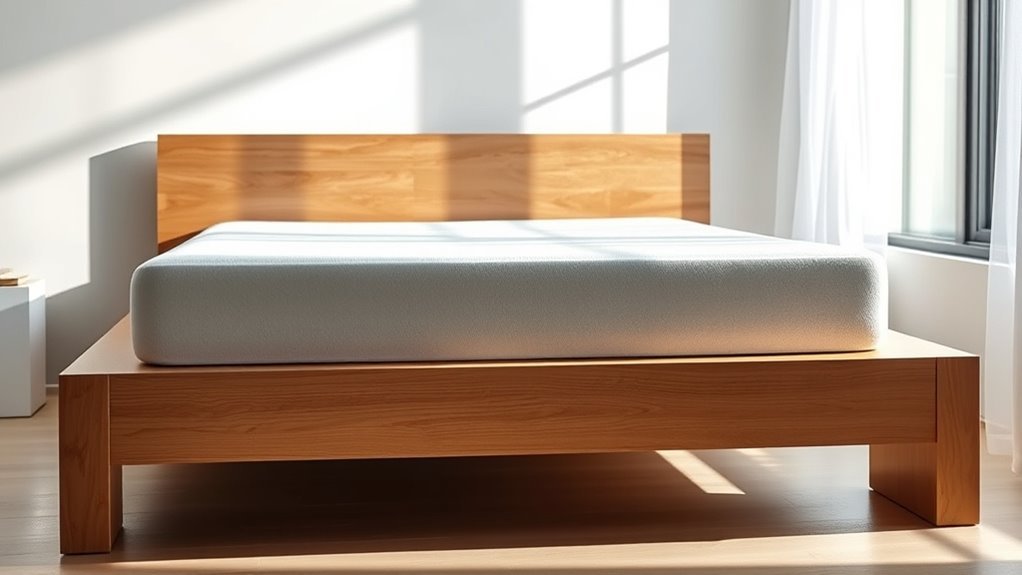
Do Memory Foam Mattresses Need Box Springs?
You don’t need a traditional box spring for your memory foam mattress because it requires firm, flat support to keep its shape and comfort.
Box springs with coils or flexible frames can cause sagging and damage over time. Instead, use a solid platform or a slatted foundation with narrow slats for proper support.
Some modern rigid box springs might work, but always check your mattress guidelines. Keep exploring to find the best foundation for your mattress’s longevity and comfort.
Remember, the right base can make all the difference in how your memory foam mattress performs and how long it lasts.
Key Takeaways
- Memory foam mattresses need a firm, flat support surface instead of the traditional flexible box springs.
- Those old-school box springs with coils can actually cause sagging and might damage your memory foam mattress over time.
- It’s best to go for a slatted foundation where the slats are no wider than 3 inches, or just use a solid platform bed.
- Nowadays, some modern rigid box springs are made specifically for foam mattresses and can work well, as long as they offer firm, even support.
- Choosing the right foundation not only keeps your mattress comfy and durable, but it also helps maintain your warranty coverage.
What Is a Box Spring and How Does It Work?
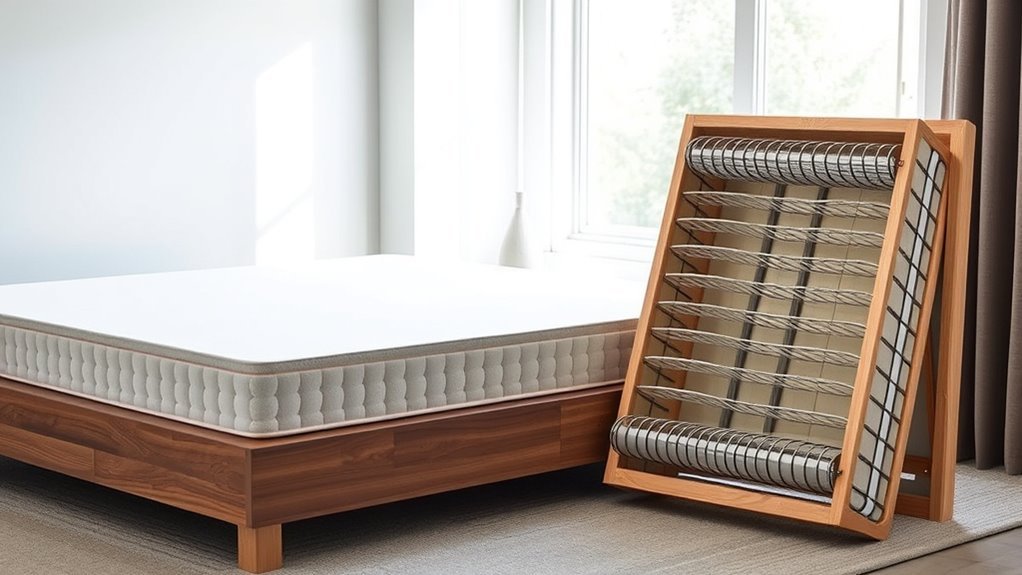
While you might think a box spring is just a simple bed base, it actually plays a crucial role in supporting your mattress. A box spring is a foundation made from a wooden or metal frame with internal coils that provide support and shock absorption.
These coils flex to absorb movement, reduce wear, and add bounce, making them ideal for traditional innerspring mattresses. The box spring also elevates the mattress, improving airflow and comfort.
However, not all mattress types benefit from a box spring; foam and memory foam mattresses often need a different support system. Modern foundations often use slats or solid surfaces instead of coils to offer a more rigid and proper support system.
This ensures compatibility with various mattress types beyond just traditional innerspring models. So, it’s good to know what kind of base works best with your mattress!
Characteristics of Memory Foam Mattresses
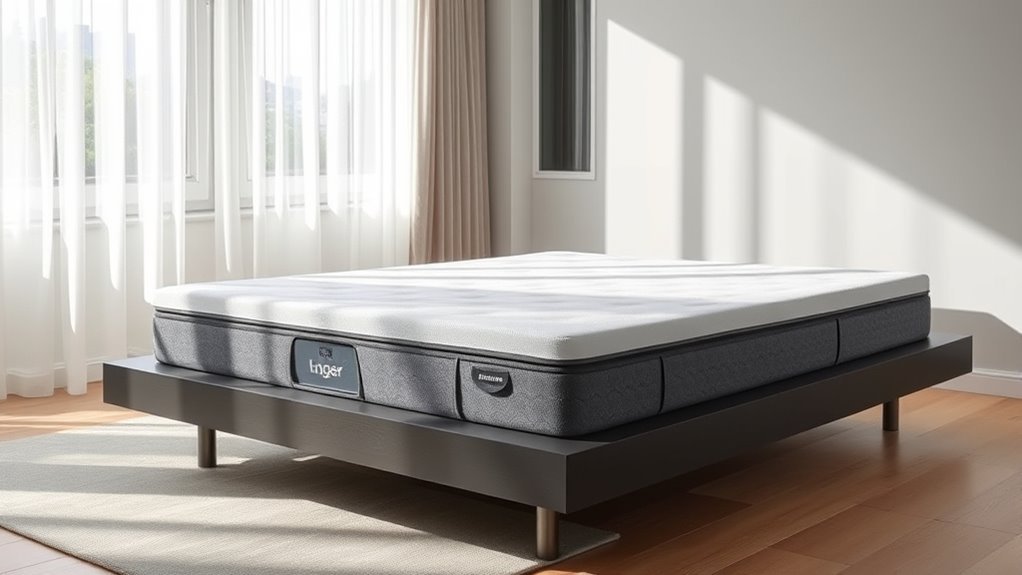
Because memory foam mattresses contour closely to your body, they need a flat, firm support surface to hold their shape properly. Memory foam excels at contouring and relieving pressure points but doesn’t require shock absorption like innerspring mattresses.
Choosing the right foundation type is vital. A solid or slatted foundation with slats no wider than 3 inches gives firm support that preserves mattress integrity.
Using an incompatible bed frame or box spring can cause sagging, reducing comfort and lifespan.
| Characteristic | Recommended Support | Impact on Mattress |
|---|---|---|
| Contouring | Flat foundation | Maintains shape, relieves pressure points |
| Support surface | Slatted foundation (≤3″) | Provides firm support without bounce |
| Shock absorption | Not needed | Prevents sagging, extends mattress life |
Reasons Memory Foam Mattresses Usually Don’t Need Box Springs
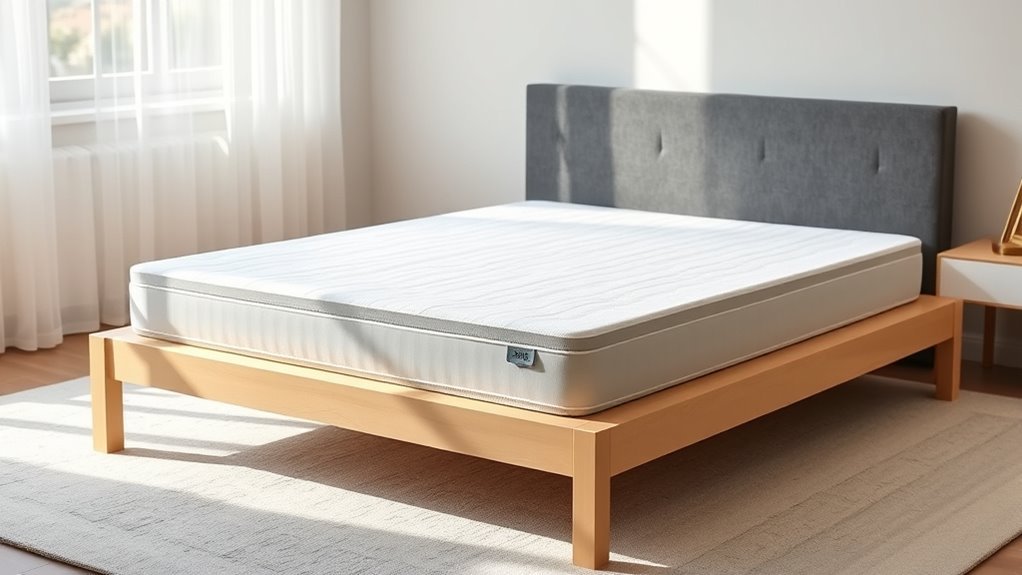
Although box springs have long been standard for traditional mattresses, they usually aren’t necessary for memory foam mattresses. Memory foam requires a firm, flat surface to maintain proper support and avoid sagging.
A box spring, often too flexible, can cause uneven support that damages the mattress over time. Instead, a solid support foundation like a slatted base or platform bed frame provides the stability memory foam needs.
Using a bed frame with a flat surface helps preserve the mattress’s integrity and ensures warranty coverage. Since memory foam mattresses rely on firm support rather than the springy feel of box springs, opting for a solid, level foundation is essential to maximize comfort and durability without risking damage.
Suitable Support Options for Memory Foam Mattresses
To keep your memory foam mattress in top shape, you need a firm, flat, and supportive surface that prevents sagging and preserves its contouring abilities.
A firm, flat surface is essential to prevent sagging and maintain your memory foam mattress’s contouring support.
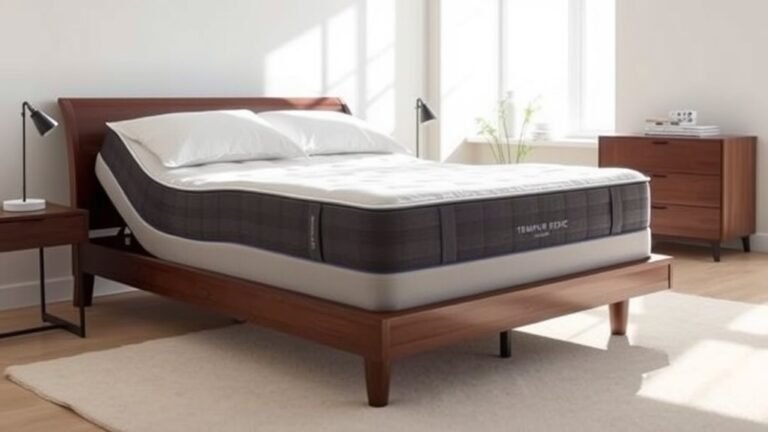
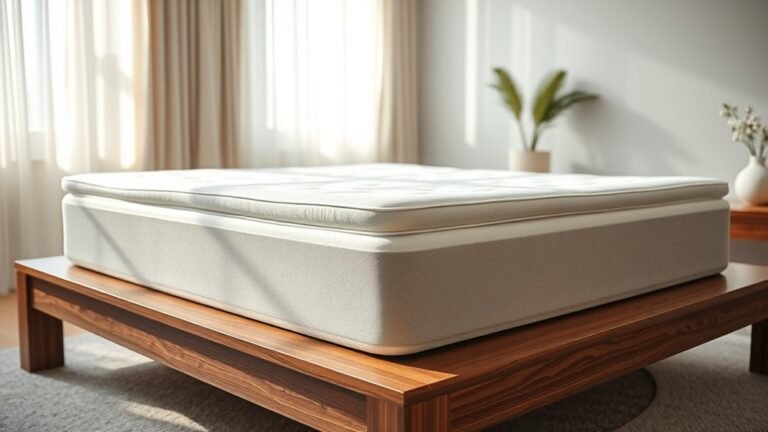
For proper memory foam support, consider a slatted foundation with slats no more than 3 inches apart or a solid platform bed. Both provide a sturdy surface that maintains the mattress’s shape and promotes airflow for memory foam, which helps regulate temperature.
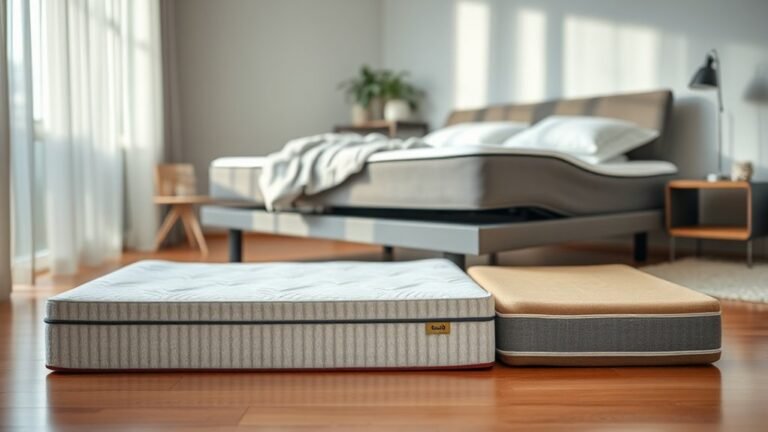
Avoid traditional box springs, as their flexible coils compromise box spring suitability and can lead to uneven support. Instead, a reinforced foundation or bunkie board offers a reliable bed base that enhances durability.
When selecting bed frame options, prioritize those that provide a stable, flat surface. This way, your memory foam mattress gets the proper support it needs to last longer and perform well.
When a Box Spring Might Be Appropriate for Memory Foam Mattresses
While traditional box springs usually don’t provide the firm, flat support memory foam mattresses need, certain types can work well. If you choose a modern box spring labeled as rigid or foam-compatible, it might offer proper support thanks to its flat surface and lack of coils.
A new box spring with a rigid foundation can be a good option, especially if your mattress manufacturer’s support recommendation includes its use. Just be sure to avoid using an old box spring or one with springs, as sagging can damage your mattress.
Alternatively, a slatted foundation with closely spaced slats or a platform bed provides excellent box spring support. Always guarantee the foundation you pick matches the memory foam mattress’s needs to maintain comfort and durability.
Frequently Asked Questions
Do I Need a Box Spring for My Mattress?
You don’t need a box spring for your mattress, especially if it’s memory foam. Just place it on a flat, sturdy surface like a platform bed or slatted frame to guarantee proper support and prolong its lifespan.
This setup works great because it keeps your mattress well-supported and comfy. Plus, it can save you money and space since you skip the box spring altogether.
Why Are People No Longer Buying Memory Foam Mattresses?
You love memory foam’s comfort, yet people avoid it due to heat retention and off-gassing.
While some prefer breathable innersprings, you might find newer foam models with cooling tech worth considering despite mixed opinions.
What Is the Best Thing to Put Under a Memory Foam Mattress?
You should put your memory foam mattress on a solid, flat surface like a platform bed or a slatted foundation with narrow gaps. This helps keep the mattress stable and prevents sagging.
A bunkie board or a sturdy, non-spring foundation works great for support and also allows for good airflow. That way, your mattress stays comfortable and lasts longer.
Does a Memory Foam Mattress Have Springs in It?
No, your memory foam mattress doesn’t have springs inside. It’s made of dense foam layers that contour your body.
Instead of springs, it relies on a firm, flat surface beneath for proper support and comfort. So, it’s all about that solid base rather than coils.
Conclusion
You don’t need a box spring for your memory foam mattress—think of it like using a rotary phone in the age of smartphones. Memory foam relies on a solid, flat foundation to support its unique structure, not the bouncy springs of old.
Opt for a sturdy platform or slatted bed frame instead. However, if your box spring is in great shape and fits well, it can still work. Just remember, modern support options often serve memory foam better.
In summary, memory foam mattresses don’t require a traditional box spring. Instead, a flat, firm base like a platform bed or slatted frame provides the right support. While a good box spring can sometimes suffice, it’s not the ideal choice for memory foam. Choosing the right foundation helps maintain mattress durability and comfort, ensuring the best sleep experience. So, for your memory foam mattress, skip the old-school box spring and go for a modern, supportive base that truly complements its design.