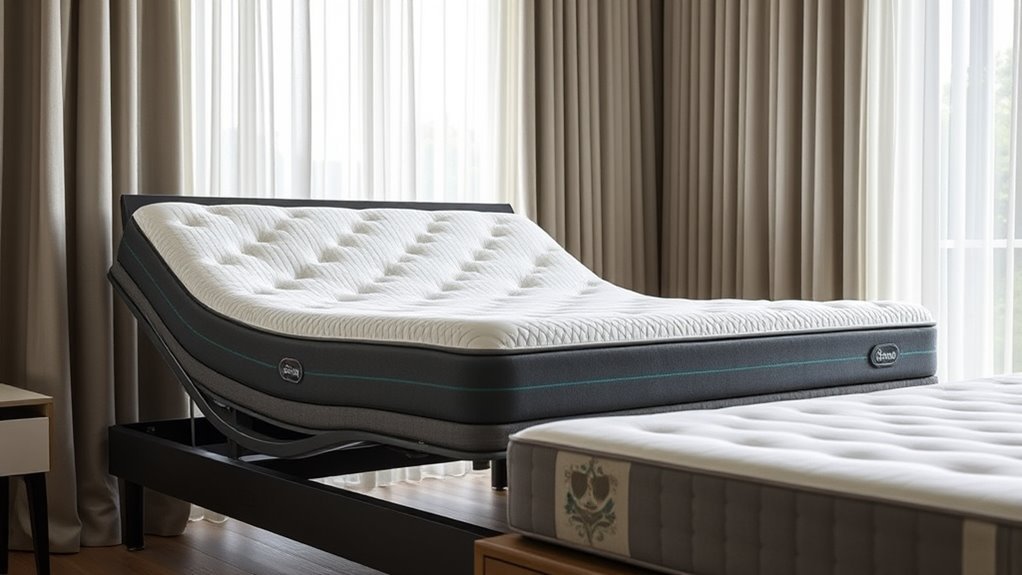
Does an Adjustable Bed Require a Special Mattress?
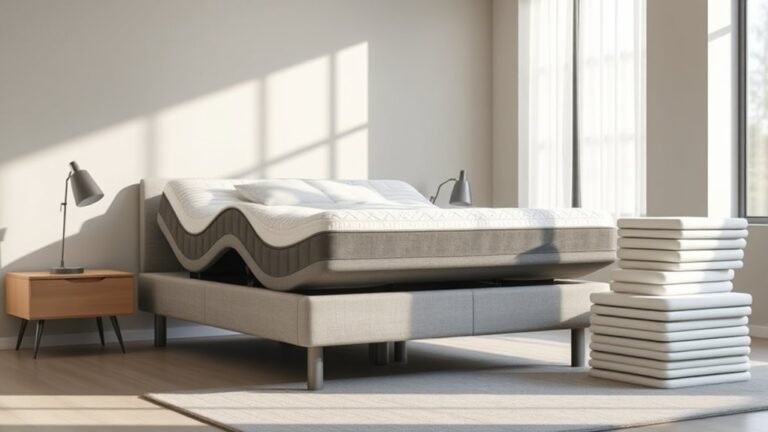
You don’t necessarily need a special mattress for an adjustable bed, but you do want one that bends smoothly with the frame to avoid damage and guarantee comfort.
Mattresses made from memory foam, latex, or hybrid materials typically work best because they offer flexibility and support. Avoid thick, rigid innersprings or overly heavy mattresses.
Choosing the right mattress thickness and type is key to maximizing your adjustable bed’s benefits and improving sleep quality—explore how to pick the perfect match and maintain it.
Key Takeaways
- Adjustable beds work best with flexible mattresses like memory foam, latex, or hybrids designed to bend without damage. These materials easily conform to the bed’s movements, making adjustments smooth and comfortable.
- Mattresses over 14 inches thick or with dense pillow tops may resist bending, which can reduce how well the bed adjusts. So, if your mattress is super thick or plush, it might not work as well with an adjustable base.
- Traditional innerspring mattresses need individually wrapped coils to be compatible with adjustable bases. Without those, the mattress won’t flex properly, and you might end up with discomfort.
- It’s a good idea to check the manufacturer’s specs or test the mattress for flexibility and bending ease before pairing it with an adjustable bed. That way, you avoid surprises and ensure a good fit.
- Using a mattress that isn’t designed for adjustable beds can cause damage over time and reduce both comfort and support. So, picking the right mattress is key to getting the most out of your adjustable bed.
Benefits of Using an Adjustable Bed
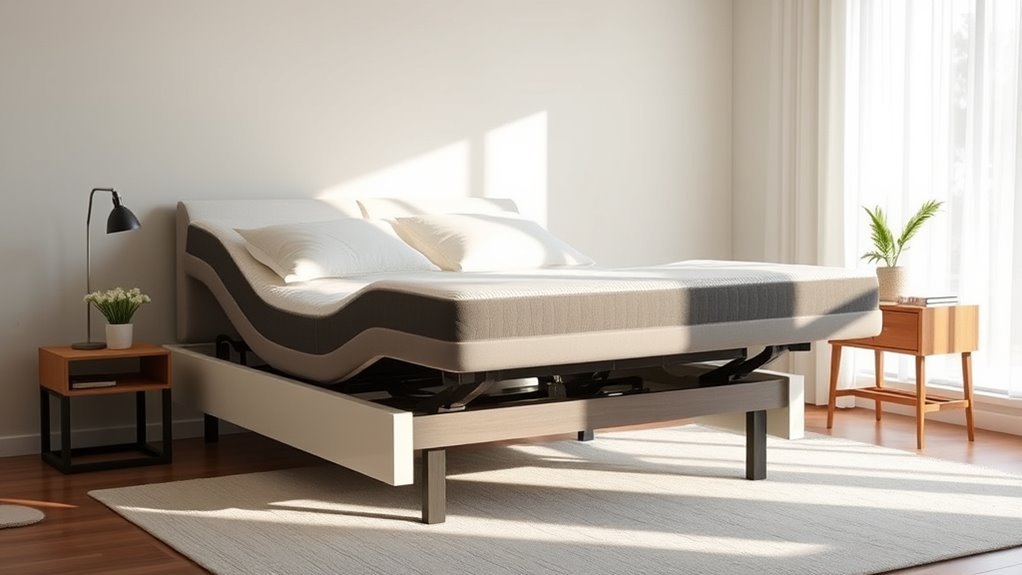
When you use an adjustable bed, you can easily customize your sleep position to boost comfort and support. The benefits of an adjustable bed go beyond simple convenience—it allows you to elevate your head or feet, improving circulation and reducing issues like snoring or acid reflux.
This flexibility also helps relieve back pain and pressure points by providing targeted ergonomic support. Whether you’re reading, watching TV, or just relaxing, an adjustable bed enhances your overall comfort.
To fully enjoy these benefits, you’ll need compatible mattresses designed to bend and flex without damage. Choosing the right mattress ensures your adjustable bed functions properly and maximizes comfort, making your sleep experience truly personalized and health-enhancing.
Key Factors When Choosing a Mattress for an Adjustable Base
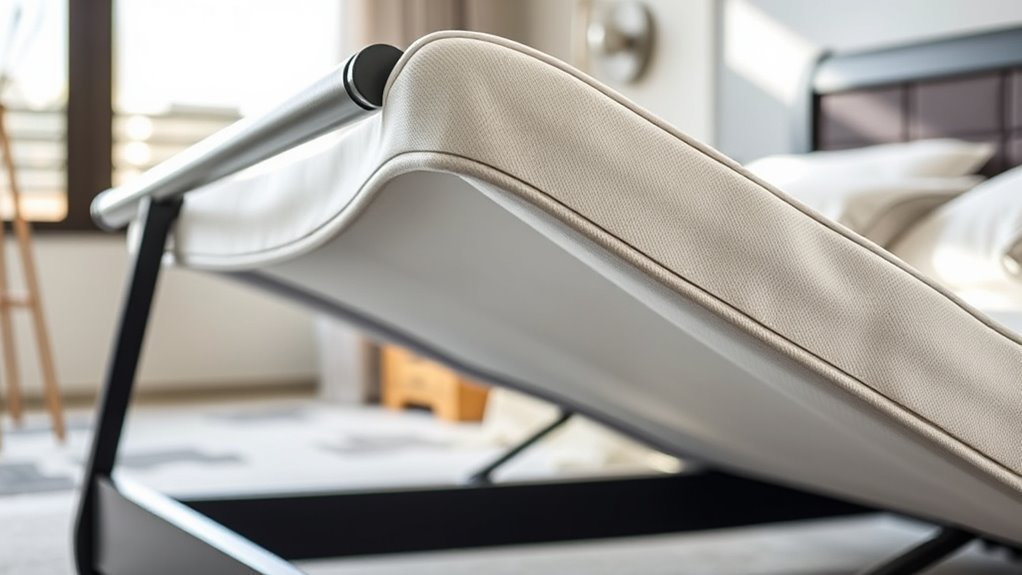
Since not every mattress works well with an adjustable base, you’ll need to focus on key factors to guarantee compatibility and comfort. An adjustable mattress must offer flexibility and bend without harm.
Thickness matters—typically between 10 to 14 inches—to avoid strain on the frame. Materials like memory foam, latex, and hybrids provide durability and adaptability.
Always check manufacturer specs to ensure the mattress suits an adjustable base. It’s worth double-checking because not all mattresses labeled as adjustable-friendly perform the same.
| Factor | Recommendation | Reason |
|---|---|---|
| Flexibility | High | Bends without damage |
| Thickness | 10-14 inches | Ensures proper movement |
| Material | Memory foam, latex, hybrid | Durable and flexible |
| Compatibility | Confirm via manufacturer | Guarantees designed use |
Compatibility of Different Mattress Types With Adjustable Beds
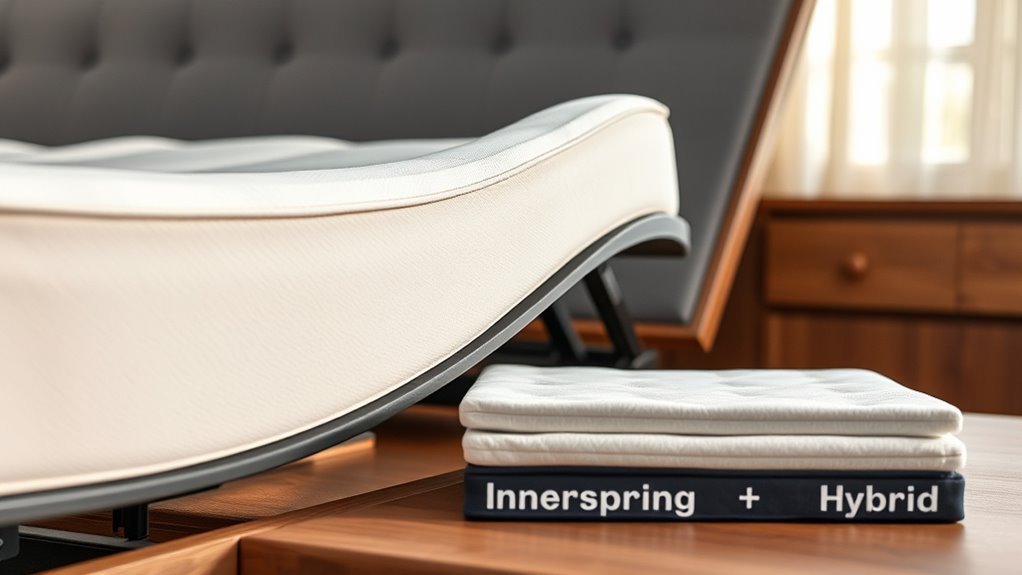
Although many mattress types claim compatibility, not all work well with adjustable beds. When choosing adjustable mattresses, you’ll find memory foam, latex, hybrid, and inflatable options generally excel because they bend easily without damage.
Hybrid mattresses, combining coils with foam layers, offer both support and flexibility, enhancing compatibility. On the other hand, traditional innerspring mattresses with rigid coils or thick pillow tops usually lack the flexibility needed for smooth movement.
Also, mattresses thicker than about 13 inches may struggle to bend properly on adjustable bases. The type of coils—like individually wrapped ones—affects how well the mattress adapts to adjustments.
Always check manufacturer specs to ensure your mattress is designed for adjustable beds, guaranteeing maximum comfort and durability. It’s worth the extra step to make sure your mattress and base work well together!
Advantages of Foam, Latex, and Hybrid Mattresses
You’ll appreciate how foam mattresses flex easily to match your adjustable bed’s movements, giving you smooth comfort. They really move with you, making every adjustment feel natural.
Latex mattresses stand out for their durability, handling repeated bending without losing shape. So, if you want something that lasts and keeps its form, latex is a great pick.
Meanwhile, hybrid mattresses offer a perfect balance of coil support and foam or latex adaptability. This means you get solid support no matter how you adjust your bed, combining the best of both worlds.
Foam Mattress Flexibility
When you pair an adjustable bed with a foam, latex, or hybrid mattress, you get unmatched flexibility that protects your mattress from damage. Foam mattresses, especially memory foam, offer excellent pliability by bending easily without cracking or losing support.
Memory foam conforms closely to your body contours, allowing smooth adjustments as your bed changes position. Hybrid mattresses blend foam or latex comfort layers with pocketed coils, providing both support and adaptability ideal for adjustable bases.
Unlike traditional innerspring mattresses with rigid coils, foam and latex materials are designed to withstand repeated bending, maintaining their shape and comfort over time. This flexibility ensures your mattress stays durable while delivering personalized comfort.
Latex Mattress Durability
Latex mattresses stand out for their impressive durability, making them a top choice alongside foam and hybrid options. Thanks to their natural elasticity, latex durability often exceeds 15-20 years, resisting sagging and maintaining support over time.
This longevity matches or even surpasses memory foam longevity, which is also known for lasting well with proper care. When paired with an adjustable bed, latex mattresses offer excellent compatibility—they bend easily without losing shape or comfort.
Plus, their natural resistance to mold, dust mites, and bacteria keeps them hygienic long-term. If you want a mattress that holds up through frequent adjustments while delivering lasting comfort, latex is a reliable pick that balances durability and flexibility better than many foam-only alternatives.
Hybrid Mattress Support
How do foam, latex, and hybrid mattresses enhance support on adjustable beds? These mattresses are flexible enough to bend smoothly, making them highly compatible with adjustable bases.
Hybrid mattresses, in particular, blend foam or latex comfort layers with pocketed coil support. This combo offers a perfect balance of flexibility and durability.
Latex mattresses respond quickly to movement, allowing your bed to adjust without damaging the material. Because these mattress types weigh less and are less rigid than traditional options, they reduce stress on your adjustable bed’s mechanism, prolonging its lifespan.
Their design supports seamless articulation, letting you easily switch positions for maximum comfort. Choosing hybrid mattresses ensures you enjoy both supportive comfort and the full benefits of your adjustable bed’s features.
How to Identify if Your Mattress Works With an Adjustable Base
To see if your mattress works with an adjustable base, start by checking the tag for manufacturer details and compatibility info. You can also research the model online or contact the manufacturer directly to confirm.
Finally, try gently bending or flexing your mattress to test its flexibility without causing damage. This way, you’ll get a good idea if it can handle an adjustable base without any issues.
Mattress Tag Check
Where can you find essential details about your mattress’s compatibility with an adjustable base? Start by checking the mattress tag. This tag usually includes the manufacturer, model, and key info about whether the mattress is designed for an adjustable bed.
Look for terms like “compatible,” “flexible,” or symbols indicating adjustable base approval. If the tag isn’t clear or is missing, contact the retailer or manufacturer to confirm. Don’t forget to read the warranty details on the tag; many warranties require using an adjustable-friendly mattress to stay valid.
| Tag Detail | What to Look For | Action if Unclear |
|---|---|---|
| Manufacturer | Name and model | Contact manufacturer |
| Compatibility | “Adjustable bed” mention | Verify with retailer |
| Flexibility | Flexible or durable note | Confirm with manufacturer |
| Symbols/Codes | Adjustable base symbols | Check manufacturer’s guide |
| Warranty Info | Adjustable mattress use | Read warranty carefully |
Manufacturer Compatibility Info
Although mattress tags provide some clues, you’ll need to look up your mattress’s manufacturer and model to confirm if it’s designed for adjustable bases. Not all mattresses handle bending well, so checking the manufacturer’s specifications guarantees compatibility.
Mattresses made from memory foam, latex, or those with individually wrapped coils usually offer the flexibility needed. To be certain, contact the mattress manufacturer or retailer directly and ask about your specific model’s suitability with adjustable frames.
This step helps you avoid damage or loss of support. Knowing your mattress’s compatibility before use keeps your investment safe and ensures smooth movement when adjusting your bed to different positions.
Physical Flexibility Test
Once you’ve confirmed your mattress’s compatibility with adjustable bases from the manufacturer, you can perform a simple physical flexibility test yourself. This helps ensure your mattress offers the right flexibility and support when paired with an adjustable bed.
Start by gently pushing or flexing your mattress to see if it bends easily without cracking or feeling stiff. Then, slowly raise the head and foot sections of the adjustable base while observing if the mattress maintains consistent support and flexibility.
Mattresses made of foam, latex, or with individually wrapped coils usually adapt better than traditional innerspring types.
To test your mattress’s compatibility, try these steps:
- Gently flex the mattress by hand to check for stiffness or cracking
- Observe support while adjusting the base’s head and foot sections
- Avoid mattresses with thick pillow tops or dense materials that resist bending
Thickness and Weight Considerations for Adjustable Bed Mattresses
When choosing a mattress for your adjustable bed, you’ll want to focus on both thickness and weight to make certain of smooth movement and proper support. Aim for a mattress thickness between 10 to 14 inches; this range offers the right balance of flexibility and comfort.
Mattresses thicker than 14 inches tend to be too stiff or heavy, limiting the base’s adjustability. Conversely, mattresses under 10 inches might lack sufficient support, especially if you sleep on your side.
Also, keep your bed’s weight capacity in mind—using a mattress that exceeds it can strain or damage the mechanism. Prioritizing both mattress thickness and weight ensures compatibility with your adjustable base, helping maintain ideal functionality and extending the life of your adjustable bed setup.
Tips for Maintaining Mattresses on Adjustable Bases
To keep your adjustable bed mattress performing well, rotate it 180 degrees every 3 to 6 months to guarantee even wear. This simple step helps extend the life of your compatible mattress on an adjustable bed base.
When maintaining mattresses, always use a mattress cover designed to move with the bed, preventing slipping or bunching.
Here are key tips for maintaining mattresses on adjustable bases:
- Choose a flexible, compatible mattress that won’t lose support with frequent adjustments.
- Avoid flipping the mattress unless it’s specifically made to be double-sided.
- Inspect your mattress regularly for signs of wear or deformation and replace it if it no longer adapts well to your adjustable bed base.
These practices keep your mattress comfortable and durable. Give them a try to make sure your mattress lasts as long as possible!
Enhancing Sleep Quality With the Right Mattress and Adjustable Bed
How can you boost your sleep quality using an adjustable bed? The secret lies in pairing it with compatible mattresses designed to flex and move without damage. Most memory foam, hybrid, and latex mattresses work well because they offer flexibility and durability. They usually come within the ideal 10-14 inch thickness range.
Avoid traditional innerspring mattresses unless they have individually wrapped coils. These coils adapt better to the bed’s adjustments. Always check the mattress label and manufacturer specs to ensure compatibility with your adjustable bed.
Choosing the right mattress not only protects your investment but also enhances sleep quality by providing tailored support and comfort. Plus, it moves seamlessly with your bed’s position changes. This perfect match helps you wake up refreshed and free from aches.
Frequently Asked Questions
Can I Put a Regular Mattress on an Adjustable Bed?
Yes, you can put a regular mattress on an adjustable bed if it’s flexible enough, like memory foam or hybrid.
Just avoid thick or rigid innerspring mattresses that won’t bend properly or could get damaged.
It’s all about the mattress’s ability to flex with the bed’s movements. So, choosing the right type makes all the difference!
What Are the Downsides of Using Adjustable Beds?
Like a telegram from the past, adjustable beds can be pricey, noisy, and tricky to get in and out of, especially for elders.
You’ll also face limited mattress choices and costly repairs, which might disrupt your peace.
It’s something to think about before making the jump!
Can You Put a 14 Inch Mattress on an Adjustable Bed?
Yes, you can put a 14-inch mattress on an adjustable bed if it’s flexible, like memory foam or latex.
Just make sure it’s not too dense or thick to avoid damaging the bed’s mechanism or reducing flexibility.
It’s all about making sure the mattress bends easily with the adjustable base. That way, you get the comfort you want without any issues.
What Is the Best Type of Mattress to Use on an Adjustable Bed?
Think of your mattress as the dance partner to your adjustable bed—memory foam, latex, or hybrids bend gracefully without breaking.
Choose one 10-14 inches thick with high-density foam or wrapped coils for smooth, lasting comfort.
This way, your bed moves easily and you stay comfy all night long.
Conclusion
Choosing the right mattress for your adjustable bed is like finding the perfect dance partner—flexible, supportive, and in sync with every move. You don’t necessarily need a special mattress, but picking one designed to bend and breathe with your base will elevate your sleep experience.
Think about factors like thickness, weight, and material. These elements help ensure the mattress works well with your adjustable frame, allowing it to move smoothly without damage.
Ultimately, the best mattress for an adjustable bed is one that adapts to every twist and turn while providing the comfort and support you need. By choosing a mattress suited for adjustability, you’ll enjoy restful nights and wake up refreshed. So, while a special mattress isn’t mandatory, selecting one made for adjustable beds can truly transform your sleep into a comfortable, restful sanctuary.