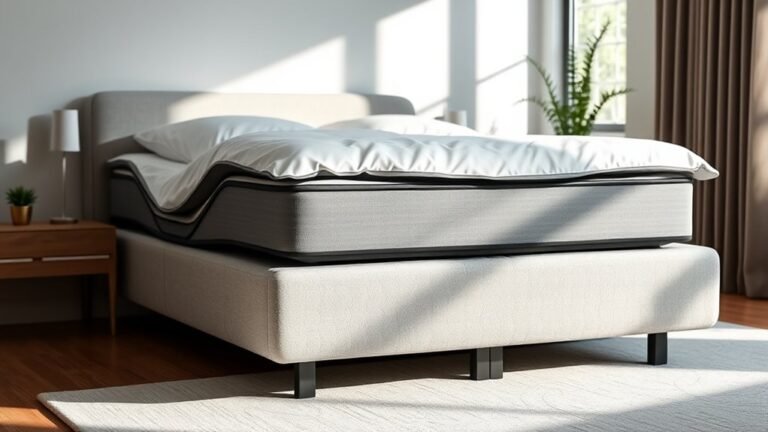
Does an Adjustable Bed Help With Snoring?
Yes, an adjustable bed can help you reduce snoring by elevating your head and opening your airway. Raising your head between 10 to 30 degrees prevents throat tissues from collapsing, improving airflow and lessening vibrations that cause snoring.
This simple adjustment can make a big difference in how well you breathe at night.
Adjustable beds also let you tailor your position for comfort and better breathing, with quiet motors and easy controls.
Plus, they offer benefits like reduced acid reflux and improved circulation.
You’ll find more about how these beds tackle snoring and boost sleep quality ahead.
Key Takeaways
- Elevating the head on an adjustable bed keeps airway tissues from collapsing, reducing snoring intensity and frequency.
- Adjustable beds allow customizable head elevation (10-30 degrees) to optimize airflow and minimize airway obstruction.
- Real-time position adjustments outperform traditional remedies by consistently improving airway opening during sleep.
- Elevating the head also alleviates acid reflux, which can worsen snoring symptoms.
- Quiet motors and wireless remotes enable convenient, noise-free position changes that maintain sleep quality.
Pretty neat, right? Being able to tweak your sleeping position easily can make a big difference in how well you breathe and sleep through the night.
Understanding Snoring and Its Causes
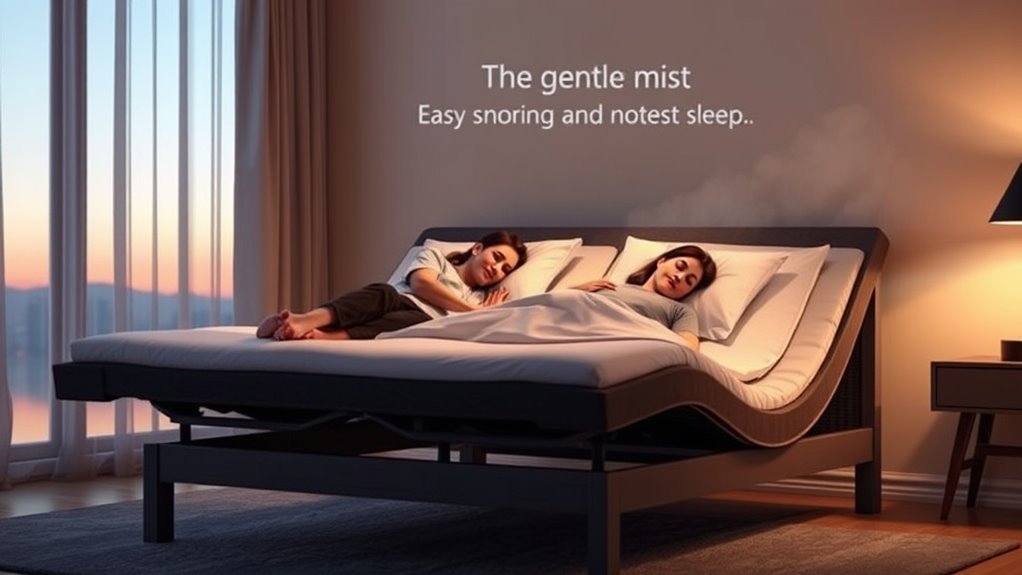
Although you might think snoring is just a minor annoyance, it actually happens when airflow causes your throat tissues—like the tongue and soft palate—to vibrate during sleep. Snoring often signals obstructive sleep apnea, a condition where your airway repeatedly blocks, disrupting your rest.
Your sleeping position plays a big role: lying on your back can worsen snoring because gravity pulls the tongue and soft tissues into your airway. That’s where head elevation helps—raising your head can reduce tissue obstruction and improve airflow.
Other factors like nasal congestion or excess throat tissue can make snoring worse. By understanding these causes, you can see why adjusting your sleeping position or using head elevation might ease snoring and lead to better sleep quality.
Health Effects of Chronic Snoring

If you’re dealing with chronic snoring, you’re likely experiencing disrupted sleep that leaves you tired during the day. Over time, this can lead to serious health issues like high blood pressure and even increase your risk of stroke.
Understanding these risks is key to finding effective solutions that protect both your sleep quality and long-term health. So, don’t just brush off snoring as a nuisance—it’s worth paying attention to.
Snoring and Sleep Quality
When you or your partner suffer from chronic snoring, your sleep quality takes a serious hit. Snoring and sleep disruptions can leave you both feeling exhausted and unfocused during the day.
Using an adjustable bed base with head elevation can markedly improve your sleep quality by reducing airway obstruction. Here’s how chronic snoring affects you:
- Causes frequent awakenings, disrupting deep sleep cycles.
- Leads to daytime fatigue and impaired concentration.
- Increases risks of cardiovascular issues like hypertension.
- Often signals underlying sleep disorders such as apnea.
Long-Term Health Risks
Because chronic snoring disrupts your breathing and sleep patterns, it poses serious long-term health risks that go beyond mere annoyance. Persistent snoring often leads to obstructive sleep apnea, a sleep disorder that increases your risk of cardiovascular problems like hypertension, stroke, and heart disease.
The repeated airway obstruction reduces oxygen levels, causing sleep fragmentation and contributing to metabolic disorders such as diabetes. Over time, these disruptions can impair your cognitive function, affecting memory and concentration during the day.
Untreated snoring also raises the likelihood of mood disorders like depression and anxiety due to poor sleep quality. Recognizing these health risks is vital, and addressing snoring early can help prevent these serious complications linked to chronic sleep disorders.
How Elevating the Head Reduces Snoring

When you elevate your head while sleeping, gravity is less likely to pull your tongue and soft palate back into your airway. This keeps it clearer and helps reduce the obstruction that causes snoring by allowing air to flow more freely.
Airway Clearance Benefits
Although snoring often feels unavoidable, elevating your head with an adjustable bed can substantially clear your airway and reduce snoring. This head elevation plays a key role in airway clearance, helping prevent obstructions that contribute to snoring and even obstructive sleep apnea.
Here’s how it benefits you:
- Keeps the tongue and soft palate from collapsing into the airway, reducing blockages.
- Increases the diameter of your upper airway for smoother airflow.
- Lowers airway vibration, cutting down snoring intensity and frequency.
- Reduces pressure on nasal passages and throat tissues, improving breathing.
Gravity’s Role in Snoring
Since gravity pulls relaxed tissues in your throat backward during sleep, it often narrows your airway and triggers snoring.
When you lie flat, gravity causes your soft tissues, like the tongue and soft palate, to collapse and obstruct your airway.
Head elevation with an adjustable bed reduces this gravitational pull by raising your head 20-30 degrees, keeping these tissues from falling back.
This tilt decreases airway obstruction and prevents airway vibration, which cuts down the intensity and frequency of snoring.
By using head elevation, you help maintain a clearer airway, making it easier to breathe and reducing the chances of snoring caused by gravitational tissue collapse.
Gravity plays a key role, but adjusting your sleeping position can effectively counteract its effects.
Types of Adjustable Beds Suitable for Snoring Relief
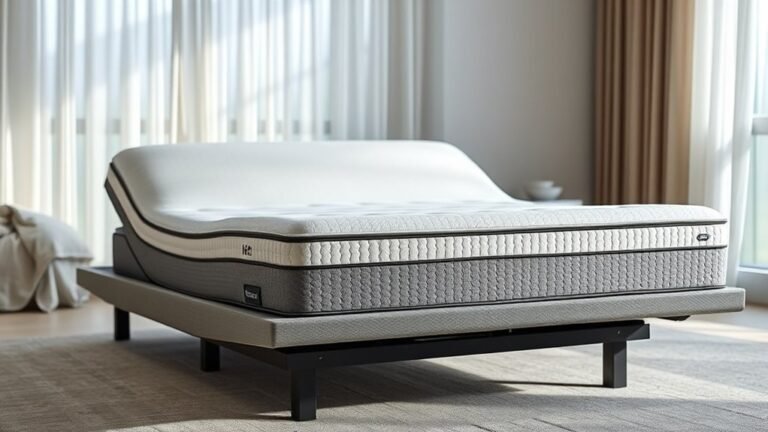
If you want to reduce snoring effectively, choosing an adjustable bed with proper head elevation is key. An adjustable base that lifts your head between 10 to 30 degrees helps keep airways open for snoring relief.
Here are four types you should consider:
- Basic adjustable bases with manual or wireless controls for head elevation.
- Models featuring split configuration, letting you and your partner adjust independently for personalized comfort.
- Beds with preset positions like Zero Gravity to optimize sleep posture effortlessly.
- Adjustable bases compatible with memory foam, hybrid, or latex mattresses, ensuring effective snoring relief.
Selecting the right type tailored to your needs improves your chances of reducing snoring and enhancing sleep quality. So, take your time choosing what fits you best!
Features to Look for in an Adjustable Bed for Snoring
Choosing the right type of adjustable bed sets the foundation, but knowing which features to prioritize will help you maximize snoring relief. Look for adjustable bases with head elevation capabilities between 10 and 30 degrees, as this range effectively supports snoring reduction.
Prioritize adjustable beds with head elevation of 10 to 30 degrees for effective snoring relief.
A wireless remote with preset positions makes adjusting and maintaining your ideal angle effortless. Ensure the bed uses quiet motors to prevent sleep disturbances that could worsen snoring.
Additional perks like massage settings or USB ports improve comfort without sacrificing function. Finally, confirm the adjustable bed’s compatibility with your mattress type—whether memory foam or hybrid—to guarantee proper support and effective elevation.
Prioritizing these features helps you create the perfect environment for peaceful, snore-free sleep.
Proper Positioning and Angle for Snoring Reduction
When you elevate the head of your adjustable bed between 20 and 30 degrees, you help keep your airway open and reduce the chance of soft tissues collapsing into your throat. Proper positioning is key for effective snoring reduction, and an adjustable bed gives you precise control over head elevation.
To optimize your setup, follow these steps:
- Adjust the head elevation to between 20 and 30 degrees to open your airway.
- Elevate both your head and shoulders to prevent airway blockage by the tongue or soft palate.
- Experiment with angles as low as 12 degrees, which studies show can reduce snoring intensity.
- Use your adjustable bed’s customizable settings to find the most comfortable, snore-minimizing position.
This targeted positioning ensures maximum snoring reduction without neck strain.
Comparing Adjustable Beds With Traditional Snoring Solutions
Although traditional snoring solutions like anti-snore pillows and oral appliances can help, adjustable beds offer a more effective and customizable approach. You can elevate your head between 10 and 30 degrees, which opens your airway and reduces snoring more consistently throughout the night.
Adjustable beds provide continuous, precise head elevation, unlike static traditional solutions.
| Feature | Adjustable Beds |
|---|---|
| Head Elevation | 10-30 degrees, adjustable |
| Snoring Reduction | Up to 7%, consistent |
| Customization | High, angle adjustments |
| Integration | Snoring detection tech |
With adjustable beds, you get a personalized snoring reduction solution that really outperforms many traditional options. It’s all about finding what works best for you and having the flexibility to adjust whenever you need.
Additional Benefits of Adjustable Beds Beyond Snoring
Since adjustable beds let you change positions easily, they offer benefits far beyond just reducing snoring. By allowing you to elevate the head, an adjustable bed can help alleviate acid reflux and heartburn, improving sleep quality.
Plus, it enhances sleep comfort by reducing pressure points and supporting better circulation. Here are four additional benefits you’ll appreciate:
- Elevate the legs to decrease swelling and improve blood flow, especially useful if you suffer from edema.
- Customize positions to aid injury recovery by targeting specific body areas.
- Enjoy built-in massage features that relax muscles and reduce tension overnight.
- Reduce restless leg syndrome symptoms through improved circulation.
These features make adjustable beds a smart choice for overall sleep health, not just snoring relief.
Tips for Choosing the Best Adjustable Bed for Your Needs
Choosing the best adjustable bed for your needs means focusing on features that enhance both comfort and functionality.
Prioritize an adjustable bed with a head elevation range of 10-30 degrees, as this effectively reduces snoring by opening airways.
Check that the bed frame supports your mattress type and includes quiet motors for noise-free adjustments.
Wireless remotes and preset positions make customizing your sleep effortless.
Extra perks like massage settings or USB ports add convenience.
| Feature | Importance |
|---|---|
| Head Elevation | 10-30° range reduces snoring |
| Remote Control | Wireless with presets for ease |
| Bed Frame & Motor | Mattress compatibility and quietness |
These tips ensure you pick an adjustable bed that fits your lifestyle and helps minimize snoring.
Frequently Asked Questions
What Are the Downsides of Using Adjustable Beds?
Adjustable beds can be pricey, sometimes noisy, and may not fit all mattress types. You’ll need time to learn their controls, and mechanical parts might wear out, leading to repairs or replacements over time.
But hey, once you get the hang of it, the benefits can outweigh these downsides. Still, it’s good to keep these points in mind before making a decision.
Is It Better to Lay Flat or Elevated for Snoring?
It’s better to sleep elevated rather than flat if you want to reduce snoring. Elevation helps keep your airway open, preventing tissue collapse and lowering vibrations that cause snoring.
How to Stop Insanely Loud Snoring?
Imagine a roaring river silenced—start by elevating your head 20-30 degrees to keep airways clear.
Use an adjustable bed or wedge pillow to stop that thunderous snoring and breathe quietly through the night. It really makes a difference!
Who Should Not Use an Adjustable Bed?
You shouldn’t use an adjustable bed if you have unstable spinal injuries, recent neck or back surgery, or untreated severe sleep apnea. Certain heart conditions or medical implants affected by adjustments also mean an adjustable bed might not be safe for you.
It’s really important to check with your doctor first before using one. They can help make sure it’s the right choice based on your health.
Conclusion
If snoring feels like a storm disrupting your nights, an adjustable bed can be the calm after the chaos. By elevating your head and opening airways, it tackles snoring at its source while offering comfort tailored to you.
Beyond easing snoring, these beds bring added health benefits, making restful sleep more attainable. So, why settle for tossing and turning when a simple adjustment could transform your nights?
Adjustable beds help reduce snoring by improving breathing and supporting better sleep posture. This not only quiets the noise but also promotes overall wellness. Investing in an adjustable bed could be the key to ending restless nights and waking up refreshed every day.