Does Your Memory Foam Mattress Have Fiberglass?
Your memory foam mattress might contain fiberglass, a common fire-retardant used to meet safety regulations affordably. This material helps prevent fires but can be a hidden hazard if you’re not aware of it. It’s important to know how to identify fiberglass in your mattress and understand the risks involved.
Look for labels warning you not to remove the cover or tiny shiny fibers, especially if the mattress is damaged. These labels are there for a reason! Fiberglass can cause skin irritation and breathing discomfort if you come into direct contact with it.
So, if your mattress cover is ripped or torn, be extra cautious.
Many mattress brands are now moving away from fiberglass, opting for safer fire barriers instead.
If you want to understand how to spot fiberglass, handle it safely, and learn which brands have made these changes, keep exploring. It’s better to be informed and keep your sleeping space safe!
Key Takeaways
- Check mattress labels and warning tags for mentions of fiberglass, glass fiber, or warnings like “Do Not Remove Cover.”
- If you see tiny, shiny white fibers or particles on the mattress surface, that could be a sign of fiberglass inside.
- Many newer memory foam mattresses from brands like Casper, Tempurpedic, and Leesa don’t have fiberglass at all.
- Just remember, if your mattress cover is damaged, there’s a higher chance you might get exposed to fiberglass, which can irritate your skin or lungs.
- It’s always a good idea to double-check product details and see if the manufacturer has updated their materials before buying. This way, you can be sure if fiberglass is present or if they’ve switched to safer alternatives.
What Is Fiberglass and How Is It Used in Mattresses
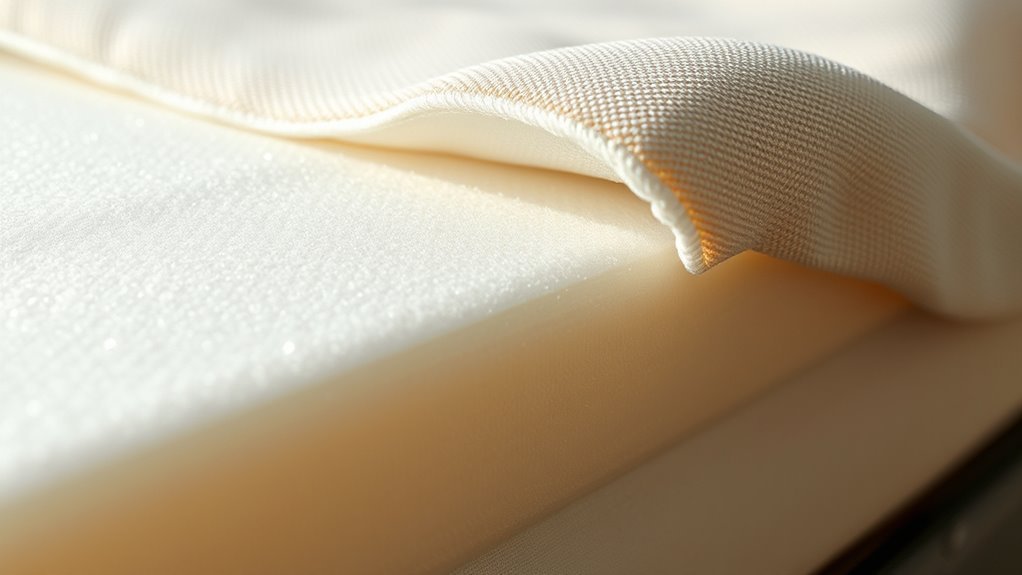
Have you ever wondered what makes mattresses fire-resistant? The answer often lies in fiberglass, a fiber-reinforced plastic made from woven glass fibers known for its high melting point.
Mattresses resist fire thanks to fiberglass, a high melting point material made from woven glass fibers.
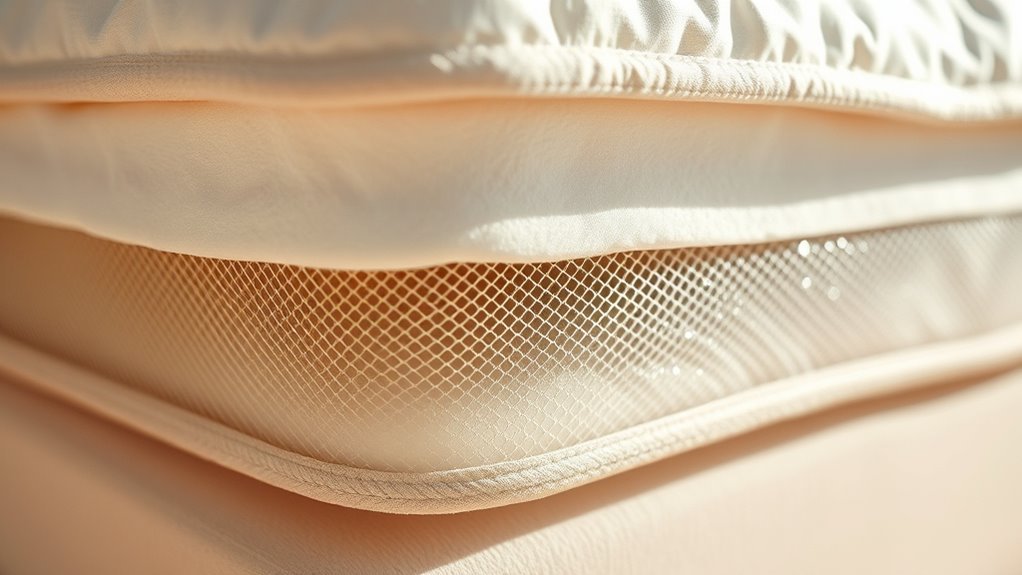
In mattresses, manufacturers use fiberglass as a fire retardant barrier, usually encased in a fire sock or barrier layer to meet strict safety standards. You might spot small, shiny, white strands of fiberglass if the mattress cover is damaged or removed.
It’s a cost-effective way to comply with fire regulations without adding much weight. However, keep in mind that if fiberglass escapes as tiny airborne particles, it can cause skin irritation, eye discomfort, or respiratory issues.
Understanding fiberglass’s role helps you stay informed about your mattress’s safety features. So, next time you look at your mattress, you’ll know a bit more about what’s inside and why it matters!
Reasons Manufacturers Include Fiberglass in Memory Foam Mattresses
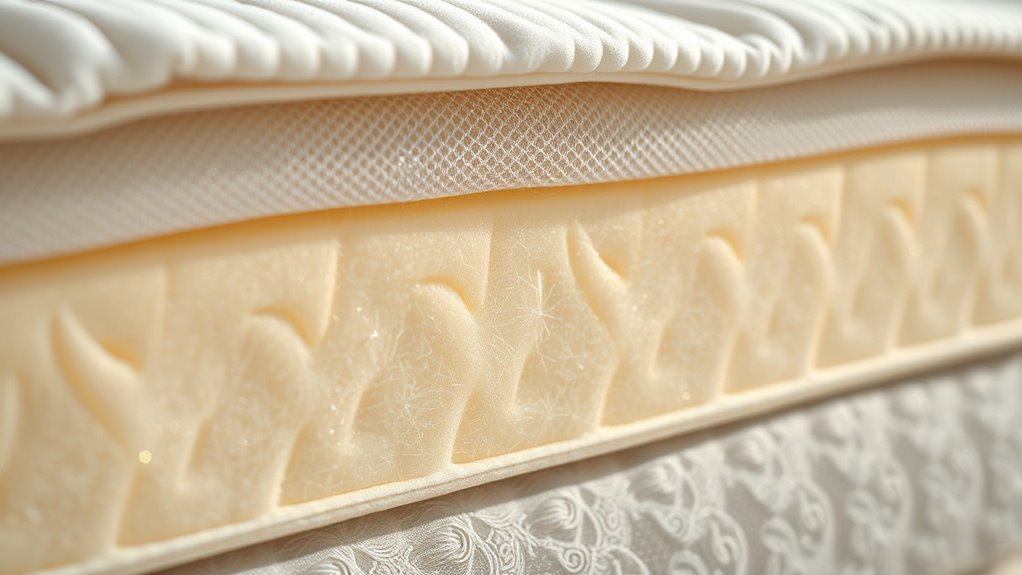
Fiberglass plays a key role in making memory foam mattresses fire-resistant, and manufacturers rely on it primarily because it offers an affordable way to meet strict fire safety regulations.
Here’s why fiberglass is commonly included:
- It acts as a low-cost fire retardant barrier, helping mattresses pass federal fire safety laws like CPSC 16 CFR 1632 & 1633.
- Fiberglass can be embedded in fire socks or barriers, containing fibers to reduce ignition risks.
- Using fiberglass helps companies avoid pricier chemical flame retardants, keeping production costs down.
- Despite some brands moving away from fiberglass, it remains a popular, economical choice for compliance.
Identifying Fiberglass in Your Mattress: Labels and Warning Signs
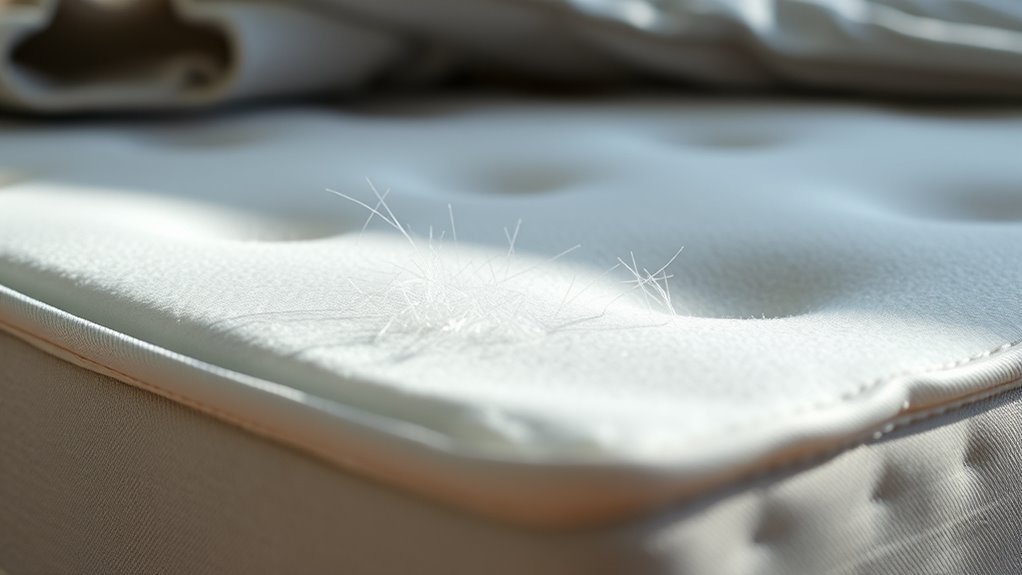
Although fiberglass is a common fire-retardant material in memory foam mattresses, you might not always know if it’s inside your bed. To identify if your mattress contains fiberglass, start by checking the labels carefully.
Look for terms like glass fiber, glass wool, silica, or fiberglass—these indicate its presence. Pay close attention to warning tags, especially ones that say “Do Not Remove Cover,” which often signal fiberglass inside that could be released if the cover is damaged.
Recognizing Fiberglass Leakage and Exposure Symptoms
You might notice tiny, shiny particles on your mattress surface—these could be fiberglass leaking through.
If you’re feeling skin irritation, itching, or eye redness, fiberglass exposure could be the cause.
Keep an eye out for these signs to protect yourself and your home.
Fiberglass Leakage Indicators
When you notice tiny, shiny particles on your mattress or bedding, it’s a sign that fiberglass may be leaking from your memory foam mattress. Fiberglass fibers often look like small, plastic-like strands that sparkle under bright light.
To spot fiberglass leakage, watch for:
- Tiny, shiny particles scattered on your mattress or nearby surfaces.
- Damage, tears, or holes in the mattress cover allowing fiberglass to escape.
- Unusual fibers or particles that don’t belong on your bedding.
- Particles that glisten under flashlight or direct light inspection.
If you see any of these indicators, it’s essential to investigate further. Catching these signs early helps prevent unwanted exposure. Plus, it keeps your sleeping environment safe and comfortable.
Exposure Symptoms Overview
If fiberglass leaks from your memory foam mattress, you might notice skin irritation, itching, or rashes after contact. These symptoms happen because tiny fiberglass particles can embed themselves in your skin.
If you inhale fiberglass fibers, you could experience a sore throat, nasal pain, coughing, or general respiratory discomfort. Eye contact with fiberglass may cause redness, burning, or irritation.
Keep an eye out for tiny shiny particles on your bedding or mattress surface—they’re a clear sign of fiberglass leakage. Damage to the mattress cover or removing fiberglass warning labels increases your risk of exposure.
Recognizing these symptoms early helps you take action to minimize discomfort. It also helps you avoid prolonged exposure to fiberglass fibers that can affect your skin, eyes, and respiratory system.
Safe Handling and Cleaning of Mattresses Containing Fiberglass
When handling a mattress with fiberglass, always wear gloves, goggles, and a mask to protect yourself from irritation. It’s really important to keep those fibers from getting on your skin or in your eyes.
Use a damp cloth for cleaning, and avoid dry brushing or vacuuming without a HEPA filter. This helps prevent the fibers from spreading around your home.
If the mattress leaks, seal it tightly in plastic. Then, be sure to dispose of it following your local hazardous waste rules to stay safe and compliant.
Protective Gear Usage
Although handling mattresses with fiberglass can pose health risks, you can protect yourself by wearing gloves, goggles, and a mask to prevent skin and respiratory irritation. Using the right protective gear is essential when dealing with fiberglass during handling and cleaning.
Follow these steps for safe protective gear usage:
- Always put on gloves, goggles, and a mask before touching or cleaning the mattress.
- Avoid dry sweeping or vacuuming without a HEPA filter, as this can spread fiberglass fibers.
- Use a damp cloth or sponge to gently clean surfaces to minimize fiber release.
- After handling, wash contaminated clothing separately in hot water to prevent irritation and fiber spread.
Cleaning Contamination Safely
Wearing gloves, goggles, and a mask protects you from skin and respiratory irritation while handling fiberglass mattresses, but cleaning requires extra care to keep fibers from spreading.
When cleaning, avoid dry sweeping or vacuuming that can disperse fiberglass fibers into the air. Instead, use a damp cloth to gently wipe surfaces and capture loose particles.
Afterward, vacuum the mattress and nearby areas with a HEPA-filter vacuum to effectively remove fiberglass without causing contamination.
Wash all linens, bedding, and clothing separately in hot water to eliminate any fiberglass fibers that may have transferred during cleaning.
Following these steps helps you control fiberglass contamination safely and minimizes the risk of irritation or exposure during the cleaning process.
Mattress Disposal Methods
Since mattresses containing fiberglass can release harmful fibers during disposal, you should seal them securely in heavy-duty plastic or a mattress bag to prevent contamination. Mattresses must never have their covers torn or removed, as this releases tiny fiberglass fibers into the air.
When disposing of your mattress, follow these steps:
- Wear protective gloves, goggles, and a mask to avoid skin and respiratory exposure.
- Seal the mattress tightly in heavy-duty plastic or a mattress bag.
- Contact your local waste management to confirm if they accept fiberglass-containing mattresses, as many forbid recycling them.
- For heavy contamination, consider professional cleaning or disposal services to ensure safe handling and environmental safety.
Health Risks Associated With Fiberglass in Mattresses
When fiberglass fibers escape from a memory foam mattress, they can irritate your skin, causing rashes and itching. If you breathe in these tiny particles, you might experience a sore throat, nasal pain, or respiratory discomfort.
Eye contact can lead to redness, burning, and watering. Prolonged exposure is especially risky if you have asthma or allergies. Kids and pets face higher risks due to their sensitive skin and smaller lungs.
| Exposure Type | Possible Symptoms |
|---|---|
| Skin Contact | Rashes, itching, irritation |
| Inhalation | Sore throat, nasal pain, cough |
| Eye Contact | Redness, burning, watering |
Knowing these risks helps you protect your household from fiberglass’s hidden dangers. So, it’s a good idea to be cautious and keep an eye out for any signs of exposure.
Brands That Use Fiberglass and Recent Industry Changes
Although fiberglass was once common in many memory foam mattresses, several major brands have moved away from using it in recent years. If you’re concerned about fiberglass, here’s what you should know:
Leesa and Novaform replaced fiberglass with fiberglass-free fire barriers in newer models. Casper and Tempurpedic confirmed their current mattresses are fiberglass-free, updating processes through 2026.
Siena stopped using fiberglass after 2024, adopting safer fire barriers. Dreamcloud and Vibe confirmed by 2025 that their newer models no longer contain fiberglass.
Keep in mind, some Canadian Puffy mattresses still contain fiberglass, unlike their US versions. These changes highlight a growing industry shift toward safer, fiberglass-free mattresses, so always check the latest product details before buying.
Frequently Asked Questions
How Do I Tell if My Memory Foam Mattress Has Fiberglass?
You can tell if your memory foam mattress has fiberglass by checking labels for terms like “fiberglass.” Also, look out for warning tags that say “Do Not Remove Cover.”
If the cover is damaged or torn, inspect for tiny shiny fibers. Those little fibers could be fiberglass particles. It’s a good idea to be cautious and avoid disturbing them.
Why Are People No Longer Buying Memory Foam Mattresses?
You’re probably dumping memory foam mattresses because they’re practically toxic nightmares!
People fear harmful chemicals and fiberglass, so they’re switching to safer, cleaner options.
You want peace of mind, not sneaky health risks lurking in your bed.
Which Memory Foam Mattresses Do Not Contain Fiberglass?
You’ll find fiberglass-free memory foam mattresses from brands like Leesa, Casper’s Atlas and Dawn, Tempurpedic’s 2026 models, and Novaform’s Nue line.
Just check labels carefully, especially if your mattress costs under $600. It’s always better to be safe than sorry, right?
What Can Be Mistaken for Fiberglass in a Mattress?
You might mistake shiny plastic fibers, mattress lint, fire-resistant powders, or small hard plastic fragments for fiberglass.
Check texture closely—fiberglass feels brittle, while these alternatives don’t.
This little trick helps you avoid confusion and know what you’re really dealing with.
Conclusion
Think of fiberglass in your memory foam mattress as tiny, hidden needles weaving through your comfort. While it helps keep the mattress intact, it can prick your peace of mind and health if exposed.
By knowing how to spot and handle it safely, you’re not just protecting your sleep—you’re shielding your sanctuary. Stay informed and choose wisely, so your rest remains a soft cloud, not a prickly trap.
Understanding whether your memory foam mattress contains fiberglass is key. This knowledge helps you avoid irritation and potential health risks. Always inspect your mattress carefully and use protective covers to keep fiberglass fibers contained.
Remember, protecting your sleep environment means more than comfort—it means safety. So, be proactive about your mattress care and ensure your memory foam mattress is free from fiberglass exposure for restful, worry-free nights.