Does a Memory Foam Mattress Need a Box Spring
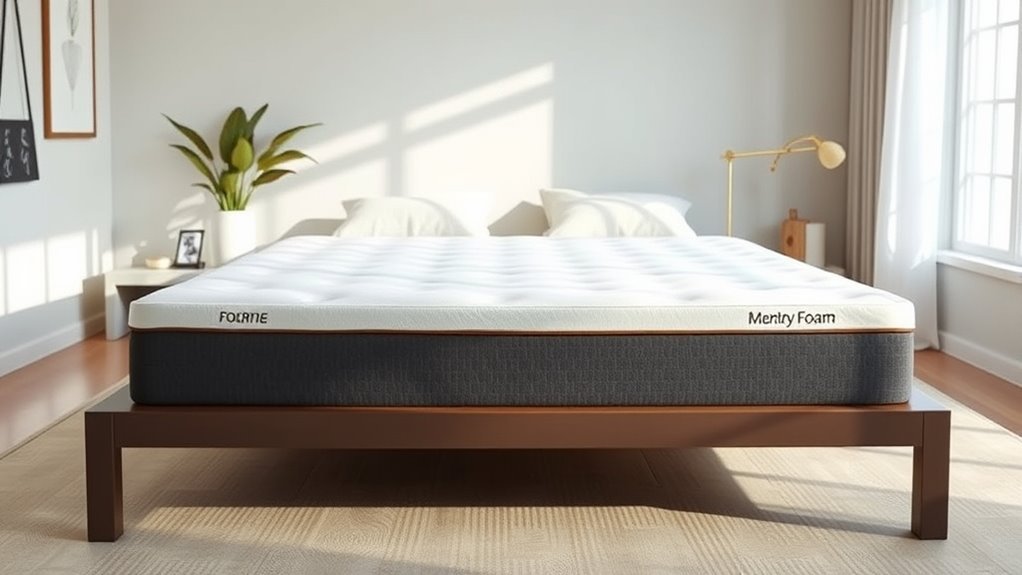
You don’t need a box spring for a memory foam mattress because it requires firm, flat support rather than the flexible foundation a box spring provides.
Memory foam mattresses work best when they have a solid base that keeps them stable and helps maintain their shape over time.
Instead, a solid platform bed, adjustable frame, or slatted foundation with closely spaced slats works best to evenly support your mattress and prevent sagging.
These options also help with airflow, which is important for keeping your mattress fresh and durable.
If you want to find the ideal support for your mattress, there’s more to contemplate.
Think about your bed frame, room ventilation, and how often you move your mattress.
All these little things can make a big difference in how comfortable and long-lasting your memory foam mattress will be.
Key Takeaways
- Memory foam mattresses do not require a box spring for proper support or comfort.
- A firm, flat foundation like a platform bed or solid base is ideal for memory foam mattresses.
- Just make sure if you’re using slats, they’re spaced no more than 3-4 inches apart. This helps prevent sagging and keeps your mattress in good shape.
- Box springs often don’t provide the solid, even support that memory foam needs. Plus, they can actually shorten the lifespan of your mattress.
- Adjustable frames and platform beds are great options. They offer excellent support and usually mean you don’t have to worry about a box spring at all.
Understanding Memory Foam Mattresses
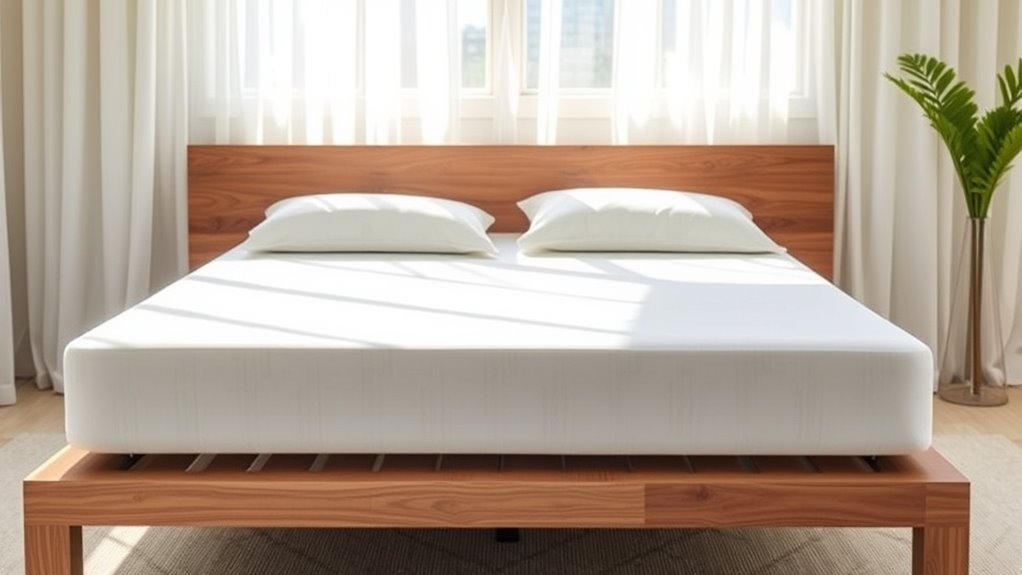
Although memory foam mattresses feel soft and conforming, they’re made from dense, viscoelastic foam that molds to your body’s shape.
Because memory foam is heavier than traditional mattresses, you need a solid support system to keep it in good condition. Unlike innerspring mattresses, memory foam doesn’t rely on a box spring for support.
Memory foam needs a sturdy foundation, not a box spring, to stay durable and supportive.
Instead, it requires a firm, flat foundation, such as a platform bed or a solid base. You can also use a slat foundation, but make sure the slats are no more than four inches apart to provide adequate support.
Using the right foundation ensures your memory foam mattress stays comfortable and durable. It prevents sagging and extends the mattress’s lifespan.
Proper support is key to getting the best from your memory foam mattress. So, choosing the right base really makes a difference!
The Role of a Box Spring in Mattress Support
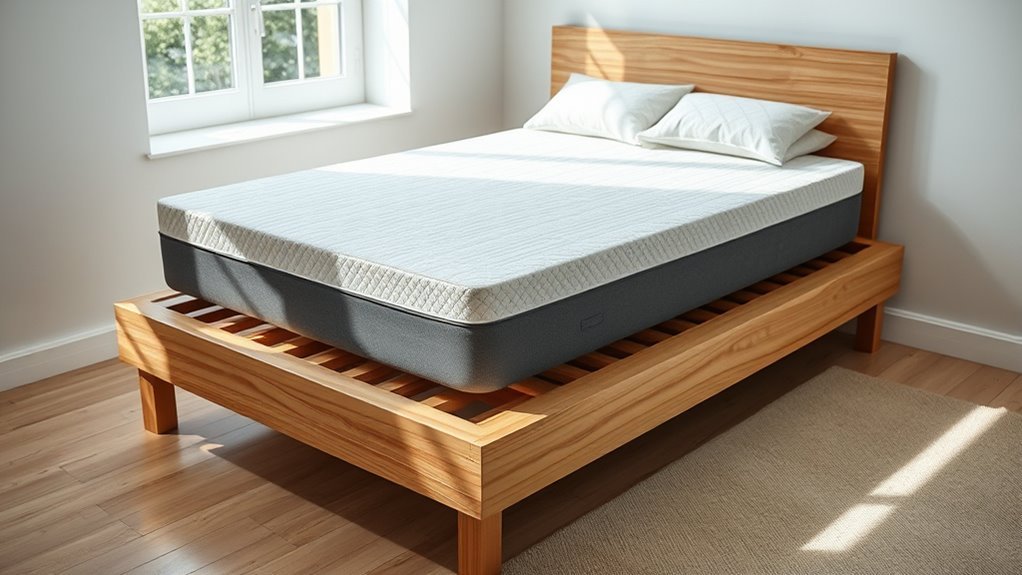
When you choose a mattress, understanding the role of a box spring can help you maintain its shape and extend its lifespan. A box spring acts as a vital support system, providing a solid foundation that supports your mattress evenly.
This foundation absorbs shocks and impacts, reducing wear and tear, which is especially important for traditional innerspring mattresses that rely heavily on mattress support. By elevating the mattress, a box spring also makes getting in and out of bed easier.
Additionally, it promotes airflow beneath the mattress, helping regulate temperature and prevent moisture buildup. While memory foam mattresses often don’t require a box spring, knowing how a box spring functions can guide you in choosing the best support system to protect and support your mattress investment.
Platform Beds and Memory Foam Mattresses
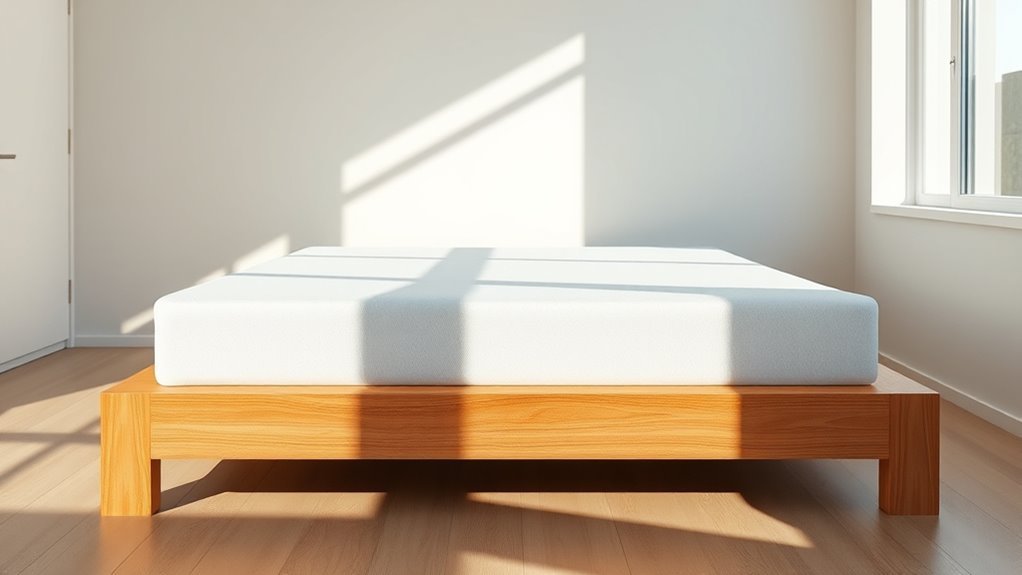
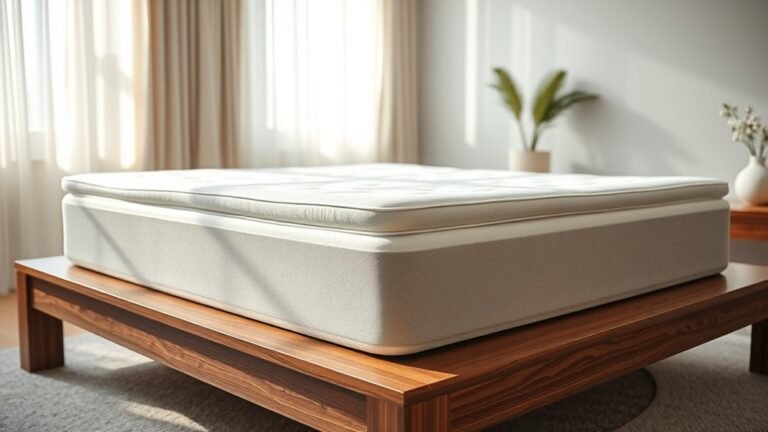
If you want to support your memory foam mattress without a box spring, a platform bed offers an ideal solution. Platform beds provide a sturdy, flat foundation that evenly supports memory foam mattresses, preventing sagging and preserving their shape.
Many platform beds come with built-in slats or solid bases designed specifically to replace traditional box springs. These slats distribute weight across the mattress, enhancing comfort and durability.
For the best support, guarantee the slats on your platform bed are spaced no more than 3 to 4 inches apart. This spacing keeps your memory foam mattress from bending or sinking between the slats.
Slat Foundations: What You Need to Know
Because properly spaced slats are essential for supporting your memory foam mattress, understanding slat foundations can help you maintain comfort and durability.
A slat foundation uses evenly spaced wooden or metal slats, typically less than four inches apart, to provide the necessary support. The spacing is critical—most manufacturers recommend gaps no wider than 3 to 4 inches to ensure your mattress gets a proper foundation.
Steel slats generally offer more rigid and durable support than wooden ones, especially if your mattress is heavy. If the slats are spaced too far apart, your mattress may sag, reducing its lifespan and comfort.
To avoid this, make sure your slat foundation supports your memory foam evenly and adheres to recommended spacing guidelines for peak performance. It really makes a difference in how your mattress feels and lasts.
Mattress Foundations Designed for Foam Mattresses
Although foam mattresses can work with various foundations, choosing one designed specifically for them guarantees ideal support and durability. Mattress foundations like platform beds and solid bases provide a flat, firm surface that helps preserve your memory foam mattress’s shape without needing a box spring.
If you prefer slat foundations, just make sure the slats are no more than four inches apart. This prevents sagging and keeps proper support in place. Support systems tailored for foam mattresses extend their lifespan by keeping your spine aligned and preventing dips.
These foundations deliver consistent, even support essential for memory foam’s performance. So, you get comfort and durability without compromising the mattress’s integrity. Avoid traditional box springs, as they often lack the proper support foam mattresses require.
Adjustable Bed Frames and Foam Mattress Compatibility
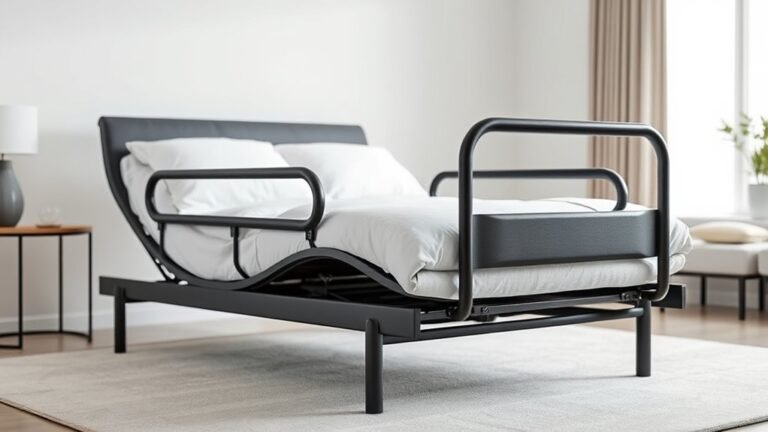
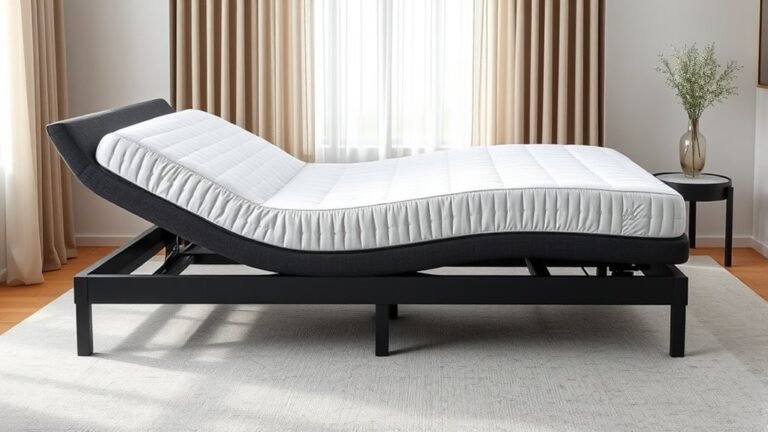
You’ll find that adjustable bed frames work great with most memory foam mattresses since they provide firm, flat support without needing a box spring.
Just make sure your mattress’s weight and thickness match the frame’s capabilities for the best fit. Always check your mattress guidelines to confirm compatibility before making a decision.
Adjustable Frame Benefits
If you want customizable comfort and support, adjustable bed frames work seamlessly with most foam mattresses, including memory foam, as long as the manufacturer approves their use.
An adjustable base provides a solid surface that evenly supports your mattress, eliminating the need for a box spring. This even support helps distribute your weight, reducing pressure points and enhancing comfort throughout the night.
One of the key benefits of using an adjustable frame is its ability to improve circulation and alleviate sleep issues like acid reflux or sleep apnea. It does this by allowing you to change your sleeping position easily.
Since foam mattresses are designed to flex without damage, they pair perfectly with adjustable bases. This ensures durability and peak performance while giving you personalized support.
Mattress Compatibility Considerations
When choosing an adjustable bed frame for your memory foam mattress, you need to guarantee the frame provides a firm, flat surface that supports the mattress evenly. Unlike traditional box springs, memory foam requires a sturdy support foundation to maintain its shape and comfort.
Many adjustable beds are designed to meet these criteria, but not all. Some frames use slats or foam padding that might not be compatible with your mattress, risking sagging or damage.
To avoid voiding your mattress warranty, always check the compatibility between your memory foam mattress and the adjustable bed frame. Confirming with both manufacturers ensures your support foundation works correctly without the need for a box spring, preserving your mattress’s durability and comfort over time.
When a Box Spring Is Necessary for Memory Foam
Although memory foam mattresses usually don’t need a box spring, you might require one if your mattress manufacturer specifies it or your current foundation lacks proper support.
In these cases, choosing a sturdy box spring or a solid foundation is vital to maintain the mattress’s integrity. Unlike a traditional mattress, memory foam needs even, firm support to prevent sagging and extend its lifespan.
A traditional box spring often falls short here, as it may not provide the necessary stability or ventilation. If your existing base doesn’t offer the right support, using a proper box spring or solid foundation guarantees your memory foam mattress performs at its best and stays comfortable for years to come.
Always check manufacturer guidelines before deciding. It’s worth making sure you get it right!
Bed Frames That Eliminate the Need for a Box Spring
You don’t always need a box spring with a memory foam mattress if you choose the right bed frame. Platform beds and reinforced slat foundations provide solid, even support that works perfectly without extra layers.
Plus, adjustable frames not only support your mattress but also let you customize your comfort. It’s all about finding what fits your style and needs best.
Platform Bed Benefits
Since platform beds provide a flat, sturdy surface that supports your mattress directly, you won’t need a box spring. A platform bed offers solid support with its flat surface, which is essential for memory foam mattresses.
This direct support helps prevent sagging, maintaining your mattress’s shape and comfort over time. By evenly distributing weight, a platform bed enhances the durability of your memory foam mattress.
Additionally, platform beds often have a low profile, making it easier for you to get in and out of bed with ease. The flat surface also promotes better airflow beneath the mattress, helping keep it cooler and more hygienic.
Choosing a platform bed means you get reliable support without the extra bulk or expense of a box spring. It’s a smart, practical choice that keeps things simple and comfy.
Slat Foundation Support
How can you support your memory foam mattress without a box spring? A slat foundation offers an excellent solution. When the slats are spaced less than four inches apart—ideally no more than three inches—they provide the sturdy, even support your memory foam mattress needs.
This close slat spacing prevents sagging, prolongs mattress life, and enhances comfort. Whether wooden or metal, the slats should be strong and well-distributed across the foundation to maintain stability.
Plus, a slat foundation promotes better airflow beneath the mattress, helping to keep it cool and fresh. By choosing a bed frame with the right slat spacing and support, you can confidently skip the box spring while ensuring your memory foam mattress performs at its best.
Adjustable Frame Compatibility
Why choose an adjustable frame for your memory foam mattress? Adjustable bases are specifically designed to support your mattress directly, eliminating the need for a box spring. These bed frames provide a flat surface that maintains the integrity and support of the foam, ensuring memory foam compatibility.
With features like adjustable head and foot positioning, you can customize your comfort without compromising support. Most memory foam mattresses work well with adjustable frames, as they meet the mattress’s support requirements perfectly.
Using an adjustable frame not only enhances your sleep comfort but also prolongs your mattress’s lifespan by providing consistent and firm support. So, if you want a versatile bed frame that supports your memory foam mattress effectively, adjustable bases are an excellent choice.
Tips for Choosing the Right Support for Your Memory Foam Mattress
When you choose the right support for your memory foam mattress, you’ll extend its lifespan and maintain comfort. Start with a firm, solid foundation like a platform bed or a manufacturer-approved foundation to prevent sagging.
A firm, solid foundation like a platform bed helps prevent sagging and extends your memory foam mattress’s comfort.
Make sure the support system includes slats spaced no more than 3-4 inches apart. This spacing ensures proper airflow and prevents damage.
Avoid flimsy or uneven bases, as they can compromise your mattress’s structure. If you want adjustable height or positioning, consider an adjustable base instead of a traditional box spring.
Always check compatibility between your mattress and support system to keep your warranty valid and guarantee ideal support. Choosing the correct support is essential for maintaining comfort and protecting your investment.
Frequently Asked Questions
What Kind of Base Do You Need for a Memory Foam Mattress?
You need a firm, flat base like a platform bed or a solid foundation with slats no wider than 3-4 inches apart. This kind of support helps your memory foam mattress perform at its best.
Adjustable bases designed specifically for foam mattresses also work great. They ensure proper support and can even extend the life of your mattress. So, choosing the right base really makes a difference!
What Is the Disadvantage of a Memory Foam Mattress?
You’ll find memory foam mattresses retain heat, which might leave you feeling hot at night. They can also sag over time without proper support.
Plus, their lifespan tends to be shorter compared to traditional mattresses. So, while they’re comfy, these are things to keep in mind.
Can You Use a Memory Foam Mattress Without a Boxspring?
Yes, you can use a memory foam mattress without a box spring. Just place it on a solid, flat platform or a slatted foundation with slats no more than 4 inches apart.
This keeps it properly supported and comfortable. So, no need to worry about the box spring if you have the right base!
Why Are People No Longer Buying Memory Foam?
You’re choosing alternatives, you’re seeking comfort, you’re valuing support.
People no longer buy memory foam because they want breathable materials, eco-friendly options, and longer-lasting mattresses.
They’re looking for things that better suit their changing sleep preferences and lifestyle demands.
Conclusion
Choosing the correct cushion for your cozy memory foam mattress can completely change your comfort. While box springs bring basic benefits, better bed bases boost breathability and bolster support.
Platform beds, slat foundations, and adjustable frames all offer options that optimize your mattress’s magic. These alternatives help maintain airflow, which is crucial for memory foam to stay fresh and long-lasting. Plus, they provide the sturdy backing your mattress needs to perform at its best.
By balancing breathability, backing, and budget, you’ll find the perfect platform to protect your plush memory foam and enjoy endless, effortless ease every night. So, while a memory foam mattress doesn’t necessarily need a box spring, choosing the right foundation can make all the difference in comfort and durability.