Are Recliners Bad for Your Back: Using Them Safely
Recliners aren’t bad for your back if you pick one with good lumbar support and use it properly. Choosing the right recliner can actually help reduce back pain rather than cause it.
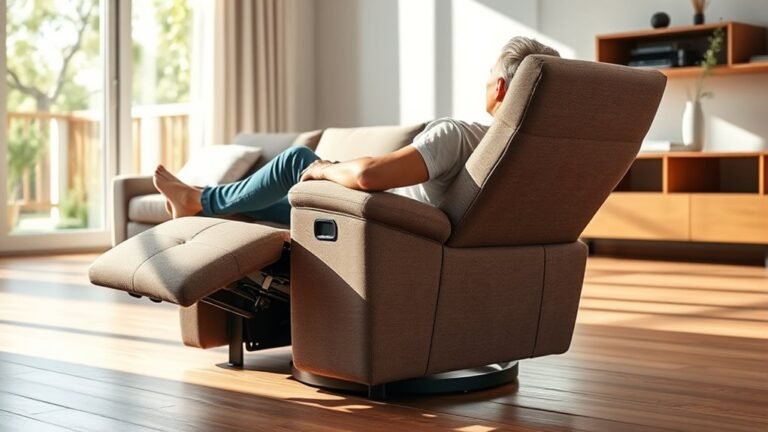
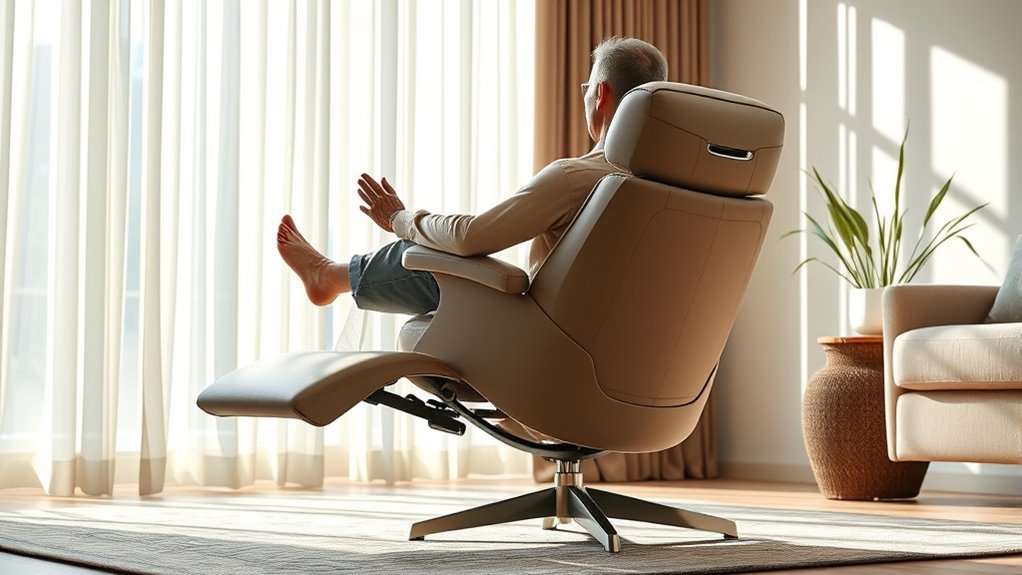
Make sure to adjust the recline angle to about 135°. Support your lower spine, and elevate your legs to ease pressure. These simple tweaks can make a big difference in comfort.
Remember to shift positions and stretch every 30 to 60 minutes to prevent stiffness and muscle strain. Sitting too long in one position isn’t great for your back, even in a recliner.
With the right chair and habits, you can enjoy comfort without pain. Keep going to discover tips that protect your spine even more.
Key Takeaways
- Recliners with adjustable lumbar support and reclining angles around 135° promote proper spinal alignment and reduce lumbar strain.
- It’s a good idea to regularly change your recliner positions and take movement breaks every 30 to 60 minutes. This helps prevent stiffness and muscle imbalances.
- Elevate your legs using the footrest to improve circulation and reduce back tension during prolonged sitting.
- Ergonomic recliners, when properly adjusted, actually support back health. They don’t inherently cause back pain or poor posture.
- But if your back pain sticks around, gets worse, or comes with numbness, tingling, or weakness, it’s best to consult a healthcare professional despite any recliner adjustments you’ve made.
What Recliners Really Do to Your Back
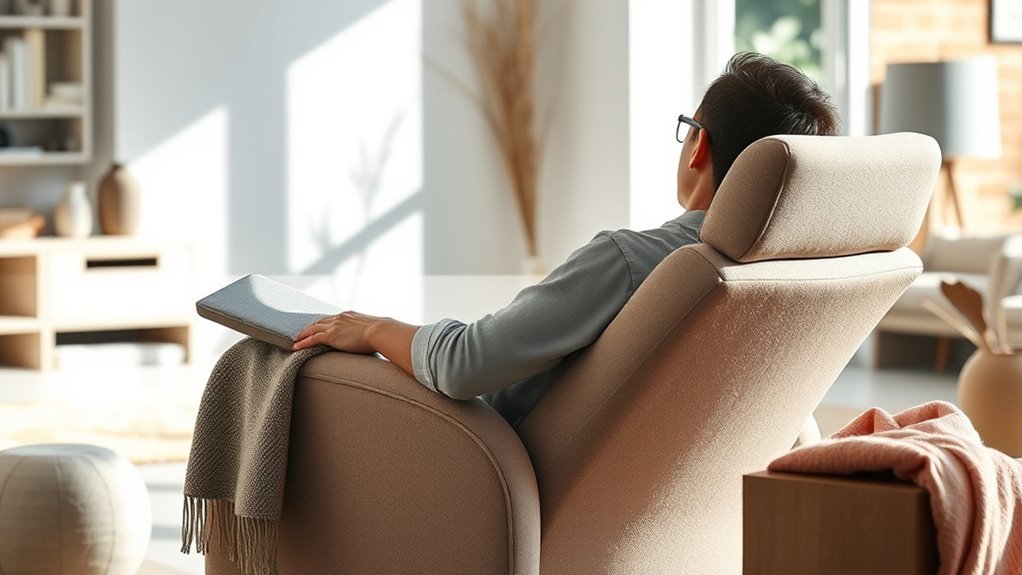
Although recliners are often seen as a way to relax, what they really do to your back depends on their design and how you use them. When a recliner includes adjustable features like lumbar support, it can promote proper spinal alignment and improve your sitting posture.
Reclining at an angle of around 135° provides pressure relief by reducing strain on your lumbar spine. However, if your recliner lacks adequate support or you sit too long without moving, you risk muscle imbalances and stiffness in your hips and lower back.
Using a recliner wisely means adjusting it to support your natural curves and changing positions regularly to avoid chronic back pain. So, focus on how your recliner supports your back rather than just comfort alone.
Why Proper Lumbar Support Matters in Recliners
When you choose a recliner with proper lumbar support, you help maintain the natural curve of your lower spine, which reduces strain and discomfort. Proper lumbar support promotes good posture by encouraging correct spinal alignment, which protects your spinal health over time.
Without adequate support, pressure concentrates on the lumbar discs, increasing the risk of chronic lower back pain. A recliner that offers even pressure distribution across the lower back prevents muscle fatigue and localized stress, helping you stay comfortable longer.
Key Features to Look For in a Back-Friendly Recliner
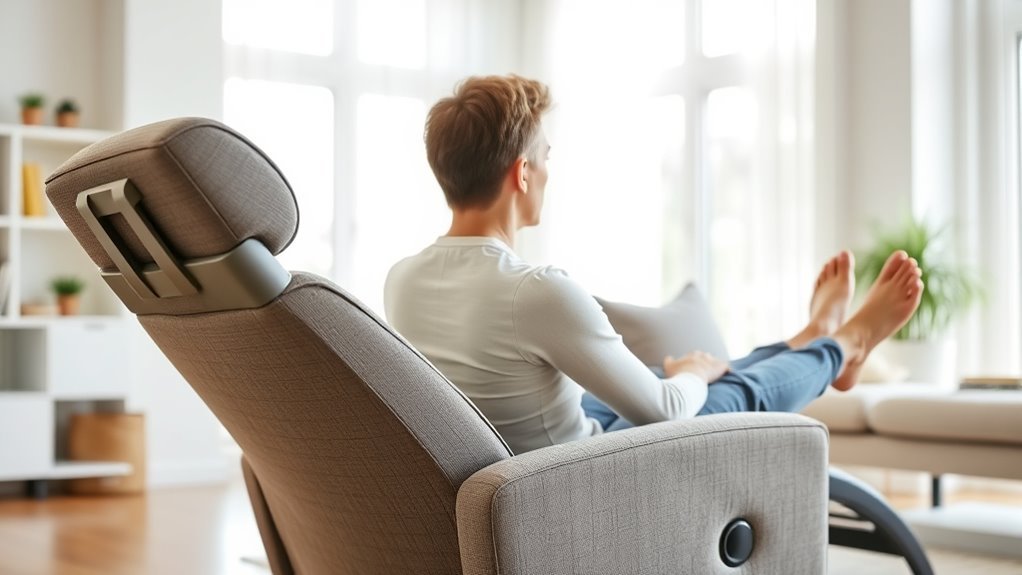
Choosing a recliner that supports your back well involves more than just looking for lumbar support. You want one with built-in or adjustable lumbar support to keep your spine’s natural curve intact.
Look for multiple reclining positions so you can find the best angle for pressure relief and reduce strain on your back muscles. Adjustable headrests and footrests let you customize your posture, improving comfort and alignment.
Firm padding that conforms without sagging provides steady support, preventing discomfort over time. Additionally, some recliners offer heat and massage features, which can help relax your back muscles and boost circulation.
How to Adjust Your Recliner to Protect Your Spine
To protect your spine, start by setting your recliner to a 135° angle. This helps reduce pressure on your hips and back.
Next, adjust the lumbar support to keep your lower spine’s natural curve. Then, position the headrest so your neck stays aligned with your spine.
Don’t forget to elevate your legs with the footrest. This improves circulation and eases lower back tension.
Optimal Recline Angles
How should you adjust your recliner to best support your spine? Aim for a recline angle between 135° and 145° to provide ideal back support. This position helps distribute your body weight evenly, reducing spinal pressure and promoting proper posture.
Avoid angles below 90°, as they increase pressure on your lumbar spine, potentially worsening back pain. Use your recliner’s adjustable features to fine-tune the angle until you find a comfortable position that keeps your back in a neutral, healthy alignment.
Research shows that a 135° body-thigh angle is biomechanically perfect for minimizing strain during prolonged sitting. By setting your recliner correctly, you’ll protect your spine and enjoy comfort without compromising your back health.
Lumbar Support Adjustment
While adjusting the recline angle is important, properly setting the lumbar support is essential to protect your spine. Make sure the lumbar support fills the natural curve of your lower back to maintain proper spinal alignment.
Many recliners have adjustable support that you can move forward or backward to fit your comfort. The key is proper positioning—your lumbar spine should be supported without causing excessive arching or flattening.
As you change recline angles, regularly check and readjust the lumbar support to avoid back pain. If your recliner’s built-in support isn’t enough, adding a small pillow or lumbar roll can enhance stability.
Taking these steps helps keep your spine aligned and reduces the risk of discomfort while you relax. It’s all about keeping things comfortable and supportive for your back.
Footrest And Headrest
Although adjusting the recline and lumbar support sets a solid foundation, properly positioning your footrest and headrest plays a crucial role in protecting your spine. Adjust the headrest to support your neck’s natural curve, maintaining spinal alignment.
Use the footrest’s adjustable features to elevate your legs fully. This promotes circulation and reduces lower back pressure. Both should be repositioned during long sitting sessions for proper support and to minimize muscle tension.
| Feature | Adjustment Tip |
|---|---|
| Headrest | Support natural neck curve |
| Headrest | Keep head upright, avoid tilt |
| Footrest | Elevate legs for circulation |
| Footrest | Fully support legs to avoid strain |
| Both | Readjust regularly for spinal health |
Using Your Recliner Without Back Pain
To use your recliner without back pain, focus on maintaining proper lumbar support and adjusting positions to fit your comfort. Don’t forget to take regular breaks to stretch and move around.
These simple steps help keep your spine aligned and reduce strain throughout the day. It’s really about listening to your body and making small changes as needed.
Maintaining Proper Lumbar Support
If you want to use your recliner without back pain, maintaining proper lumbar support is essential. Good lumbar support preserves your spine’s natural curve, reducing lower back pain during reclined sitting.
Try using a recliner with adjustable support or add a small pillow behind your lower back to improve spinal alignment. Aim for a 135° recline angle to ease pressure on your lumbar spine.
Firm padding offers consistent support and prevents sagging, which can worsen discomfort. It really makes a difference in how your lower back feels after sitting for a while.
| Tip | Why It Helps | How to Apply |
|---|---|---|
| Built-in lumbar support | Maintains natural curve | Choose recliners with it |
| Pillow or towel support | Enhances spinal alignment | Place behind lower back |
| 135° recline angle | Reduces lumbar spine pressure | Adjust recliner angle |
| Firm padding | Prevents sagging and pain | Select recliners with firm cushions |
Adjusting Recliner Positions
Maintaining proper lumbar support sets the foundation for comfort, but adjusting your recliner’s position plays a key role in preventing back pain. Aim for recliner positions with a backrest angle of at least 135°. This adjustable recline reduces pressure on your lumbar spine and promotes an ergonomic position.
Use the recliner’s adjustable headrest and footrest to maintain proper alignment, supporting your spine’s natural curves and minimizing strain. Adding lumbar support—whether built-in or with a pillow—helps keep your spinal posture correct as you adjust angles.
Incorporating Movement Breaks
While enjoying your recliner, you should take regular breaks every 30 minutes to prevent muscle stiffness and boost circulation. These movement breaks help maintain spinal health by reducing the risk of muscle imbalances caused by prolonged sitting.
When you stand or walk briefly, you encourage muscle relaxation and improve blood flow. During your breaks, try gentle stretches like spinal twists or hip openers to ease back tension.
Using a supportive pillow or lumbar roll while seated can also promote proper posture and spinal alignment. Combining movement with posture adjustments guarantees you minimize strain and discomfort.
Movement and Stretching to Support Your Back With a Recliner
Because sitting in a recliner for long periods can cause muscle stiffness, you should move and stretch every 30 to 60 minutes to protect your back. Regular movement helps maintain good posture and reduces the risk of back pain.
Move and stretch every 30 to 60 minutes to prevent stiffness and protect your back.
Simple stretching exercises like knee-to-chest stretches and spinal twists relieve tension built up from sitting too long. Adjusting your recliner’s angle or shifting to a more upright position supports spinal alignment and eases pressure on your lower back.
Taking breaks to stand, walk, or stretch boosts circulation and prevents stiffness. Pairing these habits with daily core-strengthening exercises, such as yoga or Pilates, further supports your back’s stability.
Prioritizing movement and stretching guarantees your recliner remains a comfortable, back-friendly spot. It’s all about keeping things moving and staying mindful of your posture!
Debunking Recliner Myths About Back Pain
Getting up and stretching regularly is great, but you might still wonder if recliners themselves cause back pain. The truth is, recliners with ergonomic design and proper lumbar support can actually help maintain good posture and reduce back pain.
It’s not the chair but the quality of support and how you use it that matters most.
| Myth | Reality |
|---|---|
| Recliners always cause pain | Properly designed recliners promote spinal health |
| Recliners don’t support back | Many have adjustable lumbar support |
| Recliners lead to bad posture | Ergonomic models encourage healthy posture |
When to Seek Professional Advice for Back Pain and Recliners
If you experience persistent or severe back pain after using a recliner, it’s important to seek professional advice promptly. This discomfort might signal improper support or underlying spinal issues that need attention.
If your symptoms worsen, including numbness, tingling, or weakness in your back, legs, or hips, don’t wait to consult a healthcare provider. Adjusting recliner features and maintaining good posture help, but when pain continues, a specialist can offer tailored ergonomic solutions.
Especially if you have conditions like herniated discs or sciatica, professional guidance is vital before prolonged recliner use. Regular check-ups become essential if back pain interferes with daily activities or if nerve impingement signs appear, ensuring your recliner use supports your back health safely.
Frequently Asked Questions
Can a Recliner Cause Back Problems?
Yes, a recliner can cause back problems if you don’t use it properly. Make sure you maintain good posture and use proper lumbar support.
Also, avoid excessive reclining and take breaks to move around. That way, you’ll help protect your back.
What’s the Worst Thing to Do for Back Pain?
The worst thing you can do for back pain is stay in one fixed position too long, especially slouching or ignoring proper support.
You should move regularly, adjust your posture, and avoid extreme reclining angles to reduce discomfort.
Trust me, keeping still won’t help. It’s better to keep things moving and stay mindful of how you sit or lie down.
Do Doctors Recommend Recliners?
Doctors do recommend recliners as a cozy cradle for your back when chosen wisely. You’ll want one with firm support and adjustability, so you’re not just sinking but actually easing spinal pressure while staying active.
It’s all about finding that balance between comfort and support. So, don’t just pick any recliner—look for one that helps keep your posture in check and makes you feel good.
What Is the Best Recliner for Someone With Back Problems?
The best recliner for your back has adjustable lumbar support, multiple reclining positions, and firm padding that conforms without sagging. Look for ergonomic design, adjustable headrests, footrests, and quality materials like leather or microfiber for durability.
You want something that really supports your spine and lets you find just the right angle to relax. Plus, good materials mean it’ll last longer and feel comfortable every time you sit down.
Conclusion
If you use your recliner the right way, it doesn’t have to be the thorn in your side. Paying attention to proper lumbar support, making the right adjustments, and mixing in movement can keep your back happy.
Remember, a recliner is meant to be a comfort zone, not a pain zone. So, keep an eye on how you sit and don’t hesitate to seek help if your back starts sending red flags.
Using recliners safely means listening to your body and avoiding staying in one position for too long. Incorporating breaks and gentle stretches can make a big difference.
In short, recliners aren’t bad for your back when used correctly. Proper posture, adequate lumbar support, and mindful movement are key to enjoying comfort without pain. So, use your recliner wisely, and it can be a great way to relax without causing back problems.