Can You Put a Memory Foam Mattress on a Box Spring?
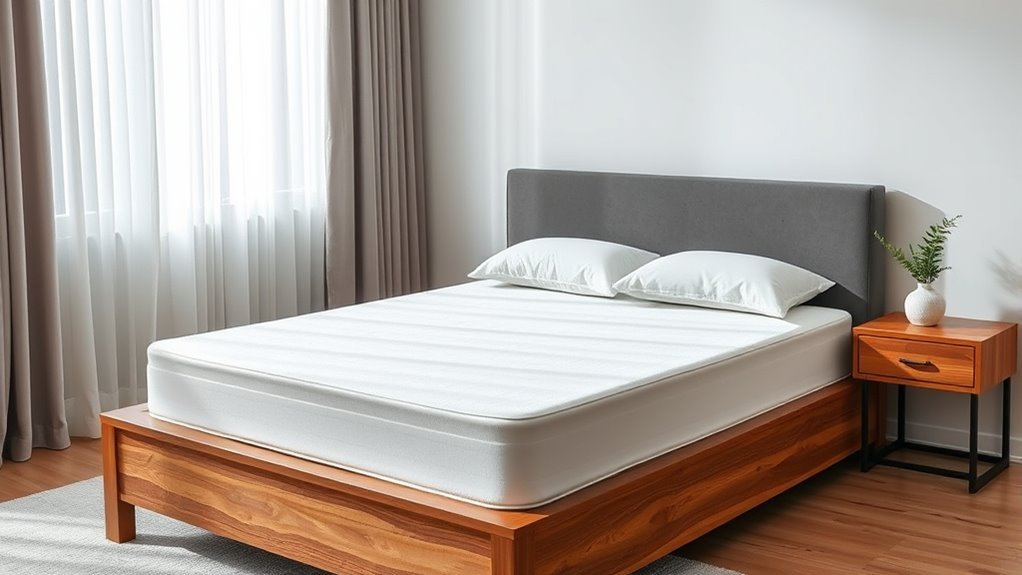
You shouldn’t put a memory foam mattress directly on a traditional box spring because it can cause uneven support, sagging, and reduce your mattress’s lifespan.
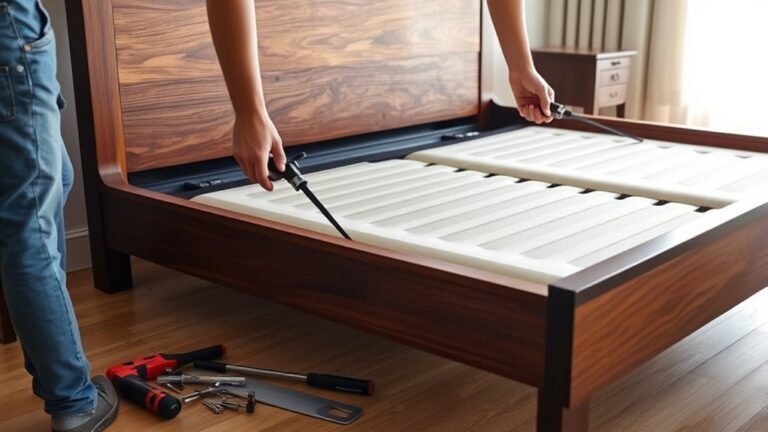
Memory foam needs a flat, solid foundation like a platform bed or closely spaced slats to maintain comfort, proper spinal alignment, and avoid warranty issues.
Using the right base helps your mattress perform better and last longer. Keep exploring to discover the best support options and care tips for your memory foam mattress.
Key Takeaways
- Memory foam mattresses require a flat, solid foundation for proper support and durability. Traditional box springs typically do not provide that kind of surface.
- Box springs with coils can cause uneven support, which might lead to sagging. This can reduce the lifespan of your memory foam mattress.
- Also, using a box spring might void your mattress warranty if it doesn’t meet the manufacturer’s support guidelines.
- Instead, consider platform beds, bunkie boards, or closely spaced slatted bases. These options offer better support for memory foam mattresses.
- Proper support not only boosts comfort and spinal alignment but also prevents premature wear. That way, your memory foam mattress performs at its best.
Understanding Memory Foam Mattress Construction
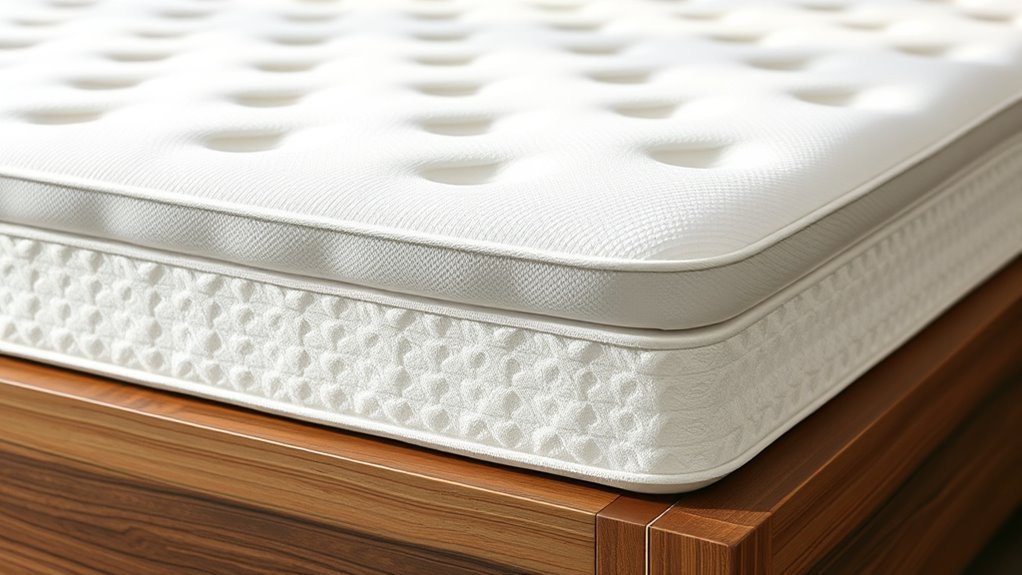
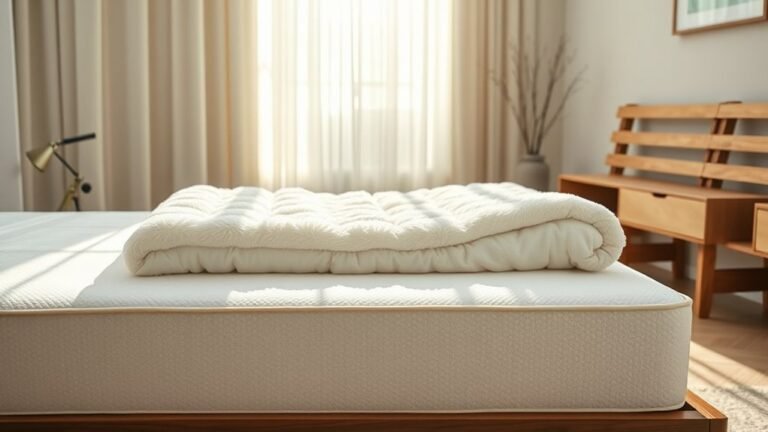
Although memory foam mattresses feel soft and flexible, they’re actually made from viscoelastic polyurethane foam that conforms closely to your body and evenly distributes weight. This unique material relies heavily on the support beneath it to maintain durability and comfort.
Unlike traditional innerspring mattresses, memory foam doesn’t have internal coils to provide stability. Instead, it needs a flat, solid surface to prevent sagging and guarantee even support.
While box springs are common mattress foundations, they aren’t always ideal for memory foam unless they offer a firm, flat base without gaps. Proper airflow beneath your memory foam mattress is also vital to avoid heat retention and moisture buildup.
This helps your mattress last longer and feel comfortable every night.
The Role of a Box Spring in Mattress Support
When you choose a box spring, you’re picking a traditional support system that combines a wooden frame with metal springs. These springs absorb shock and provide a stable base for innerspring mattresses.
The box spring plays an essential role in delivering support and comfort by:
- Absorbing impact to reduce mattress wear
- Preventing sagging to extend mattress life
- Enhancing overall bed height for ease of use
- Adding bounce and firmness aligned with innerspring comfort
Box springs work best with innerspring mattresses because their shock-absorbing design targets coil systems specifically. So, their support and comfort benefits mainly apply when paired with traditional spring mattresses, not memory foam.
Knowing this helps you make informed choices about the right foundation for your mattress type. It’s all about matching your mattress with the right support to get the best sleep experience.
Why Memory Foam Mattresses Prefer Solid Foundations
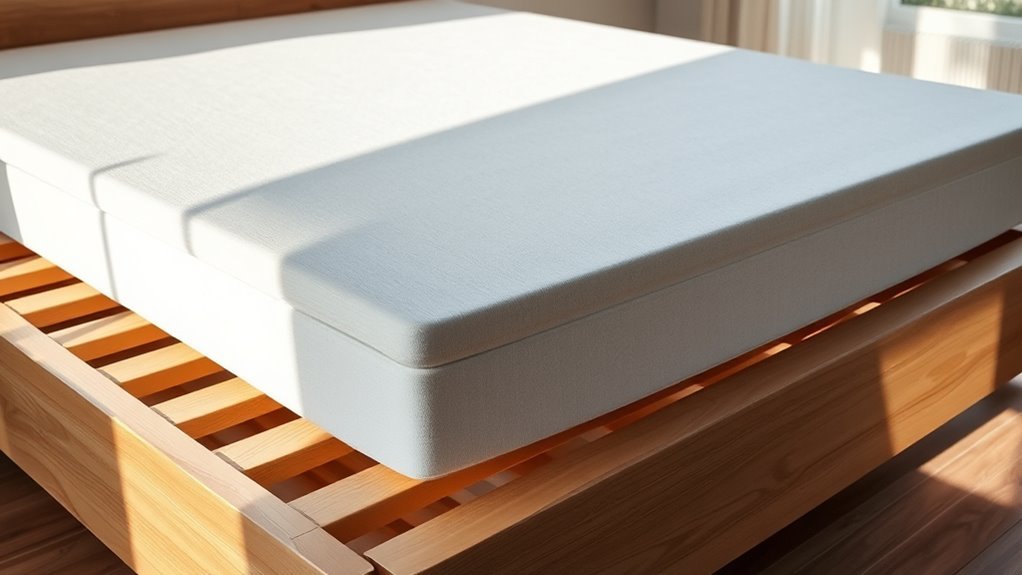
You want your memory foam mattress to last, so giving it solid support is key. Without a firm, flat foundation, the mattress can sag and wear out faster.
Choosing the right base helps maintain comfort and extends your mattress’s lifespan. It’s really worth taking the time to pick the best foundation for your bed. That way, you get the most out of your investment.
Importance of Solid Support
Since memory foam mattresses rely on consistent, firm support to maintain their shape and comfort, choosing the right foundation is essential. Avoid placing your memory foam mattress on a traditional box spring because its springs create uneven surfaces that can cause sagging and indentations.
Instead, focus on solid support options that preserve mattress integrity and comfort. Here’s what you should consider:
- Use a platform bed with a flat, sturdy base.
- Opt for slatted bases with slats spaced no more than 3 inches apart.
- Consider a rigid support board beneath your mattress.
- Ensure the foundation provides firm, even support to prevent sinking.
Choosing the right solid support will help your memory foam mattress perform at its best without damage. Trust me, it makes a big difference!
Effects on Mattress Longevity
Choosing the right support doesn’t just affect comfort—it also impacts how long your memory foam mattress lasts. When you place your mattress on a traditional box spring with coils or springs, it can create uneven pressure points.
This uneven support causes the foam layers to compress irregularly, leading to sagging and premature wear. Instead, using a solid foundation or platform with a firm, flat surface helps distribute your weight evenly.
This prevents deformation and keeps your mattress in better shape over time. Manufacturers recommend a non-springy foundation to protect your mattress’s integrity and maintain its warranty.
Potential Issues When Using Box Springs With Memory Foam
You might find that using a box spring with your memory foam mattress leads to uneven support and risks damaging the mattress over time.
This could also void your warranty, leaving you without protection if issues arise. Instead, consider solid or slatted foundations designed to provide the proper support your mattress needs.
Inadequate Support Risks
Although box springs are common mattress foundations, they often fail to provide the flat, firm support memory foam mattresses need. Using a box spring can lead to inadequate support, causing sagging and uneven wear.
Here’s what you risk when pairing memory foam with a traditional box spring: uneven support due to springs and gaps beneath the mattress. Sagging foam that develops indentations over time is another problem.
You might also experience increased pressure points, which can lead to discomfort. Plus, your mattress lifespan could take a hit from accelerated wear and tear.
These issues not only compromise your comfort but also damage the mattress structure. To maintain proper support and prevent sagging, it’s best to use a solid or slatted base designed for memory foam.
This way, your mattress stays in good shape and delivers the comfort you expect.
Warranty Void Concerns
Because many memory foam mattress manufacturers require firm, flat support, placing your mattress on a traditional box spring may void its warranty. Box springs rely on springs that create uneven support, which can lead to pressure points and premature wear on your mattress.
Many warranties explicitly state that using unsupported or improper foundations, like standard box springs, can void coverage if the base doesn’t meet their specifications. To protect your investment, always review your mattress’s warranty terms carefully before choosing a support system.
Using a non-recommended box spring risks damaging the mattress and losing warranty protection, leaving you responsible for repairs or replacement. So, making sure you have the right support is key to keeping your mattress in good shape and your warranty valid.
Alternative Support Recommendations
When you place a memory foam mattress on a traditional box spring, it often leads to uneven support that can cause premature sagging and shorten the mattress’s lifespan. To avoid these issues, consider alternative support systems designed for memory foam.
Here are some good options:
- Platform bed – offers a flat, solid surface that evenly supports your mattress.
- Slatted foundation – ensures proper airflow and consistent support with closely spaced slats.
- Bunkie board – a thin, solid layer placed between your mattress and bed frame to improve stability.
- Solid base – any flat, firm surface that prevents sagging and maintains mattress integrity.
Using these alternatives will help maintain your mattress’s comfort and durability. Plus, they promote better ventilation compared to box springs.
Effects of Improper Support on Mattress Longevity
If your box spring doesn’t provide proper support, you risk causing uneven pressure on your memory foam mattress, which leads to premature sagging and wear. This uneven support creates pressure points that accelerate the breakdown of comfort layers and can warp the mattress, reducing its lifespan.
Over time, this sag compromises the mattress structure and may even void your warranty. So, it’s really important to have the right support underneath your mattress to keep it in good shape.
| Issue | Effect on Mattress |
|---|---|
| Uneven support | Premature sagging and wear |
| Pressure points | Accelerated comfort layer breakdown |
| Warping | Reduced lifespan and discomfort |
| Compromised structure | Increased wear |
| Unsuitable support | Warranty voided |
To maintain longevity, avoid using worn-out or incompatible box springs that fail to support your memory foam mattress properly. Trust me, investing in proper support will save you headaches down the line!
Recommended Support Surfaces for Memory Foam Mattresses
Choosing the right support surface plays a big role in preventing the issues caused by improper backing. For your memory foam mattress, a flat, solid foundation is key to avoiding sagging and maintaining comfort.
Here are four recommended support surfaces to consider:
- Platform bed with a solid base – offers firm, even support.
- Slatted foundation with closely spaced slats – ensures proper weight distribution and ventilation.
- Bunkie board – provides a thin, sturdy layer beneath the mattress.
- Solid box foundation designed specifically for memory foam – supports without the give of traditional box springs.
Avoid using old or uneven box springs, as they can cause uneven support and damage your mattress. So, picking the right foundation is really important. It’ll help your mattress last longer and keep you sleeping comfortably.
How Box Springs Can Affect Comfort and Spinal Alignment
Although box springs can add a bit of bounce and absorb shock, they often don’t provide the firm, even support your memory foam mattress needs. Traditional box springs with coil systems may cause uneven surfaces that lead to sagging, affecting your spinal alignment.
When your mattress lacks proper support, your spine can shift out of its neutral position, causing discomfort or pain. Worn or sagging coils in a box spring only make this worse, reducing overall comfort during sleep.
Memory foam mattresses perform best on flat, solid foundations that maintain proper spinal alignment. Choosing the right support surface helps your mattress contour correctly to your body, ensuring restful sleep and reducing strain on your back.
Manufacturer Warranty Considerations for Support Types
Before placing your memory foam mattress on a box spring, check the manufacturer’s warranty requirements carefully. Many brands specify which support types keep your warranty valid.
Using the wrong foundation can void your coverage. So, make sure your support matches their guidelines to protect your investment.
Warranty Coverage Impact
If you don’t use the right support for your memory foam mattress, you could void the warranty. Manufacturers often require specific support systems, and ignoring these can lead to denied claims.
To keep your warranty intact, consider these points:
- Many warranties forbid using traditional box springs for memory foam mattresses.
- A flat, solid foundation or platform bed is usually required for proper support.
- Unsupported sagging or uneven wear from improper support may void the warranty.
- Always review your mattress’s warranty terms to confirm acceptable support systems.
Following these guidelines ensures your mattress stays protected under warranty. Using the correct support system not only maintains coverage but also helps your mattress last longer and perform better.
Manufacturer Support Requirements
When you choose a memory foam mattress, manufacturers expect you to use specific support systems to keep your warranty valid. Many brands list clear support requirements in their warranty policies, often excluding traditional box springs as suitable bases.
Using an incompatible support system like a standard box spring can void your warranty, especially for foam or hybrid mattresses. Manufacturers typically recommend solid, flat, and well-ventilated foundations such as platform beds or slatted frames to maintain mattress integrity and warranty coverage.
To avoid denied claims for defects or damage, you must carefully review and follow the support guidelines outlined in your mattress’s warranty. Meeting these support requirements ensures your mattress performs well and that your warranty remains in effect.
Alternatives to Box Springs for Memory Foam Mattresses
Although box springs have been a traditional choice for mattress support, memory foam mattresses perform best on alternatives like platform beds, bunkie boards, or sturdy foundations designed to provide firm, even support. You’ll want a setup that prevents sagging and distributes weight evenly.
Here are four solid alternatives to consider:
- Platform beds with a solid foundation offer consistent support without gaps.
- Bunkie boards provide a thin, flat surface that enhances mattress stability.
- Slats designed for foam mattresses, spaced closely together, improve ventilation and support.
- Sturdy foundations specifically built for memory foam ensure longevity and comfort.
Choosing one of these options helps maintain your mattress’s shape and can protect your warranty better than a traditional box spring. So, if you want your memory foam mattress to last longer and feel more comfortable, these alternatives are definitely worth considering.
Tips for Maximizing Comfort and Durability of Your Mattress
To maximize your memory foam mattress’s comfort and durability, start by placing it on a supportive, flat foundation like a platform bed or closely spaced slats to prevent sagging. Use a high-quality mattress protector to shield against spills, dust mites, and allergens, which helps maintain its condition.
Rotate and, if possible, flip your mattress regularly to distribute wear evenly and keep it comfortable longer. Keep your room’s humidity between 30-50% to prevent mold and mildew, especially if your mattress sits on a non-ventilated base.
Avoid placing heavy objects on the mattress, as excessive pressure can cause indentations and reduce support. Following these tips ensures your mattress stays comfortable and lasts, giving you better sleep night after night.
Frequently Asked Questions
What Is the Best Height for a Bed?
The best bed height for you is usually between 20 and 24 inches, making it easy to get in and out.
You might want to adjust it higher if you’re tall or need easier transfers. Or go lower if you want to save space in small rooms.
How to Put a Mattress on the Floor?
Placing your mattress on the floor is like planting a seed—start by laying it flat on a clean, dry surface.
Use a non-slip pad underneath, air it out regularly, and protect it with a breathable cover.
This helps keep your mattress fresh and in good shape. Plus, it stops it from sliding around.
What Is the Best Bed Frame for a Hybrid Mattress?
You should pick a sturdy platform bed or a foundation with slats no wider than 3 inches for your hybrid mattress.
This guarantees even support, prevents sagging, and keeps your mattress comfortable and durable.
Choosing the right base really makes a difference in how long your mattress lasts and how good you sleep. So, go for something solid and well-built!
Can a Nectar Mattress Go on a Box Spring?
Sure, you *can* put a Nectar mattress on a box spring—if you enjoy sagging, voided warranties, and a shorter mattress life.
Or, you could just use a solid foundation and actually sleep well. Your call.
Conclusion
Think of your memory foam mattress like a delicate flower—it needs the right soil to truly bloom. Placing it on a box spring is like planting it on rocky ground; it might survive but won’t thrive.
For the best comfort and longevity, opt for a solid, sturdy foundation that cradles your mattress evenly. A flat, firm surface like a platform bed or a slatted base with closely spaced slats works wonders.
Treat your sleep sanctuary with care, and you’ll wake up feeling refreshed, supported, and ready to take on the day. So, can you put a memory foam mattress on a box spring? Technically yes, but it’s not the ideal choice. To get the most out of your mattress in terms of comfort and durability, invest in a proper foundation designed for memory foam. Your back—and your mattress—will thank you!