How Can You Sleep in a Recliner While Pregnant
You can sleep comfortably in a recliner during pregnancy by sitting fully back and adjusting it to a semi-reclined position that eases pressure on your abdomen. This position helps support your growing belly and reduces strain on your back, making it easier to relax and rest.
Elevate your feet with a pillow to improve circulation, which is especially important during pregnancy. Using supportive pillows for your belly and lower back adds extra comfort and helps maintain proper alignment.
Keep your head raised to prevent acid reflux, a common issue when lying flat.
Be sure to change positions regularly and avoid staying in one posture too long to prevent stiffness and discomfort. If you want to discover more tips for safe, restful sleep in a recliner while pregnant, there’s plenty to explore. Sleeping well is key for both you and your baby!
Key Takeaways
- Recline to a semi-reclined angle (around 30 degrees) to reduce abdominal pressure and improve circulation while supporting fetal comfort.
- Use pillows or a pregnancy pillow to support the belly, lower back, and knees. This helps keep proper alignment and reduces muscle fatigue.
- Elevate your legs with a footrest or pillow. It’s a great way to minimize swelling and promote healthy blood flow during pregnancy.
- Try to avoid staying in one flat or static position for too long. Changing your posture regularly can prevent restricted blood flow and discomfort.
- Pick a recliner that has adjustable lumbar support, a headrest, and breathable cushions. This will give you the best comfort and safety.
Benefits of Sleeping in a Recliner During Pregnancy
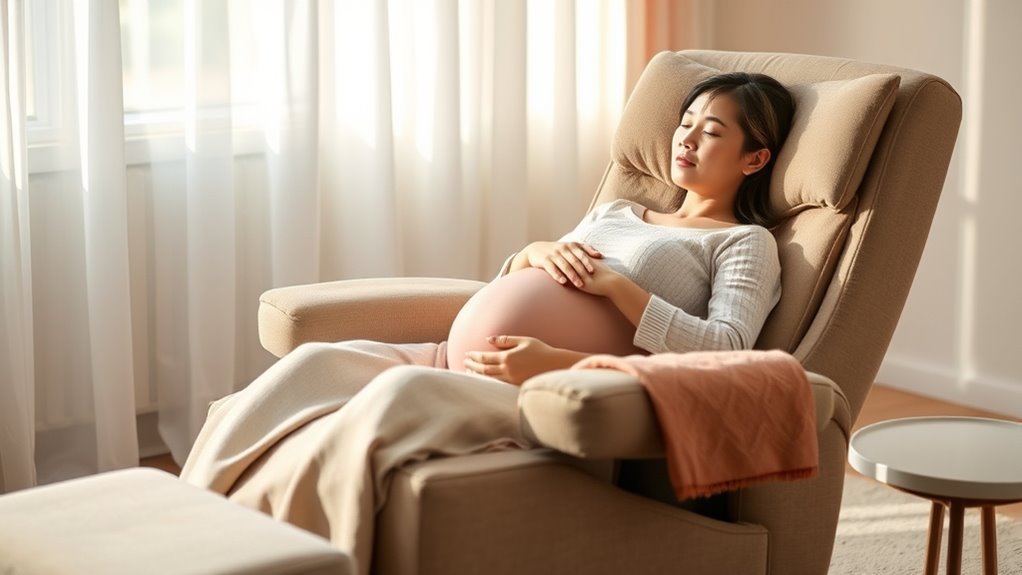
Although sleeping in a recliner might seem unconventional, it offers several benefits during pregnancy that can improve your comfort and rest. A recliner helps by elevating your upper body, which eases pregnancy sleep issues like heartburn and acid reflux.
You’ll find its customizable support reduces back pain, giving you better comfort throughout the night. The semi-upright position also promotes improved circulation, lowering swelling in your legs and ankles.
Plus, a recliner allows you to adjust your posture easily, which can help manage round ligament pain and the discomfort from fetal movements. Overall, using a recliner during pregnancy supports restful, comfortable sleep that’s often hard to achieve on a traditional bed.
How to Position Yourself Comfortably and Safely
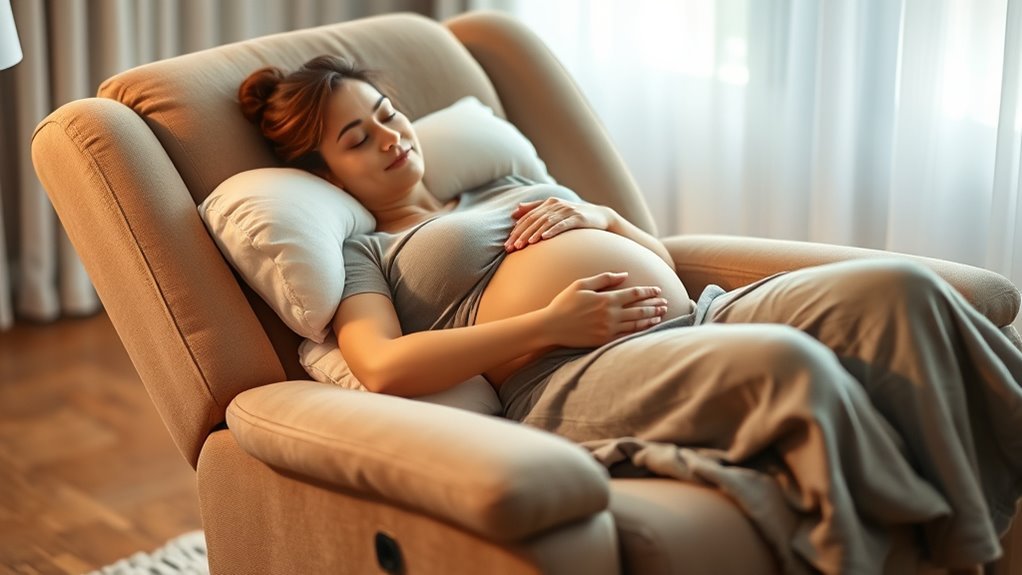
When you settle into your recliner, make sure to sit back fully so your hips and back get proper support. Proper positioning during pregnancy boosts comfort and safety.
Elevate your feet to reduce swelling, use a pregnancy pillow for belly support, and keep your head elevated to prevent reflux. Adjust the chair to a semi-reclined angle to ease abdominal pressure.
| Area | Positioning Tip | Benefit |
|---|---|---|
| Hips & Back | Sit fully back | Proper support |
| Feet | Elevate on footrest/pillow | Improves circulation |
| Belly & Hips | Use pregnancy pillow | Maintains side-lying comfort |
| Recliner Angle | Semi-reclined/upright | Reduces abdominal pressure |
| Head | Elevated with pillow | Prevents acid reflux |
Managing Pregnancy Discomforts While Reclining
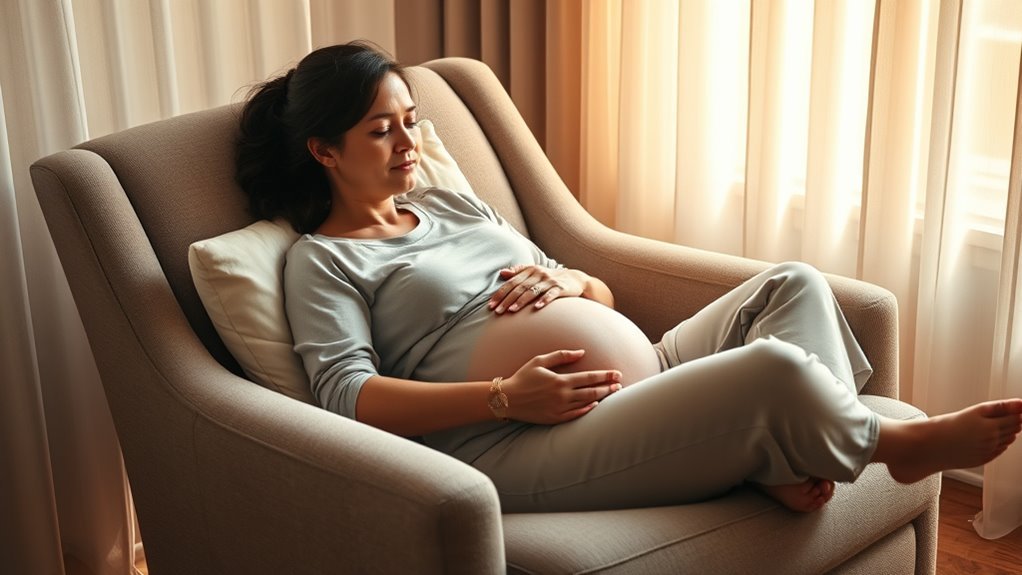
Comfortable positioning in your recliner sets the stage for managing common pregnancy discomforts. Choosing the right reclining position can reduce heartburn and acid reflux by easing stomach pressure.
Aim for about a 30-degree angle to enhance blood flow and minimize swelling in your legs. Elevate your feet while reclining to promote venous return and reduce swelling.
Incorporate adjustable pillows or lumbar supports to provide essential spinal support, relieving lower back pain. Don’t stay in one position too long; regularly changing your reclining position prevents muscle stiffness and improves circulation.
Recommended Recliner Features for Pregnant Women
When choosing a recliner during pregnancy, prioritize adjustable lumbar support to ease lower back pain. You’ll want multiple reclining angles so you can find the position that feels best at any time.
Also, look for durable, comfortable materials that provide proper support throughout the night. It makes a big difference when you can relax without worrying about discomfort.
Adjustable Lumbar Support
Because pregnancy puts extra strain on your lower back, choosing a recliner with adjustable lumbar support can make a big difference in reducing discomfort. Adjustable lumbar support lets you customize the cushion to fit the natural curve of your spine, easing pressure and promoting better posture.
This targeted support helps distribute your weight evenly, which can relieve common pregnancy-related back pain. Many recliners come with ergonomic lumbar cushions that you can move or modify, so you can find the perfect position whether you’re sitting or resting.
Reclining Angle Options
Although finding the perfect recline angle can be challenging during pregnancy, choosing a recliner with adjustable reclining options lets you tailor your position for maximum support and comfort.
Look for models featuring infinite positioning mechanisms or Twilight technology, which allow you to set the reclining angle precisely—ideally around 30 degrees. That’s a position many physicians recommend for ideal spinal alignment.
An adjustable headrest is essential, too; it lets you fine-tune neck and upper back support, reducing strain and helping you maintain a comfortable posture.
Multiple reclining positions let you switch easily between resting and sleeping angles, ensuring you find what works best for your body.
With these features, your recliner can provide the optimal support you need throughout pregnancy.
Durable Comfortable Materials
A recliner made with durable, comfortable materials can make all the difference during pregnancy. You’ll want one with high-density foam cushions—at least 1.8 lbs/cu ft—to provide firm yet supportive comfort that lasts.
Choosing upholstery in hypoallergenic fabrics or genuine leather helps reduce irritation and makes cleaning easier. Look for fabrics resistant to dust mites and breathable enough to prevent overheating, keeping you comfortable throughout the night.
Also, prioritize durable construction featuring quality stitching and reinforced frames. This way, the recliner withstands frequent adjustments and prolonged use.
Certifications like Greenguard or Oeko-Tex signal low chemical emissions, ensuring a healthier environment for you and your baby. These material features combine to create a supportive, safe, and cozy spot for restful sleep during pregnancy.
Potential Concerns About Recliner Use and Baby Positioning
You might wonder if sitting in a recliner affects your baby’s position, since reclining can tilt your uterus backward and encourage a posterior position. While evidence is limited, it’s a good idea to balance recliner use with upright or side-lying positions to support ideal fetal orientation.
Managing how you sit can help reduce the chance of longer labor and discomfort linked to baby positioning. So, mixing up your positions throughout the day could really make a difference.
Recliner Impact on Baby
When you spend long periods sitting in a recliner during pregnancy, it can tilt your uterus backward. Some believe this might influence how your baby positions itself.
This shift may encourage a posterior fetal positioning, which is sometimes linked to more painful labor. While scientific evidence is limited, many healthcare providers suggest prioritizing side sleeping over prolonged reclined sitting.
Doing so can support ideal fetal positioning and improve pregnancy sleep quality.
| Factor | Potential Impact | Notes |
|---|---|---|
| Recliner Use | Uterus tilts backward | May affect fetal positioning |
| Fetal Positioning | Possible posterior placement | Could increase labor discomfort |
| Pregnancy Sleep | Reclined sitting vs. side sleeping | Side sleeping often preferred |
| Scientific Evidence | Limited and inconclusive | Individual experiences vary |
| Healthcare Advice | Encourages side sleeping | Reduces potential risks |
Managing Baby Positioning
Although sitting in a recliner may feel comfortable during pregnancy, it can subtly influence how your baby positions itself by tilting the uterus. This tilt might affect your baby’s fetal position, potentially encouraging a posterior (sunny side up) position. Some say this could lead to longer, more painful labor.
While scientific evidence linking recliner use directly to fetal position is limited, it’s wise to be cautious. To help manage baby positioning, try to alternate between recliner sitting and side-lying positions. These side-lying positions are generally recommended to encourage ideal fetal alignment.
Also, avoid lying flat on your back for extended periods, as this can restrict blood flow and affect your baby’s placement. Always check with your healthcare provider to tailor strategies that suit your pregnancy best.
Tips for Enhancing Sleep Quality in a Recliner
Since comfort and safety are essential during pregnancy, adjusting your recliner to a 30-degree angle helps you achieve ideal support while resting. This best angle reduces strain and promotes better circulation.
To enhance sleep quality, try these tips:
- Use supportive pillows around your lower back and under your knees to maintain proper alignment and ease pressure points.
- Elevate your legs slightly or use the footrest to improve blood flow and reduce swelling.
- Choose a recliner with breathable, hypoallergenic fabric to keep you cool and comfortable.
- Limit sleep periods in the recliner to avoid muscle fatigue, and change positions frequently to promote overall rest and safety.
Following these steps ensures you rest comfortably and safely during pregnancy.
Frequently Asked Questions
Is Insomnia a Common Symptom Before Labor?
Yes, insomnia is common before labor. You’ll likely struggle to sleep due to discomfort, hormonal changes, and anxiety.
It’s normal to experience these symptoms, so try relaxation techniques and consult your doctor if it worsens.
Do Doctors Recommend Recliners?
Doctors do recommend recliners, as they cradle your body like a gentle wave, easing back pain and acid reflux. They’ll help you rest safer and comfier during pregnancy, but always check with your healthcare provider first.
It’s a great way to relax and support your body at the same time. Just make sure the recliner fits your needs and feels comfortable for you.
What Positions Should You Not Sit in While Pregnant?
You shouldn’t sit flat on your back, fully reclined, or with crossed legs tightly while pregnant.
Avoid slouching without lumbar support or sitting on hard surfaces that cause pressure or strain.
These positions can harm circulation and cause discomfort, so it’s best to steer clear of them.
What Are Some Common Sleep Issues During Pregnancy?
You’ll often face heartburn, back pain, and frequent bathroom trips during pregnancy. Hormonal changes might cause insomnia or restless legs, while your baby’s movements can wake you up.
These sleep issues are pretty common. It’s all part of the changes your body goes through when you’re expecting. Just know you’re not alone in dealing with them!
Conclusion
Sleeping in a recliner during pregnancy can feel like floating on a cloud of relief, easing your discomfort and supporting your body just right. By positioning yourself carefully and choosing the right recliner features, you’ll find it easier to catch those much-needed Z’s.
Keep an eye on baby’s position and make small adjustments to maximize comfort. It’s all about finding that perfect balance where you and your little one feel cozy and safe.
With these tips, you’re set to conquer pregnancy sleeplessness and wake up refreshed every morning! Remember, sleeping in a recliner while pregnant can be a game-changer for your comfort. So, embrace the support, listen to your body, and enjoy those peaceful nights ahead.