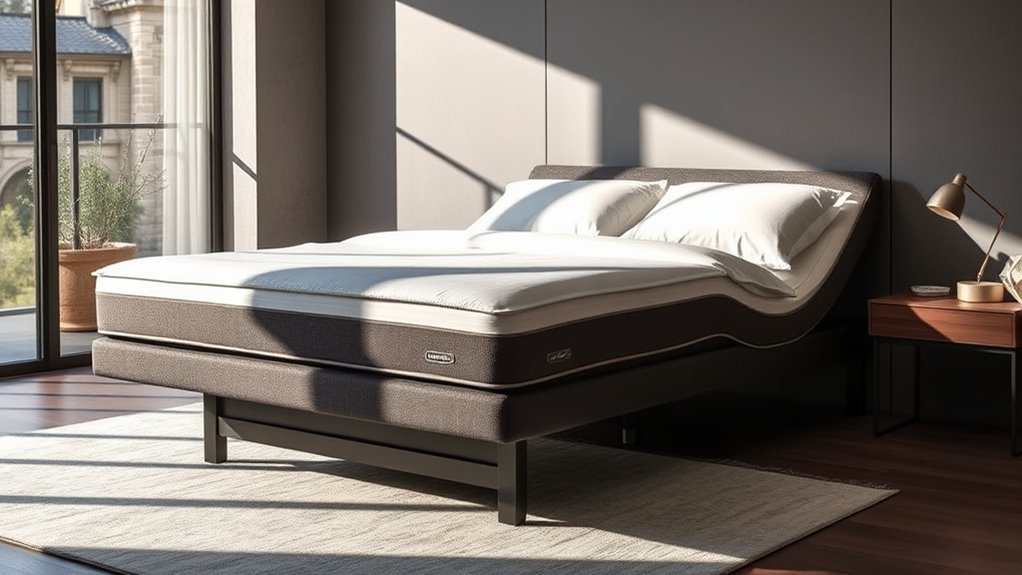
How to Use Any Mattress With an Adjustable Base
To use any mattress with an adjustable base, you need to make sure it’s flexible enough to bend without damage. This is key for compatibility because not all mattresses work well with adjustable bases.
Test it by gently flexing the mattress and see if it returns flat without creaking or cracking.
Memory foam, latex, and hybrid mattresses usually work best. Ideally, they should be about 10 to 14 inches thick to bend easily with the base.
On the other hand, avoid rigid innerspring mattresses since they resist bending and can wear out quickly.
Protect your mattress with covers to keep it in good shape.
Also, remember to rotate it regularly to extend its life.
Keep exploring for more tips on mattress compatibility and maintenance—they really make a difference!
Key Takeaways
– Ensure your mattress is flexible enough to bend smoothly without resistance or damage when adjusting positions.
You want it to move easily so it doesn’t get worn out or hurt over time.
– Use memory foam, latex, or hybrid mattresses with flexible coils for optimal compatibility with adjustable bases.
These types just work better with the movements of the base.
– Test mattress flexibility by gently bending and checking if it returns to flat without creaking or deformation.
If it snaps back nicely, you’re good to go!
– Maintain mattress condition by rotating regularly and using a mattress protector to prevent uneven wear and damage.
This helps keep it comfy and lasting longer.
– Follow manufacturer guidelines for mattress thickness, compatibility, and warranty to avoid issues and maximize performance.
That way, you’ll get the best experience without any surprises.
Why Mattress Flexibility Matters for Adjustable Beds
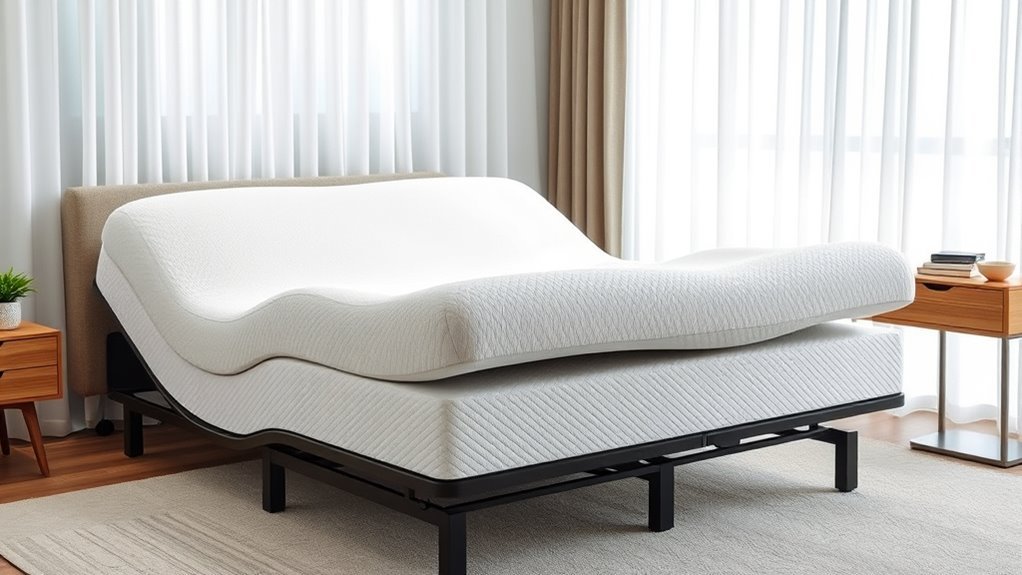
Because adjustable bases move to create customized positions, your mattress needs to flex without damage. Mattress flexibility is vital because it lets your mattress bend and conform smoothly to the adjustable base’s movements.
Memory foam mattresses excel here, thanks to their excellent bendability, making them highly compatible with most adjustable bases. In contrast, innerspring mattresses often struggle; their rigid coil systems resist bending and can suffer structural damage when used with adjustable bases.
Memory foam’s flexibility suits adjustable bases perfectly, while innerspring coils resist bending and risk damage.
When your mattress flexes well, it supports ergonomic positions like Zero-G or elevated head and foot settings comfortably. Prioritizing mattress flexibility guarantees your mattress stays intact and enhances your adjustable base experience by adapting effortlessly to your preferred positions.
Understanding this compatibility helps you choose the right mattress for ultimate comfort and durability. It’s all about making sure your bed moves with you, not against you.
How to Test Your Mattress for Adjustable Base Compatibility
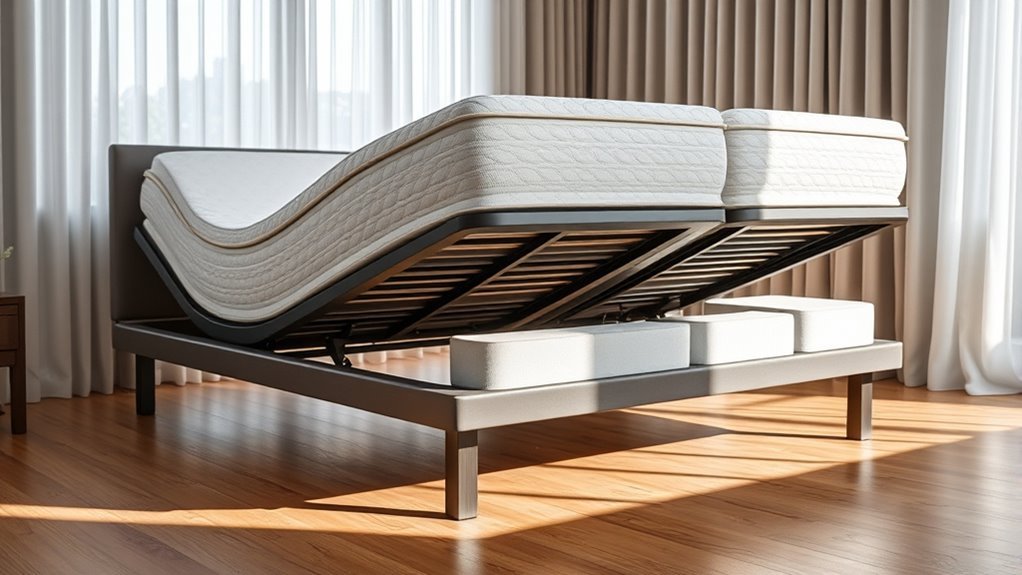
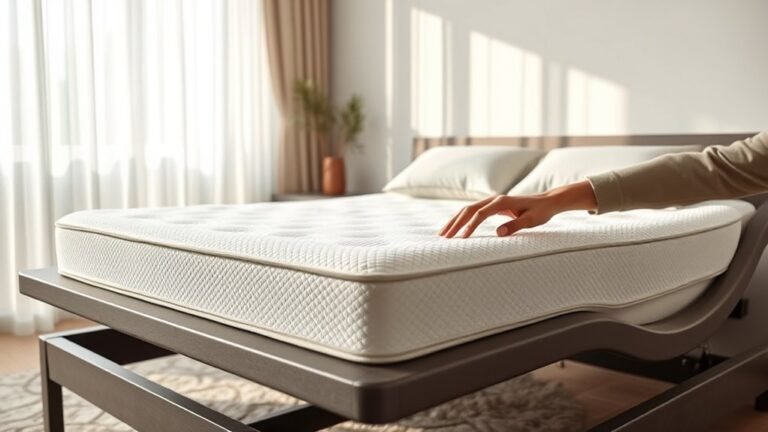
When you want to guarantee your mattress works well with an adjustable base, start by gently lifting and bending it to check for flexibility. You want to see if it bends easily without resistance or creaking, which signals good compatibility with adjustable features.
Next, test how smoothly it returns to flat after bending; this shows it can handle repeated adjustments without damage. Apply pressure at different points to assess how well your mattress conforms and supports movement.
If it feels stiff or resists bending, it may not be suitable for an adjustable base. Finally, review the manufacturer’s guidelines or labels for any specific compatibility instructions.
These steps help assure your mattress is flexible enough to work perfectly with your adjustable base.
Best Mattress Types Compatible With Adjustable Bases
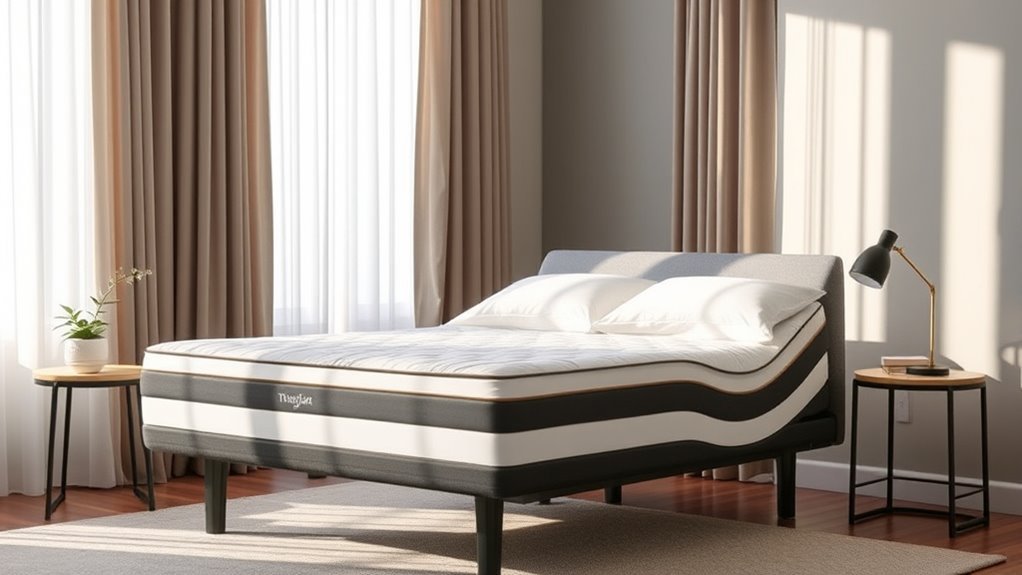
Which mattress types work best with adjustable bases? Memory foam mattresses top the list thanks to their exceptional flexibility and ability to contour without damage, making them perfect for adjustable bed compatibility.
Latex mattresses also excel, offering natural resilience and bendability that easily handle repositioning.
Hybrid mattresses can work well if they feature flexible, pocketed coil systems that move with the base. This is unlike traditional innerspring coil systems such as Bonnell or offset coils, which resist bending and may get damaged.
Choosing a mattress that adapts to your adjustable base heightens comfort by relieving pressure points effectively. So, prioritize memory foam, latex, or hybrid mattresses with flexible coil systems. That way, you can be sure you get the most from your adjustable bed’s features and support.
Ideal Mattress Thickness for Adjustable Beds
Selecting the right mattress type is just one part of enhancing your adjustable base experience. Mattress thickness plays a key role in bed compatibility and proper bending.
Aim for a mattress height between 10 and 14 inches to ensure ideal support and flexibility. Thicker mattresses often lack the flexibility needed, while thinner ones may not provide enough support.
| Mattress Thickness | Pros |
|---|---|
| Under 10 inches | May lack ideal support |
| 10 to 14 inches | Best flexibility and bending |
| Over 15 inches | Risk of damage, poor bending |
Choosing a mattress within this range guarantees proper bending, enhances flexibility, and helps maintain your adjustable bed’s longevity and comfort. It’s really about finding that sweet spot for the best experience.
Problems Caused by Incompatible Mattresses on Adjustable Beds
If your mattress isn’t compatible with your adjustable base, you risk damaging both the mattress and the bed’s mechanisms. You’ll also notice reduced comfort as the mattress may not flex properly or provide even support.
Plus, using the wrong mattress can void warranties and lead to costly repairs down the line. So, it’s really important to pick the right mattress that works well with your adjustable bed.
Mattress Damage Risks
When you use a mattress that isn’t designed to bend easily on an adjustable base, you risk damaging its internal layers and shortening its lifespan. An incompatible mattress, especially one with a rigid coil system, resists bending, causing excessive wear and tear.
This lack of flexibility leads to internal layer damage, sagging, and even permanent deformation. Over time, the mattress may fail to return to its flat position, increasing strain on both the mattress and the adjustable base.
This constant stress accelerates mattress damage, voids warranties, and might require costly repairs or replacements. To protect your investment and guarantee smooth operation, choose a mattress that flexes well with your adjustable base.
Doing so minimizes the risk of sagging and internal damage caused by incompatible designs. It’s a simple step that can save you a lot of hassle down the road.
Reduced Comfort Levels
Damage to your mattress from improper bending doesn’t just shorten its lifespan—it also affects how comfortable you feel while using your adjustable base. Incompatible mattresses often fail to flex properly, causing pressure points and uneven surfaces that reduce comfort.
Rigid mattresses resist bending, increasing sliding instability and discomfort. This discomfort leads to restless nights and poor sleep quality.
| Issue | Cause | Effect |
|---|---|---|
| Pressure Points | Non-flexible mattress | Pain, discomfort |
| Uneven Surfaces | Rigid mattresses | Comfort reduction |
| Sliding Instability | Mattress shifts on base | Sleep disruption |
Choosing a mattress designed for adjustable bases helps prevent damage to your mattress and guarantees consistent comfort all night long. It’s really worth making the right choice to ensure you get a good night’s sleep every night.
Warranty And Compatibility Issues
Although adjustable bases offer excellent flexibility, using a mattress that isn’t compatible can quickly void your warranty and cause serious issues. Many manufacturers specify in their guidelines that only mattresses designed for adjustable bases qualify for warranty coverage.
Using an incompatible mattress, like a rigid innerspring with non-flexible coils, can prevent proper bending and damage both the mattress and the adjustable base. This lack of compatibility can also lead to support problems, causing sagging, creasing, or failure to return to a flat position.
Ignoring manufacturer guidelines risks increased wear and tear and early damage, reducing the lifespan of your setup. To protect your investment and guarantee optimal performance, always check for mattress compatibility before pairing it with an adjustable base.
How to Protect and Extend Your Mattress Life on an Adjustable Base
To protect your mattress on an adjustable base, make sure you rotate and flip it regularly to prevent uneven wear.
Choose a mattress designed for adjustable frames, like memory foam or hybrid types, to guarantee it bends properly without damage.
Taking these steps will help you extend your mattress’s lifespan and maintain comfort. It’s really worth the effort!
Proper Mattress Rotation
How often should you rotate your mattress on an adjustable base? Proper mattress rotation is key to maintaining support and extending your mattress lifespan.
To keep wear evenly distributed, rotate your mattress 180 degrees every 3 to 6 months. Before doing so, make sure your mattress is compatible with the adjustable base to avoid damage or misalignment.
Here’s a quick guide to proper mattress rotation:
- Confirm mattress compatibility with your adjustable base.
- Rotate the mattress 180 degrees at the recommended rotation frequency.
- Use a mattress protector to reduce friction and surface wear during rotation.
Following these steps helps maintain your mattress’s shape, ensures consistent support, and maximizes the life of both your mattress and adjustable base. Easy, right? Just a little care goes a long way!
Use Compatible Mattress
Why does mattress compatibility matter when using an adjustable base? A compatible mattress ensures it bends without damage, keeping both mattress support and your sleep experience intact.
Choose mattresses made from flexible materials like memory foam, latex, or hybrid coils designed to move with the base’s adjustments. Avoid rigid innerspring mattresses that resist bending—they can wear out quickly or even break.
Also, check that mattress thickness falls within the recommended 10-14 inch range. This helps maintain excellent flexibility and support.
To protect your mattress even more, use a mattress protector to guard against dust, moisture, and tears. And don’t forget to regularly inspect for creases or strain.
Rotating or flipping your mattress periodically can also make a big difference. These simple steps help extend your mattress’s life while maximizing comfort on your adjustable base.
Buying a Mattress and Adjustable Base Together: Tips for Best Compatibility
When you buy a mattress and adjustable base together, you guarantee they work perfectly as a set since manufacturers design them for seamless compatibility. This assures your sleep setup offers ideal support and foundation.
To get the best match, consider these tips:
- Choose a mattress flexible enough to bend without damage, especially if it’s foam, latex, or hybrid.
- Opt for a mattress thickness between 10-14 inches, which balances comfort and reduces strain on the adjustable base.
- Buy both items from the same brand or retailer to simplify support, warranty claims, and avoid compatibility issues.
Always check manufacturer recommendations to protect your investment. That way, you can enjoy a fully compatible adjustable base and mattress that enhance your sleep experience.
Frequently Asked Questions
Can I Use an Adjustable Bed Frame With Any Mattress?
You can’t use every mattress with an adjustable bed frame. Flexible mattresses like memory foam or latex work best.
Avoid rigid innerspring types, and always check your mattress’s guidelines to guarantee it bends without damage or discomfort. It’s pretty important to make sure your mattress can handle the movement.
How Can I Tell if My Mattress Is Compatible With an Adjustable Base?
You can tell if your mattress is compatible by gently bending it to see if it flexes smoothly.
Check for flexible materials like memory foam or latex, and review the manufacturer’s guidelines for adjustable base compatibility.
It’s pretty simple—if your mattress bends without any trouble, it’s likely a good fit.
Just remember to double-check what the maker says, so you don’t run into any surprises!
Can You Put a 14 Inch Mattress on an Adjustable Bed?
Yes, you can put a 14-inch mattress on an adjustable bed if it’s flexible enough. Check if it bends easily without damage, especially if it’s memory foam or hybrid.
Avoid overly rigid or thick innersprings. They might not work well with the adjustable base. So, just make sure your mattress can move with the bed comfortably.
What Beds Are Not Compatible With an Adjustable Base?
You shouldn’t use traditional innerspring mattresses with rigid coils, very thick mattresses over 14 inches, air beds without adjustable compatibility, or those with solid, non-flexible cores.
They’ll damage the base or won’t bend properly with adjustments. So, it’s really important to choose the right mattress to avoid any issues.
Conclusion
Using any mattress with an adjustable base means choosing flexibility, testing compatibility, and considering thickness. It means understanding mattress types that move with ease, avoiding problems caused by rigidity, and protecting your investment for longer life.
It also means buying smart, pairing wisely, and sleeping comfortably. When you pay attention to these key steps, you make sure your mattress and adjustable base work together seamlessly.
By focusing on flexibility, compatibility, and mattress thickness, you guarantee a perfect match that supports your body in every position. This leads to restful nights and better sleep quality. So, whether you have memory foam, latex, or hybrid mattress, knowing how to use it with an adjustable base helps you get the most comfort and durability out of your setup every time you lie down.