Can You Use Any Mattress With an Adjustable Base?
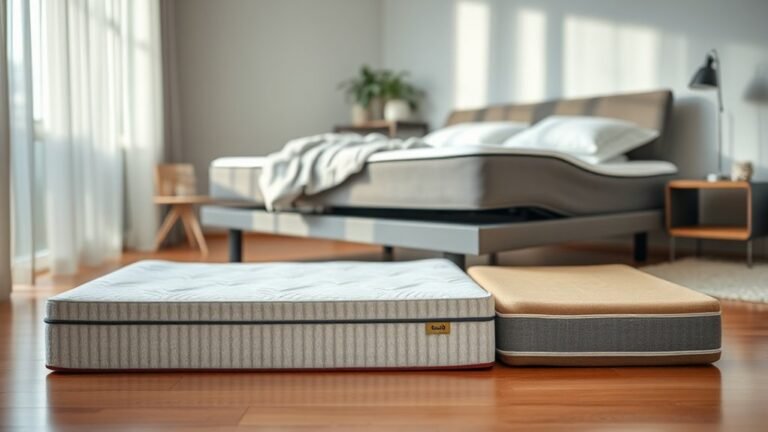
You can’t use just any mattress with an adjustable base because it needs to flex without damage for smooth movement and comfort. Memory foam, latex, hybrid, or air mattresses work best since they bend easily and hold their shape.
These types adapt well to the adjustable base’s movements, giving you a comfy and supportive sleep experience.
Avoid rigid innerspring mattresses—they can crack or wear out quickly when used on adjustable bases.
Thickness is important too; 10 to 14 inches is usually ideal. Too thick or too thin can affect how well the mattress works with the base.
Keep these tips in mind to get the best sleep experience. Knowing how to pick the perfect mattress for your adjustable base makes all the difference.
Key Takeaways
- Foam, latex, hybrid, and air mattresses work well with adjustable bases because they’re flexible and bend smoothly.
- This flexibility makes them a great match for changing positions without damaging the mattress.
- On the other hand, rigid coil or continuous innerspring mattresses usually don’t bend easily.
- They can resist movement, which might lead to damage or shorten the mattress’s lifespan.
- When choosing a mattress, aim for a thickness between 10 and 14 inches.
- This range helps ensure the mattress stays flexible enough while offering solid support when you adjust the base.
- A simple way to check if a mattress will work with an adjustable base is to gently bend it.
- See if it bends smoothly and keeps its shape without feeling stiff.
- Also, pick a firmness level that suits your personal sleep style.
- It should feel comfortable but still allow the mattress to move and relieve pressure when you change positions.
Understanding Adjustable Base Functionality
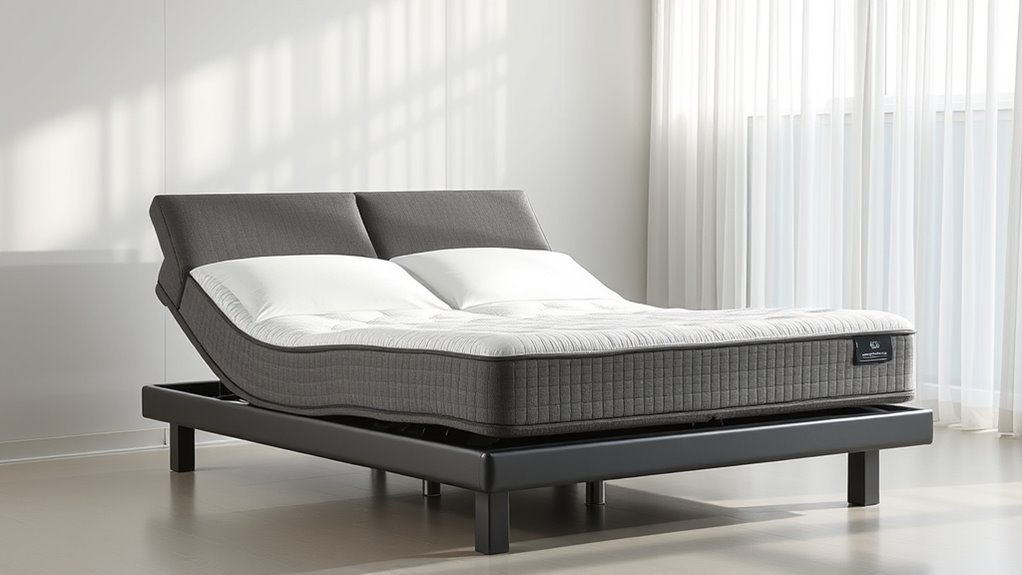
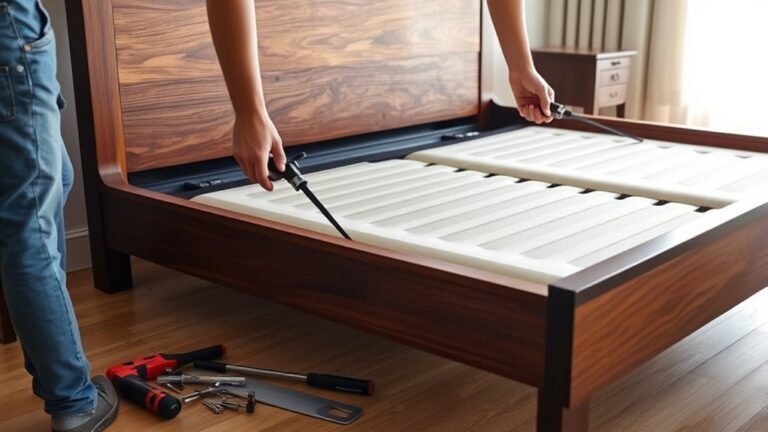
Although adjustable bases might seem complex, they work by using motors to tilt and elevate different sections of your bed, giving you customizable comfort.
This adjustable base features pivot points in the head and foot areas, offering various bed positioning options like zero gravity or reading mode.
When considering compatibility, you need to guarantee your mattress is flexible enough to move smoothly with these adjustments.
The mattress’s construction plays a vital role in how well it bends without damage.
Since the adjustable base replaces traditional box springs, it must provide adequate mattress support during movement.
Mattress Types Compatible With Adjustable Bases
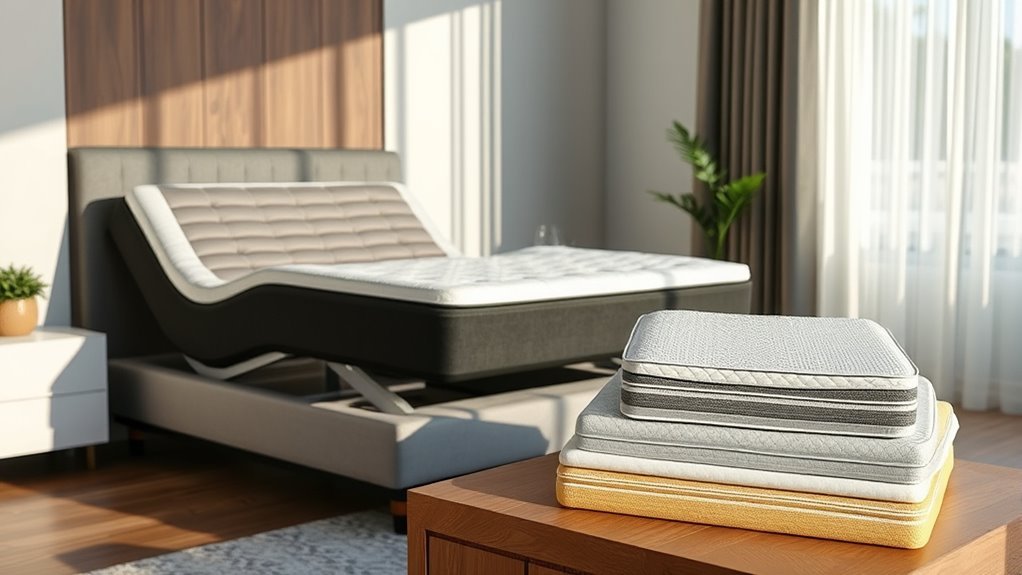
When choosing a mattress for your adjustable base, you’ll find foam mattresses offer excellent flexibility that adapts well to movement. They’re super good at bending without losing shape, which is perfect for those adjustments.
Latex mattresses provide great durability and support, making them a solid choice for long-term comfort. Plus, they tend to stay cooler than some foam options, which can be a nice bonus.
Hybrid mattresses combine pocketed coils with foam layers, giving you both support and smooth adjustability. So, you get the best of both worlds — the bounce of coils and the softness of foam.
Foam Mattress Flexibility
Since foam mattresses like memory foam and latex bend easily, they work especially well with adjustable bases. Their flexibility lets them contour smoothly to the base’s movements without cracking or losing shape.
High-density foam and latex recover quickly after repeated flex and bend, maintaining consistent support and comfort. Unlike innerspring mattresses, foam mattresses lack rigid coils, making them highly compatible with adjustable bases.
This flexibility also enhances motion isolation, so you won’t feel your partner moving. Typically 10 to 14 inches thick, foam mattresses provide enough support while adapting seamlessly to different positions.
If you want a mattress that moves with your adjustable base without damage, foam mattresses are an excellent choice due to their durability and ability to contour perfectly with every adjustment.
Latex Mattress Benefits
Why choose a latex mattress for your adjustable base? Latex offers exceptional compatibility thanks to its natural elasticity, allowing it to bend and flex smoothly without damage. This flexibility guarantees it moves effortlessly with adjustable bases, maintaining both support and pressure relief across various sleep positions.
You’ll appreciate how quickly latex recovers after bending, preserving its durability and shape over time. Plus, its open-cell structure boosts breathability, keeping you cool even when frequently adjusted.
Whether you opt for natural or synthetic latex, you’ll enjoy consistent support that adapts to your body’s needs. Choosing latex means combining comfort, resilience, and airflow—perfect qualities for a mattress designed to work dynamically with your adjustable base.
Hybrid Mattress Support
Although hybrid mattresses blend different materials, they work exceptionally well with adjustable bases. Their support core uses a coil support system with individually wrapped coils, providing the flexibility needed for smooth movement.
The foam or latex comfort layers are durable and bend without damage, enhancing compatibility with adjustable bases. Typically 10 to 14 inches thick, hybrids offer an ideal balance of support and flexibility for adjustable frames.
| Feature | Benefit |
|---|---|
| Coil Support | Bends without damage |
| Support Core | Provides stable movement |
| Flexibility | Enhances adjustable base compatibility |
If you want a mattress combining comfort and reliable support for your adjustable base, hybrid mattresses are an excellent choice. They really strike the perfect balance between comfort and support you need.
Flexibility and Thickness Requirements for Mattresses
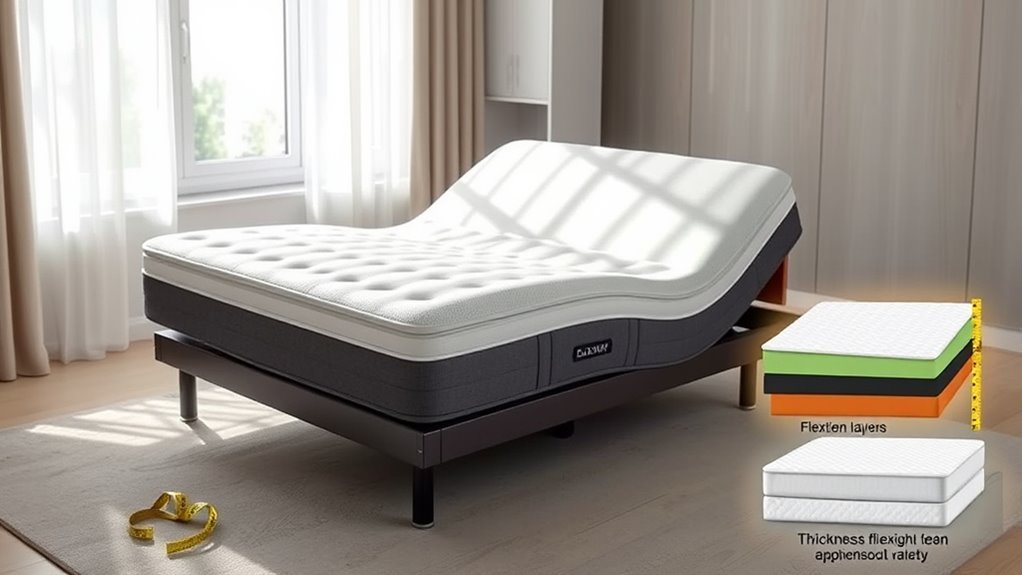
You’ll want a mattress that’s flexible enough to bend with your adjustable base without cracking or losing support. Aim for a thickness between 10 and 14 inches to make certain of smooth movement and avoid putting stress on the mattress or base.
Choosing the right flexibility and thickness helps your base perform at its best. Plus, it extends the life of your mattress. So, it’s really worth paying attention to these details!
Mattress Flexibility Importance
Because adjustable bases require frequent bending, your mattress needs enough flexibility to handle repeated movement without cracking or damage.
Mattress flexibility is vital when pairing with an adjustable bed. Mattresses compatible with adjustable bases often feature a foam comfort layer or pocketed coils, which allow for smooth bending.
In contrast, traditional indoor springs and thick pillow-top mattresses tend to resist flexing, risking internal damage. A flexible mattress bends easily without compromising support or durability.
Before buying, conduct a bend test to ensure the mattress withstands repeated articulation. Choosing the right mattress flexibility not only preserves your mattress’s lifespan but also enhances your comfort and the adjustable base’s performance for a better sleep experience.
Optimal Mattress Thickness
When selecting a mattress for your adjustable base, choosing the right thickness is essential to guarantee both flexibility and support. The ideal mattress thickness usually falls between 10 and 14 inches, striking a balance that allows the mattress to bend easily without causing internal stress or damage.
Mattresses thicker than 14 inches often resist bending at pivot points, which can harm the mattress and reduce durability. On the other hand, mattresses under 10 inches may lack sufficient comfort layers, compromising proper support and overall comfort.
Maintaining an optimal mattress thickness helps preserve bed height, supports the adjustable base’s movement, and prolongs the mattress’s lifespan. So, pick a mattress that offers flexibility and durability while matching your adjustable base’s design for the best sleep experience.
Impact on Base Movement
Selecting the right mattress thickness sets the stage for how well your adjustable base moves. For ideal adjustable bed compatibility, your mattress needs enough flexibility to bend and flex without risking internal damage.
Mattresses thicker than 14 inches often reduce bed movement and strain the support system. Memory foam, latex, and hybrids with pocketed coil systems usually offer the best mattress flexibility, while innerspring models with continuous coils tend to resist bending.
You can perform a simple bend test to assess if your mattress materials suit an adjustable base. It’s a quick way to check if your mattress will work well with your adjustable base or not.
| Mattress Material | Flexibility Level | Impact on Base Movement |
|---|---|---|
| Memory Foam | High | Smooth articulation |
| Latex | High | Excellent bed movement |
| Hybrid (Pocketed Coils) | Moderate-High | Good support, flexible |
| Innerspring (Continuous Coils) | Low | Limited bend, risk of damage |
Hybrid Vs Foam Vs Latex Mattresses on Adjustable Bases
If you want a mattress that moves smoothly with your adjustable base, hybrid, foam, and latex options each offer unique benefits. A hybrid mattress combines coil support with foam layers, providing excellent flexibility and compatibility with adjustable bases. The pocketed coils flex easily while foam adds conforming comfort.
Foam mattresses excel in bending and conforming without damage, making them highly suitable for adjustable bases. Latex mattresses also perform well thanks to their natural elasticity and durability, offering consistent support during movement.
However, keep in mind that excessively thick or dense foam layers in hybrid and foam mattresses can reduce flexibility, especially if over 14 inches thick or made from less flexible materials. So, it’s best to prioritize models designed for repeated articulation to ensure long-lasting compatibility and smooth base movement.
Risks of Using Incompatible Mattresses
Although adjustable bases offer great comfort and flexibility, using a mattress that’s not compatible can lead to serious problems.
Incompatible mattresses, especially those with rigid coils or inflexible materials, can cause internal damage and premature wear and tear. If your mattress resists bending, it may crack or deform, compromising support and comfort.
This lack of proper articulation can also strain the mechanical components and motors of the base, risking costly repairs. Plus, unsupported mattresses might shift or slide during adjustments, creating safety hazards.
Using rigid or non-flexible mattresses often voids the warranty, leaving you responsible for any damage. So, to protect your investment and guarantee ideal performance, it’s essential to avoid incompatible mattresses that don’t pair well with adjustable bases.
How to Test Mattress Compatibility With Adjustable Bases
To guarantee your mattress works well with an adjustable base, start by performing a simple bend test. Gently flex the mattress in several spots to see if it folds smoothly without cracking or creasing.
Pay attention to the material—foam, latex, or hybrids with pocketed coils tend to be more flexible and offer better compatibility. Check the manufacturer’s specs or law label to confirm if the mattress is designed for adjustable bases.
During testing, observe if the mattress maintains support and shape while you flex it, indicating it can handle repeated articulation. Finally, place the mattress on the adjustable base and adjust the head and foot sections to ensure smooth movement without strain or misalignment.
This hands-on approach ensures your mattress will flex and support properly with your adjustable bed. It’s a simple way to avoid any surprises down the road!
Choosing the Right Mattress Firmness for Adjustable Beds
When choosing the right mattress firmness for your adjustable bed, consider how you sleep and what level of support you need. Medium firmness mattresses generally offer the best compatibility with adjustable beds. They provide balanced support and pressure relief for various sleep positions.
If you’re a side sleeper, a softer mattress can enhance pressure relief. Just keep in mind, it might lack sufficient bed support if you’re heavier. On the other hand, firmer mattresses suit back and stomach sleepers better. They maintain shape and offer stronger support when the bed bends.
Your ideal mattress firmness depends on your body weight, sleep position, and personal preference. It’s a good idea to test different firmness levels on your adjustable bed. That way, you can find the perfect balance of comfort, support, and durability for lasting bed support and excellent sleep quality.
Enhancing Sleep Quality With Adjustable Mattress Setups
Selecting the right mattress firmness sets the foundation for comfort, but pairing it with an adjustable base takes your sleep quality to the next level.
The right mattress firmness lays the groundwork, while an adjustable base elevates your overall sleep experience.
To enhance your sleep quality, you need an adjustable mattress compatible with adjustable bases that can move with the base without damage. Here’s how to choose a mattress for adjustable beds effectively:
- Choose a mattress with flexibility—memory foam, latex, or hybrid mattresses work well.
- Opt for a thickness between 10 to 14 inches to ensure smooth articulation.
- Test mattresses that work with an adjustable base before buying to confirm comfort and support.
- Select mattresses with individually wrapped coils or foam that adapt to movement, improving circulation and reducing snoring.
With these steps, your mattress and base setup will maximize comfort and sleep quality.
Frequently Asked Questions
Who Should Not Use an Adjustable Bed?
You shouldn’t use an adjustable bed if you have spinal injuries, implants, severe sleep disorders, neurological balance issues, or severe allergies.
Always check with your doctor first to make certain it’s safe and comfortable for you. Better safe than sorry, right?
How Do Adjustable Bed Frames Work?
Adjustable bed frames work by using built-in motors that raise or lower the head and foot sections independently. You control them with a remote or app, allowing you to find the perfect position for comfort or activities.
It’s pretty simple to use, really. Just a few clicks, and you can adjust your bed to sit up for reading or kick up your feet for relaxation.
What Is the Best Twin XL Mattress for an Adjustable Bed?
Imagine Sarah, who chose a 12-inch memory foam Twin XL mattress for her adjustable bed—it bends easily, offers great support, and lasts long.
You’ll want a flexible, medium-thick memory foam or hybrid mattress like hers for comfort and durability.
What Is the Lifespan of an Adjustable Bed?
You can expect your adjustable bed to last about 10 to 15 years if you maintain it well. Keep the motor and mechanical parts clean, avoid overloading, and follow the manufacturer’s care instructions to extend its lifespan.
Taking good care of it really makes a difference. Just a little regular maintenance can keep everything running smoothly for years. So, don’t forget to give it some attention now and then!
Conclusion
You can’t just pair any mattress with an adjustable base—it’s like trying to fit a square peg in a round hole. To get the best comfort and support, you need a mattress that bends and flexes with your base, like memory foam or hybrid models designed for movement.
Choosing the right firmness and compatibility is key. This way, you’ll enhance your sleep quality and wake up feeling refreshed, ready to face the day with ease.
When it comes to adjustable bases, not all mattresses are created equal. Memory foam and hybrid mattresses are your best bet because they adapt well to the base’s movements. So, if you want to enjoy the full benefits of an adjustable base, make sure your mattress is designed for it. That’s how you get the perfect combo for a great night’s sleep.