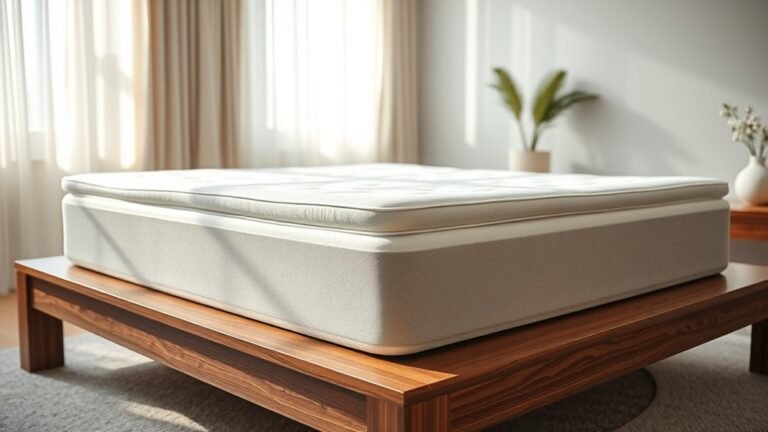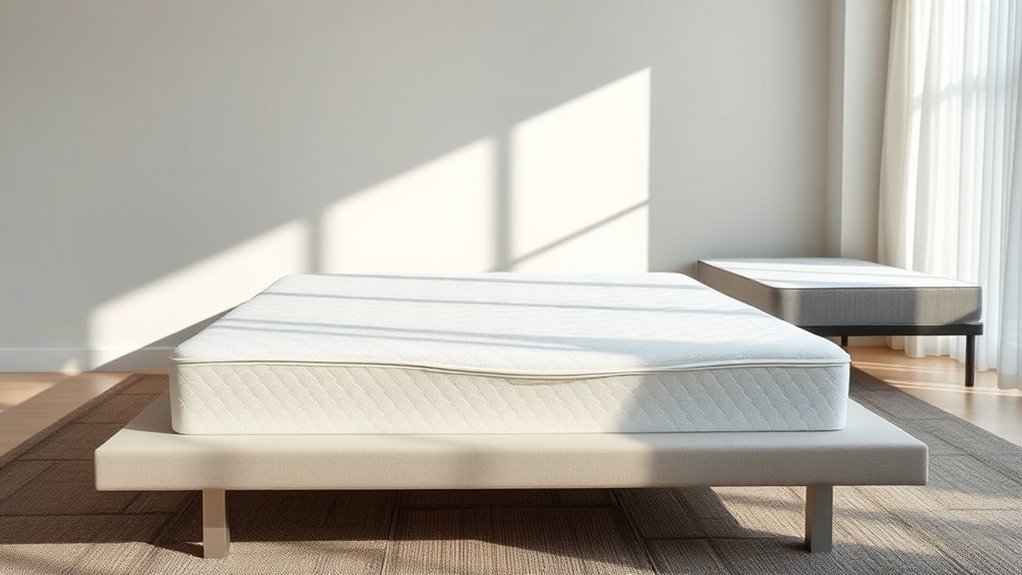
Does a Memory Foam Mattress Need a Box Spring?
You don’t always need a box spring for a memory foam mattress if you provide firm, flat support with a solid platform or closely spaced slats (no more than 3-4 inches apart).
These foundations prevent sagging and help maintain both comfort and durability.
If your bed frame has wide gaps or lacks proper support, though, a box spring might be necessary to protect your mattress and keep your warranty intact.
Finding the right foundation is key to maximizing your mattress’s lifespan and ensuring you get the best sleep possible.
So, keep exploring your options to discover what works best for your memory foam mattress and sleeping style.
Key Takeaways
- Memory foam mattresses typically need a firm, flat support surface, not necessarily a box spring.
- Solid platforms or slat foundations with slats spaced no more than 3-4 inches are ideal for memory foam.
- Box springs are only needed if the bed frame lacks sufficient support or has wide slat gaps.
- Inadequate support can cause sagging, damage, and void the mattress warranty.
- Adjustable bed frames and properly designed platform beds can support memory foam without a box spring.
Understanding Memory Foam Mattress Support Requirements
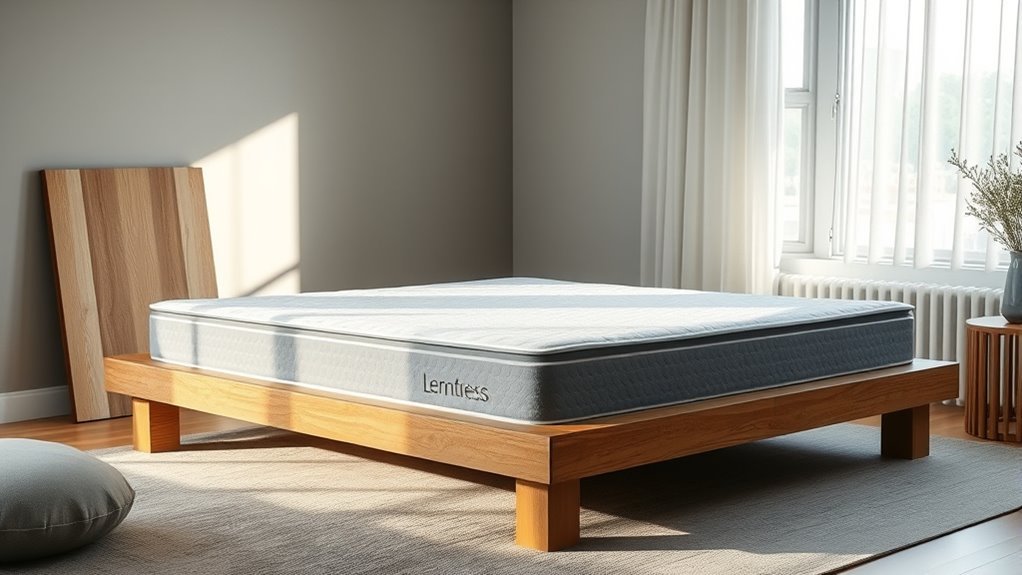
Although memory foam mattresses offer excellent comfort, they need firm, flat surfaces for proper support to prevent sagging and maintain their shape. Unlike traditional mattresses, memory foam doesn’t require a box spring; instead, it performs best on a solid foundation or platform bed.
Your support system should feature sturdy slats spaced no more than 4 inches apart to provide even mattress support. Using flimsy or uneven bases can cause premature sagging and damage, which shortens your mattress’s lifespan.
A compatible support system not only preserves your mattress warranty but also ensures ideal sleep comfort. So, when setting up your memory foam mattress, focus on choosing a strong, solid support that maintains its shape and durability over time.
Bed Frame Options Suitable for Memory Foam Mattresses
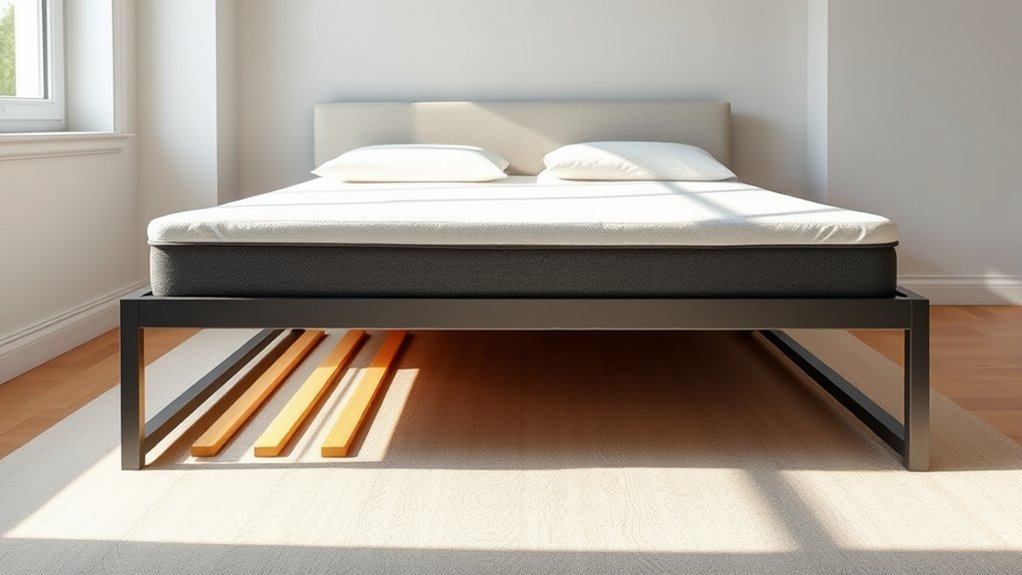
When choosing a bed frame for your memory foam mattress, you want to guarantee it provides firm, even support without the need for a box spring. Several bed frame options work well with foam mattresses.
Platform beds offer a solid, flat surface, delivering direct, solid support that eliminates the need for a traditional box spring. Slat foundations with slats spaced less than four inches apart provide both ventilation and sturdy support.
Adjustable bed frames also pair perfectly with memory foam mattresses, letting you customize your position comfortably without added components. Even metal frames with reinforced slats can effectively support foam mattresses.
These modern bed frame options ensure your mattress performs at its best while keeping your setup simple and sturdy. So, you’ve got plenty of choices to keep your memory foam comfy and well-supported!
When a Box Spring Is Necessary for Memory Foam Mattresses
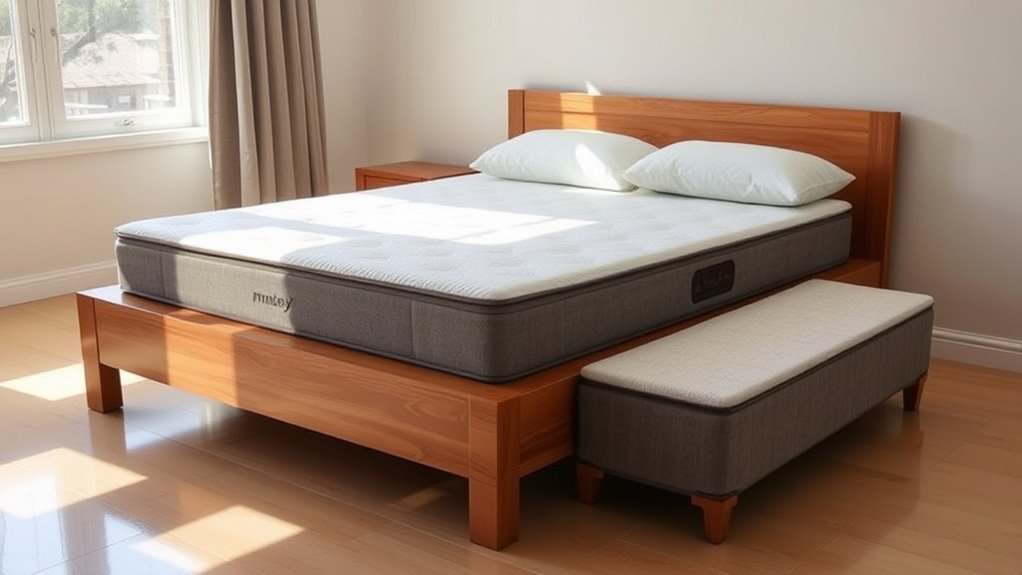
You’ll want to pay close attention to slat spacing when choosing support for your memory foam mattress, as too wide gaps can cause sagging. Also, check your mattress warranty to see if a box spring is required to keep it valid.
Finally, make sure your bed frame provides solid, even support. This helps prevent damage and extends your mattress’s life.
Slat Spacing Importance
Since memory foam mattresses require consistent support, the spacing between your bed slats plays a crucial role in maintaining their shape and durability.
If the slats are spaced more than four inches apart, they won’t provide adequate support, risking sagging and damage. To support your mattress properly, slat spacing should be no more than three to four inches apart, creating a solid foundation.
If your current slats are too far apart, consider adding a box spring or switching to a platform bed for better mattress support. Proper support for memory foam helps evenly distribute weight and prolongs mattress life.
| Slat Spacing | Support Level |
|---|---|
| ≤ 3-4 inches | Adequate support |
| > 4 inches | Inadequate support |
| Use box spring if >4 inches | Ensures solid foundation |
Mattress Warranty Considerations
Proper slat spacing provides the support memory foam mattresses need, but it’s equally important to think about how your foundation affects your mattress warranty.
Many manufacturers require a solid, flat foundation to keep your warranty valid. Using an unapproved support system, like a box spring not specified in the warranty, might void your mattress warranty.
To protect your investment, always check the warranty’s support requirements and foundation type before you buy. Here’s what to keep in mind:
- Check if your warranty mandates a specific foundation type
- Confirm if a box spring is approved or prohibited
- Ensure your support system offers consistent, flat support
Remember, improper foundations can lead to denied claims. So, follow all warranty support requirements carefully to avoid voiding your coverage.
Choosing the right foundation safeguards both your memory foam mattress and its warranty. It’s worth taking the time to get it right!
Frame Support Requirements
How can you tell when a box spring is necessary for your memory foam mattress? It depends largely on the support your current foundation or bed frame provides. Memory foam mattresses need a firm, flat surface to maintain shape and avoid sagging.
If your bed frame has slats spaced more than four inches apart or fewer than six slats, it may not be supporting your mattress properly. Slatted foundations with sturdy wood or metal slats spaced no more than three inches apart offer adequate support.
Otherwise, you’ll need a box spring or a solid surface beneath the mattress to ensure proper support. Using an inadequate foundation can void your warranty and damage the mattress, so always check your frame’s support before deciding if a box spring is necessary for your memory foam mattress.
Bed Frames That Eliminate the Need for a Box Spring
When you choose a bed frame designed to support memory foam mattresses directly, you can skip the box spring altogether. Many modern bed frames provide a solid foundation that offers the right support surface for your mattress.
This means less hassle and a sleeker look for your bedroom. Pretty neat, right?
Consider these bed frame options that eliminate the need for a box spring:
- Solid platform beds with a flat, sturdy surface
- Reinforced metal frames featuring added slats
- Bunkie boards or thin wooden panels for extra support
- Modern memory foam-specific bed frames engineered for direct support
- Adjustable bed frames designed to hold foam mattresses without extra foundation
With these options, your memory foam mattress gets the support it needs without relying on a box spring. It’s a simple change that can make a big difference!
Advantages of Using Platform and Adjustable Bed Frames
Although you might be used to traditional bed setups, platform and adjustable bed frames offer clear advantages that can enhance your memory foam mattress experience. A platform provides a solid, flat bed foundation that guarantees even mattress support without needing a box spring.
An adjustable frame lets you customize head and foot positions, improving comfort and promoting proper spinal alignment. This reduces pressure points and eases back pain.
Both types create a support system that boosts airflow beneath your mattress, helping regulate temperature and prolong mattress life. Plus, these frames reduce noise and motion transfer, which is perfect if you share your bed.
Tips for Choosing the Right Foundation for Your Memory Foam Mattress
When choosing a foundation for your memory foam mattress, focus on options like platform beds or solid slat bases with tight spacing for proper support. You’ll want a firm, flat surface that prevents sagging and matches your mattress manufacturer’s guidelines.
This way, you’re giving your mattress the support it needs. Plus, it helps protect your mattress and extend its lifespan. Understanding these support requirements really makes a difference!
Foundation Types Overview
How do you choose the right foundation to support your memory foam mattress? Understanding different foundation types is key to providing proper bed support and extending your mattress’s life.
You want a firm, flat support surface that prevents sagging and keeps the mattress shape intact. Here are common foundation types to consider:
- Solid platform: Offers continuous, sturdy support without gaps
- Slatted foundation: Use slats no more than 4 inches apart for stability
- Adjustable bases: Customize comfort while maintaining proper support
- Reinforced bed frames: Provide strong, reliable bed support
- Bunkie boards: Thin, solid layers that add extra firmness
Always follow the manufacturer’s recommendations to make sure your foundation type matches your mattress. That way, you get suitable comfort and keep your warranty protection intact.
Support Requirements Explained
Since memory foam mattresses need firm, flat support to stay comfortable and durable, choosing the right foundation is essential. You want a support surface that prevents sagging and preserves the mattress’s shape.
A solid platform offers excellent support, ensuring even weight distribution without gaps. If you prefer slats, make sure they’re no more than 3 to 4 inches apart; wider gaps won’t meet your mattress’s support requirements.
Using an inadequate support base can void your warranty and shorten the mattress’s lifespan. So, always check the manufacturer’s guidelines before picking a foundation to ensure compatibility.
Whether you opt for a sturdy box spring, solid platform, or properly spaced slats, providing the right support keeps your memory foam mattress comfortable and long-lasting.
Frequently Asked Questions
What Kind of Base Do You Need for a Memory Foam Mattress?
You need a firm, flat base like a solid platform, slatted foundation with slats no wider than 4 inches, or an adjustable base.
This support guarantees your memory foam mattress stays in shape and ensures maximum comfort and durability.
Think of it like giving your mattress a strong, steady foundation to rest on. That way, it won’t sag or wear out too quickly.
What Is the Disadvantage of a Memory Foam Mattress?
Think of memory foam like a thick sweater in summer—it traps heat. You’ll find it retains warmth, can sag without proper support, and might develop permanent indentations.
That reduces comfort and lifespan if you’re not careful. So, while it feels cozy, it might get too warm and lose shape over time.
Can You Use a Memory Foam Mattress Without a Boxspring?
Yes, you can use a memory foam mattress without a box spring. Just make sure you place it on a firm, flat surface like a platform bed or slatted foundation.
This helps keep proper support and avoids sagging. So, no worries if you don’t have a box spring handy!
Why Are People No Longer Buying Memory Foam?
Imagine carrying a heavy backpack on a hot day—that’s why people avoid memory foam mattresses. They trap heat, feel heavy, and off-gassing worries push you toward cooler, lighter, and more breathable mattress options instead.
It’s like your bed is working against you rather than for you. So, folks are looking for something fresh that keeps them cool and comfy all night long.
Conclusion
You don’t always need a box spring for your memory foam mattress, especially if you choose a supportive platform or adjustable bed frame. These elegant foundations provide the gentle embrace your mattress deserves, ensuring comfort and longevity.
While some setups call for a traditional box spring, you can often sidestep it by selecting the right base. With thoughtful consideration, you’ll find the perfect foundation that quietly elevates your sleep experience to new heights.
So, does a memory foam mattress need a box spring? Not necessarily. Opting for a sturdy platform or adjustable base can offer the support memory foam mattresses require without the extra bulk. This choice not only maintains mattress integrity but also enhances comfort and durability, making it a smart investment in your sleep quality.