How Do You Cool Down a Memory Foam Mattress Fast?
To cool down your memory foam mattress fast, start by improving airflow with a slatted bed frame and breathable bedding like organic cotton or bamboo sheets. These materials help wick away moisture and keep things feeling fresh.
Next, use fans to circulate air in your room and keep the temperature cool—it makes a big difference.
You can also adjust your sleep position to reduce body heat buildup, which helps you feel cooler through the night.
Consider investing in advanced mattress toppers that use gel or phase-change materials designed specifically to regulate temperature.
Combining these approaches will speed up the cooling process and make your sleep environment more comfortable.
Keep exploring different methods to find what works best for you and enjoy a cooler, more restful night’s sleep.
Key Takeaways
– Use a slatted bed frame with 2-3 inch gaps to increase airflow and help dissipate heat under the memory foam mattress.
This simple change can make a big difference in keeping things cool.
– Select or add gel-infused or open-cell foam mattress toppers. These toppers speed up heat transfer and promote quicker cooling.
They’re a great way to upgrade your mattress without replacing it.
– Opt for breathable, moisture-wicking bedding like organic cotton percale or bamboo viscose. These materials reduce heat and moisture buildup.
Trust me, switching your sheets can really improve your sleep comfort.
– Improve room airflow by using fans and opening windows. This lowers the ambient temperature and enhances mattress ventilation.
Fresh air circulation goes a long way in keeping you cool at night.
– Adjust your sleep position by lying on your back and elevating your head. This helps improve airflow around your body and minimizes heat retention.
Sometimes, small tweaks in how you sleep can make a noticeable difference.
Benefits of Using a Cooling Mattress Topper
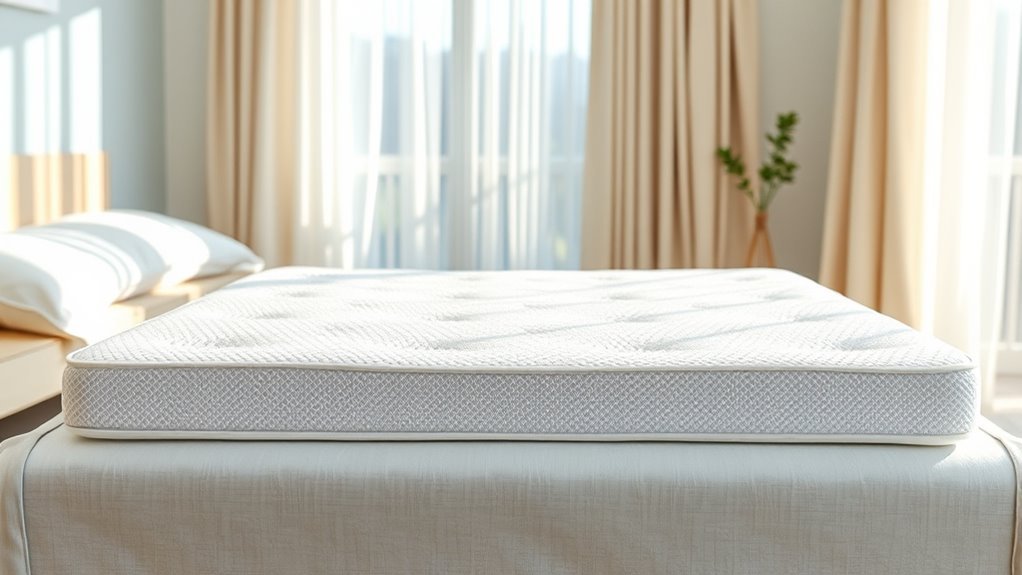
If you want to cool down your memory foam mattress quickly, using a cooling mattress topper is one of the most effective solutions. A cooling mattress topper made from gel-infused memory foam or breathable latex can lower surface temperatures by 3-5°F, giving you immediate relief.
These toppers often include phase-change materials that absorb and dissipate body heat, which helps maintain steady temperature regulation all night. Plus, designs with open-cell structures or copper infusion improve airflow and enhance heat transfer, keeping your sleep environment comfortable.
Installing a cooling mattress topper not only cools your mattress fast but also prevents heat-related wear and moisture buildup. This helps extend your mattress’s lifespan. It’s a simple, affordable way to enjoy better sleep without replacing your entire mattress.
Selecting Breathable Bedding Materials
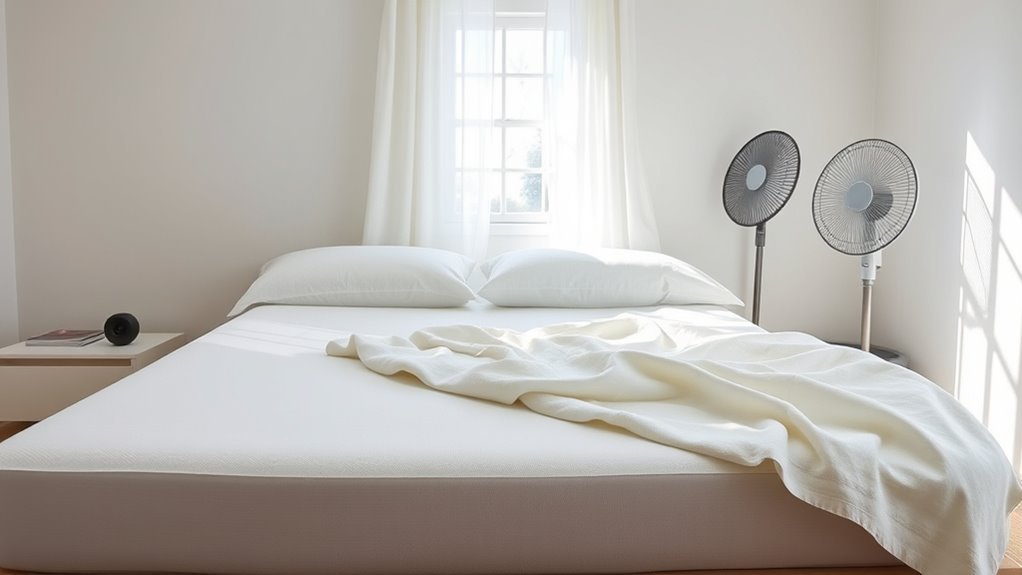
Along with adding a cooling mattress topper, choosing the right bedding materials plays a big role in keeping your memory foam mattress comfortable. Opt for breathable bedding made from natural fibers like organic cotton or linen sheets to boost airflow and help dissipate heat.
Look for linens with a percale weave, which enhances breathability compared to sateen or flannel. You’ll also want moisture-wicking fabrics such as bamboo viscose or Tencel™ Lyocell to pull sweat away from your body, reducing heat buildup.
Avoid synthetic materials like polyester or microfiber since they trap heat and moisture, making your mattress feel warmer. Using lightweight, loose-fitting covers made of these breathable fabrics will prevent heat from getting trapped and help your mattress cool down faster, ensuring a more comfortable night’s sleep.
Enhancing Air Circulation in Your Bedroom
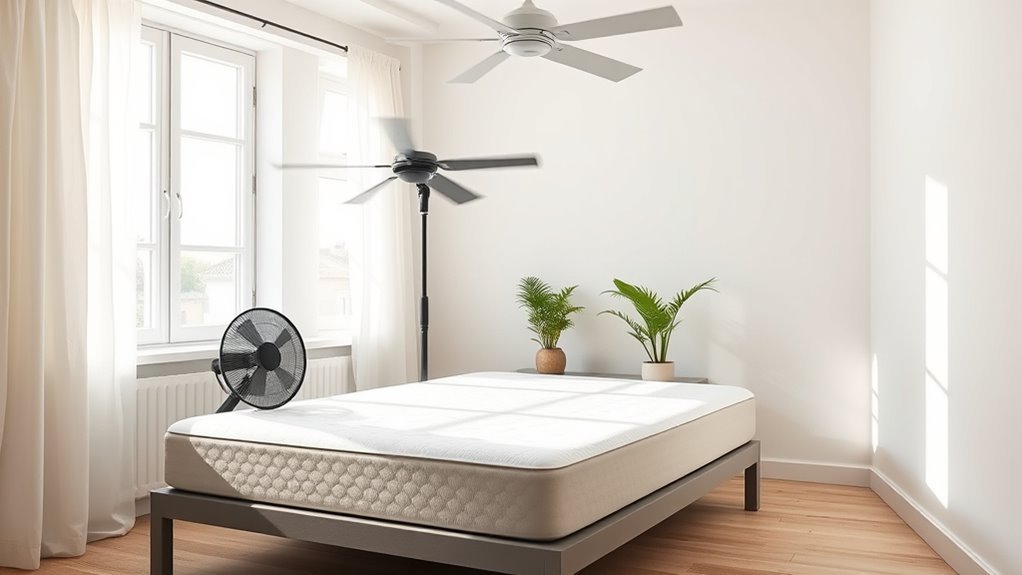
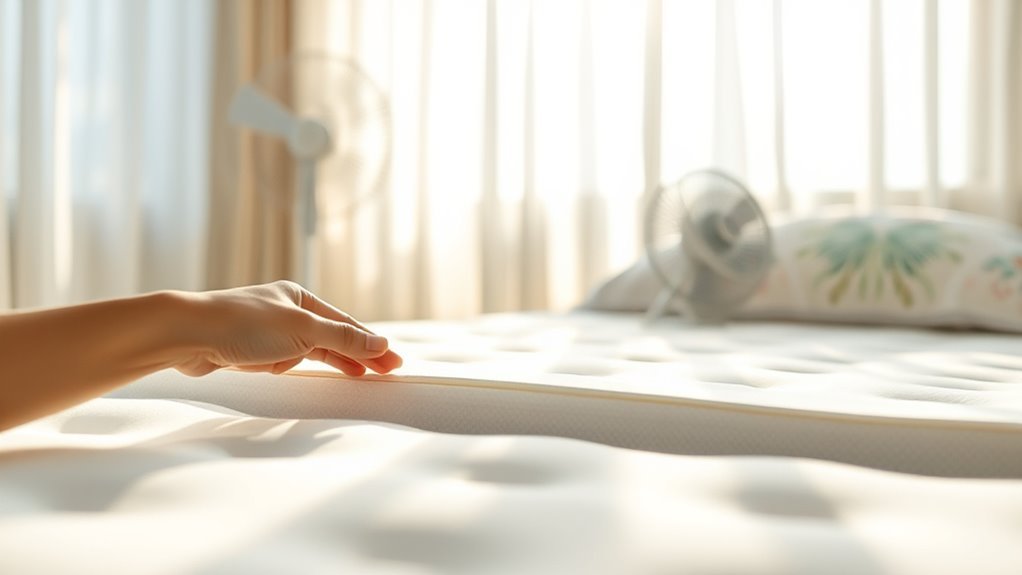
When you boost air circulation in your bedroom, you help your memory foam mattress shed trapped heat more efficiently. Start by using a ceiling fan or an oscillating fan to increase airflow around your mattress. These fans move air consistently, preventing heat buildup.
Opening windows during cooler parts of the day creates cross-ventilation. This allows fresh air to replace warm air and improve ventilation. Positioning floor or box fans to blow directly over the mattress surface speeds up heat dissipation.
Also, remove heavy curtains or obstructive objects that block airflow to maintain good ventilation. By improving air circulation, you lower the room temperature naturally. This helps your mattress cool faster without relying solely on air conditioning.
Adjusting Room Temperature for Optimal Cooling
Although managing air circulation is essential, adjusting your room temperature plays an equally important role in cooling down your memory foam mattress. Keeping the room temperature between 60-67°F can drastically reduce heat buildup.
Using a programmable thermostat lets you pre-cool the space, so your mattress feels comfortable right away. Opening windows during cooler hours promotes natural ventilation, helping dissipate stored heat.
Fans increase air circulation, speeding up mattress cooling. Portable air conditioners also lower ambient temperature quickly.
| Feeling Too Hot? | Solutions to Try |
|---|---|
| Mattress feels sticky | Lower thermostat setting |
| Heat buildup at night | Open windows for ventilation |
| Stuffy air | Use a fan for circulation |
Adjust your room temperature and ventilation for a cooler, more comfortable sleep.
Choosing the Right Sleep Position to Minimize Heat
To keep your memory foam mattress cool, try sleeping on your back to improve airflow and reduce heat buildup. Using a breathable pillow and positioning it to elevate your head can also boost air circulation.
These simple adjustments can make a big difference in staying comfortable through the night. Give it a shot and see how much cooler you feel!
Optimal Sleeping Postures
Choosing the right sleep position can really help cut down on heat buildup on your memory foam mattress. By changing how you lie down, you can boost air circulation and keep heat from getting trapped. This makes your sleep cooler and way more comfortable.
To get your sleeping posture just right, try these tips:
- Sleep on your back to spread out body heat evenly and get better airflow.
- Side sleeping is great too—it helps reduce contact at hot spots like your hips and shoulders.
- Try to avoid sleeping on your stomach since it tends to trap heat around your chest and face.
Also, think about elevating your head or upper body. This can really help with ventilation and stop heat from sticking around. Using breathable pillows is another smart move—they promote airflow and keep heat from building up near your head.
Making these small shifts in how you sleep and how you prop yourself up can make a big difference. You’ll stay cooler all night long, which means better rest for you.
Cooling Pillow Placement
When you place cooling pillows behind your head or under your neck, you help reduce heat buildup in key areas where your body generates the most warmth. Strategic placement of cooling pillows enhances heat dissipation by promoting better airflow around the pillow and your upper body.
To achieve a cooler sleep, combine this with smart bed positioning—sleeping on your back maximizes airflow and minimizes contact points that trap heat. Avoid stomach sleeping, which increases heat retention.
Using breathable bedding alongside cooling pillows further supports heat dissipation. If you prefer side sleeping, position breathable pillows carefully to reduce heat accumulation at contact points.
Incorporating Cooling Pillows and Accessories
How can you effectively reduce heat buildup on your memory foam mattress? Incorporating cooling pillows and accessories is a smart move. Cooling pillows made from gel memory foam or latex help lower head and neck temperature, easing overall warmth.
You can also use cooling mattress pads with phase-change materials that absorb and dissipate heat fast. Don’t forget breathable pillowcases and moisture-wicking sheets—they boost heat dissipation and comfort.
Here’s how to enhance your mattress cooling:
- Choose cooling pillows with gel memory foam for targeted heat relief
- Add a breathable pillowcase made of bamboo or cotton
- Use airflow accessories like cooling gels or heat-dissipating inserts
- Incorporate phase-change material mattress pads for active cooling
- Pair with moisture-wicking sheets to keep sweat away and improve airflow
These steps will cool your mattress efficiently and quickly. Give them a try and feel the difference!
Proper Mattress Maintenance for Better Airflow
Although memory foam mattresses offer great comfort, they can trap heat if not maintained properly. To improve airflow and breathability, practice regular mattress maintenance by rotating your mattress every 3-6 months.
This prevents indentations that block air circulation and cause heat buildup. Strip all bedding and air out the mattress in a well-ventilated room to let moisture and odors dissipate, helping regulate bedroom temperature.
Gently vacuum the mattress with an upholstery attachment to clear dust from foam pores, maintaining ventilation. Using a moisture-wicking, breathable mattress protector also promotes airflow and reduces heat retention.
These simple steps enhance ventilation and air circulation, making your sleep environment cooler and more comfortable without drastic changes. It’s pretty easy to do, and your mattress will thank you for it!
Using a Slatted Bed Frame to Improve Ventilation
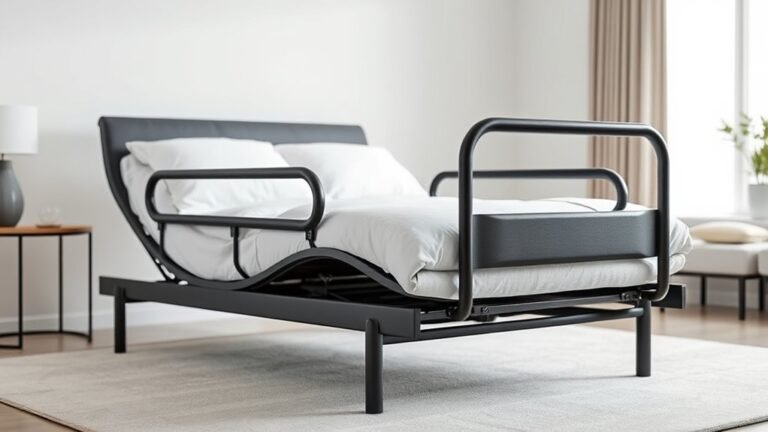
Because memory foam mattresses tend to trap heat, using a slatted bed frame can make a noticeable difference in keeping your sleep environment cooler. This setup improves ventilation by allowing air to flow beneath the mattress, reducing heat buildup from trapped body heat.
A slatted bed frame enhances airflow under memory foam mattresses, helping to dissipate heat and keep you cooler.
Here’s why a slatted bed frame helps with cooling your mattress fast:
- Gaps between slats (2-3 inches) boost airflow and prevent sagging.
- Air exchange under the mattress dissipates moisture and warmth.
- It increases airflow by up to 50% compared to solid platforms.
- Plus, it elevates the mattress to promote continuous ventilation.
- All this helps reduce heat buildup for a fresher, cooler sleep surface.
Leveraging Advanced Cooling Mattress Technologies
You can cool your memory foam mattress faster by choosing one with innovative materials like gel-infused foam or phase-change layers that actively regulate temperature.
Look for designs that enhance airflow, such as open-cell structures or air channels, to keep heat from building up.
These advanced cooling technologies work together to lower surface temperature quickly and improve your sleep comfort.
Innovative Cooling Materials
When you want a cooler sleep experience, innovative cooling materials in memory foam mattresses make a big difference. These materials work together to enhance heat dissipation and airflow, keeping you comfortable throughout the night.
Here’s what you’ll find in advanced cooling mattresses: Gel-infused memory foam cools by drawing heat away from your body. Open-cell structures improve airflow within the foam itself.
Phase Change Materials (PCMs) embedded in covers absorb and release heat to regulate temperature. Thermal conductivity materials like copper or graphite rapidly transfer heat.
Hybrid mattresses combine memory foam with innerspring or latex layers for better ventilation. Plus, breathable covers and airflow channels further speed up heat transfer, making your mattress feel fresh and cool fast.
Airflow-Enhancing Mattress Design
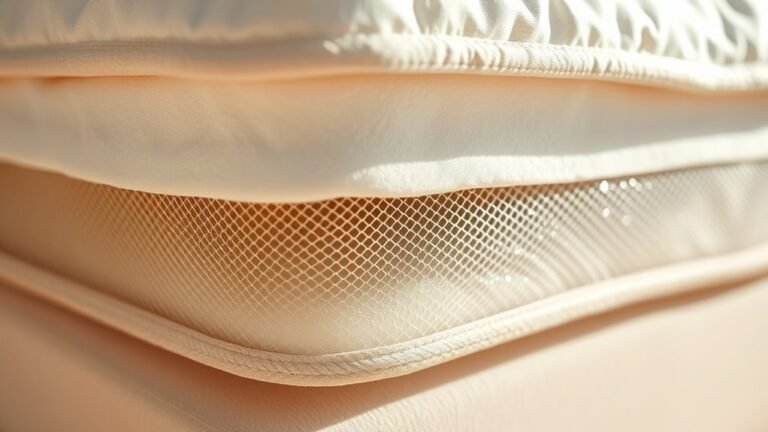
Although memory foam is known for its heat retention, airflow-enhancing mattress designs leverage advanced cooling technologies to keep you comfortable. These mattresses use open-cell foam or gel-infused layers that improve airflow and promote efficient heat dissipation.
Strategic air channels create passive airflow, allowing heat to escape quickly and preventing buildup. Ventilated support cores further enhance ventilation by increasing airflow deep within the mattress structure.
A breathable cover complements these features by allowing moisture and warmth to disperse, maintaining a cooler surface throughout the night. Together, these elements work seamlessly to boost ventilation, reduce heat retention, and cool down your memory foam mattress fast.
Combining Multiple Strategies for Maximum Cooling Effect
Since a single method might not fully address heat buildup, combining several cooling strategies can substantially enhance your mattress’s comfort. To maximize cooling, focus on integrating these key approaches:
Use breathable bedding like cotton or bamboo paired with moisture-wicking sheets to reduce surface heat. It’s all about letting your skin breathe and staying dry through the night.
Choose breathable cotton or bamboo bedding with moisture-wicking sheets to keep your skin cool and dry all night.
Improve room airflow by using ceiling fans, opening windows, or running air conditioning. Fresh air circulation really helps keep things cool.
Opt for a slatted bed frame to boost mattress ventilation and lower heat retention. This simple change can make a noticeable difference.
Add cooling accessories such as phase-change gel pillows to dissipate heat effectively. These gadgets work behind the scenes to keep you comfy.
Maintain temperature controls and regularly air out your mattress to optimize the environment. Keeping things fresh and well-regulated is key for lasting coolness.
Frequently Asked Questions
What to Do if a Memory Foam Mattress Is Too Hot?
If your memory foam mattress feels too hot, try using a breathable gel-infused topper. It helps wick away heat and keeps things cooler.
You can also lower the room temperature with a fan or AC. Opening windows for some fresh air and ventilation works wonders too.
Another quick fix is to use a cooling mattress cover. It helps reduce heat and boosts your comfort while you sleep.
Do You Really Need to Wait 24 Hours for a Memory Foam Mattress?
Imagine you get a quick-expanding mattress that’s ready in hours. You don’t always need 24 hours, but waiting that long helps with full expansion and off-gassing.
Otherwise, you risk discomfort and odors early on. So, while it’s tempting to jump right in, giving it some time really pays off.
How to Make a Memory Foam Mattress Cooler?
You can make your memory foam mattress cooler by using a breathable gel-infused topper. This helps to regulate temperature and keep things comfy.
Another trick is placing a cooling pad on it. It’s an easy way to add a layer of coolness right where you sleep.
Also, try increasing room ventilation. Open a window or door to let fresh air flow through.
And don’t forget about directing a fan at the mattress. This helps quickly dissipate trapped heat and keeps things feeling fresh.
Why Do Memory Foam Mattresses Get so Hot?
Your memory foam mattress acts like a heat trap, holding your body warmth tight. Its dense, closed cells and limited airflow stifle ventilation.
This causes heat and moisture to build up, making you feel hot and sweaty at night. It’s like your mattress is hugging your warmth a little too closely!
Conclusion
If you’re struggling with a hot memory foam mattress, try combining breathable bedding with a cooling mattress topper. For example, Sarah swapped her heavy cotton sheets for bamboo ones and added a gel-infused topper—she noticed her nights stayed cooler instantly.
By adjusting your room temperature and improving airflow with a slatted bed frame, you’ll create a cooler sleep environment quickly. These simple changes help air circulate better and reduce heat buildup.
Taking these easy steps can make your memory foam mattress feel fresh and comfortable fast. Using breathable bedding, a cooling mattress topper, and better airflow are key to cooling down a memory foam mattress quickly. That way, you can enjoy a cool, restful night’s sleep without the heat!