How to Do Remove Rust Stains From Carpet in 10 Easy Steps
To remove rust stains from your carpet, start by blotting loose rust gently without rubbing. This helps to prevent the stain from spreading further.
Next, apply white vinegar directly to the rust stain to begin dissolving it.
Let the vinegar sit on the carpet for 20 to 40 minutes. This gives it time to break down the rust particles effectively.
For tougher rust spots, try using lemon juice mixed with salt. Apply this mixture to the stain, let it sit for a while, then blot it again.
After treating the stain, rinse the area with water to remove any leftover cleaning agents.
Blot the carpet dry with a clean cloth and allow the spot to air dry completely.
To prevent future rust stains, consider protecting your furniture legs and clean up any spills quickly.
Keep following for detailed tips on thorough stain removal and proper carpet care.
Key Takeaways
- Blot loose rust particles gently with a dry cloth without rubbing to avoid spreading or fiber damage.
- Saturate the stain with white vinegar and let sit for 20-40 minutes to dissolve rust particles.
- For stubborn stains, apply lemon juice with salt or a baking soda-vinegar paste, then blot and rinse.
- Rinse the area with a damp cloth to remove residue and repeat treatment if necessary.
- Dry the carpet thoroughly using fans or open windows, then inspect for any remaining discoloration before walking on it.
Recognizing Rust Stains on Carpet
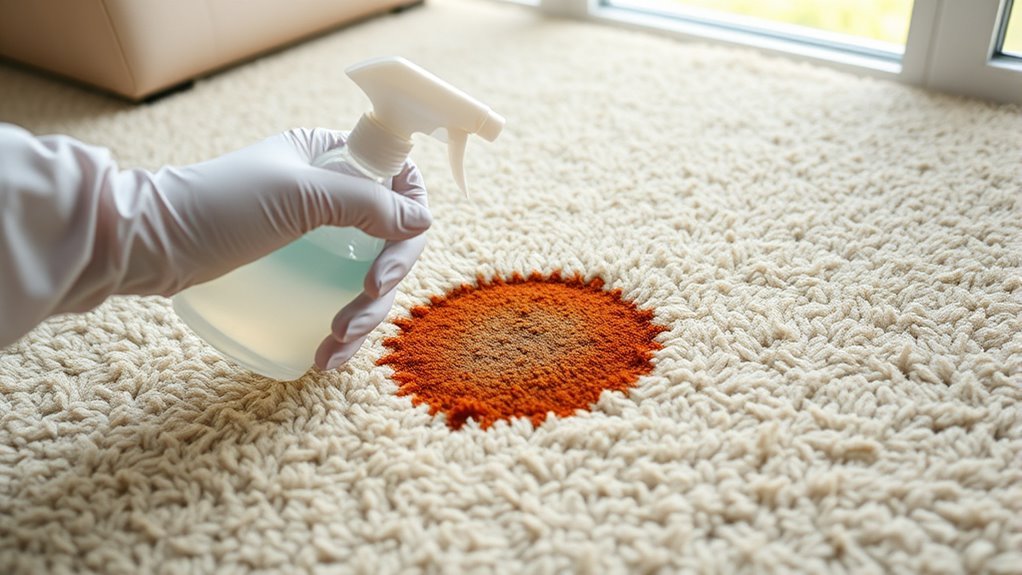
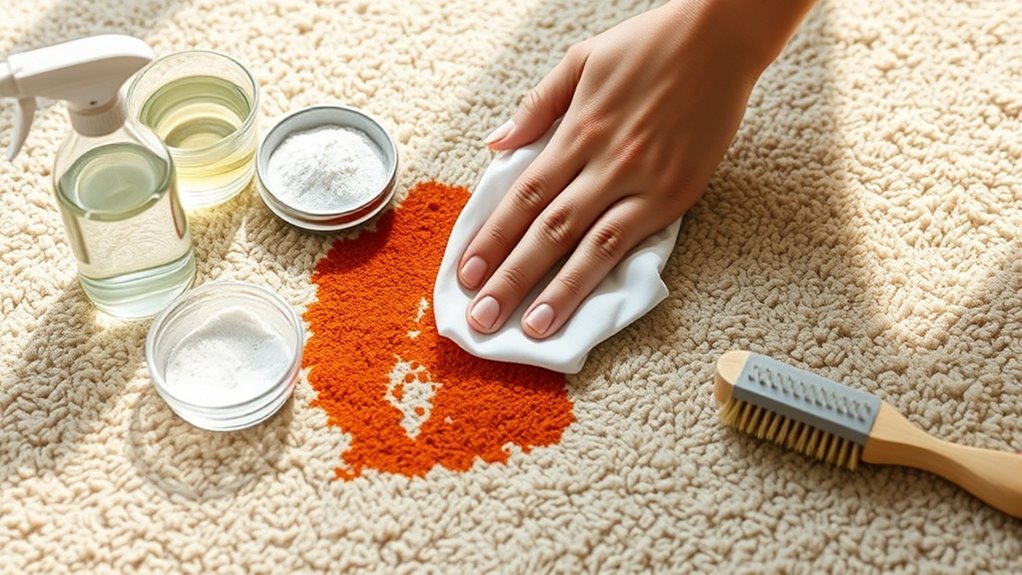
How can you tell if that stubborn mark on your carpet is a rust stain? Rust stains usually show up as dark, reddish-brown patches on carpet fibers. You’ll often find them near metal furniture legs, appliances, or fixtures that have rusted over time.
If the stain is close to a window or in a humid basement, rust might be the culprit. The color and texture can change depending on your carpet’s material and how long the rust has been there.
Look closely for specks of rust or tiny metallic particles embedded in the fibers—these visual cues confirm it’s a rust stain. Recognizing these signs early helps you tackle stain removal effectively before the rust sets deeper into your carpet.
Preparing Materials for Rust Removal
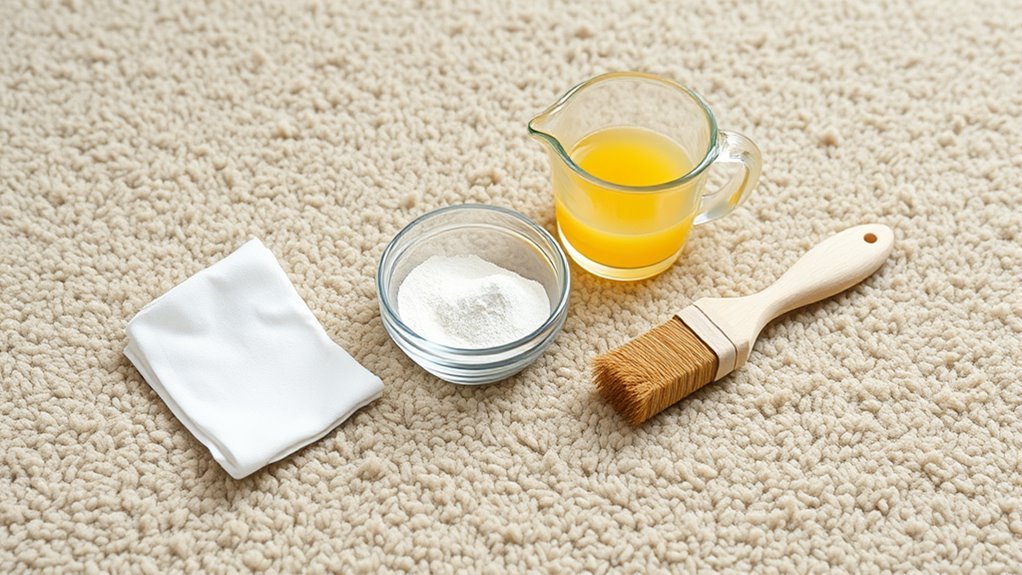
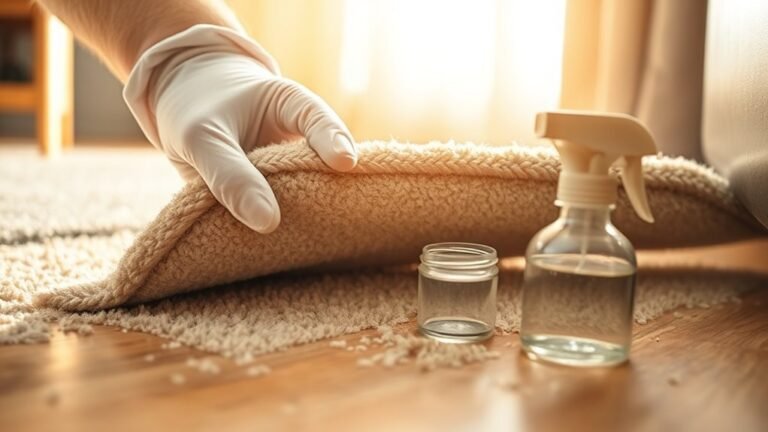
Before you start, gather essential supplies like plain white vinegar, a clean cloth, and a small bowl for mixing solutions.
Choose safe, gentle ingredients such as salt or baking soda to avoid damaging your carpet fibers. Always test your cleaning solution on a hidden spot to make certain it won’t cause discoloration.
It’s better to be safe than sorry, right? Testing first helps you avoid any nasty surprises later on.
Essential Cleaning Supplies
Although tackling rust stains can be challenging, having the right supplies ready makes the process much smoother. Start by gathering essential cleaning supplies like pure white vinegar, a clean white cloth, and a spoon.
Avoid colored or scented vinegars to prevent additional staining or residue. Prepare a small amount of white vinegar in a spray bottle or bowl for easy application. Keep a damp cloth and dry towels nearby to blot and dry the area after treatment.
Make sure all your materials are clean and free from debris to avoid spreading dirt or damaging the carpet further. With these supplies ready, you’ll be set to tackle rust stains effectively and efficiently.
Choosing Safe Ingredients
Once you have your cleaning supplies ready, focus on selecting safe ingredients that won’t harm your carpet fibers or colors. Choose pure, white vinegar, baking soda, lemon juice, or salt-based solutions—they’re effective natural remedies for rust stain removal.
Before applying any mixture, test it on a hidden carpet spot to ensure it won’t cause discoloration or damage. It’s always better to be safe than sorry!
Prepare your natural remedies by mixing lemon juice with salt or creating a baking soda paste in a small bowl. Use clean, soft cloths and a spoon or spatula for application.
Make sure all ingredients are at room temperature or slightly warmed, as this improves effectiveness without risking fiber harm. Using these safe ingredients helps you tackle rust stains efficiently while protecting your carpet’s appearance.
Initial Blotting and Removing Loose Rust
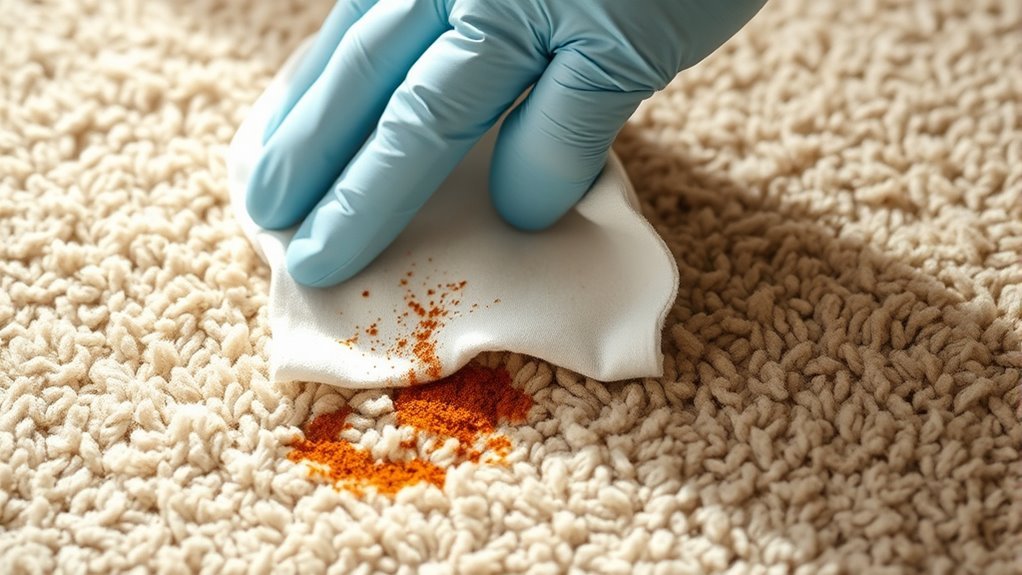
How you start treating a rust stain can make all the difference. Begin by gently blotting the rust stain with a clean, dry cloth to lift any loose rust particles. Don’t rub; rubbing can spread the rust or push it deeper into the carpet fibers, making removal harder.
Instead, carefully use a soft brush or a spoon to lift surface rust without damaging the fibers. Act quickly—blot the stain as soon as you notice it to stop it from setting further. Also, remove or move any nearby metal objects to prevent more rust from falling onto the carpet.
This initial blotting and careful removal of loose rust sets the stage for successful cleaning and helps protect your carpet fibers from lasting damage.
Applying Vinegar to the Rust Stain
You’ll want to saturate the rust stain with white vinegar to break down the rust particles effectively. Make sure to apply it gently and let it sit for 20 to 40 minutes to work its magic.
Patience is key here, as giving the vinegar time will make the stain easier to remove. Just hang tight and let it do its thing!
Vinegar’s Rust Removal Power
Although rust stains can seem stubborn, white vinegar offers a powerful solution by breaking down iron oxide without harming your carpet. For effective rust removal, pour a generous amount of vinegar directly onto the stain, covering the entire affected area.
Let it sit for about 40 minutes to penetrate and dissolve the rust particles. Then, gently work the vinegar into the carpet fibers with a soft brush or cloth to loosen embedded rust.
Afterward, blot the area with a clean, dry cloth to absorb both the vinegar and the lifted rust residue. If necessary, just repeat this carpet cleaning process. Vinegar’s acidity continues to break down rust without damaging your carpet fibers, making it a reliable and safe rust removal method.
Proper Vinegar Application
When applying vinegar to a rust stain, make sure to saturate the affected area thoroughly so the solution can reach deep into the carpet fibers. Use a clean, white cloth or sponge to gently dab the vinegar onto the stain, avoiding oversaturation of the surrounding carpet.
This careful application guarantees effective stain removal without spreading the rust or damaging fibers. Let the vinegar sit on the rust stain for about 40 minutes to break down the rust particles.
During this time, avoid rubbing or scrubbing, as it can worsen the stain or harm the carpet. Afterward, blot the area with a dry cloth to absorb excess vinegar and lifted rust residue, preparing the carpet for the next step in the stain removal process.
Timing and Patience
Since rust stains can be stubborn, you need to be patient and let the vinegar do its work. Timing is essential: allow the vinegar to sit on the stain for about 40 minutes to effectively break down rust particles.
Make sure the stain is completely covered with vinegar to maximize contact with the carpet fibers. During this time, keep the area moist with vinegar, but don’t let it dry out prematurely.
If the stain persists, just reapply vinegar and let it sit for additional 20-30 minute intervals. Remember, patience is key—rushing the process won’t help.
Using Lemon Juice and Salt for Stubborn Stains
If you’re dealing with stubborn rust stains on your carpet, using lemon juice and salt offers a natural and effective solution. Start by applying fresh lemon juice directly onto the rust stain; the acidity helps break down the rust.
Then, sprinkle a generous amount of table salt over the lemon juice to boost the abrasive action, aiding in stain removal. Let this mixture sit for about 30 minutes, allowing the acid and salt to work together.
Afterward, gently blot the area with a clean cloth to lift the rust residue—avoid rubbing to prevent fiber damage. Finally, rinse the treated spot with cold water and dry thoroughly to stop any residual rust from setting again.
This method is simple and eco-friendly for tackling tough rust stains. Give it a try—you might be surprised how well it works!
Making a Baking Soda and Vinegar Paste
Although rust stains can be stubborn, you can tackle them effectively by making a baking soda and vinegar paste. Start by mixing equal parts baking soda and white vinegar until you get a thick, spreadable consistency.
This paste works wonders for stain removal because the reaction between baking soda and vinegar creates fizzing that helps lift rust from carpet fibers. Use a spoon or spatula to apply the paste directly onto the rust stain, ensuring you cover the entire affected area thoroughly.
Let it sit for 15 to 20 minutes so the paste can break down the rust particles effectively. Afterward, you’ll be ready to move on to the next step to fully remove the paste and any loosened rust residue.
Blotting and Rinsing the Treated Area
Once the baking soda and vinegar paste has had time to break down the rust, you’ll want to start blotting the area with a clean, dry cloth to soak up excess moisture and lifted rust particles. Be sure to blot gently—never rub—as rubbing can push rust deeper into the carpet fibers or cause damage.
After blotting, use a damp, clean cloth to rinse the treated area. This helps remove any leftover cleaning agents and rust residue. You might need to repeat blotting and rinsing several times with fresh water until the stain and residue are completely gone.
This careful process ensures your carpet is free of rust without risking fiber damage or leaving behind unwanted cleaning solution residue. Just take your time, and you’ll see great results!
Drying and Inspecting the Carpet
After treating the rust stain, make sure you let the carpet dry completely by opening windows or using a fan to speed up airflow.
Once it’s dry, carefully inspect the area for any leftover discoloration or moisture.
Avoid walking on the damp spot to keep the fibers intact and prevent spreading the stain.
Proper Drying Techniques
To make certain your carpet stays in good condition and free from mold, let it air dry completely for at least 8 hours after removing rust stains. Proper drying is essential to prevent moisture from lingering, which can lead to mildew growth.
Open windows or use fans to improve airflow and speed up the drying process. Avoid walking on the damp area until it’s fully dry to prevent re-soiling or damage to the carpet fibers.
Periodically check the stained area during drying to ensure no moisture remains trapped beneath the surface. Once the carpet feels dry to the touch, you can be confident the drying process was successful and that your carpet is ready for the next step in stain removal or inspection.
Visual Stain Inspection
How can you be sure the rust stain is truly gone? After letting your carpet dry completely for at least 8 hours, perform a thorough visual inspection under good lighting. This helps you spot any remaining residue or faint discoloration.
Follow these steps to check the area carefully:
- Examine the rust stain closely for shadowing or reddish-brown marks.
- Use a magnifying glass to catch small rust residues or fiber discoloration.
- Compare the stain’s intensity with how it looked before treatment.
- Re-inspect after any additional cleaning to confirm full removal.
This careful visual inspection ensures you don’t miss lingering rust particles. It gives you confidence your carpet looks clean and fresh.
Assessing Residual Moisture
Once you confirm the rust stain appears gone, turn your attention to moisture left in the carpet. Use a dry, clean cloth or paper towels to blot the area, absorbing any residual moisture. Avoid walking on the damp carpet to prevent spreading moisture or damaging fibers.
Let the carpet dry completely, which usually takes at least eight hours, to stop mold growth and further damage. If the carpet stays damp, speed up the drying process by placing a fan or dehumidifier nearby.
After it’s dry, carefully inspect the area for any leftover rust discoloration or sticky residue. Properly evaluating and managing residual moisture ensures your carpet stays clean and helps maintain its condition after rust stain removal.
Preventing Future Rust Stains
Although rust stains can be stubborn, you can prevent them from forming by taking simple precautions. Protect your carpet by addressing potential rust sources before they cause damage.
Here’s what you can do to prevent rust stains effectively:
- Place furniture pads under metal legs to stop rust transfer onto carpets.
- Clean up spills from metal objects immediately to avoid stains setting in.
- Regularly inspect and maintain metal fixtures and furniture to prevent rust formation.
- Opt for rust-resistant or coated metal furniture and appliances.
Also, keep your carpets dry and well-ventilated, since moisture speeds up rust development. By following these steps, you’ll ensure long-lasting carpet protection and keep rust from becoming a problem in your home.
Knowing When to Seek Professional Help
If rust stains don’t fade after several DIY attempts, it’s time to seek professional help to protect your carpet fibers from damage. When rust is deeply embedded or old, home remedies might not work, and stubborn stains can worsen without proper treatment.
Professional cleaning services use specialized equipment and solutions designed to remove rust safely and effectively. If you have a high-value or delicate carpet, consulting experts ensures thorough stain removal without risking discoloration or fiber damage.
Also, if your DIY efforts lead to discoloration or make the stain worse, don’t hesitate to call a professional. Their expertise guarantees your carpet is restored properly, saving you time and preventing costly replacements in the long run.
Frequently Asked Questions
What Will Take a Rust Stain Out of a Carpet?
You can remove rust stains from carpet by applying lemon juice with salt or a vinegar and baking soda mix, then blotting immediately.
For tough stains, use a carpet-safe rust remover, following instructions carefully. It’s pretty straightforward once you know the trick!
What Dissolves Rust Without Scrubbing?
You can dissolve rust without scrubbing using white vinegar, lemon juice, or commercial rust removers containing oxalic acid. Just apply, let them sit for 30-40 minutes, and the rust will break down on its own.
It’s pretty simple, right? No need to grab a brush or get your hands dirty. Just apply the solution and wait a bit.
Does Dawn Dish Soap Remove Rust Stains?
Dawn’s like a gentle wave chasing oil away, but rust is a stubborn mountain.
You won’t remove rust stains with Dawn alone; you’ll need stronger acids like vinegar or lemon juice to conquer that stubborn stain.
Does WD-40 Remove Rust From Carpet?
You shouldn’t use WD-40 to remove rust from carpet because it can leave oily residues and damage fibers.
Instead, try specialized rust removers or professional cleaning to safely and effectively treat rust stains on your carpet.
Trust me, it’s better to go with products designed for carpets to avoid making the stain worse.
And if the rust stain is stubborn, calling in a pro might save your carpet in the long run!
Conclusion
Rust stains on your carpet may seem like a stubborn enemy, but with these simple steps, you’ve got the upper hand. By acting quickly and using everyday items like vinegar and lemon juice, you can breathe new life into your carpet fibers.
Remember, prevention is your best armor. If the stain fights back, don’t hesitate to call in the pros.
With patience and care, your carpet will soon be as good as new. Removing rust stains from carpet might feel tricky at first, but following these easy steps makes the process manageable and effective. Keep some basic stain-removal supplies handy, so you’re always ready to tackle rust spots as soon as they appear.
In the end, a clean carpet not only looks great but also keeps your home feeling fresh and inviting. So, don’t let rust stains ruin your carpet—take action today and restore its beauty with these simple, practical methods.