Can Carpet Beetles Bite and How to Identify Them
Carpet beetles don’t bite or feed on blood, but their larvae’s tiny hairs can poke your skin, causing itching or rashes. These little pests are more irritating because of their fuzzy larvae than the adults themselves.
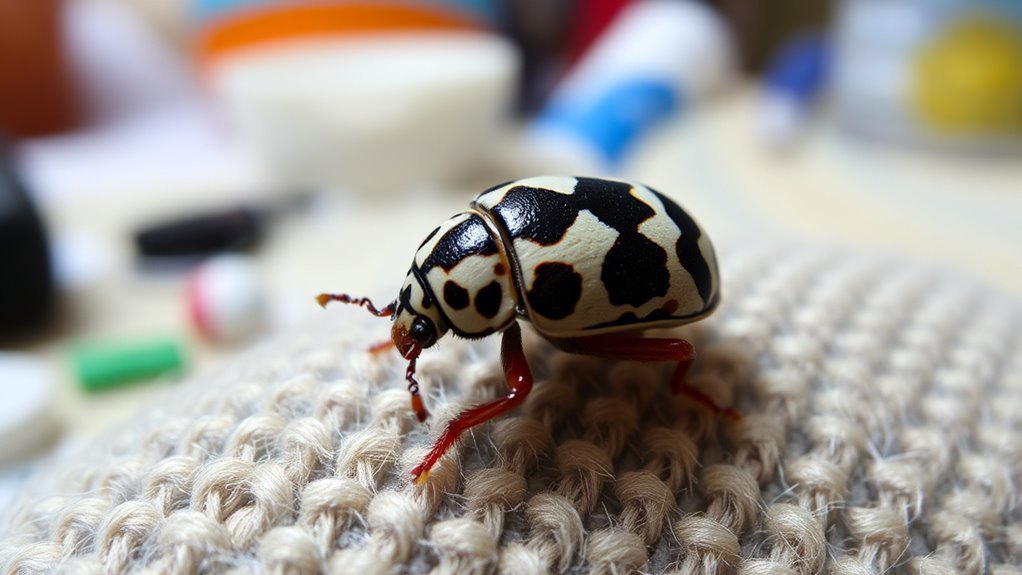
You can identify adults by their small, oval shape with mottled white, orange, and black patches. The larvae, on the other hand, look fuzzy and worm-like, with darker stripes running across their bodies.
Keep an eye out for shed skins and small holes in natural fabrics like wool or silk. These signs often mean you might have an infestation.
If you want to understand how to spot an infestation and control it, there’s more useful information ahead.
Key Takeaways
- Carpet beetles do not bite or feed on blood; skin irritation is caused by larvae hairs, not bites.
- Adult carpet beetles are small, oval, and mottled with white, orange, black, and brown patches.
- Larvae are fuzzy, worm-like, about 4-6.5 mm long, with banded darker stripes. You might also notice shed skins in dark areas where they hang out.
- Signs of infestation include small holes in natural fibers, shed larval skins, and tiny droppings.
- Adults are harmless and often found near light sources. But it’s the larvae that cause damage to wool, fur, and leather.
What Are Carpet Beetles and How Do They Affect You?
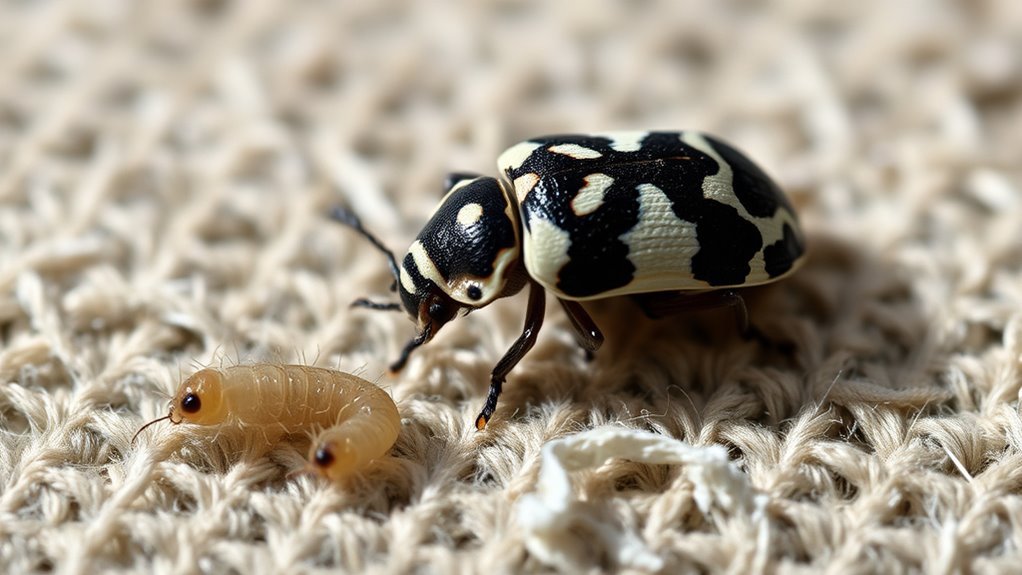
Although carpet beetles don’t bite or feed on your blood, they can still affect you by causing skin irritation and damaging your belongings. The larvae of carpet beetles have tiny hairs that can poke your skin, leading to red rashes or dermatitis.
These aren’t bites but an allergic reaction to the larvae’s hairs. While adult carpet beetles are harmless and often fly in seeking pollen, it’s the larvae you need to watch out for because they feed on animal-based materials like wool, fur, and leather.
You might not notice an infestation until the larvae cause damage or you develop allergic reactions. So, it’s a good idea to regularly inspect and clean your home. This helps you catch carpet beetle larvae early, preventing skin irritation and protecting your textiles from harm.
How to Identify Carpet Beetles and Their Larvae by Appearance
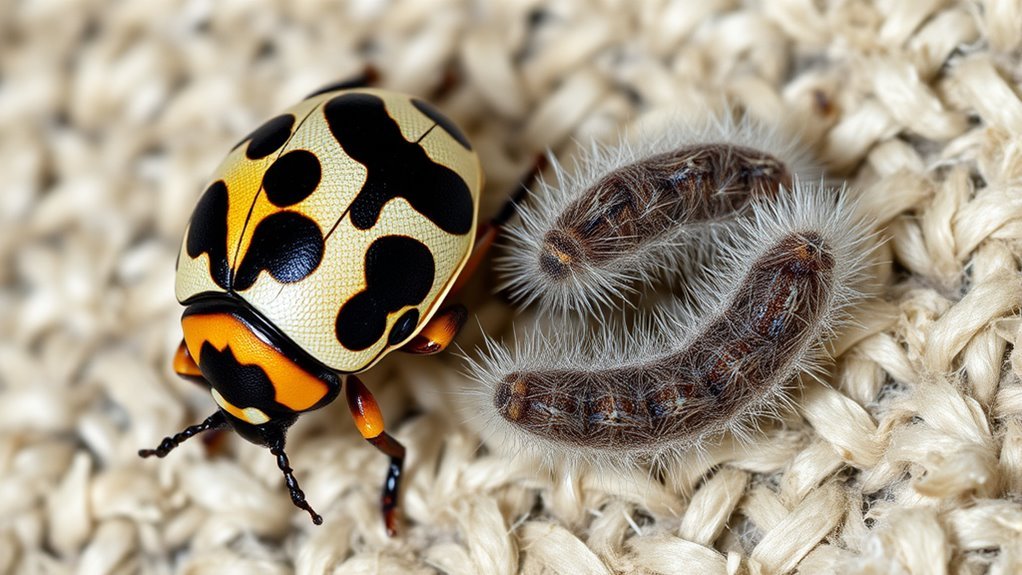
Recognizing carpet beetles and their larvae by sight can help you catch an infestation early before it causes skin irritation or damage to your belongings.
Adult carpet beetles are small, oval-shaped, and show mottled white, orange, black, and brown patches. Their larvae are fuzzy, worm-like, and banded with darker stripes.
You might also spot shed skins in dark, undisturbed areas like closets or under furniture. These larvae feed on natural fibers, so check carpets and fabrics closely.
| Feature | Adult Carpet Beetle | Carpet Beetle Larvae |
|---|---|---|
| Size | 1.5 to 6 mm | 4 to 6.5 mm |
| Shape | Oval | Elongated, worm-like |
| Color | Mottled white, orange, black | Fuzzy, banded darker stripes |
| Habitat | Near windows, light areas | Dark, undisturbed spots |
| Signs | Visible beetles | Shed skins, fabric damage |
What Are the Signs of a Carpet Beetle Infestation?
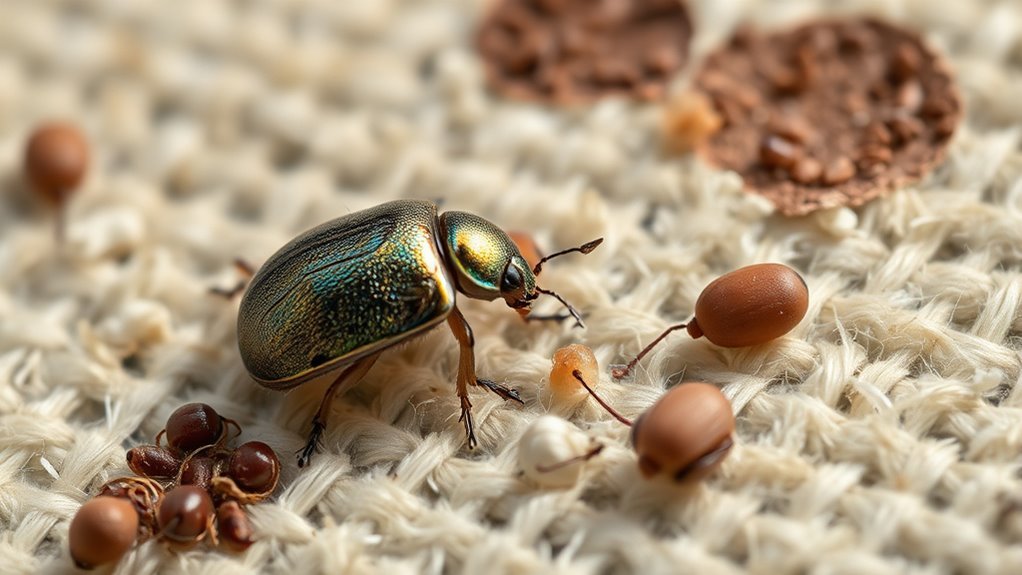
If you notice small holes in your wool, silk, or upholstery, you might be dealing with a carpet beetle infestation. Look for shed larval skins, which are tiny, fuzzy, and often left behind as larvae grow.
These skins, along with small black or brown droppings resembling pepper flakes, are clear signs of active infestation. You may also find dead beetles near windows or storage areas, as carpet beetles are attracted to light.
Damaged textiles, especially natural fibers, often show irregular holes or thinning. Increased beetle activity around windows and light sources further confirms their presence.
Do Carpet Beetles Bite or Just Cause Skin Irritation?
While carpet beetles don’t bite or feed on your blood, you might still experience skin irritation caused by their larvae. The tiny larvae hairs have sharp spines that can poke your skin, leading to itching or dermatitis.
This reaction isn’t a bite but an allergic response to those hairs. Not everyone reacts the same—some people show no symptoms, while others develop rashes or irritation.
Adult carpet beetles don’t cause skin irritation since they don’t come into contact with your skin or feed on human tissue. The skin irritation you might feel comes exclusively from the larvae hairs, so understanding this helps you avoid unnecessary worry about bites when dealing with carpet beetles.
Effective DIY Methods to Get Rid of Carpet Beetles
Though carpet beetles can be persistent, you can tackle them effectively using several DIY methods. Start by vacuuming thoroughly, focusing on dark, undisturbed spots like under furniture and along baseboards to remove larvae and eggs.
Steam-clean carpets and upholstery to kill larvae and interrupt their life cycle.
To prevent carpet beetles, spray natural repellents made from peppermint and clove oils mixed with water on fabrics and infested areas.
Freeze vulnerable items at -18°C for at least 24 hours to eliminate eggs and larvae.
For tougher infestations, apply targeted insecticides or boric acid carefully, following safety instructions.
Combining these steps will give you solid pest control and help you keep carpet beetles at bay.
Frequently Asked Questions
What Fabrics Do Carpet Beetles Eat?
Carpet beetles eat natural fabrics like wool, silk, fur, feathers, leather, cotton, and linen. They avoid synthetic materials since those lack the keratin and chitin they need.
You’ll notice holes or frayed edges on affected items. It’s pretty clear once you spot the damage. Just keep an eye out for those signs!
Do Bed Bugs Look Fuzzy?
Yes, bed bugs look fuzzy because their bodies have fine hairs, especially when they’re nymphs or newly molted adults.
You’ll notice a soft, velvety texture that sets them apart from other insects like carpet beetles.
It’s kind of like they have a little coat of fuzz, which makes them easier to spot if you know what to look for.
What Are the Small Black Beetles I’m Seeing in My House?
Those small black beetles in your house look like shiny, oval seeds scattered on the floor—they’re likely carpet beetles.
You’ll spot them near windows or lights, especially in warmer months, feeding on natural fibers in fabrics. They can be a bit annoying, but knowing what they are helps!
What Damage Do Carpet Beetles Cause?
Carpet beetles damage your natural fibers by boring holes in wool, silk, and leather. You’ll notice holes, shed skins, and powdery debris on seams or hidden spots.
This can ruin clothing, upholstery, and carpets if left unchecked. So, it’s important to catch the signs early and take action.
Conclusion
Dealing with carpet beetles is like spotting tiny pirates on your ship—they may not bite like a shark, but their damage can still leave you stranded. By learning to identify these little invaders and spotting their signs early, you can swab the decks before they cause real trouble.
With the right DIY strategies, you’ll reclaim your home and keep these pesky pirates from ever boarding again. Stay vigilant, and your ship will stay safe.
Remember, carpet beetles don’t actually bite humans, but their larvae can cause skin irritation. So, knowing how to identify carpet beetles and act quickly is key to preventing damage to your carpets, furniture, and clothes. Regular cleaning, sealing cracks, and using natural repellents can help keep carpet beetles away. By staying proactive, you protect your home from these tiny pests and avoid costly repairs. Keep an eye out, and your home will stay a safe haven from carpet beetle invasions.