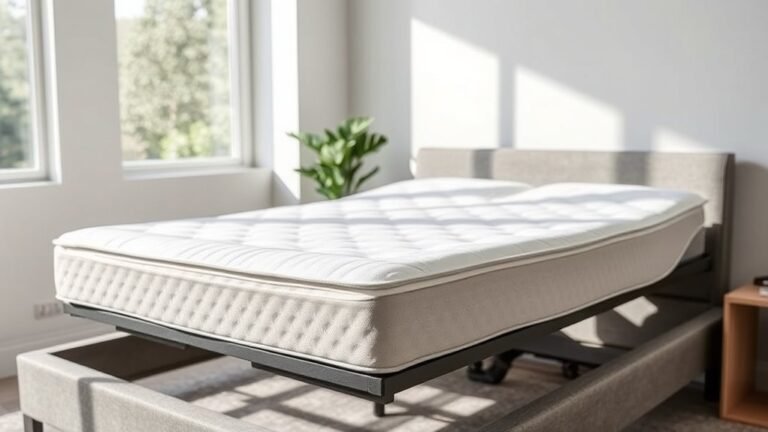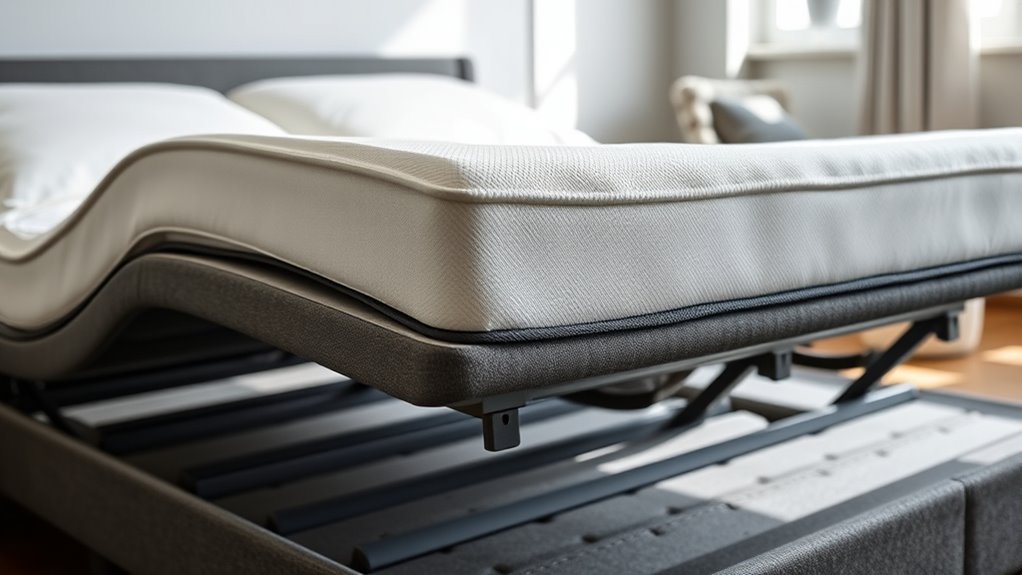
Can a Regular Mattress Be Used With an Adjustable Bed?
You can use a regular mattress with an adjustable bed, but it really depends on the type of mattress you have. Flexible mattresses like memory foam or latex work best because they can bend without getting damaged.
On the other hand, traditional innerspring mattresses aren’t the best choice since their coils are too rigid. They can crease or wear out quickly when used on an adjustable base.
Mattress thickness also plays a role—around 10-12 inches is ideal for smooth movement and comfort.
Before you decide, make sure to test how your mattress moves on the adjustable bed frame. It’s also a good idea to check the manufacturer’s details to confirm if your mattress is compatible.
There’s a bit more to consider for the perfect fit and overall comfort, so take your time picking the right combo!
Key Takeaways
- Regular mattresses must be flexible, like memory foam or latex, to work well with adjustable beds. These materials bend easily without losing their shape or comfort.
- Traditional innerspring mattresses often lack flexibility and may cause damage when bent on adjustable bases. So, they’re usually not the best choice for adjustable beds.
- Mattress thickness around 10-12 inches balances flexibility and support for smooth adjustable bed movement. Thicker mattresses might be too stiff, while thinner ones may not provide enough support.
- Testing mattresses on adjustable bases before purchase ensures compatibility and prevents damage. It’s a good idea to try out the mattress first if you can.
- Manufacturer labels or specifications help confirm if a mattress suits adjustable bed use. Always check these details before making your decision.
Why Regular Mattresses Don’t Work With Adjustable Beds
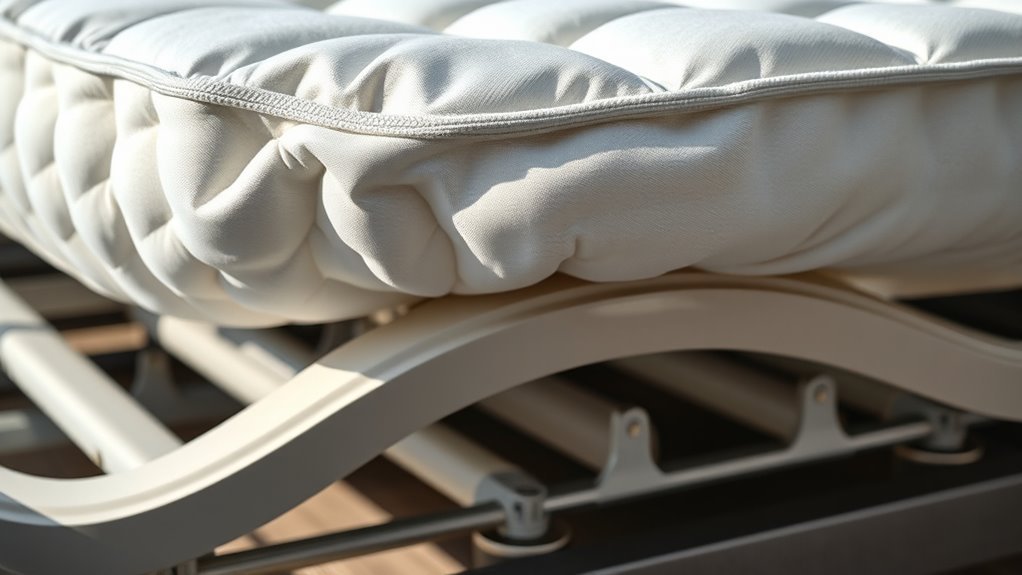
Why won’t a regular mattress work well with an adjustable bed? Regular mattresses, especially traditional mattresses with rigid innerspring coils, lack the flexibility needed to bend smoothly with an adjustable base.
When you use these mattresses, they can’t adapt properly, causing creasing and buckling that compromise support and comfort. This incompatibility not only reduces the mattress’s lifespan but also risks damage to both the mattress and the bed’s mechanism.
Standard mattresses are designed to stay flat, so continuous movement on an adjustable bed can break them down faster. If you want your adjustable bed to function efficiently and avoid costly repairs, you’ll need a mattress built with flexibility in mind—something regular mattresses simply don’t offer.
Why Mattress Flexibility Matters For Adjustable Beds
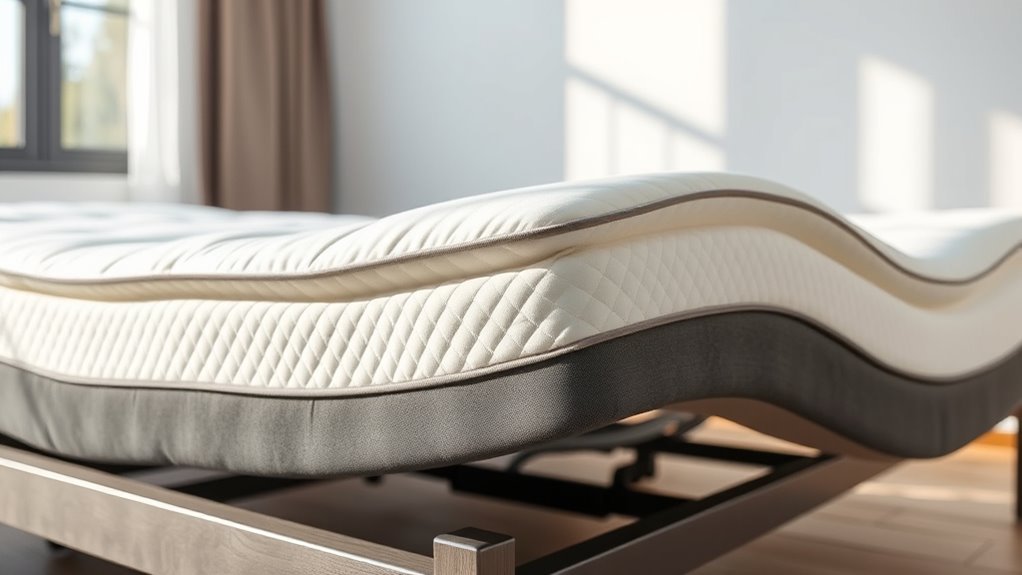
You need a mattress that flexes easily to keep up with your adjustable bed’s movements.
If it’s too rigid, it won’t bend properly, which can damage the mattress and reduce its lifespan.
Choosing a flexible mattress helps maintain comfort and durability over time.
It’s all about making sure your mattress moves with you, so you get the best rest possible.
Mattress Flexibility Importance
Because adjustable beds change position frequently, mattress flexibility becomes essential to guarantee comfort and durability. You need a mattress that can bend and conform smoothly to various angles without damage.
Traditional innerspring mattresses often lack this flexibility, which can cause discomfort and even breakage. On the other hand, memory foam mattresses and latex mattresses excel at bending and conforming, maintaining support as you adjust your bed.
This flexibility not only enhances your comfort but also protects your mattress and adjustable bed frame over time.
| Mattress Type | Flexibility | Suitability for Adjustable Bed |
|---|---|---|
| Traditional Innerspring | Low | Poor |
| Memory Foam | High | Excellent |
| Latex | High | Excellent |
Effects On Mattress Durability
Mattress flexibility plays a key role in how long your mattress lasts when paired with an adjustable bed. If you use a regular mattress lacking flexibility, it can develop cracks or tears from repeated bending.
This rigidity causes uneven pressure distribution, accelerating wear and tear. Over time, insufficient flexibility leads to permanent deformation, reducing durability and comfort.
You may notice sagging or indentations as the mattress loses support prematurely. Continuous movement on an inflexible mattress also causes material fatigue, further shortening its lifespan.
To maintain durability and proper support, your mattress needs to bend easily with the adjustable base. Choosing a mattress designed for flexibility helps prevent sagging, material fatigue, and permanent damage. That way, your mattress stays comfortable and supportive longer.
Why Innerspring Mattresses Don’t Work On Adjustable Beds
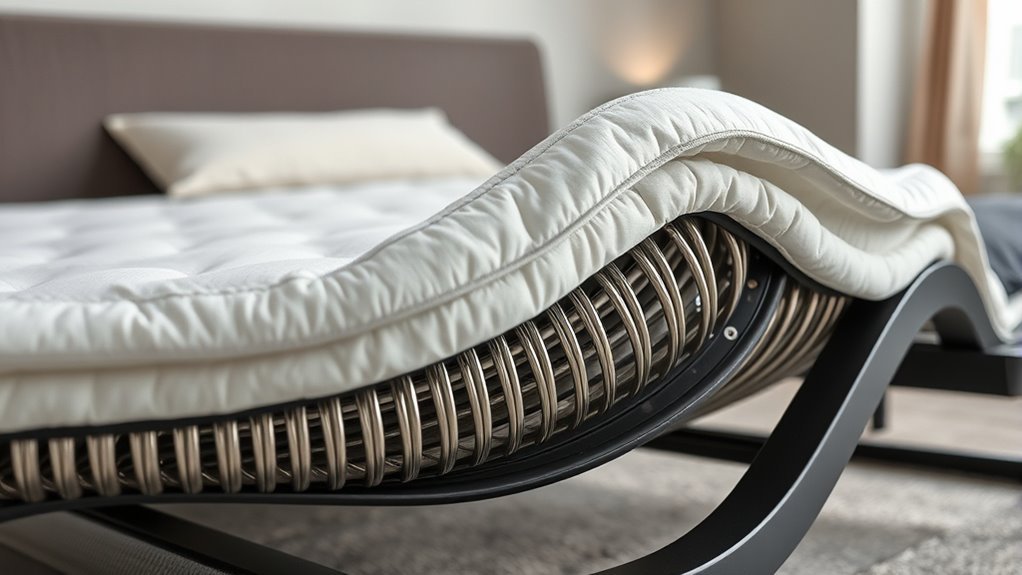
You’ll find that innerspring mattresses don’t flex well with adjustable beds because their coils are too rigid. This limited flexibility can cause the mattress to buckle or even damage the springs when you adjust the bed.
Over time, this not only reduces comfort but also risks harming both the mattress and the bed frame. So, if you want to keep things comfy and safe, it’s best to skip innerspring mattresses for adjustable beds.
Limited Flexibility Issues
Although adjustable beds offer versatile positioning, innerspring mattresses don’t adapt well to their movements. Their rigid coil structure limits flexibility, making them incompatible with an adjustable bed base.
When you try to bend an innerspring mattress, the coils resist, causing buckling and uneven pressure points that reduce proper support. This lack of conformability means the mattress can’t smoothly return to a flat position after adjustments, leading to discomfort.
Over time, the constant bending and resistance increase wear and tear, further compromising the mattress’s durability. If you rely on an innerspring mattress, you’ll likely face challenges with compatibility and support when paired with an adjustable bed, as their limited flexibility simply doesn’t align with the dynamic movements of these bases.
Coil Damage Risks
The rigid coils in innerspring mattresses don’t just limit flexibility—they also face significant risk of damage when used on adjustable beds. These traditional open coil systems aren’t designed to bend repeatedly, which leads to coil breakage and coil damage over time.
When you place an innerspring mattress on an adjustable bed, the lack of flexibility causes the coils to buckle or deform. This seriously undermines mattress compatibility and can be a real problem.
This deformation compromises support and creates uneven pressure points, which reduces comfort and shortens the mattress’s lifespan. Plus, innerspring mattresses often struggle to return to a flat position after adjustments, putting even more stress on the coils.
If you want to avoid premature wear and keep your mattress supportive, it’s definitely best to choose one designed specifically for adjustable beds. That way, you won’t risk coil damage with traditional innersprings.
Which Mattress Materials Work Best With Adjustable Beds
When choosing a mattress for your adjustable bed, you want materials that bend easily without losing support. Memory foam and latex are excellent choices because their flexibility allows them to contour smoothly with your bed’s movements, relieving pressure points effectively.
Hybrid mattresses, which combine coils with foam or latex layers, also work well by providing balanced support and flexibility. However, traditional innerspring mattresses with rigid coils aren’t ideal since their lack of bendability can damage the coils and reduce comfort.
Opting for materials like high-resilience foam can further enhance adaptability and durability. By selecting the right mattress materials, you guarantee your adjustable bed delivers comfort and support without compromising its mechanical function.
How Mattress Thickness Affects Adjustable Bed Comfort
If you want your adjustable bed to move smoothly and provide maximum comfort, choosing the right mattress thickness is key. Mattresses between 10-12 inches offer excellent flexibility, allowing your bed adjustment to flow effortlessly.
Thinner mattresses bend easily, reducing strain on both mattress and base while improving mattress support. On the other hand, thicker mattresses over 14 inches can restrict movement and limit the bed’s range of adjustment. This can decrease comfort and potentially cause pressure points.
The ideal mattress thickness for adjustable beds is around 13 inches, striking a balance between support and flexibility. This guarantees a seamless shift between positions without sacrificing comfort.
Keep in mind, heavier mattresses may hinder bed adjustment, so selecting the right thickness helps maintain comfort and durability. It’s all about finding that sweet spot!
Can You Modify A Regular Mattress For Adjustable Beds?
Although most regular innerspring mattresses aren’t designed to flex with adjustable beds, you can sometimes modify them to improve compatibility. To enhance mattress compatibility, manufacturers may alter the support system or add flexible materials, boosting flexibility for adjustable beds.
However, this kind of modification isn’t always straightforward and requires expert advice to guarantee safety and comfort. Foam mattresses naturally adapt better to adjustable bases, often needing little or no modification.
If you want to modify a regular mattress, consult with mattress specialists or the manufacturer to explore your options. They can help determine if your mattress can handle the movement without compromising support.
This approach helps you enjoy the benefits of an adjustable bed while preserving your mattress’s integrity.
Signs Your Current Mattress Works With An Adjustable Base
Modifying your mattress can help, but sometimes your current mattress might already be compatible with an adjustable base. To check compatibility, see if your mattress is flexible—materials like memory foam or latex usually work well.
Your mattress may already be compatible with an adjustable base if it’s flexible, like memory foam or latex.
If it bends smoothly without creasing or damage and returns to its original shape, that’s a strong sign of flexibility and support. Avoid mattresses with open coil springs, as they often lack flexibility and risk damage when adjusted.
Also, monitor if your mattress maintains proper support during multiple position changes. Finally, look for a manufacturer’s label or product info confirming the mattress is designed for adjustable bases.
These signs ensure your mattress can adapt well, providing comfort without compromising durability or structural integrity.
How To Choose The Best Mattress For Adjustable Beds
When choosing the best mattress for an adjustable bed, you’ll want to prioritize flexibility and support to guarantee comfort across various positions. Look for mattresses designed with flexible materials like memory foam, latex, or hybrid types of mattresses, as these bend easily without damage.
Avoid traditional coil spring mattresses since they’re generally not compatible with adjustable beds due to limited flexibility. A mattress thickness between 10-14 inches is ideal, balancing support and ease of movement.
Always check that the mattress for an adjustable base is explicitly labeled compatible with adjustable beds. This guarantees it will work well with your adjustable mattress frame.
Especially if you’re considering bed frames for seniors, selecting the right mattress enhances comfort and usability. Choosing wisely ensures your mattress moves smoothly and supports you properly.
Tips For Testing And Buying Mattresses For Adjustable Beds
Choosing the right mattress for an adjustable bed is just the beginning—you’ll want to test how it performs before committing. Always prioritize testing in-store by trying out test mattresses on an adjustable base to check mattress flexibility and support during movement.
Use the adjustable bed’s controls to simulate different positions and observe how the mattress bends without damage. Look for mattresses labeled as compatible or adjustable-friendly, often made from foam or latex, which offer better flexibility.
Don’t forget to check the law label or manufacturer specs to confirm if the mattress suits adjustable bed use. Finally, consult mattress experts or manufacturers to verify compatibility and guarantee you’re investing in a mattress that provides proper support and comfort with your adjustable bed.
Frequently Asked Questions
Can You Put a 14 Inch Mattress on an Adjustable Bed?
Yes, you can put a 14-inch mattress on an adjustable bed if it’s flexible, like memory foam or latex. Just check your bed’s specs to make certain it supports that thickness to avoid damage or poor adjustment.
It’s all about making sure the mattress can bend easily with the adjustable base. So, if your mattress is too stiff, it might not work well. Always double-check before you buy!
What Are the Disadvantages of Adjustable Beds for Seniors?
You might find adjustable beds tricky if you have mobility issues, risk falls, or get confused by controls. They can cause discomfort, be costly, and mechanical failures could leave you stuck or unsafe without help nearby.
It’s important to think about how easy the controls are for you. Also, consider if you have someone nearby in case the bed stops working. Sometimes, these beds might not feel as comfortable as you expect, so keep that in mind too.
What Type of Mattress Works Best With an Adjustable Bed?
You’ll want a memory foam, latex, or hybrid mattress because they bend easily with adjustable beds.
Avoid traditional innerspring mattresses, and choose one between 10 to 14 inches thick for the best support and flexibility.
This way, you get comfort and the mattress moves just right with your bed. It really makes a difference!
How Do I Know if My Mattress Will Work on an Adjustable Bed?
Wondering if your mattress can dance with an adjustable bed? Check its flexibility by bending it gently or consult the label and manufacturer.
If it flexes without damage, you’re good to go—if not, reconsider.
Conclusion
Think of your adjustable bed as a dance partner—it needs a mattress that can move and bend with it, not one that’s stuck in rigid steps. While regular mattresses might seem like a quick fix, they often resist the groove, making comfort a distant dream.
Choose a flexible, compatible mattress, and you’ll glide through restful nights like a perfectly choreographed waltz. Your body—and sleep—will thank you for it.
Using a regular mattress with an adjustable bed isn’t usually the best idea because most aren’t designed to bend and flex. Mattresses like memory foam or latex work better since they easily adapt to different positions. So, if you want to fully enjoy the benefits of your adjustable bed, picking the right mattress is key. In the end, a mattress made for adjustable beds will provide better comfort, support, and durability, ensuring you get the restful sleep you deserve.