How Do You Get Carpet Glue off Cement?
To get carpet glue off cement, start by softening the adhesive with a heat gun or apply a commercial adhesive remover designed for masonry. These methods help loosen the glue, making it easier to remove without damaging the cement surface.
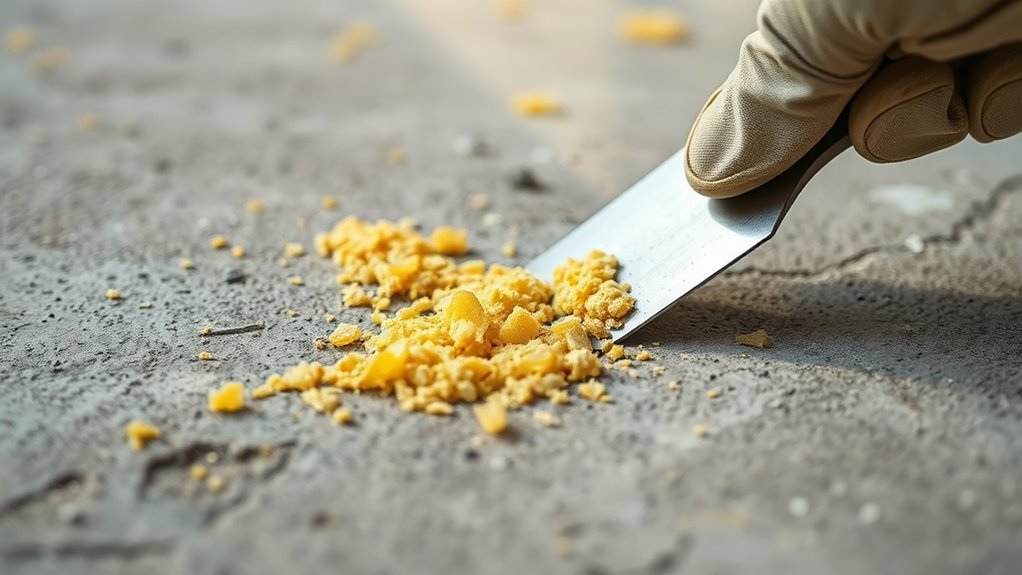
Next, gently scrape the glue using a plastic putty knife at a 45-degree angle. This angle helps protect the cement while lifting the glue away.
You can also use a stiff brush to clean any remaining residue.
Always wear gloves to protect your skin and test any product on a small, hidden area first to make sure it won’t harm the cement.
If you run into tougher spots, don’t worry—you’ll find helpful tips ahead to handle those and keep your cement safe.
Key Takeaways
- Soften carpet glue by using heat from a heat gun or apply a commercial adhesive remover. Let it sit for about 10-15 minutes before you start scraping.
- Use a plastic putty knife held at a 45-degree angle to gently scrape the softened glue. Be careful not to damage the cement surface while doing this.
- Before you begin removal, clean the cement surface thoroughly with water and detergent to get rid of dust and debris.
- It’s a good idea to test any solvents or removers on a small, hidden area first. This way, you can make sure they won’t harm the cement.
- Don’t forget to wear protective gloves and goggles for safety. Also, make sure the area is well ventilated, and rinse the surface well after removing the adhesive.
Tools and Materials Needed for Removing Carpet Glue
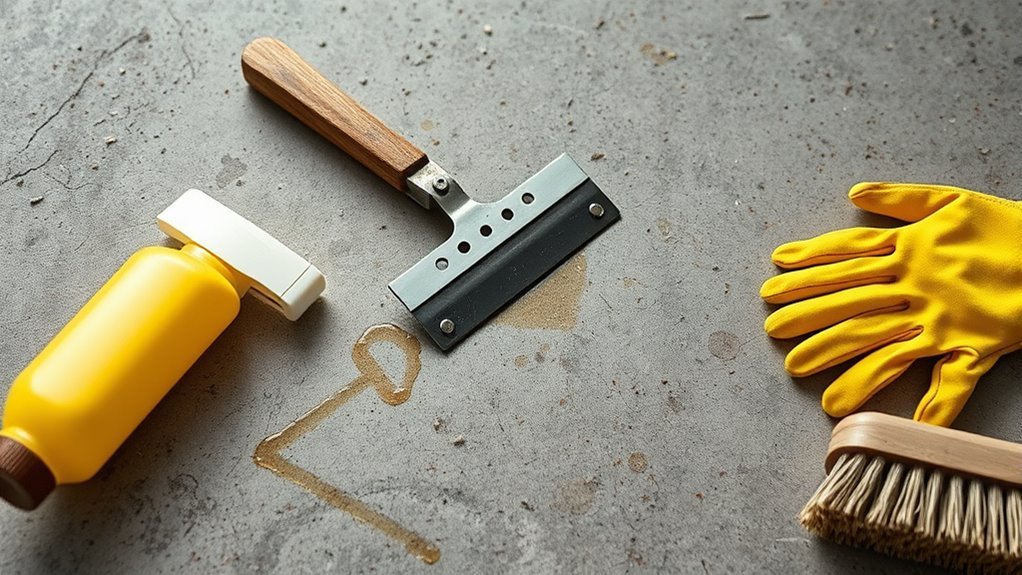
Before you begin removing carpet glue from cement, gather the right tools and materials to make the job easier. You’ll need scrapers or putty knives for manually lifting and scraping off the glue.
A wire brush or stiff-bristled brush helps when you need to scrub away a little bit of stubborn adhesive. Chemical solvents like adhesive remover, acetone, or commercial glue dissolvers soften the glue, making it easier to remove.
Don’t forget protective gear—gloves and goggles are essential to protect your skin and eyes from irritation. Finally, keep hot water and detergent handy to clean any residual adhesive once the bulk is gone.
Having these tools and materials ready saves you time and effort throughout the process. It really makes the whole job a lot smoother.
Step-by-Step Process to Scrape and Soften Adhesive
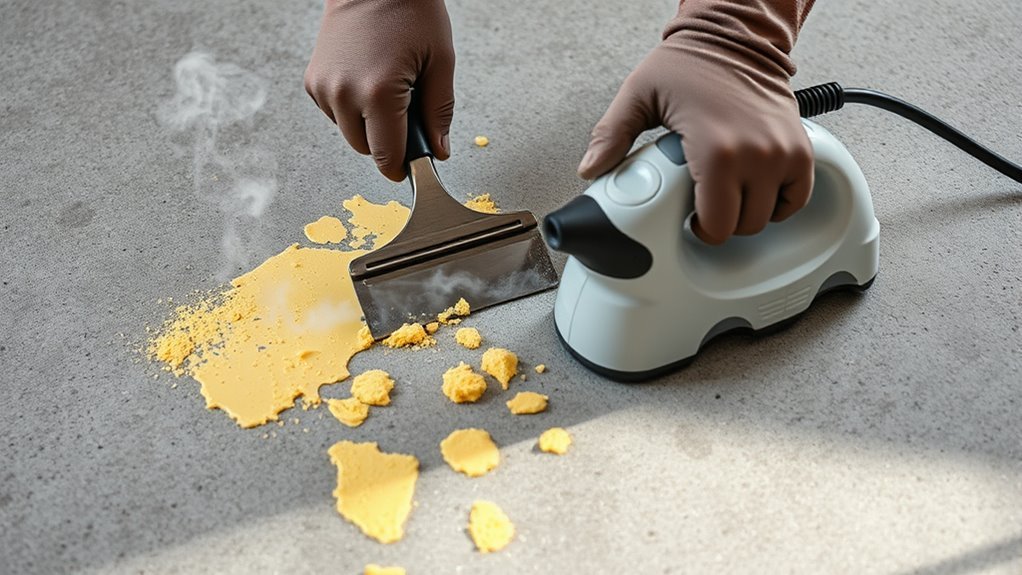
Start by preparing the cement surface, removing any loose debris to guarantee better contact with your tools and solvents.
Next, soften the adhesive using a commercial remover or a warm water and soap mixture. Let it sit for a bit to break down the glue.
Finally, use a putty knife or scraper to lift the softened glue. You might need to repeat this step for tougher spots.
Preparing Surface for Removal
Although removing carpet glue from cement can be challenging, you can make the process smoother by properly preparing the surface. Start by thoroughly cleaning the cement to remove dust and debris.
Use a putty knife at a 45-degree angle to gently scrape and loosen the glue. Next, apply a commercial adhesive softener or a warm water-vinegar mixture, letting it sit for 10-15 minutes to break down the bonds.
Repeat scraping and reapplying the softener until the glue fully detaches.
| Step | Tool/Material | Purpose |
|---|---|---|
| 1. Clean surface | Broom or vacuum | Remove loose debris and dust |
| 2. Scrape glue | Putty knife or scraper | Loosen adhesive edges |
| 3. Apply solution | Adhesive softener or vinegar mix | Soften glue for easier removal |
| 4. Wait | None | Let solution penetrate glue |
| 5. Repeat | Scraper and softener | Fully detach glue |
Softening Adhesive Techniques
When you want to loosen carpet glue from cement, applying heat or a solvent can make the job much easier. Start by using a heat gun or pouring hot water onto the glue to soften it. Let it sit for several minutes so the adhesive relaxes.
If heat alone isn’t enough, try a commercial adhesive remover or a vinegar-and-water mixture. Apply the solvent and wait patiently to break down the glue’s bonds. Always test your chosen method on a small, hidden spot first to avoid damaging the cement.
Once softened, use a putty knife or scraping tool to gently lift the adhesive. Taking these steps ensures the glue loosens effectively without harming the surface beneath.
Effective Scraping Methods
After softening the carpet glue with heat or solvent, you’ll want to tackle the removal with the right scraping technique. Start by using a putty knife or manual scraper, holding it at a 45-degree angle to avoid damaging the cement.
Work in small sections, gently loosening the softened adhesive. If the glue resists, reapply heat with a heat gun or hairdryer from 6-12 inches away, or use a commercial adhesive remover like acetone—always following safety guidelines.
Repeat this cycle of softening and scraping until all glue is gone. Once fully removed, clean the surface with water and a stiff brush to eliminate any residue, leaving your cement ready for its next use.
Using Commercial Adhesive Removers Safely
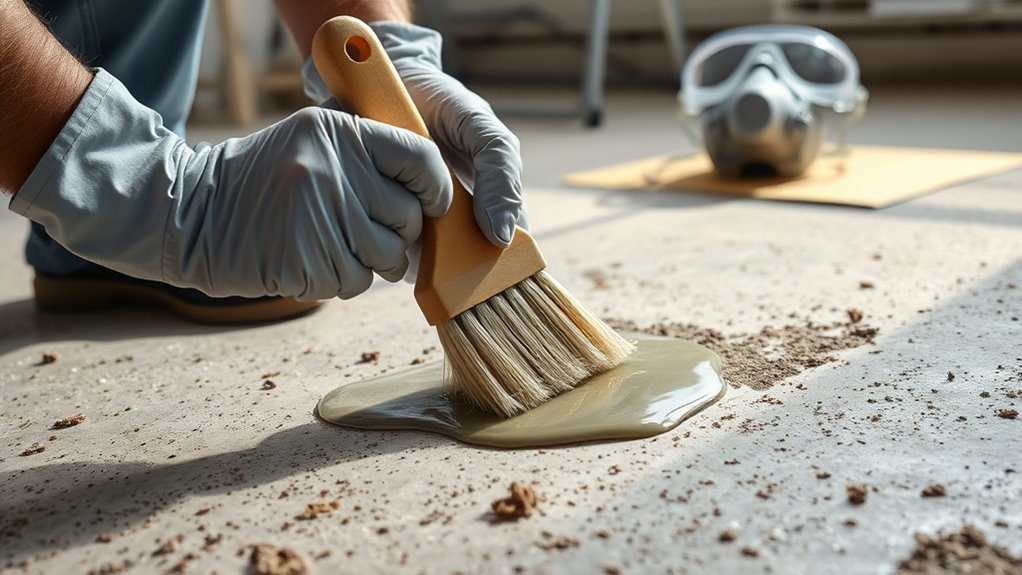
When choosing a commercial adhesive remover, pick one that’s effective on carpet glue but safe for cement. Always test it on a small area first and follow the manufacturer’s instructions closely.
Don’t forget to wear gloves and goggles, and keep the space well-ventilated to protect yourself during use. It’s better to be safe than sorry!
Choosing Effective Adhesive Removers
Although commercial adhesive removers contain strong solvents like acetone or methylene chloride that effectively dissolve carpet glue, you need to use them carefully to protect your cement surface and your health.
Start by selecting a remover designed specifically for cement or masonry to avoid damage. Always test the product on a small, hidden area first to check for any adverse effects.
Follow the manufacturer’s instructions exactly, paying attention to recommended application methods and contact time. Once the glue softens, gently scrape it off with a putty knife to prevent scratching the cement.
While this subtopic focuses on choosing removers, remember that proper use guarantees effective glue removal without harming your floor or exposing you to unnecessary risks.
Safety Precautions During Application
Because commercial adhesive removers contain strong chemicals, you need to take safety seriously during application to protect yourself and your surroundings. Always wear protective gloves, goggles, and a mask to prevent skin and eye irritation.
Make sure to ventilate the area well by opening windows and using fans to disperse fumes. Before applying widely, test the remover on a small, hidden spot of the cement to check for any damage or adverse reactions.
Follow the manufacturer’s instructions closely, especially regarding contact time and application methods. Keep children and pets away from the workspace during and after use until the remover has dried or been cleaned up completely.
Taking these precautions ensures you handle commercial adhesive removers safely and effectively.
Alternative Home Remedies for Glue Removal
If you want to avoid harsh chemicals, you can try several home remedies to remove carpet glue from cement. Start by mixing warm water with dish soap and apply it to the glue. Let it sit for a few minutes to loosen the adhesive, then gently scrape with a putty knife to lift the softened glue without damaging the surface.
For tougher residues, white vinegar can help dissolve glue effectively. You could also use rubbing alcohol or acetone, but test a small area first to ensure it won’t harm the cement. After applying any solvent, scrub the area with a stiff-bristled brush to remove leftover particles.
These simple methods provide effective alternatives before resorting to stronger chemical removers. Give them a try and see which one works best for you!
Tips for Handling Stubborn Glue Spots
When stubborn glue spots refuse to budge, you’ll want to reach for a solvent like acetone or a commercial adhesive remover to break down the residue. Apply it with a cloth directly onto the glue and let it sit for a few minutes.
Next, carefully scrape away the softened glue using a putty knife, taking care not to damage the cement surface. If some glue still remains, try applying heat with a heat gun to soften it further, making removal easier.
Always test any solvent or chemical on a small, hidden area first to avoid discoloration or damage. Once the glue is removed, thoroughly clean the area with water and a stiff brush to eliminate any leftover residue and restore the cement’s appearance.
Preventing Damage to Cement During Cleaning
While solvents and heat can help tackle tough glue spots, it’s important to protect the cement from damage during cleaning. Start by using a plastic scraper to gently remove excess glue without scratching.
Always test any solvent on a small hidden area first to avoid discoloration or damage. Avoid harsh acids or aggressive chemicals that might degrade the surface. Instead, use mild solvents like warm water mixed with dish soap to safely loosen adhesive.
Be gentle with scraping and apply cleaning agents carefully to prevent pitting or etching.
| What to Do | What to Avoid |
|---|---|
| Use plastic scraper | Avoid metal scrapers |
| Test solvents first | Don’t skip patch testing |
| Use mild soap solution | Avoid harsh acids |
| Scrape gently | Don’t apply excessive force |
| Apply chemicals carefully | Avoid soaking cement |
Frequently Asked Questions
Is Diggers Glue Rid Available at Bunnings?
Yes, you can usually find Diggers Glue Rid at Bunnings, but stock varies.
It’s a good idea to check their website or call your local store to confirm availability before heading out.
And remember, always follow safety instructions when using it.
Is Goo Gone Good for Removing Carpet Glue?
Goo Gone works like a magic eraser for carpet glue, breaking it down without harming your cement. Just apply, scrub gently, and rinse.
What Tools Are Needed to Remove Carpet?
You’ll need a pry bar to lift carpet sections, utility knives to cut manageable pieces, and heavy-duty gloves for protection.
Plus, a broom or shop vacuum helps clear up debris. A carpet stretcher or knee kicker comes in handy to loosen stubborn areas.
What Type of Machine Can Remove Carpet Glue From Concrete?
You can use heavy-duty floor scrapers, scarifiers with rotating blades, or floor grinding machines with diamond wheels to remove carpet glue from concrete.
These tools are pretty effective at breaking down and scraping up the adhesive.
Commercial adhesive removal machines like shot blasters or planetary grinders work well too.
They’re designed for tougher jobs and can save you a lot of time and effort.
Conclusion
Removing carpet glue from cement might feel like a sticky situation, but with patience and the right approach, you’ll gently encourage the adhesive to let go. Whether you choose commercial removers or household alternatives, taking care not to upset the cement’s integrity is key.
Remember, this process isn’t just about cleaning—it’s about restoring your space with a delicate touch. By carefully tackling carpet glue on cement, you can turn a stubborn challenge into a smooth, satisfying finish.
So, don’t rush it! With the right tools and a bit of elbow grease, removing carpet glue from cement becomes manageable. In the end, you’ll enjoy a clean, glue-free surface that’s ready for whatever comes next in your home improvement journey.