
How Do You Get Bleach Out of Carpet?
You can’t fully get bleach out of carpet fibers because bleach removes the dye, leaving permanent light spots. However, if you act fast, you can minimize the damage.
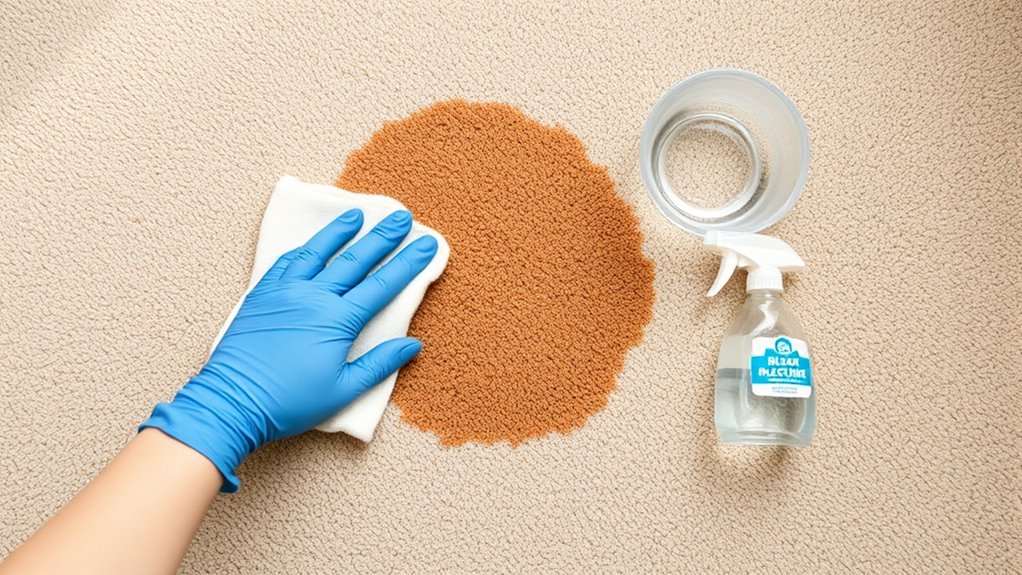
Start by blotting the bleach spill gently to soak up as much as possible without rubbing it deeper into the fibers.
Next, neutralize the bleach with a mixture of water and vinegar. This helps stop the chemical reaction.
After that, sprinkle baking soda over the area to absorb moisture and odors.
You might also try dabbing the spot gently with hydrogen peroxide before rinsing the carpet thoroughly and drying it completely.
For more serious damage, professional color restoration services can offer deeper fixes.
Keep reading to find out how to tackle different types of bleach stains and learn tips to prevent future mishaps with your carpet.
Key Takeaways
- Blot bleach spills immediately with a clean, dry cloth to prevent further fiber damage. This helps soak up the bleach before it seeps deeper into the carpet.
- Neutralize bleach by diluting the area with water and white vinegar to stop chemical reactions. It’s a simple way to calm things down and protect your carpet.
- Apply baking soda overnight to absorb moisture and odors from the bleach spill. Just sprinkle it on and leave it be while you sleep.
- Dab the stain gently with a damp hydrogen peroxide solution to help lift discoloration. Be careful not to rub too hard—you don’t want to damage the fibers further.
- Rinse thoroughly and dry the carpet completely. If the stain sticks around, you might want to consider professional color restoration to bring your carpet back to life.
Understanding the Nature of Bleach Damage on Carpets
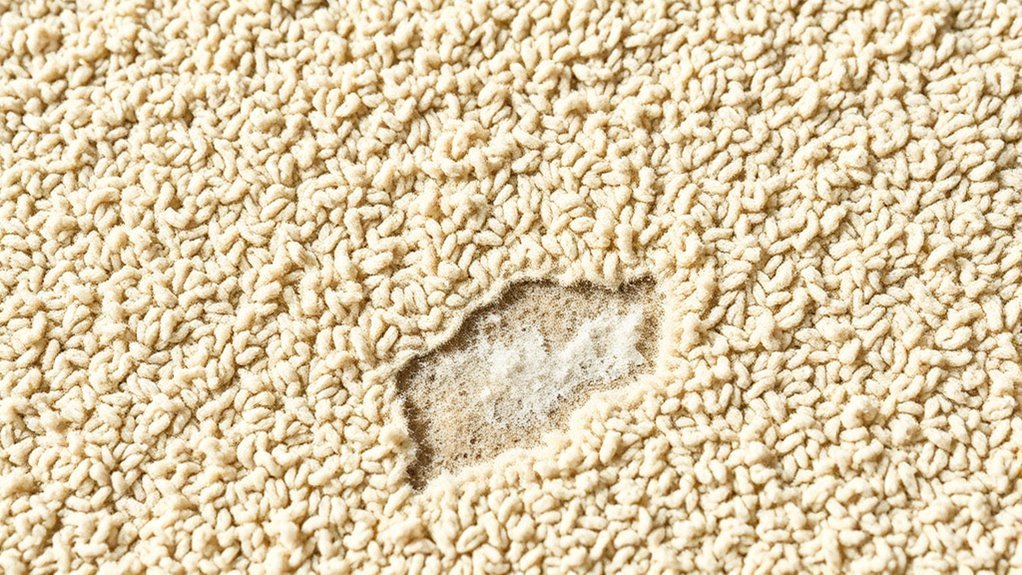
Although bleach is effective for cleaning, it damages carpets by chemically breaking down the dye molecules in the fibers. When bleach stains your carpet, it removes the original pigmentation, leaving behind a light or white patch that’s a permanent stain.
Bleach removes carpet dye molecules, leaving permanent light or white stains that can’t be restored.
This damage happens because the bleach reacts with the dyes, physically removing their color. So, no amount of carpet care can restore it.
Different bleaches, like sodium hypochlorite or benzoyl peroxide, target specific dyes, causing unique discolorations. The severity depends on how strong the bleach is, how long it sits, and the type of carpet fiber.
Nylon, polyester, or wool each reacts differently. Understanding this helps you realize why bleach stains are so challenging to fix and why prevention is key.
Identifying Different Types of Bleach Stains
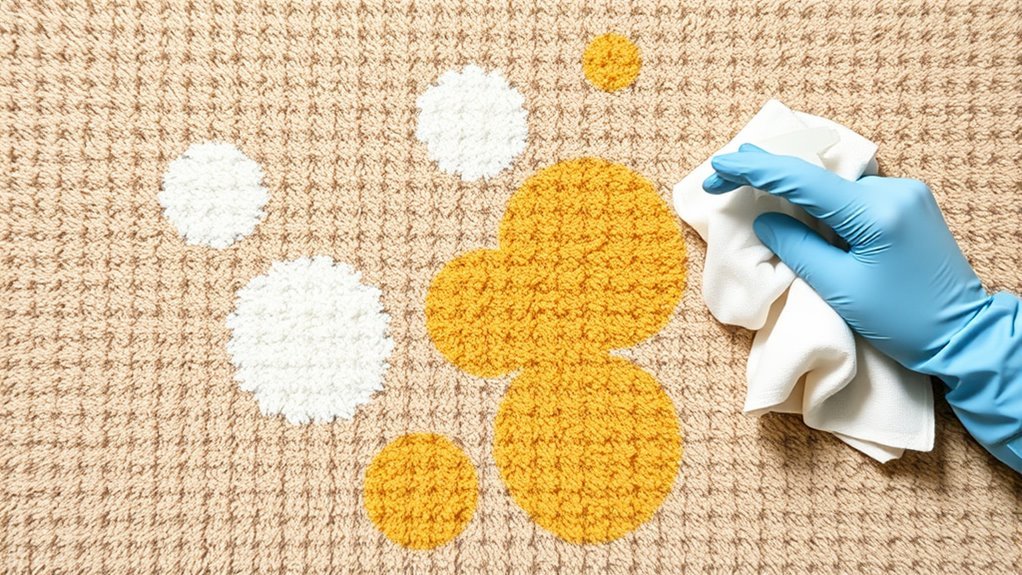
When bleach damages your carpet, the stain’s color can reveal the type of bleach involved, helping you decide how to address it. Sodium hypochlorite bleach often leaves yellowish stains by stripping away blue and red acid dyes, exposing the yellow underneath.
Benzoyl peroxide creates pink or orange stains by destroying blue dye molecules. Acidic cleaners, like rust removers, cause greenish stains by removing red acid dyes and revealing the combination of blue and yellow dyes.
Identifying the stain color is vital because it guides you in selecting the right method to restore the original carpet color. Knowing whether the damage comes from sodium hypochlorite, benzoyl peroxide, or acidic bleach helps you tailor your approach for the best chance to repair or disguise the stain effectively.
Step-by-Step Process to Attempt Bleach Stain Removal
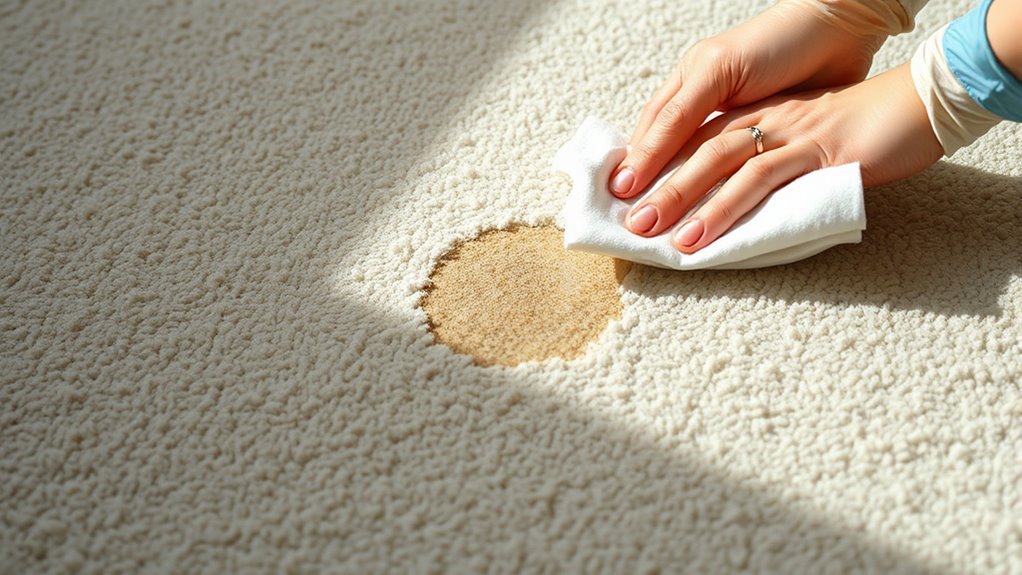
Understanding the type of bleach stain on your carpet sets you up for the best chance at restoration. Start by immediately blotting the bleach spill with a clean, dry cloth to absorb excess liquid.
Next, dilute the area with a mixture of water and white vinegar to neutralize the bleach’s chemical reaction. Sprinkle baking soda over the spot and leave it overnight to absorb moisture and odors.
Then, gently dab the stain with a dampened hydrogen peroxide solution, repeating until the discoloration lessens. Finally, rinse the area thoroughly with water and dry it using a clean towel or fans to prevent further damage.
If needed, apply a specialized stain remover designed for carpets to tackle stubborn spots, but always test a small area first. This way, you can be sure it won’t harm your carpet even more.
Professional Color Restoration Solutions for Bleach Spots
A professional color restoration can effectively neutralize bleach residues and restore your carpet’s original look by applying color-matched dyes with expert precision. When you choose this service, specialists use advanced color matching techniques to blend the repair flawlessly with your carpet’s surrounding fibers.
They begin by neutralizing bleach residues using specialized solutions, followed by patch testing and pH balancing to prepare the area. Multiple dye applications ensure a durable and natural finish.
Experts rely on tools like color spectrometers and fiber chemistry knowledge to achieve near-invisible results. If the carpet fibers are undamaged, professional restoration can fix 99% of bleach spots, offering you a cost-effective alternative to replacing your carpet.
This approach brings your carpet back to life without noticeable blemishes. It’s a smart way to save both your carpet and your wallet.
Preventative Measures to Protect Your Carpet From Bleach Damage
While professional restoration can repair bleach damage, preventing stains in the first place saves you time and money. To protect your carpet, take key preventative measures.
Store bleach in high, secure cabinets out of reach from children and pets to avoid accidental spills. Opt for cleaning solutions that are bleach-free or specifically made for carpet care to minimize risk.
Always perform patch tests on hidden areas before using any new cleaning products containing chemicals. Follow label instructions carefully to prevent unwanted bleach contact.
Additionally, regularly check storage areas to ensure bleach containers are sealed tight and free from leaks. Avoid excess moisture during cleaning, as it can spread bleach and worsen damage.
These steps help keep your carpet safe and looking great. It’s worth the little extra effort!
Frequently Asked Questions
How to Remove Years of Old Stains From Carpet?
You can’t fully remove years-old bleach stains, but you can reduce discoloration using specialized carpet spot dye kits.
If that doesn’t work, consider replacing the affected carpet section for the best appearance.
Can Vinegar Remove Bleach Stains?
You might think vinegar’s magic will erase bleach stains, but it can’t. While it freshens odors, it won’t restore color.
Instead, you’ll need professional treatment to fix that accidental splash on your carpet.
How to Lighten Carpet Color?
You can lighten carpet color by applying a vinegar and water solution to neutralize residues, then use baking soda paste to absorb bleach.
Rinse thoroughly, blot dry, and avoid heat or sunlight to prevent uneven fading.
This way, you get a more even lightening effect without damaging your carpet. Just take it slow and be gentle!
Are Bleach Stains Permanent?
Yes, bleach stains are permanent because they chemically alter carpet fibers’ color. You can’t simply remove them.
But don’t worry, you can try specialized dye treatments or color-matching to blend the affected area with the rest of your carpet. It might not be perfect, but it helps make the stain less noticeable.
Conclusion
Bleach stains on your carpet can feel like a storm you didn’t see coming, but you’re not powerless against them. While getting the color back isn’t always simple, following the right steps can help you minimize damage.
If DIY methods fall short, professional restoration can work wonders. Remember, prevention is your best friend—handle bleach carefully and act fast to keep your carpet looking its best.
Don’t let a bleach spill steal your carpet’s shine! Acting quickly to get bleach out of carpet can save your flooring from lasting damage. Using the right cleaning techniques and knowing when to call in professionals ensures your carpet stays fresh and vibrant. So next time you face a bleach accident, stay calm and tackle the stain head-on for the best results.