How Do You Dry a Wet Carpet in 5 Easy Steps
First, stop the water source to prevent more damage to your carpet. This step is crucial to avoid further soaking and potential structural issues in your home.
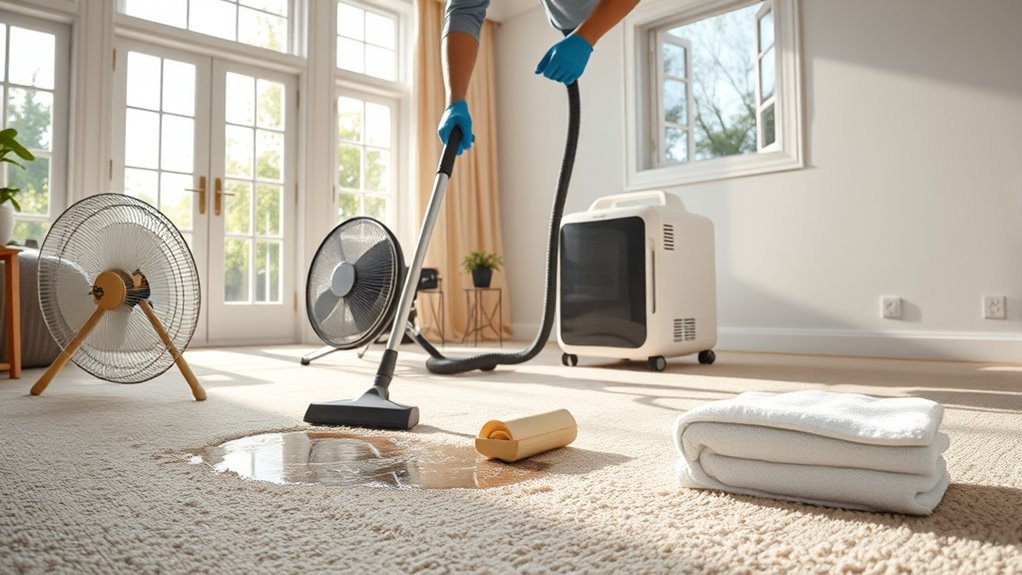
Next, remove all furniture from the affected area. Then, use a wet-dry vacuum to extract as much water as possible from the carpet fibers and padding.
After that, elevate the carpet with blocks or similar supports. This allows airflow underneath, which helps the drying process.
Once the carpet is lifted, run fans and a dehumidifier in the room. These tools speed up drying by circulating air and reducing moisture in the air.
Finally, inspect the carpet for any damage or damp spots. Treat these areas promptly to prevent mold growth and lingering odors.
Following these simple steps will help you dry a wet carpet efficiently and safely. You’ll find detailed tips to make the process easier ahead.
Key Takeaways
- Shut off the main water supply immediately to stop further flooding and water damage.
- Remove all furniture and use a wet-dry vacuum to extract excess water from the carpet and padding.
- Elevate the carpet with blocks or containers to improve airflow underneath and speed up drying.
- Use high-powered fans and a dehumidifier continuously for 24-48 hours to thoroughly dry the carpet.
- Inspect the carpet and subfloor for moisture, treat with antimicrobials, and address any damage promptly.
Stop the Water Source Immediately
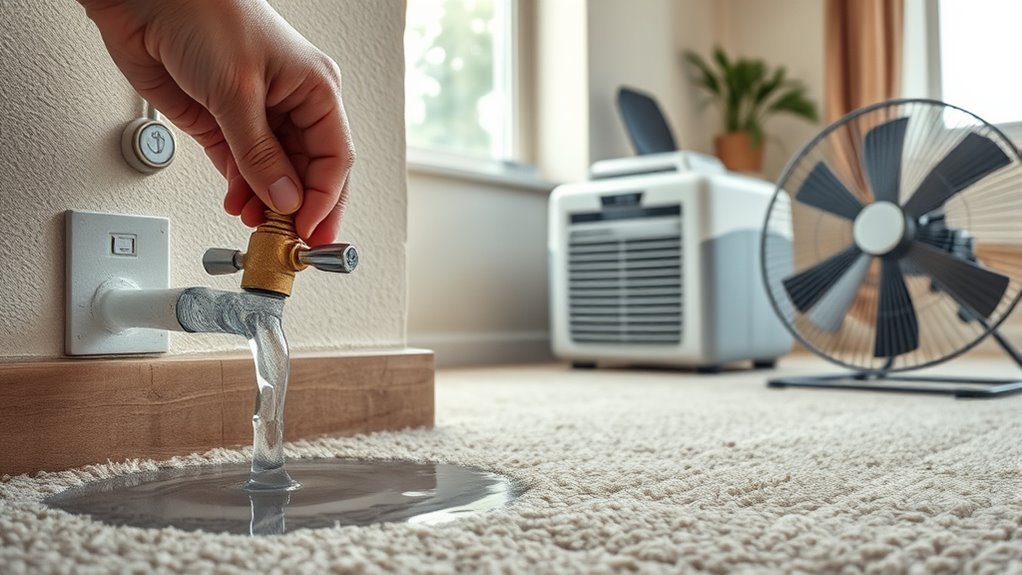
Before you begin drying your wet carpet, you need to stop the water source immediately to prevent more flooding. Locate where the leak or burst pipe is coming from and shut off the main water supply without delay.
If you don’t cut off the water source, the flood will only worsen, saturating your carpet further and causing more damage. Turning off the water valve at the main supply ensures no additional water keeps flooding the area.
Addressing the source quickly limits how much water seeps into your carpet, making the drying process faster and more effective. Taking this first essential step minimizes damage and creates a safer environment for the next steps in restoring your carpet.
Don’t skip shutting off the water supply—it’s really important!
Remove Excess Water and Furniture
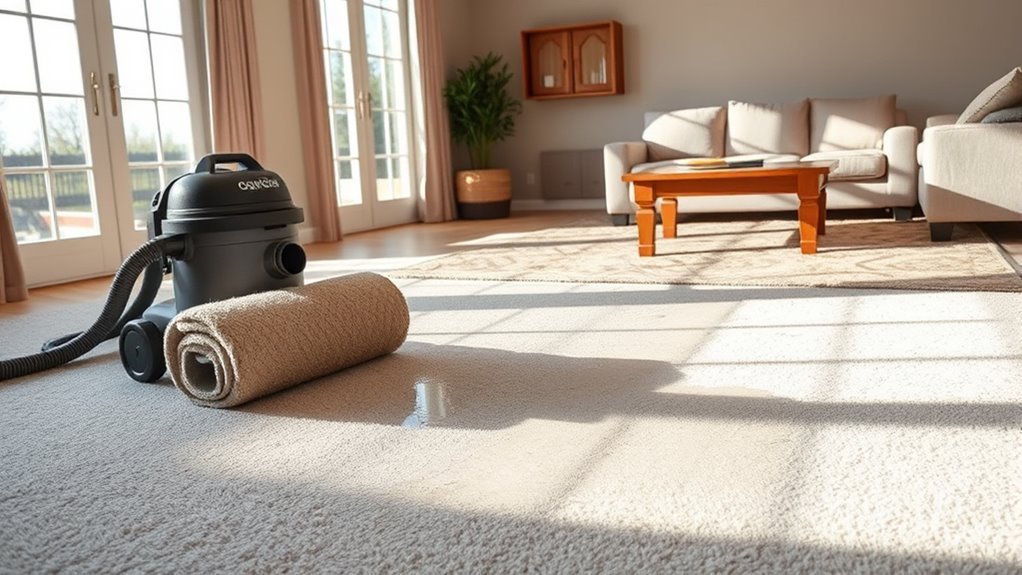
Once you’ve stopped the water source, immediately remove all furniture and objects from the wet carpet to prevent further damage and allow thorough drying. Leaving furniture on a wet carpet traps moisture, increasing the risk of stains and mold.
Next, use a wet-dry vacuum to remove as much excess water as possible from both the carpet and padding. Removing this water quickly is essential to avoid long-term damage.
Be thorough in extracting moisture because any remaining wetness can promote mold growth and unpleasant odors. After you remove the excess water and furniture, you’ll be ready to proceed with drying techniques that will restore your carpet’s condition efficiently and effectively.
Elevate the Carpet for Airflow
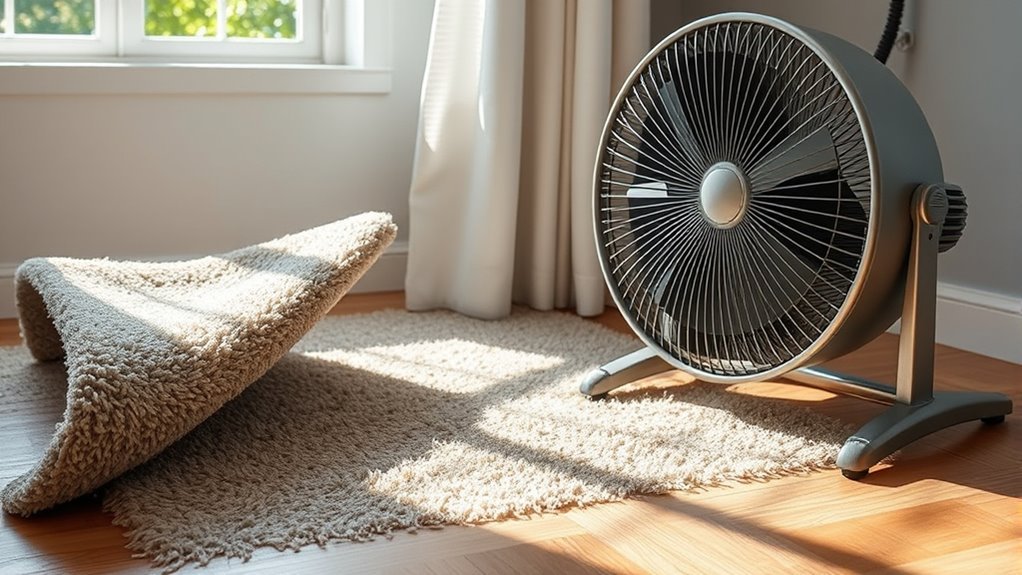
After removing excess water and clearing the area, focus on elevating the carpet to improve airflow. Elevate the carpet by placing objects underneath to create space, allowing air circulation beneath the fibers and padding.
Elevate your carpet with objects underneath to boost airflow and speed drying after water removal.
This ventilation helps speed up drying by reducing trapped moisture and promoting evaporation. Use wooden blocks or plastic containers to lift the carpet without damaging it.
Make sure to check regularly so the carpet stays supported and doesn’t sag or tear. Elevation plays a key role in effective drying by:
- Increasing ventilation beneath the carpet
- Accelerating moisture evaporation
- Preventing humidity buildup
- Supporting the carpet to avoid damage
Use Fans and Dehumidifiers to Dry
When you use fans and dehumidifiers together, you create ideal conditions for drying your wet carpet quickly and thoroughly. Place high-powered fans to promote strong airflow underneath and around the carpet, accelerating moisture evaporation.
Run the fans continuously during the drying process, ideally for 24 to 48 hours, depending on how soaked the carpet is. Pairing the fans with a dehumidifier helps reduce ambient humidity, allowing moisture to escape from the carpet fibers more effectively.
Keep adjusting fan placement as needed to maintain consistent airflow and prevent mold growth. Regularly check moisture levels to ensure the drying process is progressing efficiently.
Combining fans and a dehumidifier maximizes drying speed and protects your carpet from lasting water damage. It’s definitely the best way to get your carpet dry and safe again.
Inspect and Treat the Carpet and Subfloor
Using fans and dehumidifiers effectively speeds up drying, but you still need to carefully inspect the carpet and subfloor for any lingering moisture or damage.
Start with a thorough subfloor inspection using a moisture meter to detect water penetration. Check for soft spots, discoloration, or warping that could signal structural issues.
After confirming complete moisture removal, apply an antimicrobial treatment to the subfloor to prevent mold and bacteria growth. If you find significant damage, don’t hesitate to seek professional repair.
Remember, reinstalling carpet or padding over damp areas risks mold problems later.
- Use a moisture meter for accurate moisture level readings
- Look for discoloration and soft spots on the subfloor
- Apply antimicrobial treatment after drying
- Consult professionals for severe damage or repairs
Frequently Asked Questions
How Can I Dry My Wet Carpet Fast?
You can dry your wet carpet fast by vacuuming water out, opening windows, running fans, and using a dehumidifier. These steps help speed up the drying process and reduce moisture.
Don’t forget to lift the carpet, replace wet padding, and treat it to prevent mold growth. Taking these extra measures keeps your carpet safe and fresh.
Can You Use a Space Heater to Dry Carpet?
You can’t just rely on a space heater alone—it’s like trying to dry an ocean with a single towel!
Use it with fans and dehumidifiers to avoid damage and speed up drying safely and effectively.
How Quickly Can Mold Grow Under Wet Carpet?
Mold can start growing under your wet carpet within 24 to 48 hours if you don’t dry it quickly.
High humidity and poor airflow speed this up, so act fast to prevent mold from taking hold.
Trust me, the sooner you tackle the moisture, the better your chances of keeping mold at bay.
What Is the Fastest Way to Dry a Wet Floor?
You dry a wet floor fastest by removing excess water with a wet-dry vacuum, then using high-powered fans and dehumidifiers while elevating the floor covering.
Open windows to boost airflow and monitor moisture levels regularly.
This way, you speed up drying and prevent damage or mold growth. Just keep an eye on things, and you’ll have a dry floor in no time!
Conclusion
Drying a wet carpet quickly is essential—did you know that mold can start growing within 24 to 48 hours? By stopping the water source and removing excess moisture, you’re already a step ahead in preventing damage.
Next, elevate your carpet and use fans and dehumidifiers to speed up the drying process. These tools help cut off mold’s chances to thrive by keeping the air moving and moisture levels low.
Don’t forget to inspect and treat both the carpet and the subfloor. This step is crucial to prevent long-term damage that can be costly and hard to fix.
Following these simple steps guarantees your carpet dries thoroughly and stays fresh. Acting fast and using the right methods ensures your carpet remains clean, mold-free, and in great condition for years to come. Drying a wet carpet doesn’t have to be a hassle when you know what to do!