Are Recliners Good for Your Back and How to Use Them Safely
Recliners can be good for your back when you use them correctly, as they help keep your spine aligned and reduce pressure on your lower back and legs. Using recliners for back support can ease muscle tension and provide relief after a long day.
But it’s important to know how to use them safely to avoid any discomfort or issues.
To stay comfortable and safe, keep the recline angle between 30°-45°, use support pillows, and elevate your feet slightly.
Avoid fully reclining flat because that can sometimes cause joint stiffness or poor circulation.
If you use your recliner wisely, you’ll find a great way to relax without risking your back health.
Keep exploring to find the best recliner setup for your back. Everyone’s different, so a little experimentation will help you discover what feels best for your spine and overall comfort.
Key Takeaways
– Recliners with built-in lumbar support help maintain proper spinal alignment and relieve back pain.
Using a recline angle between 30°-45° is best. It promotes spinal decompression and reduces pressure.
– Elevate your legs slightly above heart level. This improves circulation and reduces lower back strain.
Try to avoid fully reclining flat. Also, regularly shift positions to prevent joint stiffness and safety risks.
– If you have chronic back pain or spinal conditions, it’s a good idea to consult a healthcare professional before using a recliner.
Why Sleeping in a Recliner Can Help Your Back
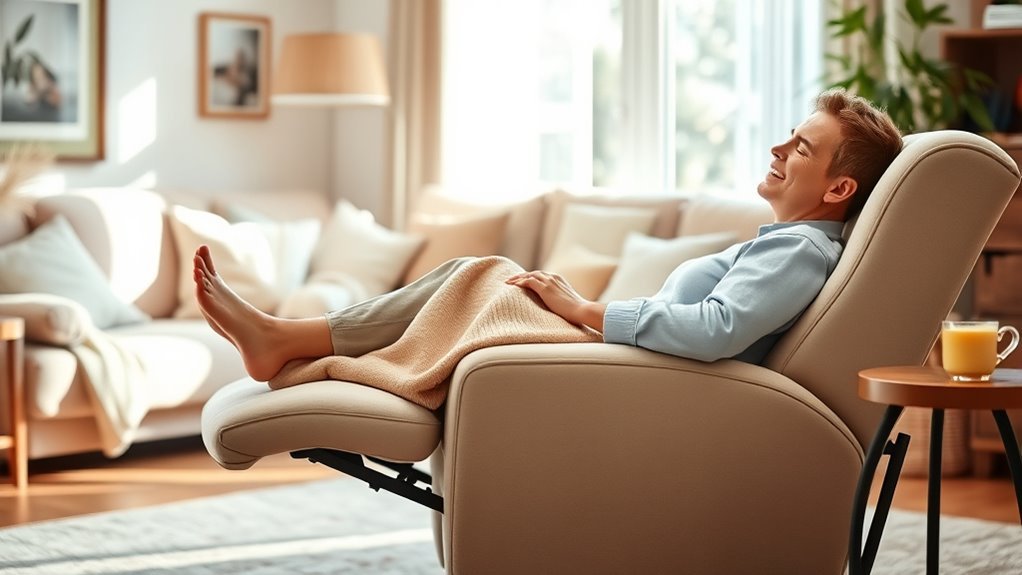
While traditional beds may not always provide the best support, sleeping in a recliner can help your back by reducing strain on your lower spine. When you use a recliner with proper lumbar support and reclining features, it helps maintain spinal alignment by keeping your upper body in an elevated position.
This setup relieves pressure on your lower back, which can prevent back pain and muscle stiffness common with flat sleeping surfaces. To get the most out of your recliner, you need proper adjustment to guarantee it truly supports your back and promotes pressure relief.
Benefits of Sleeping in a Recliner for Back Pain Relief
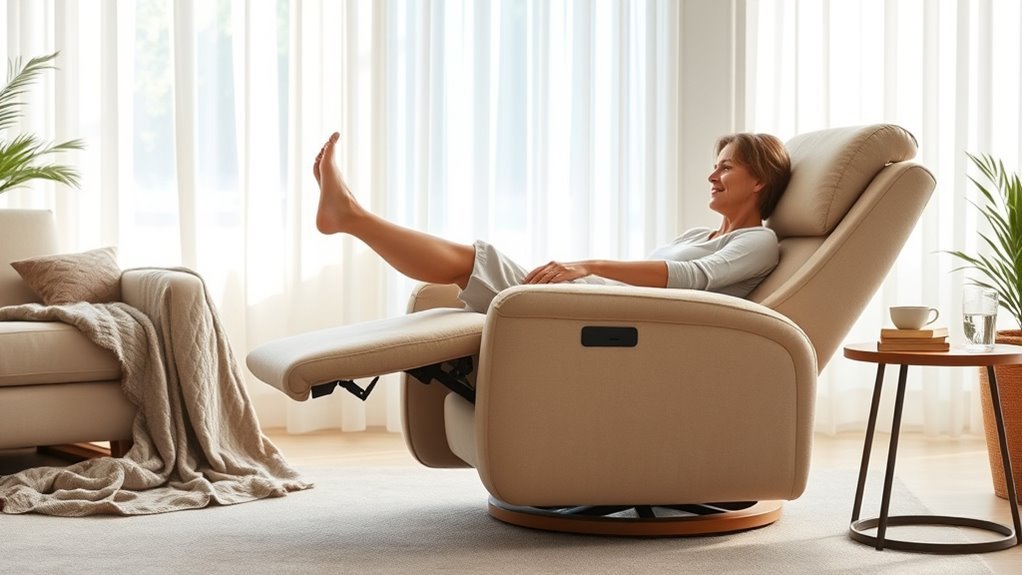
When you sleep in a recliner, it helps keep your spine properly aligned, which can ease back pain. Elevating your legs and lower back reduces pressure on sensitive areas, providing much-needed relief.
With the right support and adjustments, you’ll wake up feeling less stiff and more comfortable. It’s a simple change that can make a big difference in how your back feels.
Spinal Alignment Support
Because a recliner supports your natural spinal curves, it can substantially reduce pressure on your lower back while you sleep. Adjustable recliners offer proper positioning with lumbar cushioning that promotes spinal alignment and spinal stability.
Ergonomic support prevents misalignment, which helps keep back pain at bay. Plus, elevating your legs and upper body helps distribute your weight more evenly, enhancing pressure reduction on spinal discs.
| Feature | Benefit | Result |
|---|---|---|
| Lumbar support | Alleviates strain | Reduces lower back pain |
| Adjustable recliners | Personalized positioning | Enhances spinal stability |
| Ergonomic support | Maintains spinal alignment | Prevents long-term pain |
Using a recliner with these supports makes it easier to maintain spinal health and comfort throughout the night. It’s a simple way to help your back feel better while you rest.
Pressure Relief Benefits
Supporting your spine properly is just one way recliners help your back. Reclining chairs with ergonomic design offer excellent pressure relief by distributing your weight evenly across the seat and backrest.
This pressure distribution reduces strain on sensitive areas, easing back pain. When you elevate your legs and lower back, these support mechanisms promote spinal decompression, which alleviates tension in spinal discs.
Adjustable positions let you customize your recliner to fit your unique comfort needs, further enhancing pressure relief. By maintaining the natural curve of your spine with built-in lumbar support, recliners decrease muscle tension and joint compression.
Using a recliner wisely can provide targeted relief from chronic back discomfort, making it a valuable tool for managing and preventing back pain.
Risks of Long-Term Sleeping in Recliners
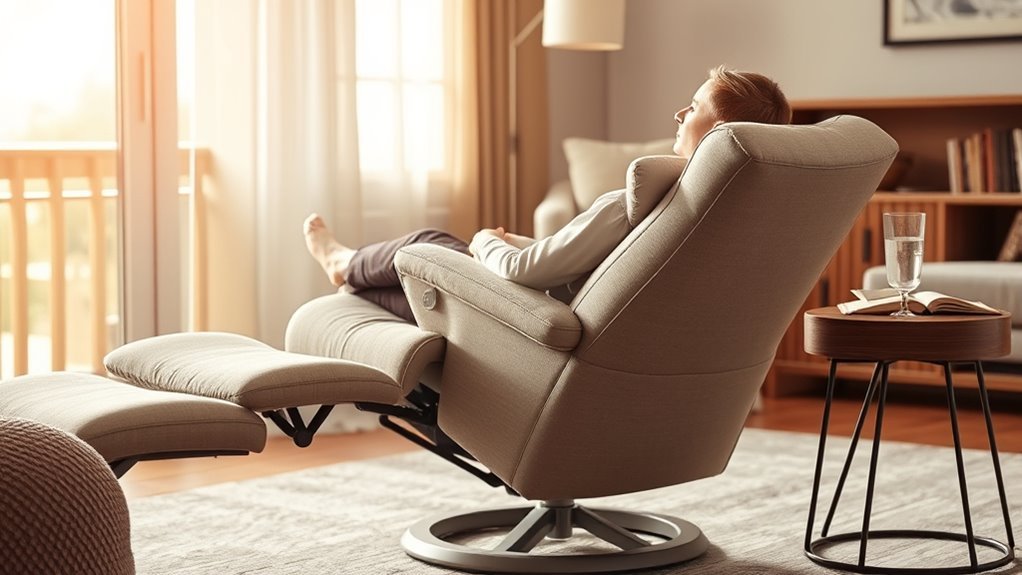
How does sleeping in a recliner for long periods affect your body? Prolonged use can cause uneven pressure, leading to pressure points and circulation issues that may make you uncomfortable.
Holding fixed hip and knee positions often results in joint stiffness, limiting your natural repositioning during sleep. This lack of movement can worsen musculoskeletal problems, including back pain and neck strain.
Additionally, relying on a recliner as your primary sleep surface might reduce sleep quality due to restricted mobility. Safety risks also increase, especially for those with limited mobility, as sliding or falling off becomes more likely.
To protect your back and overall health, it’s important to avoid prolonged use and guarantee you move regularly rather than sleeping continuously in a recliner. So, try to switch things up and give your body a break whenever you can.
Choosing a Back-Friendly Recliner: What to Look For
When selecting a recliner, you want to focus on features that protect and support your back throughout use. Look for an ergonomic design with built-in lumbar support to maintain your spine’s natural curve and improve pressure distribution.
Choose models with adjustable recline angles and smooth mechanisms for personalized comfort. A supportive headrest and body size compatibility ensure all-encompassing back and neck support.
High-quality materials enhance durability and ongoing support.
| Feature | Benefit | What to Check |
|---|---|---|
| Lumbar Support | Reduces lower back strain | Built-in curve support |
| Adjustable Recline | Customizable positioning | Smooth, easy-to-use controls |
| Ergonomic Design | Improves pressure distribution | Zoned cushioning, headrest |
Tips for Sleeping Comfortably and Safely in Your Recliner
Once you’ve chosen a recliner with the right ergonomic features, the next step is learning how to sleep comfortably and safely in it. Proper positioning and comfort optimization are key to protecting your back during extended periods of use.
Use the adjustable recline feature to set the angle between 30°-45°, which supports spinal alignment and reduces pressure points. It really makes a difference in how you feel after a long rest.
Incorporate support pillows for your lower back, neck, and knees to enhance body support. These little additions can boost your comfort big time.
Follow these safety tips: avoid fully reclining flat to prevent sliding or falling. It’s safer to keep the recline at a gentle angle.
Elevate your feet slightly above heart level to improve circulation. And don’t forget to regularly shift your position to reduce joint stiffness.
Use cushions to maintain proper spinal alignment throughout the night. These simple measures help you sleep safely and comfortably in your recliner.
When to Consult a Healthcare Professional About Recliner Use
Although recliners offer great comfort, you should consult a healthcare professional before using one if you have chronic back pain, spinal conditions, or recent injuries. It’s important to get their advice to make sure you’re not making things worse.
If you notice increased pain, numbness, or tingling after using a recliner, seek medical advice promptly. Don’t wait—getting checked out early can help avoid worsening your back health.
Those with severe osteoporosis or joint stiffness should get guidance to guarantee safe recliner use tailored to their needs. It’s better to be safe and use the right support for your condition.
Additionally, if you suffer from conditions like sleep apnea or GERD, talk to your healthcare provider to determine if sleeping in a recliner is suitable for you. They can help you figure out what’s best for your health.
Regularly discussing your recliner use with a professional helps monitor its impact on your back health and prevents potential issues. This way, you can make sure you get the most benefit without harm.
Frequently Asked Questions
What Is the Best Sofa for Back Pain Sufferers?
The best sofa for your back pain offers firm lumbar support, adjustable features, and high-quality cushions. You’ll want a seat that keeps your feet flat and spine aligned.
Plus, adding lumbar pillows can give you extra comfort and support. It really makes a difference when you’re sitting for a while!
Is It Better to Sleep in a Recliner or in a Bed?
You’re better off sleeping in a bed since 70% of people report improved spinal alignment there.
Recliners can help with reflux but may cause stiffness over time, so use them cautiously and avoid long-term sleep.
It’s kind of a trade-off—beds are generally better for your back, while recliners might offer some relief for certain issues. Just don’t rely on recliners for every night’s rest.
Is Sitting in a Recliner Bad for My Back?
Sitting in a recliner isn’t bad for your back if it offers good lumbar support and you adjust it properly.
Just make sure you avoid slouching. Take breaks to move around every once in a while.
And hey, if you start feeling discomfort or pain, it’s a good idea to chat with a professional.
Do Doctors Recommend Recliners?
Doctors do recommend recliners, but only if you choose ones with proper lumbar support and adjustable positions.
You shouldn’t just lounge endlessly; instead, use them wisely to relieve pain without risking further back strain or discomfort.
It’s all about finding the right balance and making sure your recliner supports your body properly. That way, you get the benefits without the downsides.
Conclusion
Recliners can really relieve your aching back when used right, offering soothing support and sweet, safe slumber. But beware: balancing benefits with risks is vital to avoid discomfort or damage.
Choosing the correct chair, practicing proper posture, and pacing your reclining periods protect your spine. Remember, reliable rest requires responsibility.
So, sit smartly, sleep soundly, and seek specialist support if soreness persists. Your back deserves deliberate, dedicated care every day. Using recliners safely means paying attention to how you sit and for how long. When done right, recliners can be a great way to ease back pain and support good posture. Always listen to your body and take breaks to keep your spine healthy.