How to Choose Any Mattress Used on an Adjustable Bed Frame
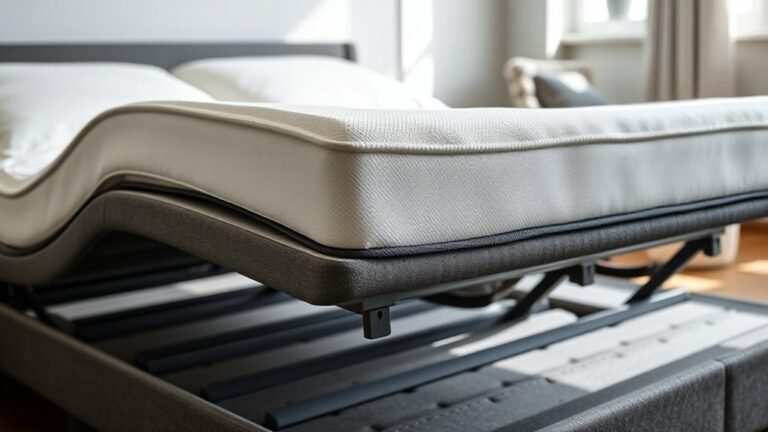
When choosing a mattress for your adjustable bed frame, it’s important to pick one that’s flexible and fits the frame size, like split king or split queen. These sizes work best because they allow each side to move independently, giving you customizable comfort.
You’ll want a mattress that’s easy to bend without losing its shape.
Aim for a thickness between 8-14 inches. This range balances support and flexibility, making sure the mattress works well with your adjustable base.
Memory foam, latex, or hybrid mattresses are great choices since they flex easily and maintain durability.
Avoid overly thick or rigid mattresses because they can damage your frame or even void your warranty.
Understanding these key factors can help you get the best comfort and durability from your adjustable bed.
Key Takeaways
- Choose a mattress compatible with adjustable frames and follow manufacturer guidelines to avoid voiding warranties. It’s super important to stick to their rules so you don’t lose any coverage.
- Select mattresses 8-14 inches thick for optimal flexibility, support, and smooth articulation. This thickness range usually gives you the best balance between comfort and movement.
- Prefer foam, latex, or hybrid mattresses for their flexibility, durability, and ability to bend without damage. These materials tend to work well with adjustable bases.
- Test mattress flexibility by manually bending it to ensure it moves smoothly without creaking or resistance. Give it a little bend yourself and see how it responds.
- Avoid overly thick or rigid mattresses to prevent damage, maintain warranty, and ensure long-term comfort and support. Stiffer or bulky beds might not adjust properly and could lead to problems down the line.
How to Choose a Mattress for an Adjustable Bed Frame
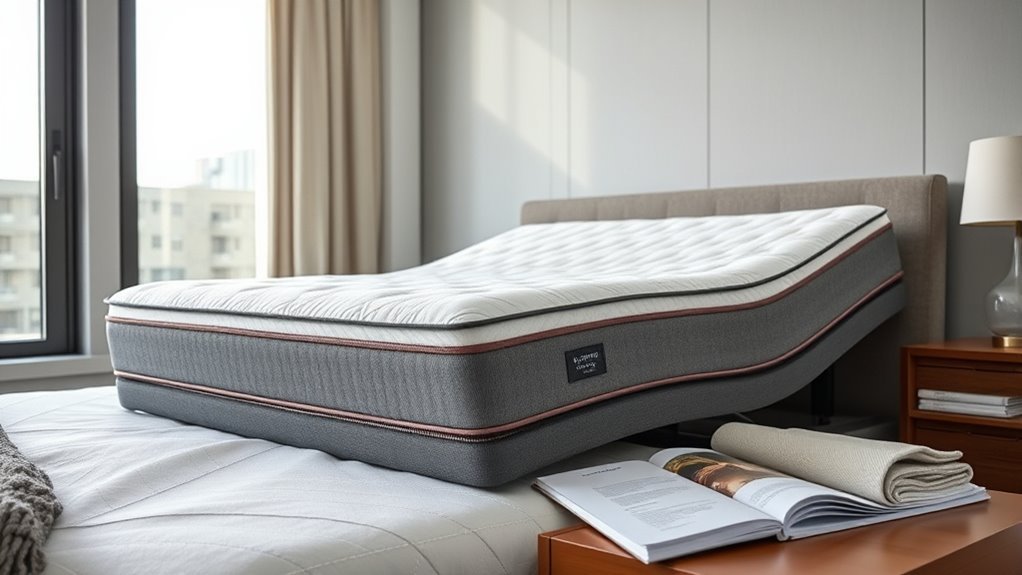
When choosing a mattress for an adjustable bed frame, you’ll want one that bends easily without losing support. Look for mattresses made with flexible materials like memory foam, latex, or hybrid coils to guarantee smooth bending.
Pay attention to the mattress profile and height—ideally between 8 and 14 inches—so it won’t resist the frame’s movements. Check the manufacturer’s compatibility guidelines carefully; this helps avoid voiding your warranty and assures the mattress suits your adjustable bed.
If you have a larger bed, consider a split configuration, such as a split king, which allows each side to adjust independently. Choosing durable, flexible materials means your mattress will withstand repeated adjustments without sagging or damage.
That way, your adjustable bed stays comfortable and functional for years to come.
Why Mattress Thickness and Materials Matter for Adjustable Beds
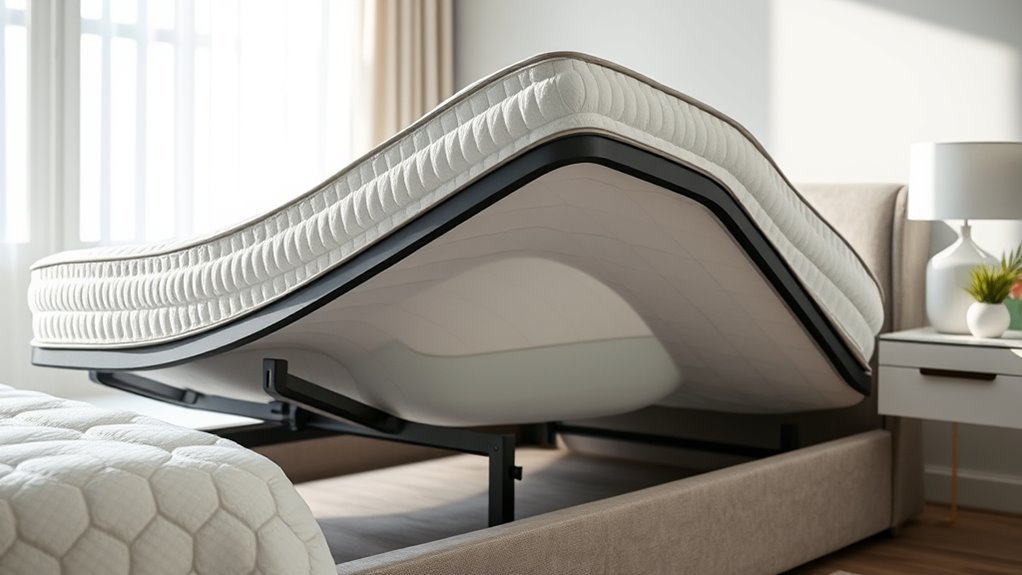
You’ll want a mattress between 8 and 14 inches thick to guarantee it bends smoothly with your adjustable bed. Materials like foam, latex, and flexible hybrid coils offer the right balance of support and durability.
Choosing the right thickness and material helps your mattress stay comfortable and functional over time. Plus, it makes sure your adjustable bed works just like it’s supposed to.
Ideal Mattress Thickness
Why does mattress thickness matter so much for adjustable beds? Choosing the right mattress thickness guarantees your bed frame can bend smoothly without damaging the mattress or losing support.
If the mattress is too thick, it resists bending. But if it’s too thin, it won’t provide enough cushioning or spinal support. Foam mattresses often offer better flexibility for adjustable beds, which can really enhance comfort and durability.
| Mattress Thickness | Support Level | Flexibility on Bed Frame |
|---|---|---|
| Under 8 inches | Insufficient support | Too flexible, lacks cushioning |
| 8 – 14 inches | Ideal support | Ideal bending and flexibility |
| Over 15 inches | Resists bending | Difficult to articulate |
| Foam Materials | Balanced support | Excellent for bending |
Picking the right mattress thickness not only protects your investment but also boosts your comfort on adjustable beds. It’s all about finding that perfect balance!
Flexible Material Types
How do mattress materials affect your adjustable bed’s performance? Flexible materials like memory foam and latex excel because they bend easily without damage, guaranteeing smooth movement on adjustable bases.
When choosing, consider mattress compatibility: hybrid mattresses with pocketed coils offer better coil support and flexibility compared to traditional innersprings. This allows your bed to articulate without strain.
Foam layers also play a key role; they conform to your body’s shape while maintaining flexibility. Thickness matters too—mattresses between 8 and 14 inches optimize bending and function.
Meanwhile, those over 15 inches may resist adjustment, stressing your frame. By focusing on flexible material types, you guarantee your mattress works harmoniously with your adjustable base.
This provides comfort and reliable performance without compromising the mechanism.
Durability and Support
Because adjustable beds move frequently, your mattress needs to combine durability with flexibility to avoid wear and maintain support. Choosing a mattress with the right thickness—typically between 8 and 14 inches—ensures it bends easily without straining the adjustable base.
Mattresses thicker than 15 inches can resist movement, which risks damage and discomfort. The materials you pick play a vital role. Foam and latex offer smooth flexibility, while hybrid mattresses with flexible coil designs deliver both durability and proper support.
These hybrids prevent premature sagging and help the mattress keep its shape despite frequent repositioning. So, prioritizing the right thickness and quality materials guarantees your mattress will support you effectively and last longer on an adjustable bed frame.
Why Foam and Hybrid Mattresses Work Best With Adjustable Bases
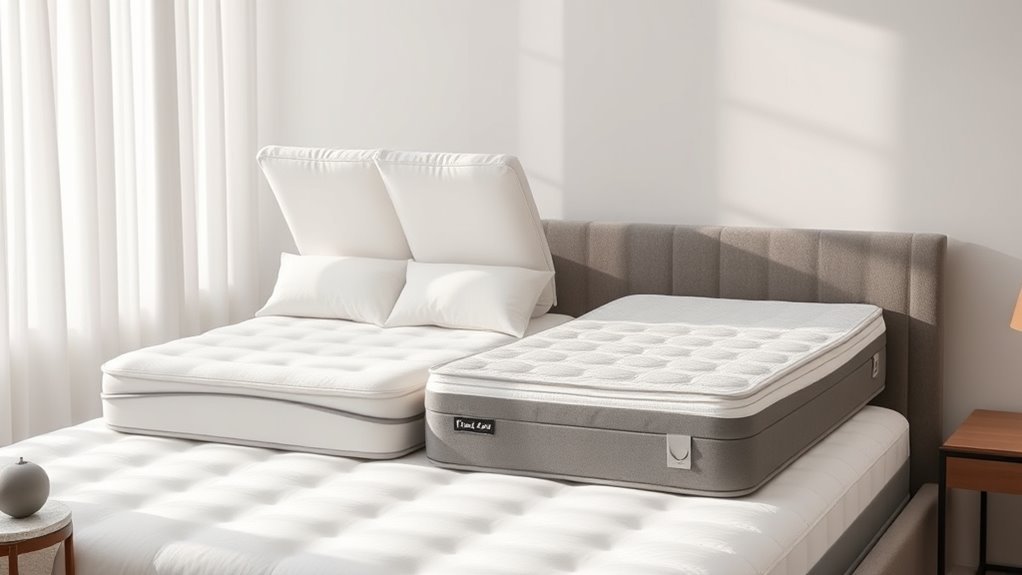
You’ll find foam and hybrid mattresses excel with adjustable bases because they flex easily without losing support. Their design lets them bend smoothly while keeping comfort intact.
Plus, they hold up well over time, giving you lasting durability with every adjustment. It’s like they’re made to move with you, making your sleep experience even better.
Flexibility And Support
When you choose a mattress for an adjustable bed frame, flexibility and support become essential factors. Foam and hybrid mattresses excel here because their multilayered construction allows smooth articulation, bending easily without damage.
This flexibility helps the mattress conform closely to your body, enhancing spinal alignment regardless of your sleep position. Unlike rigid innerspring models, foam and hybrid mattresses reduce motion transfer, minimizing disturbances if you share the bed.
Their quick response to movement offers consistent support, adjusting seamlessly with the base’s changes. Typically 8 to 14 inches thick, they strike the perfect balance between flexibility and durability.
Choosing foam or hybrid assures your mattress works harmoniously with your adjustable bed frame, providing both comfort and reliable support throughout the night.
Durability And Comfort
Foam and hybrid mattresses don’t just bend easily—they stand up to daily use without losing their shape or support. Thanks to their layered construction, these mattresses offer exceptional durability and comfort, adapting smoothly to your adjustable bed’s movements.
Memory foam layers provide excellent motion isolation, minimizing disturbances when you change positions. Their flexibility ensures the mattress won’t crease or resist bending, which helps extend its lifespan.
With thickness typically between 8 to 14 inches, foam and hybrid options balance softness and support perfectly, promoting spinal alignment in every position. When you choose these mattresses, you get consistent comfort and reliable support that lasts.
They’re really the best fit for adjustable bases that demand both adaptability and durability.
How to Test Mattress Flexibility and Durability for Adjustability
Although adjustable bed frames offer great comfort, not every mattress works well with them. So, you need to test how easily the mattress bends without resistance or creaking.
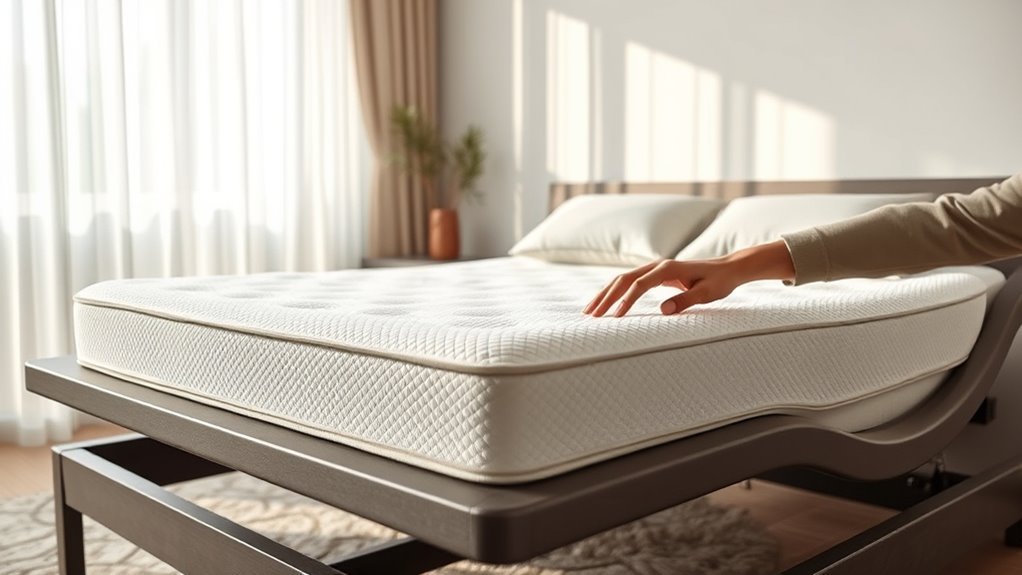
Start by manually lifting and bending the mattress slightly to assess its flexibility and bending resistance. A mattress that maintains its shape and support during this movement shows good compatibility with adjustable beds.
Manually bend the mattress slightly to check flexibility and ensure it supports adjustable bed frames effectively.
Also, check for any bunching or lifting of the surface from the frame. This might indicate poor construction durability.
If the mattress feels stiff or resists bending, it might not be the best fit for adjustable frames. Making sure the mattress supports repeated bending without damage is key for long-term durability and support retention.
This way, you’ll get the most from your adjustable bed setup.
Adjustable Firmness or Position: Which Mattress Is Right for You?
Since adjustable bed frames offer multiple positions, choosing a mattress with adjustable firmness can really enhance your comfort. It lets you tailor support to your needs, which is a big plus.
An adjustable mattress usually has firmness levels ranging from soft (4) to firm (8). This gives you versatile pressure relief and support for different sleep positions.
Hybrid mattresses and latex options work especially well with adjustable bases. Their flexibility means they bend easily without losing shape, which is exactly what you want.
Try to pick a mattress thickness between 10 to 14 inches. This thickness helps guarantee proper bending and responsiveness.
Zoned support features also add to comfort by targeting pressure points as you adjust firmness or position. So, when you choose a mattress designed for adjustable firmness and flexibility, you’ll enjoy personalized comfort that fits your adjustable bed frame perfectly.
Split Mattresses: Why They Matter for Dual Adjustable Beds
While choosing a mattress with adjustable firmness can boost your comfort, it’s equally important to think about how your mattress works with a dual adjustable bed frame. A split mattress is essential for dual adjustable beds because it divides into two sections, allowing each side to move and articulate independently.
This compatibility prevents issues like bunching or misalignment during adjustments, guaranteeing smooth movement without damaging the mattress or frame. Split mattresses come in sizes such as split king, split California king, or split queen to perfectly match your adjustable bed frame.
Tips for Buying Compatible Mattresses and Adjustable Bases
When you shop for a mattress to pair with an adjustable base, focus on flexibility and compatibility to guarantee smooth movement and lasting comfort. Choose an adjustable mattress with flexible coils or foam to ensure easy mattress bending without damage.
Also, check mattress compatibility with your bed frames and confirm it supports your weight and movement. Opt for mattresses 8 to 14 inches thick to maintain support and durability.
If you have a split king adjustable base, select two separate or split mattresses for independent adjustment.
| Consideration | Recommendation |
|---|---|
| Mattress Type | Foam, latex, or hybrid with flexible coils |
| Thickness | 8 to 14 inches |
| Compatibility | Confirm with manufacturer guidelines |
| Construction | Allows easy bending |
| Split Beds | Use split-configured mattresses |
How to Avoid Common Problems With Mattresses on Adjustable Frames
If your mattress resists bending or feels too thick for your adjustable frame, you risk damaging both the bed and the mattress. Incompatible mattresses can cause creaking, resistance, and uneven support. This often leads to discomfort and potential warranty issues.
To avoid common problems with mattresses on adjustable frames, keep these tips in mind:
To prevent issues with adjustable frames, select flexible mattresses and monitor for wear regularly.
- Choose a mattress with proven flexibility and proper support for your frame.
- Avoid thick or rigid mattresses that limit movement and cause resistance.
- Regularly check for sagging or bunching to catch early wear.
- Ensure the mattress and base warranty covers adjustable use.
- Replace mattresses that creak or slide during adjustments to maintain stability.
Following these steps helps protect your investment. Plus, it guarantees a comfortable, durable sleep setup.
Frequently Asked Questions
Which Adjustable Firmness Mattress Is the Best?
The Saatva Solaire is the best adjustable firmness mattress because it offers a wide range of customizable support from 4 to 8 firmness levels, letting you tailor comfort precisely to your sleep preferences with ease.
It’s super easy to adjust, so you can find that perfect feel without any hassle. Plus, the quality materials make it a durable choice that feels great night after night.
What Mattress to Stay Away From?
Did you know 70% of adjustable bed users report discomfort with innerspring mattresses? You should avoid rigid coils, thick mattresses over 15 inches, and dense, non-flexible memory foam.
These types can make your adjustable bed less comfortable and harder to use. So, sticking to more flexible and thinner options will keep things working smoothly and feeling great.
Can You Put an Adjustable Mattress on a Regular Bed Frame?
You shouldn’t put an adjustable mattress on a regular bed frame because it won’t flex properly. This can damage the mattress and reduce comfort.
Always use an adjustable base to get the most from your mattress. It’s really the best way to enjoy all the features your adjustable mattress offers.
What Is the Lifespan of an Adjustable Bed?
Like the saying goes, “A stitch in time saves nine.” Your adjustable bed typically lasts 10 to 15 years.
But with proper care and timely repairs, you can extend its life up to 20 years or more.
Conclusion
Choosing the right mattress for your adjustable bed frame is like finding the perfect dance partner—it needs to move smoothly with you without missing a beat. By focusing on flexibility, durability, and compatible materials like foam or hybrid, you’ll enjoy comfort and support all night long.
Remember to test firmness options and consider split mattresses if you share your bed. These choices ensure both partners get the perfect feel. With these tips, you’ll avoid common pitfalls and sleep soundly on your adjustable base.
In short, picking a mattress for an adjustable bed frame means looking for flexibility, durability, and material compatibility. Foam and hybrid mattresses tend to work best because they easily bend and conform to the bed’s movements. Testing firmness levels lets you find your ideal comfort, while split mattresses are great for couples with different preferences. By keeping these factors in mind, you can maximize your comfort and support every night, making the most out of your adjustable bed frame experience.